Ever stood locked outside your building, frantically calling a friend inside while mentally calculating the cost of an emergency locksmith? That frustrating moment is precisely why intercom key duplicators have become essential security tools in residential and commercial settings.
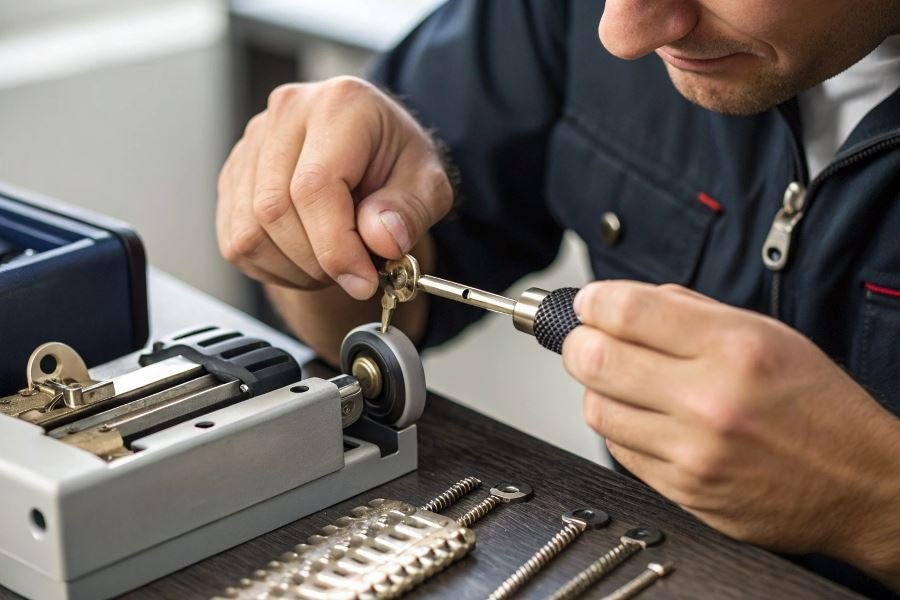
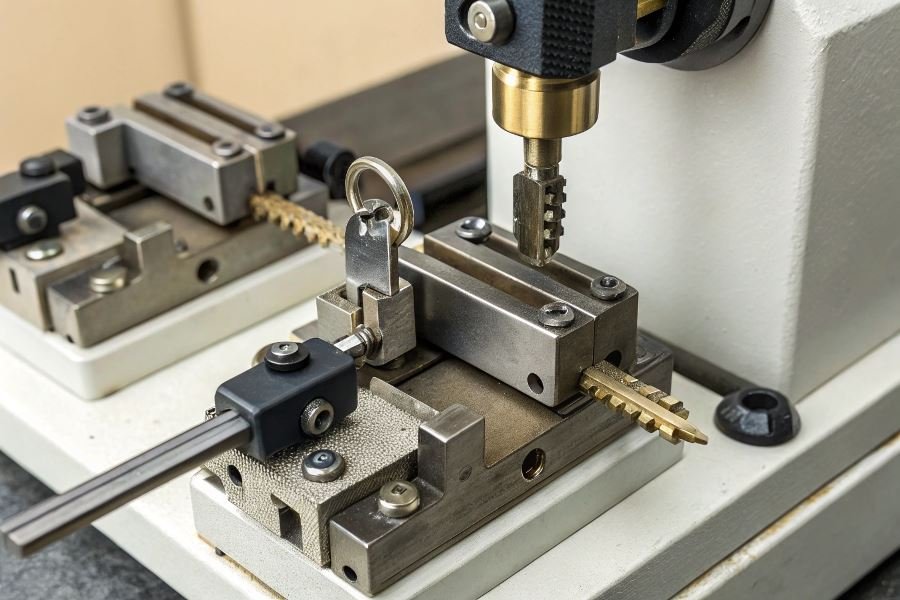
Key duplicators for intercoms are specialized devices designed to create functional copies of existing intercom keys. Unlike traditional door keys, intercom keys often feature unique configurations that control access to building entry systems. These clever machines essentially “read” the original key’s pattern and transfer that exact template to a blank key.
The technology behind these duplicators has undergone remarkable transformation since the first mechanical copiers emerged in the early 1900s. What began as purely mechanical processes requiring skilled hands has evolved into sophisticated digital systems. The watershed moment came in the 1980s when computerized key-cutting machines revolutionized accuracy and speed.
Today’s market offers three primary categories of intercom key duplicators:
- Mechanical duplicators – Traditional machines that physically trace the original key’s pattern
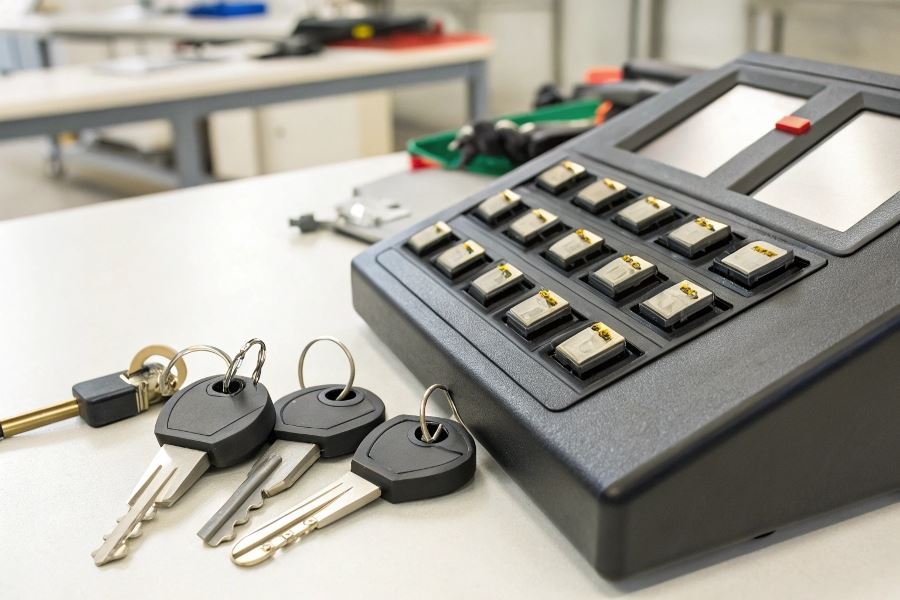
- Digital duplicators – Computer-guided systems offering precision cuts with minimal human error
- Portable duplicators – Compact solutions for on-the-go professionals
Each type serves different needs, from high-volume commercial applications to specialized security requirements. The most advanced models now incorporate laser-scanning technology that can detect microscopic details invisible to the naked eye.
“The right duplicator doesn’t just copy a key—it replicates security confidence.”
What makes modern duplicators particularly fascinating is their ability to navigate the complex world of proprietary key systems while maintaining building security integrity.
The Technology Behind Intercom Key Duplication
The world of access control has evolved dramatically, with intercom systems standing as gatekeepers to our homes and businesses. Understanding how key duplicators for intercoms work: principle of operation reveals a fascinating intersection of electromagnetic science and digital innovation that makes modern security both convenient and complex.
RFID Technology Powers Modern Access
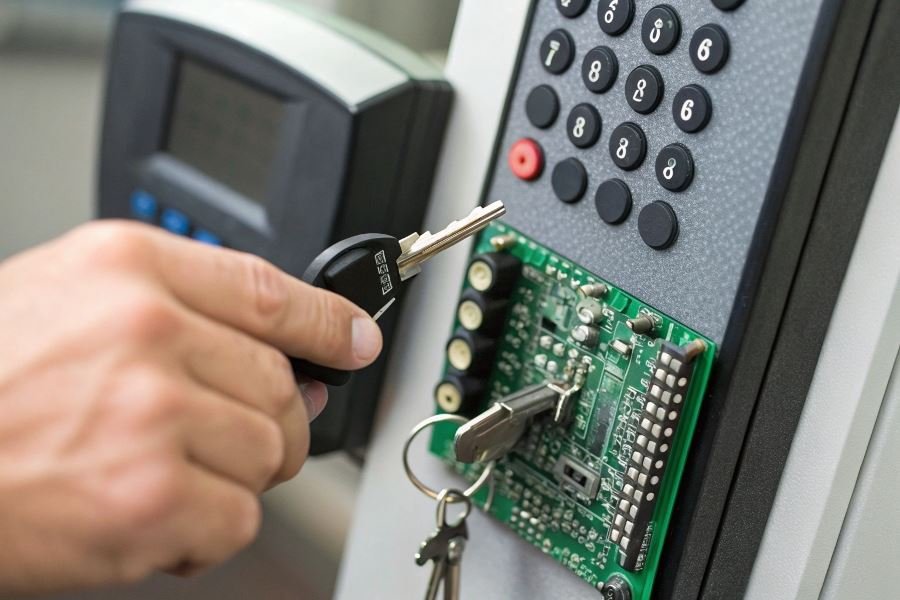
At the heart of contemporary intercom key duplication lies Radio Frequency Identification (RFID) technology. Unlike traditional metal keys that rely on physical notches, RFID-based intercom keys contain tiny microchips and antennas that communicate wirelessly with readers. These keys, often in the form of fobs or cards, store unique identification codes that grant access when recognized by the system.
The duplication process begins when specialized equipment captures the unique digital signature embedded within the original key. Professional duplicators use RFID readers that operate across multiple frequencies—typically 125 kHz for older systems and 13.56 MHz for newer high-frequency applications. This versatility allows technicians to clone virtually any modern intercom key with remarkable precision.
The beauty of RFID duplication lies in its invisibility—the original key remains unchanged while its digital essence is captured and transferred.
Electromagnetic Signal Capture and Replication
The electromagnetic dance between key and duplicator follows a precise choreography:
- Signal Detection: The duplicator creates an electromagnetic field that powers the passive chip in the original key
- Data Extraction: When energized, the key transmits its unique code
- Code Analysis: The duplicator deciphers the transmitted data pattern
- Signal Replication: The code is written to a blank key using precisely calibrated electromagnetic pulses
This process happens in seconds, but represents decades of technological advancement. Modern duplicators like the Keyline Ninja or Silca RW4 Plus can read, decode, and replicate signals with astonishing accuracy.
Digital vs Analog Duplication Methods
| Feature | Digital Duplication | Analog Duplication |
|---|---|---|
| Accuracy | Near-perfect replication | Variable quality |
| Speed | Seconds per key | Minutes per key |
| Complexity | Handles encrypted formats | Limited to basic signals |
| Equipment Cost | 500−3,000 | 100−500 |
| Security Risk | Higher (perfect copies) | Lower (imperfect copies) |
Digital duplication methods represent the gold standard for intercom key replication. These systems employ sophisticated microprocessors that analyze signal patterns with mathematical precision, creating bit-for-bit copies of the original key’s data structure. The HID Omnikey series exemplifies this approach, offering enterprise-grade duplication capabilities.
Analog methods, while less sophisticated, still persist in some applications. These systems attempt to mimic the electromagnetic signature of the original key through basic frequency matching rather than digital code replication. The results vary widely in quality and reliability, making analog duplicators increasingly obsolete for all but the simplest intercom systems.
The security implications are significant. As duplication technology advances, so too must the countermeasures. Modern intercom systems increasingly employ rolling codes, encryption, and multi-factor authentication to stay ahead of unauthorized duplication attempts—creating an ongoing technological arms race between security providers and those seeking to circumvent their protections.
Beyond the Copy: Advanced Features and Security in Key Duplicators
Military-grade encryption meets your keychain
Modern high-end intercom key duplicators have evolved far beyond simple copying tools. Today’s premium duplicators incorporate sophisticated security protocols that rival banking systems. The most advanced models utilize 128-bit AES encryption—the same standard used by financial institutions—to protect key data during the duplication process. This prevents unauthorized interception of key codes during transmission between the reader and duplicator components.
RFID-shielding technology has become standard in premium duplicators from manufacturers like KeyMaster Pro and SecureDupe, preventing signal skimming attempts by potential intruders. These devices create a Faraday cage effect around the original key during the reading process, ensuring the signal remains contained within the duplicator.
“The security of a building is only as strong as its weakest access point. Modern duplicators must balance convenience with robust protection measures.”
Some high-end systems now incorporate biometric verification, requiring fingerprint authentication before allowing duplication to proceed—creating a dual-layer security approach that significantly reduces unauthorized duplication risks.
Legal landscape and ethical boundaries
The legality of key duplication varies dramatically across jurisdictions, creating a complex landscape for both users and manufacturers. In most states, duplicating your own keys remains perfectly legal, but creating copies of restricted keys (often marked “Do Not Duplicate”) enters a gray area.
| Jurisdiction | Personal Key Duplication | Restricted Key Duplication | Tenant Rights |
|---|---|---|---|
| Most US States | Legal for owned property | Restricted/Illegal | Limited rights |
| California | Legal with proof of ownership | Illegal without authorization | Enhanced rights |
| New York | Legal for owned property | Illegal without certification | Moderate rights |
Property managers and building owners should establish clear policies regarding key duplication. Many modern buildings now implement key tracking systems that log which keys have been duplicated and by whom, creating accountability throughout the system.
Ethically, the responsibility falls on both manufacturers and users. Leading companies like Keyline have implemented verification protocols requiring proof of ownership before duplicating certain key types, balancing convenience with security concerns.
Tomorrow’s keys: emerging technologies reshaping access
The future of intercom key duplication is rapidly evolving toward completely keyless systems. Biometric access control is gaining momentum, with fingerprint and facial recognition becoming more affordable for residential applications. These systems eliminate the need for physical duplication entirely.
Mobile credentials represent perhaps the most significant shift. Digital key technology allows access permissions to be sent directly to smartphones, creating virtual keys that can be:
- Instantly revoked if compromised
- Time-restricted for temporary access
- Activity-logged for comprehensive security audits
Blockchain technology is beginning to enter the key duplication space, with startups developing systems that create immutable records of key creation and duplication. This creates unprecedented transparency in tracking who has access to which spaces.
The most forward-thinking manufacturers are developing hybrid systems that maintain backward compatibility with traditional keys while incorporating these advanced features—ensuring buildings can transition gradually to newer technologies without requiring complete infrastructure overhauls.
Discover how intercom key duplicators work using RFID technology and electromagnetic signal replication. Learn about digital vs. analog methods, security protocols, and ethical considerations for safe access management in residential buildings.
Discover how intercom key duplicators work using RFID technology and electromagnetic signal replication. Learn about digital vs. analog methods, security protocols, and ethical considerations for safe access management in residential buildings.