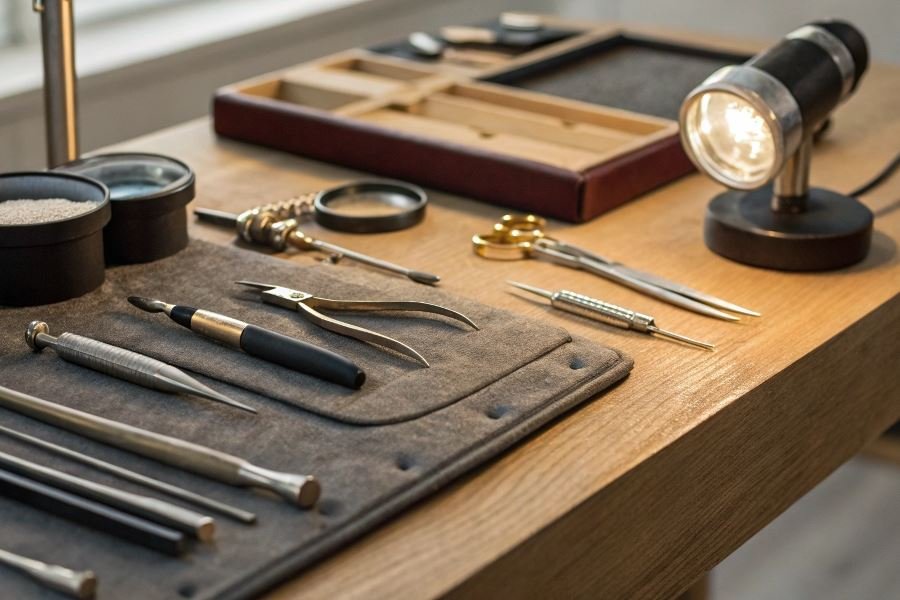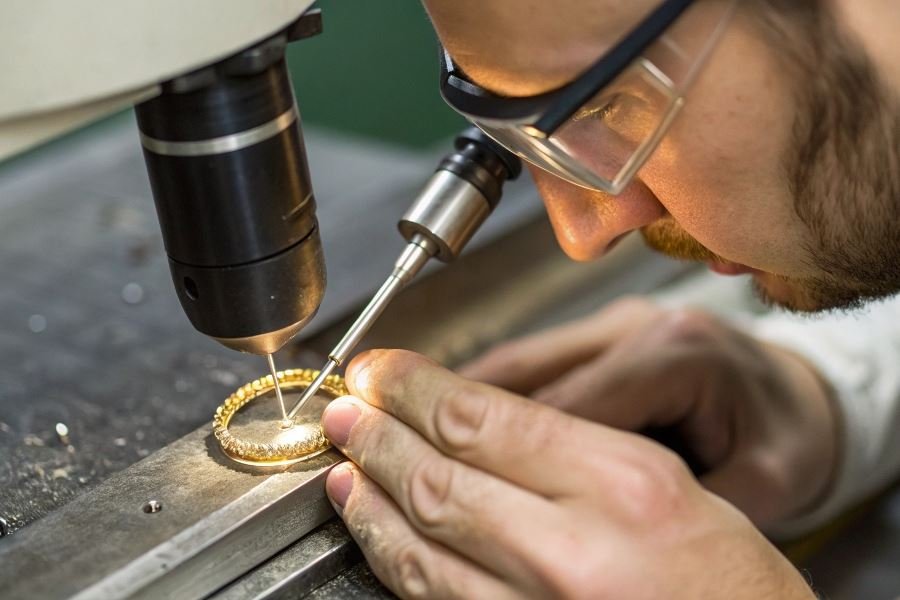
What if I told you that a technology once reserved for aerospace engineering now sits at the heart of fine jewelry creation? The journey from traditional soldering to precision laser welding represents one of the most significant technological leaps in jewelry craftsmanship of the past century.
Before the 1990s, jewelers relied almost exclusively on torch soldering—a technique dating back thousands of years. While effective, it demanded extraordinary skill and often resulted in visible repair lines and heat-affected zones that could damage gemstones. The introduction of laser welding machines in jewelry workshops changed everything, offering unprecedented precision, minimal heat spread, and the ability to work mere millimeters from heat-sensitive stones.
From ancient craft to modern precision
The evolution of jewelry repair techniques tells a fascinating story of human ingenuity. Ancient Egyptians and Romans used primitive soldering methods with charcoal fires, while medieval craftsmen refined these techniques using foot-powered bellows. The industrial revolution brought gas torches, but the fundamental approach remained unchanged for centuries—until laser technology arrived.
The laser welding advantage
Laser welding fundamentally transformed what’s possible in jewelry creation and repair:
- Precision control: Focused energy allows for work on pieces as thin as 0.1mm
- Minimal heat spread: Protects delicate gemstones and intricate designs
- Material versatility: Works with gold, platinum, silver, and even titanium
- Invisible repairs: Creates seamless joins virtually undetectable to the naked eye
Choosing your perfect machine
When selecting a laser welding system, jewelers must consider power output (typically 60-200W), pulse shaping capabilities, microscope quality, and ergonomics. The right machine becomes an extension of the craftsperson’s hands—transforming intricate repairs from stressful challenges into satisfying opportunities for precision craftsmanship.
Technical Mastery for Jewelry Laser Welding
When evaluating laser welding machines for jewelers, the technical specifications make all the difference between amateur repairs and professional masterpieces. The right machine transforms intricate jewelry work from challenging to effortless, while the wrong choice leads to frustration and wasted materials. Let’s dive into the critical technical factors that separate exceptional laser welders from mediocre ones.
Power Output and Pulse Control
The heart of any laser welding system lies in its power capabilities. Modern jewelry laser welders typically range from 60W to 200W, with higher-end models offering greater versatility. What truly matters isn’t just raw power, but how precisely that power can be controlled.
When selecting criteria for laser welding machines for jewelers, pulse duration becomes equally important as power output. Most quality systems offer pulse durations between 0.5ms to 20ms. Shorter pulses (0.5-2ms) excel at delicate work on thin materials and near gemstones, while longer pulses (5-20ms) provide deeper penetration for structural repairs and working with metals like platinum.
Application-specific requirements:
| Jewelry Application | Recommended Power | Ideal Pulse Duration | Notes |
|---|---|---|---|
| Fine filigree work | 60-80W | 0.5-1.5ms | Requires minimal heat spread |
| Stone-in-place repairs | 80-120W | 0.5-2ms | Precision control essential |
| Platinum welding | 150-200W | 5-15ms | Needs higher energy for proper fusion |
| Production joining | 120-180W | 2-10ms | Balance between speed and quality |
Spot Size Precision and Control
The ability to precisely control spot size determines whether you’re performing surgical-grade welds or blunt-force repairs. Premium machines like the PUK 5.1 offer spot sizes as small as 0.2mm, while entry-level systems might bottom out at 0.5mm.
What separates exceptional machines is not just minimum spot size, but the granularity of adjustment between sizes. Look for systems offering at least 10 distinct spot size settings rather than just 3-5 presets.
Advanced spot control features to consider:
- Dynamic spot shaping technology that adjusts energy distribution within the spot
- Ability to create oval spots for seam welding applications
- Spot size memory settings for quick switching between common applications
- Automatic spot size recommendations based on material selection
The difference between 0.1mm increments versus 0.3mm increments in spot size adjustment can mean the difference between saving or scrapping a $5,000 custom piece.
Microscope and Viewing System Quality
Even perfect laser parameters become useless without proper visualization. The microscope system is where many jewelers make costly compromises.
Top-tier viewing systems provide:
- Magnification range of 10x-20x with smooth adjustment
- LED illumination with color temperature control (3000K-6500K)
- Ergonomic positioning with adjustable eye relief
- Cross-hair targeting for precise spot placement
- LCD displays showing real-time parameter feedback within the viewing field
The Orotig Vision series exemplifies excellence in viewing systems with their stereoscopic microscopes offering shadow-free illumination and exceptional depth perception.
Remember that you’ll spend hours looking through this microscope—eye strain and poor visibility directly impact both productivity and quality. The viewing system should provide crystal-clear optics with minimal distortion at the edges, allowing you to work comfortably for extended periods.
When evaluating microscope quality, check for chromatic aberration at the edges and ensure the working distance provides enough room for your hands to manipulate pieces comfortably without bumping the objective lens.
The Real-World Practicalities of Laser Welding Equipment
When investing in laser welding technology for jewelry production, the specifications on paper only tell half the story. The practical considerations—from where you’ll place the machine to how much ongoing maintenance it requires—often determine whether your investment becomes a workshop hero or an expensive paperweight.
Space planning and ergonomic considerations
Laser welding machines vary dramatically in their footprint requirements. Compact desktop models like the PUK 5.1 require as little as 2 square feet of bench space, while comprehensive systems such as the Rofin Performance may demand up to 15 square feet plus adequate clearance for ventilation and operator movement.
Beyond mere dimensions, consider these workspace factors:
- Ventilation requirements: Most systems need dedicated exhaust systems to remove potentially harmful fumes
- Power supply: Many professional-grade machines require 220V connections rather than standard 110V outlets
- Lighting conditions: Optimal operation often requires controlled lighting to prevent interference with the laser viewing system
The ergonomics of daily operation matter tremendously. The viewing system’s quality directly impacts operator comfort during long sessions. Microscope eyepieces positioned at uncomfortable heights lead to neck strain, while poorly designed hand controls cause wrist fatigue.
The most powerful laser welding machine becomes worthless if your craftspeople avoid using it because it causes physical discomfort.
Maintenance realities and true operational costs
The sticker price represents only the beginning of your investment. Annual maintenance costs typically range from 5-15% of the initial purchase price, depending on usage intensity and machine complexity.
Common maintenance requirements include:
| Maintenance Task | Typical Frequency | Approximate Cost |
|---|---|---|
| Lamp replacement | 100-300 hours | 400−1,200 |
| Filter changes | Monthly/quarterly | 50−200 each |
| Calibration | Annually | 500−2,000 |
| Software updates | As released | 0−500 |
Beyond scheduled maintenance, consider consumables like shielding gas (typically argon), which can add 30−100 monthly depending on usage patterns. Power consumption varies widely—from 1kW for entry-level machines to 5kW or more for industrial systems—translating to meaningful differences in utility costs.
The human element: training and skill development
The learning curve for laser welding technology varies dramatically based on both the machine’s interface design and the operator’s existing skills. Most manufacturers offer initial training packages ranging from basic 2-hour orientations to comprehensive 3-day workshops.
Typical skill development timelines:
- Basic operational proficiency: 1-2 weeks
- Confident handling of routine repairs: 1-2 months
- Advanced techniques mastery: 6-12 months
Manufacturers like Orotig and LaserStar offer ongoing education through webinars and advanced workshops, which can significantly accelerate skill development. Some even provide libraries of technique videos specific to their equipment.
Consider whether your team will need dedicated training time away from production, potentially creating temporary workflow disruptions. The most successful implementations typically involve designating a “champion user” who receives comprehensive training and then becomes the in-house expert for other staff members.
Remember that the most sophisticated machine offers little value without operators skilled enough to leverage its capabilities. The investment in human skill development often yields greater returns than purchasing marginally more powerful equipment.
Discover the top laser welding machines for jewelry professionals with our comprehensive selection guide. Learn essential technical criteria and practical considerations to find the perfect equipment for your jewelry workshop.
Discover the top laser welding machines for jewelry professionals with our comprehensive selection guide. Learn essential technical criteria and practical considerations to find the perfect equipment for your jewelry workshop.