
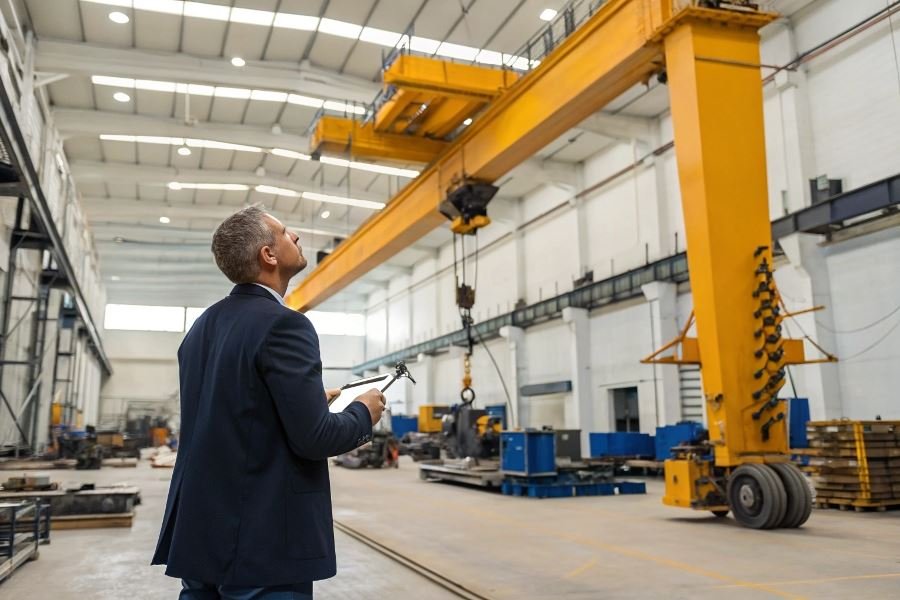
Ever wonder why some construction companies replace their cranes every few years while others maintain the same equipment for decades? The difference isn’t luck—it’s service strategy.
When investing in lifting equipment, what you don’t see on the price tag often determines the true cost of ownership. A properly serviced 10-ton overhead crane can remain operational for 25+ years, while neglected equipment might fail catastrophically within 5—potentially causing injuries, project delays, and regulatory penalties that dwarf the initial purchase price.
The lifting equipment market has evolved dramatically, with manufacturers offering increasingly sophisticated service packages alongside their hardware. Today’s smart buyers recognize that maintenance accessibility, parts availability, and service network reliability are as crucial as lifting capacity or power specifications.
The service-purchase connection is undeniable: every decision made during procurement directly impacts future maintenance requirements. Choosing equipment with proprietary components might save $5,000 upfront but could cost $20,000 more in specialized service over the equipment’s lifespan. Similarly, opting for a model with remote diagnostic capabilities might add to initial costs but reduce downtime by up to 60% through predictive maintenance.
“The wisest investment isn’t always the cheapest upfront. It’s the one with the most transparent, accessible service pathway.”
Understanding this relationship between purchase decisions and long-term serviceability isn’t just good business—it’s essential protection for both your investment and the people who depend on your equipment’s safe operation every day.
The Hidden Costs of Lifting Equipment Service
When investing in lifting equipment, the purchase price is just the tip of the iceberg. Smart buyers know that service of lifting equipment: what to pay attention to when buying can make the difference between a profitable investment and a costly mistake. The long-term operational success of your crane, hoist, or lift depends heavily on the service infrastructure supporting it.
Manufacturer Service Networks That Won’t Let You Down
The strength of a manufacturer’s service network should be a deciding factor in your equipment purchase. Top-tier manufacturers like Konecranes and Manitowoc maintain extensive service networks across North America, ensuring technicians can reach your site within 24-48 hours.
What separates exceptional service networks from mediocre ones?
- Geographic coverage – How many service centers are within 100 miles of your operation?
- Technician certification levels – Are they factory-trained or third-party certified?
- Response time guarantees – The best providers offer contractual response times
Warranty coverage varies dramatically between manufacturers. While standard warranties typically cover 12 months for parts and labor, premium manufacturers offer tiered warranty options extending up to 5 years on structural components.
“The difference between a 24-hour and 72-hour service response time can cost your operation thousands in downtime. This isn’t a place to compromise.”
Spare Parts: The Lifeline of Your Equipment
Nothing cripples operations faster than waiting weeks for a critical part. Before purchasing, investigate:
| Parts Factor | Industry Leader | Industry Average | Red Flag |
|---|---|---|---|
| Parts stocking locations | Multiple regional warehouses | Central warehouse only | International shipping only |
| Critical parts availability | Same/next day | 2-5 business days | 1-3 weeks |
| Parts price transparency | Published price lists | Quote-based | Variable pricing |
Liebherr and Terex maintain impressive parts inventories with 95%+ fill rates for common components. Ask potential suppliers for their parts fill rate statistics and average delivery times for both common and specialized components.
Lifecycle Maintenance: Calculating the True Cost
The most overlooked aspect of equipment acquisition is the total maintenance cost over the equipment’s lifecycle. Sophisticated buyers calculate Total Cost of Ownership (TCO) rather than focusing solely on purchase price.
Service intervals vary significantly between manufacturers and models. Premium equipment might command higher upfront costs but require maintenance every 500 operating hours, while budget alternatives might need attention every 250 hours.
Consider these lifecycle factors:
- Frequency of required service interventions
- Labor hours per service event
- Consumable parts costs (filters, fluids, wear items)
- Major component replacement intervals
JLG publishes detailed maintenance schedules with estimated costs, allowing buyers to project expenses over 5-10 year periods. This transparency should be expected from any quality manufacturer.
The most successful equipment owners develop relationships with service providers before problems arise. By thoroughly evaluating service networks, parts availability, and lifecycle maintenance costs, you’ll make an investment that delivers reliability when it matters most.
The True Cost Equation of Lifting Equipment
When investing in lifting equipment, the sticker price is just the tip of the iceberg. Smart buyers know that service considerations can make the difference between a bargain and a budget-draining mistake. Let’s dive into the strategic approach that separates seasoned professionals from novices in the lifting equipment marketplace.
Beyond the Price Tag
The initial purchase price of lifting equipment often represents just 20-30% of its total lifetime cost. The remaining 70-80% comes from maintenance, repairs, downtime, and operational expenses. This reality demands a more sophisticated calculation when evaluating options.
A Caterpillar forklift might command a 15% premium over competitors, but its superior service network and parts availability can reduce downtime by up to 40% over the equipment’s lifespan. Similarly, a Konecranes overhead crane system might require a larger upfront investment but delivers documented 22% lower maintenance costs over a 10-year period.
The smart money looks at total cost of ownership (TCO), not just acquisition price. This means factoring in:
- Scheduled maintenance costs
- Parts availability and pricing
- Downtime frequency and duration
- Service technician response times
- Training requirements for operators
- Energy efficiency during operation
Your Essential Service Evaluation Checklist
Before signing any purchase agreement, arm yourself with this comprehensive service evaluation framework:
| Service Factor | Key Questions | Impact on Value |
|---|---|---|
| Service Network | How many certified technicians within 50 miles? | Directly affects downtime duration |
| Parts Inventory | Are critical components stocked locally? | Can mean hours vs. weeks of downtime |
| Service Agreements | What preventative maintenance is included? | Predictable costs vs. surprise expenses |
| Technical Support | Is 24/7 phone support available? | Critical for emergency troubleshooting |
| Warranty Terms | What’s covered and for how long? | Reflects manufacturer confidence |
| Training Options | Is operator training included? | Prevents misuse and extends equipment life |
This checklist transforms vague service promises into quantifiable metrics. When a salesperson claims “excellent service,” respond with “What’s your average response time for emergency calls?” The specificity of their answer tells you everything.
The Long Game Advantage
Prioritizing service quality in your purchase decision creates a cascade of benefits that compound over time:
Extended equipment lifespan – Well-maintained lifting equipment routinely exceeds expected service life by 30-40%. A JLG boom lift with proper service can deliver 12+ years of reliable operation versus the industry average of 8-10 years.
Improved safety profile – Equipment serviced according to manufacturer specifications experiences 60% fewer safety incidents than poorly maintained alternatives. This translates directly to reduced liability and insurance costs.
Higher resale value – Comprehensive service records can increase resale value by up to 25%. A Yale forklift with documented maintenance history commands significantly higher prices on the secondary market.
The most successful equipment owners understand that service isn’t an expense—it’s an investment with measurable returns. By shifting perspective from acquisition cost to lifecycle performance, you transform a transactional purchase into a strategic asset that delivers value year after year.
Discover essential service factors for lifting equipment purchases that ensure safety, longevity, and cost-effectiveness. Learn how to evaluate warranty coverage, parts availability, and maintenance costs to make smarter investment decisions.
Discover essential service factors for lifting equipment purchases that ensure safety, longevity, and cost-effectiveness. Learn how to evaluate warranty coverage, parts availability, and maintenance costs to make smarter investment decisions.


