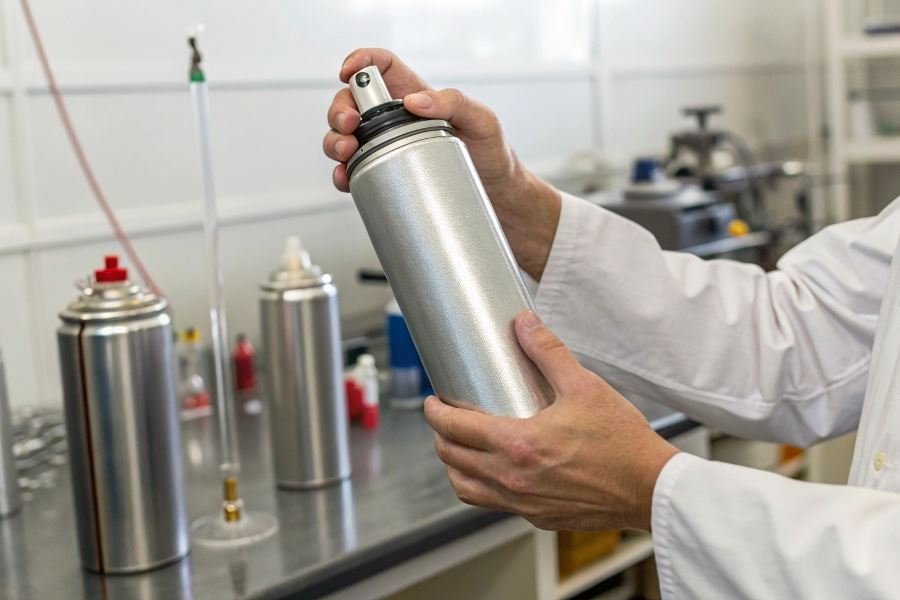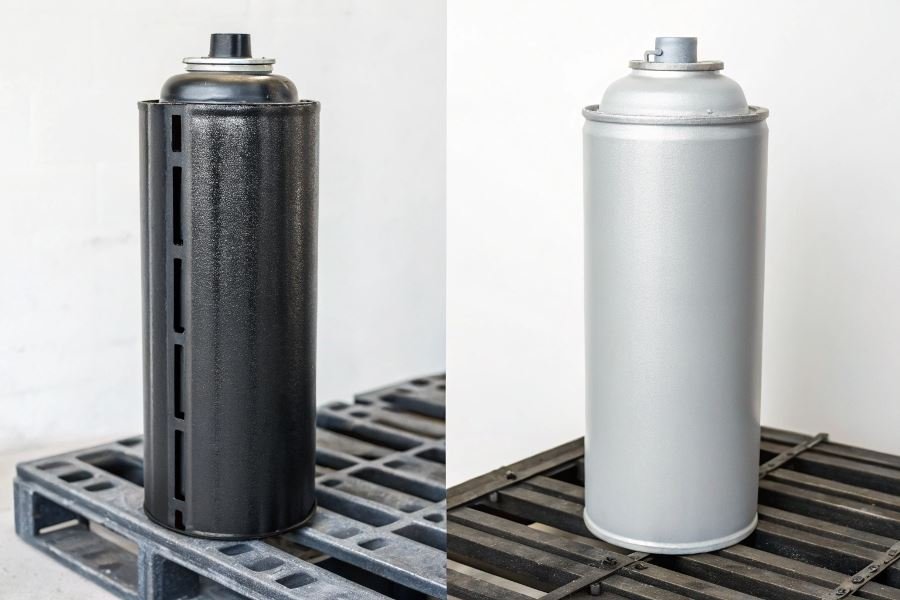
Did you know that the aerosol can you just used to spray your deodorant has a lineage dating back to World War II? The technology that delivers everything from whipped cream to spray paint has undergone a fascinating transformation, with materials science playing the starring role in this industrial drama.
The journey of aerosol containers began in earnest when American inventor Erik Rotheim patented the first aerosol can valve in 1927. However, it wasn’t until the 1940s that the technology gained significant traction, when the U.S. government developed aerosol cans to dispense insecticide to soldiers fighting in mosquito-infested areas. These pioneering containers were exclusively metal—primarily tin-plated steel, later aluminum—and dominated the market for decades.
Fast forward to the 1990s, and plastic aerosol containers emerged as viable alternatives, challenging metal’s monopoly. Today, the global aerosol packaging market exceeds $11 billion, with metal containers still commanding approximately 75% of market share, though plastic options are gaining ground at an impressive rate of 4.5% annually.
Material matters: The decision drivers
When manufacturers choose between metal and plastic aerosol packaging, three critical factors typically guide their decision:
- Product compatibility – Does your formula contain corrosive ingredients or require pressure resistance?
- Environmental impact – Recyclability, carbon footprint, and end-of-life considerations
- Cost efficiency – Not just production expenses, but transportation and storage implications
The metal vs. plastic decision isn’t merely technical—it’s increasingly strategic. Aluminum offers unparalleled barrier properties and pressure resistance, while advanced polymers provide design flexibility and potential weight reduction of up to 30%, translating to significant shipping cost savings.
As sustainability concerns intensify, both materials are evolving rapidly, with innovations in recycled content and monomaterial designs reshaping the competitive landscape of aerosol packaging.
The Ultimate Showdown: Metal vs Plastic Aerosol Cans
Built to Last or Built for Change
When examining the structural integrity of aerosol packaging options, metal cans clearly dominate in pressure resistance. Aluminum and tinplate containers withstand internal pressures up to 180 psi, while most plastic alternatives max out around 60-70 psi. This fundamental difference explains why products requiring higher propellant concentrations still predominantly use metal containers.
The comparison of metal and plastic aerosol cans reveals fascinating engineering tradeoffs that impact everything from shelf life to user experience. Metal cans offer superior puncture resistance—a critical factor for products with extended shelf lives. Aluminum containers, in particular, demonstrate remarkable corrosion resistance without additional internal coatings, whereas tinplate requires protective lacquers to prevent product interaction.
Plastic aerosol containers bring their own advantages to the table. Their impact resistance significantly reduces denting issues during transportation and handling. Most plastic aerosol containers can withstand drops from 4-5 feet onto hard surfaces without compromising functionality, a test many metal alternatives fail. Additionally, plastic’s transparency allows consumers to monitor product levels—an unexpectedly important feature for premium products.
Environmental Footprint Factors
The sustainability equation isn’t as straightforward as many assume. While metal cans boast impressive recycling rates (approximately 67% for aluminum aerosols in the United States), their production carries a heavier initial carbon footprint.
| Container Type | Recycling Rate | Energy to Produce | CO₂ Emissions (per 1000 units) |
|---|---|---|---|
| Aluminum | 67% | High | 320 kg |
| Tinplate | 71% | Medium-High | 290 kg |
| Plastic (PET) | 29% | Low | 180 kg |
| Plastic (HDPE) | 31% | Low | 165 kg |
Plastic aerosols typically generate lower emissions during manufacturing but face significant end-of-life challenges. The complex multi-layer construction of many plastic aerosols (combining PET, HDPE, and barrier materials) complicates recycling efforts. However, recent innovations from companies like Aptar have introduced mono-material plastic aerosols specifically designed for recycling streams.
The Bottom Line: Costs and Manufacturing Realities
Manufacturing economics heavily influence packaging decisions. Metal aerosol production requires substantial capital investment—a typical high-speed line costs between $8-12 million and demands specialized expertise. The aluminum commodity market’s volatility also introduces pricing uncertainties, with raw material costs fluctuating up to 35% annually.
Plastic aerosol manufacturing offers lower entry barriers. Production equipment typically runs $3-5 million for comparable output, and the extrusion blow-molding process allows for greater design flexibility. This cost advantage translates to approximately 15-20% lower unit costs for plastic containers in most size categories.
The operational efficiency differences are equally significant. Metal can production lines operate at speeds up to 600 units per minute but require lengthy changeover times between product runs. Plastic manufacturing achieves lower speeds (typically 250-300 units per minute) but enables rapid format changes, making it ideal for smaller production batches and specialty products.
For brands balancing performance requirements, sustainability goals, and economic realities, the metal-versus-plastic decision increasingly depends on specific product needs rather than tradition alone. The packaging landscape continues evolving as both materials advance through ongoing innovation.
Making the Right Choice: Metal vs Plastic Aerosol Cans
Industry Applications That Drive Material Selection
The battle between metal and plastic aerosol containers isn’t just academic—it’s reshaping entire industries. In the personal care sector, aluminum cans dominate premium hairsprays and deodorants where brand perception matters tremendously. Meanwhile, pharmaceutical companies increasingly favor plastic for medical sprays, with Aptar Pharma reporting 37% growth in plastic aerosol adoption for respiratory medications since 2020.
Food-grade applications reveal another fascinating divide. Metal cans excel for products requiring pressure resistance above 140 psi, while plastic containers have captured 62% of the whipped cream market where lightweight dispensing improves user experience.
Industry best practices have evolved dramatically. Automotive manufacturers now predominantly select metal for brake cleaners and lubricants where chemical resistance is non-negotiable. Conversely, household cleaning brands like SC Johnson have transitioned 40% of their aerosol portfolio to plastic, citing reduced shipping costs and carbon footprint.
Tomorrow’s Aerosol Technology
The innovation pipeline for aerosol materials is bursting with potential. Biodegradable plastic compounds derived from corn starch are projected to capture 15% of the market by 2028, addressing growing sustainability concerns. Meanwhile, ultra-thin aluminum technology has reduced metal can wall thickness by 30% in the past decade, narrowing plastic’s weight advantage.
Smart packaging integration is transforming both materials. Metal cans with NFC chips embedded in their structure allow product authentication and consumer engagement, while transparent plastic aerosols with LED indicators are revolutionizing the way consumers monitor product levels.
The regulatory landscape is equally dynamic. The EPA’s stricter VOC emissions standards are accelerating the shift toward bag-on-valve systems compatible with both materials, though plastic currently offers more design flexibility for these systems.
Decision Framework for Material Selection
When selecting between metal and plastic aerosol containers, consider this comprehensive decision matrix:
| Factor | Metal Advantage | Plastic Advantage |
|---|---|---|
| Pressure Tolerance | ✓ (Up to 180 psi) | Limited (Max 110 psi) |
| Chemical Compatibility | ✓ (Broader range) | Selective compatibility |
| Recyclability | ✓ (95% recovery rate) | Improving (Currently 47%) |
| Weight | Heavier | ✓ (30-40% lighter) |
| Design Flexibility | Limited shapes | ✓ (Virtually unlimited) |
| Production Cost | Higher for small runs | ✓ (Lower tooling costs) |
| Consumer Perception | ✓ (Premium feel) | Modern, lightweight |
Budget considerations must extend beyond unit costs. While plastic molds typically cost $25,000-45,000 versus $75,000-120,000 for metal tooling, the per-unit economics favor metal at very high volumes due to faster production cycles.
The decision ultimately hinges on your specific product requirements. For products requiring premium positioning, chemical resistance, and high pressure, metal remains the gold standard. For applications where weight, design flexibility, and cost efficiency drive success, plastic delivers compelling advantages.
The most successful brands are increasingly adopting hybrid approaches—using metal for premium lines and plastic for value offerings, creating material diversity that optimizes both performance and profitability across their product portfolio.
Discover the key differences between metal and plastic aerosol cans in terms of durability, environmental impact, and cost-effectiveness. Learn which option offers better sustainability and performance for specific industry applications.
Discover the key differences between metal and plastic aerosol cans in terms of durability, environmental impact, and cost-effectiveness. Learn which option offers better sustainability and performance for specific industry applications.