Ever watched molten metal splash at 2,500°F? In metalworking environments, the right protective gear isn’t just a recommendation—it’s the difference between going home safely and a trip to the emergency room.
The protective barrier between you and danger stands as the unsung hero in metalworking shops across America. When selecting aprons for metalworking applications, professionals must navigate a complex landscape of materials, standards, and practical considerations that directly impact worker safety and productivity.
The foundation of metalworking safety
The Occupational Safety and Health Administration (OSHA) reports that over 500,000 workers in metal manufacturing face daily exposure to hazards including molten metal splash, sparks, and sharp edges. Quality protective aprons serve as the first line of defense against these threats.
“The right apron doesn’t just protect—it provides confidence that allows craftsmen to focus on precision rather than personal safety concerns.” — American Welding Society
Navigating industry standards
Metalworking aprons must comply with specific standards including:
- ASTM F2302: Testing for flame resistance
- ANSI/ISEA 107: High-visibility safety apparel standards
- EN ISO 11611: Protection for welding and allied processes
These certifications aren’t just bureaucratic checkmarks—they represent rigorous testing under conditions that simulate real-world hazards.
Essential evaluation criteria
When assessing metalworking aprons, consider these critical factors:
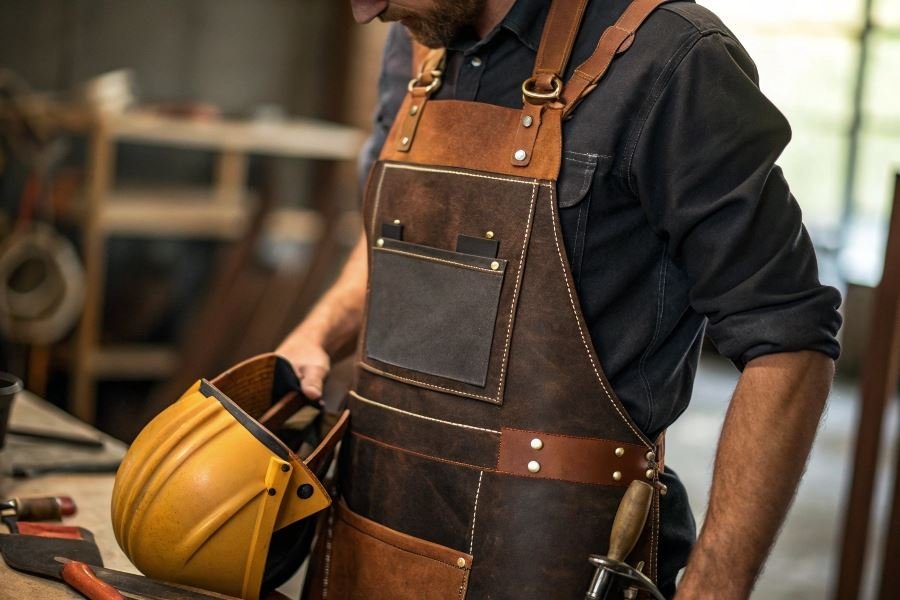
- Material composition – Leather provides excellent heat resistance while Kevlar offers superior cut protection
- Coverage area – Full-torso protection versus specialized coverage
- Heat resistance rating – Measured in calories per square centimeter
- Mobility impact – Protection balanced with freedom of movement
- Durability under repeated exposure – Cost-effectiveness over time
The ideal apron balances these factors against your specific metalworking environment, creating protection that feels like a natural extension of the craftsman’s skill.
Material Matters: Engineering the Perfect Metalworking Apron
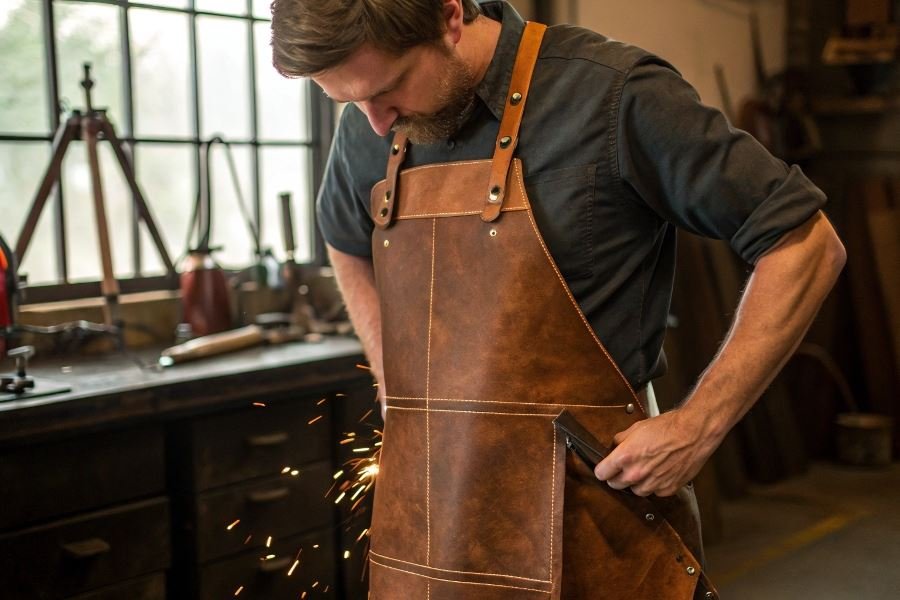
When molten metal sprays at 2,500°F or razor-sharp shavings fly across the shop floor, your apron isn’t just workwear—it’s your primary defense system. The metalworking environment demands protection that meets industrial-grade challenges head-on, where failure isn’t an option.
Selecting appropriate protective gear requires understanding the specific criteria for choosing aprons for the metalworking industry. These criteria aren’t arbitrary—they’re engineered responses to real workplace hazards that professionals face daily. Let’s dive into what separates exceptional metalworking aprons from those that merely look the part.
Heat Resistance: Your First Line of Defense
Heat resistance isn’t just a feature—it’s the foundation of metalworking safety. Top-tier aprons incorporate materials rated for specific temperature thresholds:
- Kevlar-infused fabrics withstand temperatures up to 800°F before degrading
- Carbon fiber composites maintain structural integrity at 1,200°F
- Aluminized materials reflect radiant heat, reducing thermal transfer by up to 95%
The gold standard for flame retardancy is compliance with NFPA 2112 standards, which require materials to self-extinguish within 2 seconds of flame removal. This isn’t just about comfort—it’s about preventing catastrophic burns when seconds matter.
“The difference between a standard cotton apron and a properly rated FR apron is the difference between a minor incident and a trip to the burn unit.” — American Welding Society Safety Committee
Cut and Puncture Resistance: Beyond the Basics
Metalworking environments are battlegrounds of sharp edges and projectiles. Modern protective aprons incorporate:
| Resistance Type | Material Technology | Protection Level |
|---|---|---|
| Cut Resistance | ANSI A5-rated fibers | Withstands 3,500 grams of cutting force |
| Puncture Defense | Layered aramid composites | Stops 22-gauge wire at 60 PSI |
| Abrasion Protection | Silicon carbide-infused weaves | 100,000+ abrasion cycles before failure |
The best aprons feature strategic reinforcement zones—typically across the chest and thighs—where cut-resistant materials are doubled or tripled. DuPont Kevlar and similar aramid fibers provide exceptional protection while maintaining flexibility, unlike the rigid leather aprons of yesteryear.
Construction Quality: The Details That Define Durability
Construction quality separates professional-grade aprons from disposable alternatives. Key indicators include:
Stitching Technology
- Triple-reinforced seams with heat-resistant thread
- Bartack reinforcement at stress points
- Kevlar thread maintaining integrity even when exposed to sparks
Hardware Considerations
- Riveted stress points rather than simple stitching
- High-carbon steel grommets that resist deformation
- Quick-release mechanisms rated for 10,000+ cycles
The apron’s design should incorporate ergonomic load distribution. 3M Speedglas and other industry leaders have pioneered cross-back straps that distribute weight across the shoulders rather than concentrating pressure on the neck, reducing fatigue during 10-hour shifts.
Durability isn’t just about surviving harsh conditions—it’s about maintaining protective properties through hundreds of cleaning cycles. Premium aprons maintain their flame-retardant properties even after 50+ industrial washings, while lesser products may lose critical protection after just 5-10 cycles.
When evaluating construction quality, examine the warranty. Industry leaders back their products with 3-5 year guarantees against manufacturing defects, reflecting confidence in their engineering and materials science.
The right apron isn’t just protective equipment—it’s an investment in safety, productivity, and professional longevity in an industry where protection can never be compromised.
Ergonomic Excellence: The Metalworker’s Guide to Apron Selection
When you’re standing at a lathe for eight hours, the last thing you need is an apron that feels like a medieval suit of armor. Let’s dive into what makes a metalworking apron not just protective, but a genuine pleasure to wear throughout those long shifts.
The comfort factor in all-day protection
The average metalworker spends over 2,000 hours annually wearing protective gear. An apron’s weight distribution becomes critical when metal shavings are flying and you’re focused on precision work rather than shoulder pain.
Material weight matters significantly. Premium leather aprons typically weigh between 2-4 pounds, while advanced synthetic options like Kevlar-reinforced materials can reduce weight by up to 40% while maintaining protection levels.
The difference between a well-designed and poorly designed apron becomes apparent around hour six of your shift.
Top-tier aprons feature:
- Padded shoulder straps that distribute weight across the trapezius muscles
- Cross-back designs that eliminate neck strain
- Strategic reinforcement only where needed to minimize overall weight
- Breathable panels in non-critical areas
Adjustability that adapts to your body
An ill-fitting apron is more than uncomfortable—it’s dangerous. When protection gaps occur or material bunches up near machinery, what should protect can become a hazard.
The adjustability sweet spot includes:
| Adjustment Point | Optimal Range | Safety Benefit |
|---|---|---|
| Waist strap | 30-52 inches | Prevents apron from swinging |
| Shoulder straps | 4-6 inches of adjustment | Keeps coverage consistent |
| Chest width | Side buckles or expandable panels | Accommodates different builds |
Quick-release mechanisms deserve special attention. In emergency situations, the ability to remove your apron in under three seconds could prevent serious injury. Look for magnetic or quick-snap closures from manufacturers like Carhartt or Duluth Trading Co.
The best aprons feel customized to your body without requiring custom pricing.
Maintenance that extends protection lifespan
Even the finest apron becomes a liability when improperly maintained. Metalworking environments introduce unique challenges—from oil saturation to embedded metal particles that can compromise integrity.
Cleaning frequency should correlate with exposure intensity. Heavy machining environments typically require weekly deep cleaning, while lighter fabrication work might need monthly attention.
Maintenance best practices include:
- Removing metal particles with a stiff brush before washing
- Using manufacturer-recommended cleaning products that won’t degrade protective coatings
- Inspecting stitching and stress points after cleaning
- Storing flat or hung properly to prevent creasing in protective layers
The most expensive apron becomes the cheapest when measured by cost-per-wear over its useful life.
For leather aprons, conditioning with appropriate products every 3-4 months extends lifespan by up to 40%. Synthetic options from Tillman and Black Stallion often include specific care instructions that, when followed, can double the effective protection period.
When replacement becomes necessary, look for degradation indicators: compromised stitching, thinning material in high-impact areas, or closures that no longer secure properly. Most quality aprons should provide 2-3 years of daily protection before requiring replacement.
The right apron becomes an investment in both safety and productivity—choose wisely, maintain diligently, and replace promptly when protection can no longer be guaranteed.
Discover the 7 critical criteria for selecting metalworking aprons that maximize safety and comfort. Learn about heat resistance, cut protection, durability, and ergonomic features that protect professionals in high-risk environments.
Discover the 7 critical criteria for selecting metalworking aprons that maximize safety and comfort. Learn about heat resistance, cut protection, durability, and ergonomic features that protect professionals in high-risk environments.