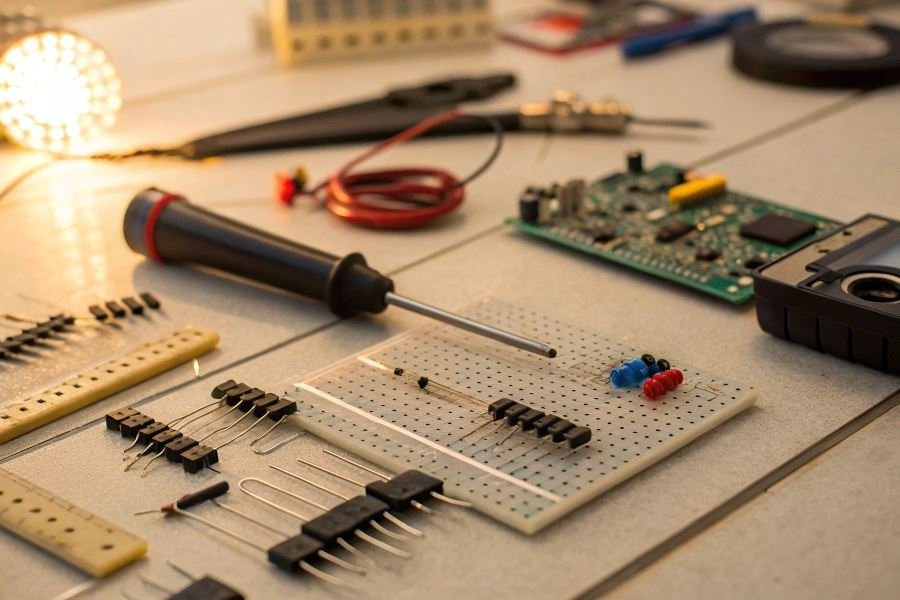
Did you know the smartphone in your pocket contains over 100 billion microscopic transistors? This mind-boggling scale of miniaturization represents just one facet of the revolution quietly transforming everything from medical devices to autonomous vehicles.
Microelectronics has evolved from a specialized field into the backbone of virtually every technological advancement we witness today. The ability to manipulate components measured in micrometers (and increasingly, nanometers) has become a critical skill across industries. Whether you’re prototyping a new IoT device, repairing sophisticated equipment, or exploring electronics as a hobby, having the right tools isn’t just convenient—it’s essential.
The technological microscope: Why microelectronics matters now
The significance of microelectronics continues to accelerate as devices become smaller, more powerful, and more integrated into daily life. From the precision sensors in modern healthcare equipment to the complex circuitry powering renewable energy systems, microelectronic components form the invisible infrastructure of innovation.
From novice to expert: Tool selection across skill levels
Microelectronics work spans a spectrum of complexity. Beginners might start with basic soldering equipment and magnification tools, while professionals require precision instruments like hot air rework stations and microscopes with digital imaging capabilities. The good news? Quality entry-level tools have become increasingly affordable without sacrificing functionality.
Critical factors when building your microelectronics toolkit
When selecting tools, consider these essential factors:
- Precision requirements: The scale of your work dictates tool sensitivity
- Frequency of use: Occasional hobbyists have different needs than daily professionals
- Workspace limitations: Some equipment requires significant space and ventilation
- Budget constraints: Quality matters, but strategic investment beats overspending
- Future applications: Tools that grow with your skills provide better long-term value
The right microelectronics toolkit doesn’t just enable current projects—it expands your capabilities and opens doors to innovations previously beyond reach.
Essential Workbench Arsenal for Microelectronics
The precision world of microelectronics demands specialized tools that balance finesse with functionality. Professional engineers and hobbyists alike recognize that quality equipment makes the difference between frustration and flow when working with intricate circuit boards and microscopic components. The most popular tools for working with microelectronics form a trinity of essential categories: soldering equipment, testing instruments, and visualization aids. Each plays a crucial role in the creation, modification, and repair of electronic devices that power our modern world.
Precision Soldering: Where Art Meets Science
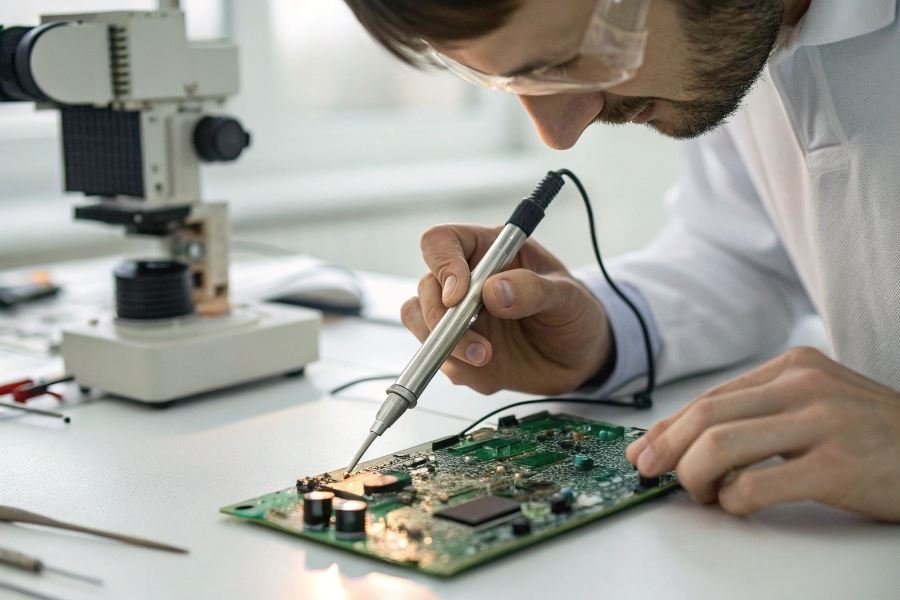
At the heart of any microelectronics workbench sits a quality soldering station. Unlike basic hardware store irons, professional stations like the Hakko FX-951 offer temperature stability within ±1°C, crucial when working with heat-sensitive components. The difference becomes apparent when tackling surface-mount devices (SMDs) that measure mere millimeters.
Temperature-controlled stations have revolutionized precision work, with models from Weller and JBC featuring:
- Digital temperature displays with ±2°C accuracy
- Interchangeable tips for different component sizes
- ESD-safe designs to prevent static damage
- Rapid heating and recovery times
For ultra-fine work, hot air rework stations provide contactless soldering capabilities essential for quad flat packages (QFPs) and ball grid arrays (BGAs). The Quick 861DW exemplifies this category with microprocessor-controlled airflow and temperature settings.
Specialized tweezers and flux applicators complement these primary tools, creating a comprehensive soldering ecosystem that handles components invisible to the naked eye.
Diagnostic Mastery Through Testing Equipment
Identifying faults in microelectronic circuits requires sophisticated testing equipment. The humble multimeter has evolved into an indispensable diagnostic powerhouse.
Modern digital multimeters like the Fluke 87V offer:
| Feature | Benefit for Microelectronics |
|---|---|
| 0.05% basic DC accuracy | Precise voltage measurements for sensitive components |
| μA measurement capability | Testing low-power circuits without disruption |
| Frequency measurement | Analyzing clock signals and oscillators |
| Temperature probes | Monitoring thermal conditions during testing |
Beyond multimeters, oscilloscopes provide visual insight into signal behavior. The Rigol DS1054Z has democratized access to professional-grade scopes with 50MHz bandwidth and deep memory—sufficient for most microelectronics troubleshooting.
For complex integrated circuits, logic analyzers like the Saleae Logic Pro 16 capture and decode digital signals across multiple channels simultaneously, making them invaluable for debugging microcontrollers and communication interfaces.
Seeing the Invisible: Magnification Systems
Working with components measured in fractions of millimeters demands powerful magnification. The difference between success and failure often comes down to visual clarity.
Digital microscopes have transformed the field with:
- Real-time HD video output
- Adjustable magnification from 20x to 300x
- Built-in measurement capabilities
- Screenshot and recording functions
The AmScope SM-4TZ stereo microscope represents the gold standard for serious work, offering true stereoscopic vision with shadow-free illumination and working distances that accommodate soldering under magnification.
For quick inspections, illuminated magnifiers with integrated LED rings provide instant magnification without the setup time of microscopes. The Luxo Wave LED combines 3.5x magnification with shadow-elimination technology ideal for board-level inspection and rework.
These three categories of tools—soldering equipment, testing instruments, and magnification systems—form the foundation of any serious microelectronics workbench. The investment in quality pays dividends through saved time, reduced frustration, and professional-grade results that stand the test of time.
Building Your Microelectronics Toolkit
Smart budget planning for long-term success
Building a comprehensive microelectronics toolkit requires strategic investment rather than impulsive purchasing. Quality tools command premium prices but deliver reliability when working with sensitive components. Start with essentials—a temperature-controlled soldering station (80 − 150), precisiontweezers(15-30), and a digital multimeter ($40-100)—before expanding your collection.
Prioritize versatility over quantity. A high-quality soldering iron with interchangeable tips serves multiple functions, eliminating the need for several specialized tools. Consider the Hakko FX-888D (100)or[WellerWE1010NA](https : //www.weller − tools.com)(120) as foundation investments that professionals still use decades into their careers.
For hobbyists and beginners, allocate 60% of your budget to core tools, 25% to consumables (solder, flux, cleaning supplies), and 15% to safety equipment. Professional setups typically require $500-1,500 initial investment, while enthusiasts can begin with $200-400.
The most expensive tool isn’t always the best—but the cheapest tool is rarely adequate for precision electronics work.
Creating an optimal workspace environment
Your workspace significantly impacts tool effectiveness and project outcomes. Dedicate a minimum 3×4 foot area with these essential elements:
- Proper lighting: A combination of overhead lighting and an adjustable task lamp with 4000-5000K color temperature
- Anti-static protection: ESD mats, wrist straps, and grounded workstations prevent invisible component damage
- Ventilation: Proper airflow systems to remove solder fumes and prevent respiratory irritation
- Organization systems: Component drawers, tool holders, and project trays to maintain workflow efficiency
The ideal workspace incorporates ergonomic considerations—adjustable seating, proper work surface height (28-30 inches), and tool placement within easy reach. A magnification system like the Brightech LightView Pro ($85) reduces eye strain during intricate work.
Mastering your microelectronics arsenal
Owning quality tools only matters when you know how to use them properly. Develop technical proficiency through these learning pathways:
| Resource Type | Recommended Options | Benefits |
|---|---|---|
| Online Courses | SparkFun, Adafruit | Self-paced, project-based learning |
| Technical Manuals | IPC-J-STD-001 standards, tool manufacturer guides | Industry-standard techniques |
| Community Forums | r/AskElectronics, EEVblog Forum | Real-time troubleshooting help |
| In-Person Workshops | Makerspaces, community colleges | Hands-on guidance from experts |
Invest time in mastering fundamental techniques before attempting complex projects. Understanding proper soldering temperature control, component handling, and troubleshooting methodologies prevents costly mistakes and component damage.
Document your learning journey. Keep a project notebook detailing techniques, challenges, and solutions. This creates a personalized reference guide tailored to your specific tools and working style.
Remember that building your microelectronics toolkit is an ongoing process. As your skills evolve, so will your equipment needs. Start with quality fundamentals, create an optimized workspace, and continuously develop your technical expertise—this three-pronged approach ensures you’ll have the right tools, environment, and knowledge to tackle increasingly sophisticated microelectronics projects.
Discover the essential microelectronics tools professionals rely on for precision work. From advanced soldering stations to diagnostic multimeters and magnification systems, learn how to build the perfect toolkit for today's complex electronic projects.
Discover the essential microelectronics tools professionals rely on for precision work. From advanced soldering stations to diagnostic multimeters and magnification systems, learn how to build the perfect toolkit for today's complex electronic projects.