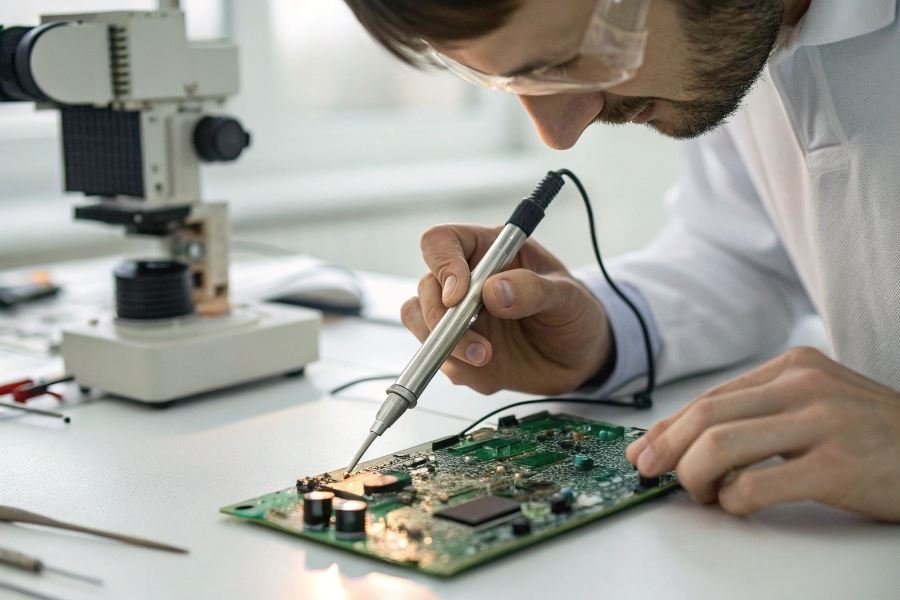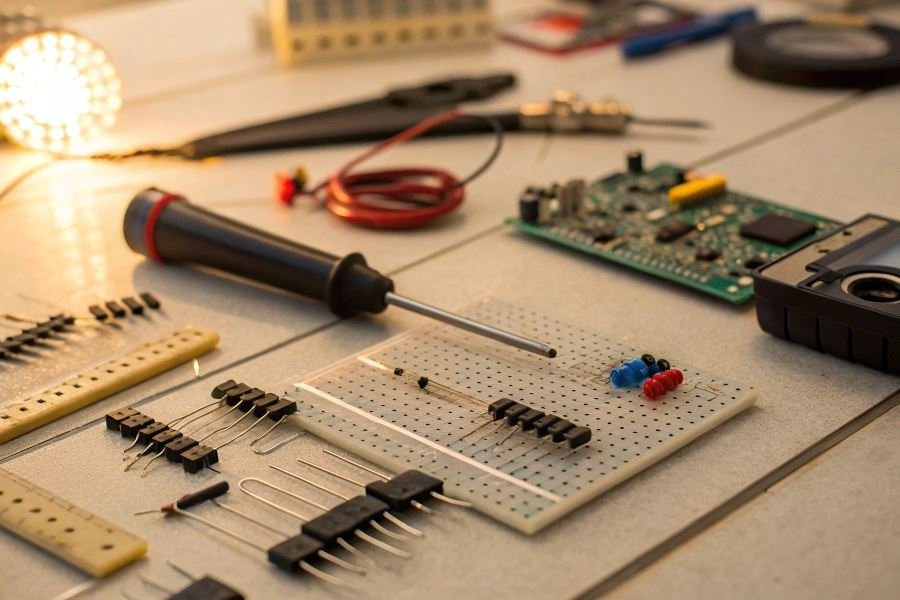
Ever wondered what it takes to capture voices from across the globe with equipment you built yourself? Amateur radio—often called ham radio—opens a world where technology meets adventure, allowing you to communicate across continents without relying on commercial infrastructure.
The foundation of any successful radio amateur journey begins with understanding the right components. A thoughtfully assembled set of radio components serves as both your entry point and your growth platform in this fascinating hobby. Rather than purchasing random parts that catch your eye, strategic selection ensures you’ll build functional circuits while developing crucial skills.
Understanding the fundamentals
Amateur radio operates on designated frequency bands regulated by the FCC, requiring operators to obtain appropriate licensing. Your component selection should align with these regulations while supporting your learning objectives. Most beginners start with simple receiver circuits before advancing to transmitters.
“The components you choose today shape the radio operator you’ll become tomorrow.”
Essential equipment categories
For newcomers, focus on these fundamental categories:
- Basic tools: Soldering iron, wire cutters, multimeter
- Passive components: Resistors, capacitors, inductors in various values
- Active components: Transistors, diodes, integrated circuits
- Connection hardware: Breadboards, jumper wires, connectors
- Power supplies: Batteries or regulated DC power sources
Balancing budget and skill development
Quality matters, but that doesn’t mean spending hundreds of dollars upfront. A starter kit priced between $50-100 typically contains sufficient components for dozens of beginner projects. As your skills advance, invest incrementally in specialized components that align with your developing interests—whether that’s digital modes, antenna design, or vintage radio restoration.
Remember that patience and methodical learning yield better results than acquiring expensive equipment before mastering the basics.
Essential Radio Gear for Your Amateur Radio Journey
Starting your adventure in amateur radio requires thoughtful equipment selection that balances functionality, budget, and growth potential. The necessary set of radio components for a beginner radio amateur doesn’t need to be overwhelming—with smart choices, you can build a capable station that will serve you well for years.
Choosing Your First Transceiver
Your transceiver is the heart of your station, and beginners face a critical decision: handheld or base station?
Handheld transceivers (HTs) offer compelling advantages for newcomers. Models like the Baofeng UV-5R provide dual-band capability (VHF/UHF) at under $50, while the Yaesu FT-60R delivers exceptional reliability at around $150. These portable units require minimal setup—perfect for immediate operation.
Base stations, though pricier, offer expanded capabilities. The ICOM IC-7300 (1, 100)representsanoutstandingentry − levelHFrigwithtouchscreeninterfaceandbuilt − inspectrumscope.Fortighterbudgets, the[YaesuFT − 450D](https : //www.yaesu.com/)(750) provides solid performance across HF bands plus 6 meters.
Key consideration: Handheld units offer mobility and simplicity, while base stations provide greater power, frequency range, and features for long-term growth.
Antenna Systems: Your Signal’s Lifeline
No component impacts your station’s performance more dramatically than your antenna system. Even modest transceivers shine with proper antennas.
For HTs, upgrade from the included “rubber duck” antenna to a:
- ¼-wave whip antenna ($15-25) for 2-3dB gain
- Roll-up J-pole ($30) for portable operations
- Magnetic mount mobile antenna ($35-60) for vehicle use
Base station operators should consider:
| Antenna Type | Typical Cost | Bands | Key Benefits |
|---|---|---|---|
| Dipole | $40-100 | Single/Multi | Simple, effective, DIY-friendly |
| End-fed longwire | $60-150 | Multi | Flexible installation, minimal space |
| Vertical | $150-300 | Multi | Small footprint, omnidirectional |
| Yagi | $200+ | Single | Directional gain, DX capability |
Quality coaxial cable is non-negotiable. RG-8X offers a good balance of performance and cost for most beginners (0.50 − 0.75/foot), whileRG − 213provideslowerlossforlongerruns(1-1.50/foot).
Don’t overlook connectors—PL-259/SO-239 for HF and UHF/N-type for VHF/UHF applications. Invest in proper mounting hardware rated for your antenna’s weight and wind load.
Power Solutions: Keeping You On Air
Reliable power is fundamental to consistent operation. Requirements vary by equipment:
For handhelds:
- Quality rechargeable batteries (spare sets recommended)
- Desktop rapid charger
- AA battery adapter for emergency use
For base stations:
- Dedicated power supply matching your transceiver’s requirements (typically 13.8V DC)
- The Astron RS-35M ($200) provides 35A continuous with analog meters
- The Samlex SEC-1235M ($150) offers 30A in a compact form factor
Backup power options ensure operation during emergencies:
- Deep-cycle lead-acid batteries with appropriate capacity
- LiFePO4 batteries for lighter weight and longer life
- Solar charging systems for extended off-grid operation
Include power distribution panels with proper fusing to protect your investment and ferrite chokes to minimize RF interference in your station.
The thoughtful selection of these core components—transceiver, antenna system, and power solutions—creates a foundation for your amateur radio journey that balances immediate functionality with room for growth as your skills and interests evolve.
Building Your Radio Arsenal: From Starter Kits to Growth Path
Curated Starter Kits Worth Your Investment
For newcomers to the radio hobby, starter kits offer a structured entry point that eliminates guesswork. The ARRL Education & Technology Program Kit provides a comprehensive foundation with pre-selected components that work harmoniously together. At approximately $149, it includes essential resistors, capacitors, transistors, and basic ICs alongside instructional materials specifically designed for beginners.
Another standout option is the Elenco AM/FM Radio Kit, priced around 29.95, whichguidesyouthroughbuildingafunctioningreceiverwhilelearningfundamentalradioprinciples.Forthoseinterestedinsoftware − definedradio, the[RTL − SDRBlogV3StarterKit](https : //www.rtl − sdr.com/)(29.95) offers exceptional value with its dongle, antenna, and adapter accessories.
Component bundles from suppliers like Mouser Electronics and DigiKey offer curated assortments of resistors, capacitors, and semiconductors specifically tailored for radio projects. These typically range from $50-100 and save significant money compared to buying components individually.
The right starter kit isn’t just about components—it’s about building confidence through achievable early successes.
Learning Resources That Accelerate Your Journey
The radio amateur community thrives on knowledge sharing and support. The ARRL Handbook remains the definitive resource for radio fundamentals, updated annually with current technologies and techniques. Online platforms like HamRadioScience offer free tutorials specifically designed for component-level understanding.
YouTube channels have revolutionized learning for beginners. Channels like W2AEW provide detailed explanations of electronic principles with practical demonstrations, while David L. Jones offers component-focused tutorials that demystify radio circuit design.
Community support proves invaluable for troubleshooting and inspiration. The Reddit r/amateurradio community welcomes beginners with dedicated weekly threads for component and circuit questions. Local ham radio clubs often maintain component libraries where members can borrow parts before committing to purchases.
Strategic Upgrade Paths As Your Skills Develop
As your expertise grows, your component collection should evolve strategically. Most enthusiasts progress from passive components to specialized radio ICs like the NE602 mixer and LM386 audio amplifier. These integrated circuits, typically costing $2-5 each, enable more sophisticated receiver and transmitter designs.
| Skill Level | Recommended Component Upgrades | Approximate Cost |
|---|---|---|
| Beginner | Basic passive components, breadboards, multimeter | $75-150 |
| Intermediate | Oscilloscope, signal generator, specialized ICs | $200-500 |
| Advanced | Spectrum analyzer, precision components, SDR platforms | $500+ |
Test equipment represents the most significant upgrade investment. While beginners can start with a basic multimeter, intermediate builders benefit enormously from an entry-level oscilloscope like the Rigol DS1054Z, which transforms your ability to troubleshoot and understand circuit behavior.
Many enthusiasts eventually gravitate toward specialized interests—whether it’s homebrew transceivers, antenna design, or digital modes. Each specialty demands its own component ecosystem. Antenna experimenters invest in analyzers and specialized wire, while digital enthusiasts focus on microcontrollers and interface components.
The most successful radio amateurs build their component collection incrementally, letting each project inform the next purchase rather than accumulating parts without purpose.
Discover the essential radio components every beginner ham operator needs to start their journey. From entry-level transceivers to antenna systems and power supplies, learn how to build your first amateur radio station without breaking the bank.
Discover the essential radio components every beginner ham operator needs to start their journey. From entry-level transceivers to antenna systems and power supplies, learn how to build your first amateur radio station without breaking the bank.