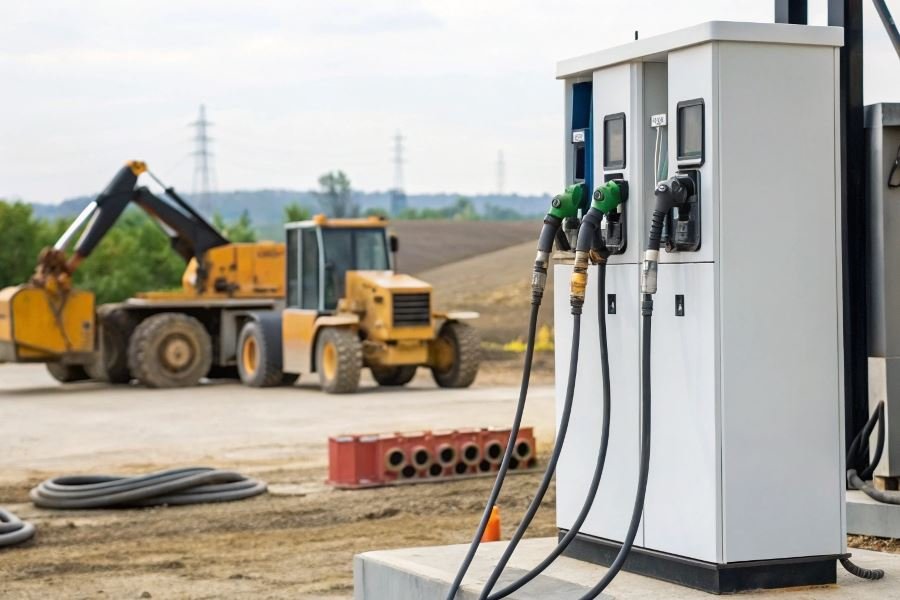
Did you know that a single mobile fueling truck can service up to 100 vehicles in one shift? That’s the equivalent of a small gas station operating without the real estate footprint. This game-changing approach to refueling is transforming how businesses manage their fleets and how consumers think about filling up.
Mobile gas stations—compact, vehicle-mounted fueling systems that bring the pump directly to cars, trucks, and equipment—represent one of the fastest-growing segments in the fuel distribution industry. These nimble operations eliminate the need for drivers to detour to traditional gas stations, saving precious time and reducing emissions from unnecessary travel.
The regulatory framework governing these operations varies significantly across states, with federal oversight from the Department of Transportation, Environmental Protection Agency, and Occupational Safety and Health Administration creating a complex compliance landscape. Mobile fuelers must navigate regulations covering everything from hazardous materials transport to spill prevention and fire safety protocols.
Safety isn’t just a checkbox—it’s the foundation of the entire mobile fueling concept. Without rigorous safety standards and certification, these operations simply couldn’t exist. The industry’s growth depends on maintaining impeccable safety records through:
- UL-certified equipment designed specifically for mobile applications
- Comprehensive operator training and certification
- Advanced spill containment systems
- Real-time monitoring technology
For fleet managers and businesses considering mobile fueling solutions, understanding these safety requirements isn’t just about compliance—it’s about protecting assets, personnel, and the environment while embracing a more efficient approach to energy distribution.
Navigating the Regulatory Landscape for Fuel on Wheels
Federal Standards That Keep Everyone Safe
The mobile fuel industry operates under a complex web of federal regulations designed to protect both operators and the public. The Department of Transportation (DOT) and the Occupational Safety and Health Administration (OSHA) have established comprehensive frameworks that govern every aspect of mobile fuel handling. These regulations aren’t just bureaucratic red tape—they’re life-saving guardrails.
Mobile gas stations: safety requirements and certification represent a specialized field where compliance isn’t optional. The DOT’s Hazardous Materials Regulations (HMR) specifically address the transportation of flammable liquids, requiring specialized containers, proper labeling, and regular inspection protocols. Meanwhile, OSHA’s standards focus on worker safety, mandating proper training, emergency procedures, and protective equipment.
Key federal requirements include:
- DOT 406 specification tankers for fuel transport
- Hazardous materials endorsements for drivers
- Secondary containment systems capable of holding 110% of the largest container’s volume
- Proper grounding and bonding to prevent static electricity discharge
- Emergency shutdown systems accessible from multiple locations
Equipment That Meets the Challenge
The technical specifications for mobile fueling equipment leave no room for compromise. Every component must be engineered specifically for the volatile nature of fuel products.
Dispensing Equipment Requirements
| Component | Specification | Safety Feature |
|---|---|---|
| Hoses | UL-Listed, 350 PSI rating | Breakaway coupling |
| Nozzles | Automatic shutoff | Pressure-sensitive release |
| Pumps | Explosion-proof motors | Thermal overload protection |
| Meters | Weights & Measures certified | Tamper-evident seals |
| Filters | 10-micron particulate | Pressure differential indicators |
The National Fire Protection Association (NFPA) standards, particularly NFPA 30 and NFPA 30A, establish the baseline for equipment design. These standards require vapor recovery systems, proper electrical classification for all components, and redundant safety mechanisms.
The difference between consumer-grade and commercial-grade equipment isn’t just about durability—it’s about preventing catastrophic failures under extreme conditions.
Operational Protocols That Prevent Disasters
Even the best equipment requires proper handling. Operational safety protocols transform good intentions into consistent safety outcomes.
Daily Operational Checklist
- Pre-service inspection of all hoses, connections, and emergency equipment
- Spill kit verification ensuring adequate materials for containment
- Communication systems check to maintain contact with dispatch
- Weather assessment to avoid operations during lightning or severe conditions
- Site evaluation for proper setbacks from buildings, ignition sources, and storm drains
Best practices extend beyond the checklist. Operators must maintain detailed records of all transactions, regular maintenance, and any incidents—no matter how minor. These records aren’t just for regulatory compliance; they provide critical data for continuous improvement.
The most successful mobile fueling operations treat safety not as a cost center but as their primary product.
Training represents perhaps the most critical operational component. Operators need more than basic knowledge—they need scenario-based training that prepares them for real-world emergencies. This includes proper fire extinguisher use, spill containment techniques, and customer safety management.
By adhering to these federal standards, equipment specifications, and operational protocols, mobile fueling operations can deliver convenience without compromising safety—proving that innovation and responsibility can indeed travel together.
Navigating the Certification Maze for Mobile Fueling
The Permit Puzzle
Mobile gas stations can’t simply roll onto a street corner and start pumping fuel. The certification process begins with obtaining the right permits—a complex tapestry of local, state, and federal authorizations. Most jurisdictions require a basic business license, but that’s just the starting line. Fire department permits are non-negotiable, as they verify your operation won’t turn into a rolling hazard. These permits typically examine vehicle specifications, safety equipment, and operational protocols.
The Department of Transportation demands its own set of permits for hazardous materials transportation. Mobile fuelers must secure proper HAZMAT endorsements and vehicle registrations that acknowledge the unique risks of transporting gasoline or diesel.
Environmental agencies add another layer with permits addressing potential spill containment and remediation plans. In California alone, operators must navigate the California Air Resources Board regulations alongside local Air Quality Management District requirements.
The permit acquisition process typically takes 3-6 months and costs between 5, 000−15,000 depending on your location and operation scale.
Industry Standards That Matter
Once permitted, certification standards ensure your operation maintains professional excellence. The National Fire Protection Association’s NFPA 30A serves as the gold standard for mobile fueling operations, detailing everything from equipment specifications to operational safety protocols.
PEI/RP1000 (Recommended Practices for the Installation of Marina Fueling Systems) offers additional guidance for watercraft fueling operations. Meanwhile, UL listings for dispensing equipment provide third-party verification of component safety.
| Certification Body | Focus Area | Renewal Period |
|---|---|---|
| NFPA 30A | Fire safety protocols | 3 years |
| UL Listings | Equipment safety | Annual inspection |
| PCI Compliance | Payment security | Annual |
| EPA Certification | Environmental protection | 2 years |
Compliance verification isn’t a one-time event but an ongoing process. Third-party inspectors regularly evaluate mobile fueling operations, examining everything from hose integrity to emergency shutdown procedures. These inspections often include surprise site visits to ensure daily operations match certification claims.
Staying Certified in a Changing Landscape
Maintaining certification requires vigilance. Most permits require annual renewals with updated documentation and proof of continued compliance. Smart operators maintain digital compliance calendars with 60-day advance warnings for approaching deadlines.
Equipment certification demands regular testing and documentation. Pressure testing of hoses, calibration of meters, and verification of emergency systems must occur on manufacturer-recommended schedules—typically quarterly or semi-annually.
The regulatory landscape shifts constantly, requiring operators to stay informed.
When the Environmental Protection Agency updated spill containment requirements in 2019, mobile fuelers had just 18 months to implement new containment systems. Those who maintained active membership in industry associations like the Petroleum Equipment Institute received early warnings and implementation guidance.
Regulatory changes typically come with 12-24 month implementation windows, but operators who wait until the deadline often face equipment backlogs and rushed installations. Leading companies maintain regulatory monitoring systems, subscribing to industry publications and participating in trade associations that provide advance notice of pending changes.
The certification process may seem daunting, but it creates a framework ensuring mobile fueling remains safe, environmentally responsible, and professionally operated.
Discover comprehensive safety requirements and certification processes for mobile gas stations. Learn federal standards, equipment specifications, and operational protocols essential for compliant mobile fueling operations in today's regulatory landscape.
Discover comprehensive safety requirements and certification processes for mobile gas stations. Learn federal standards, equipment specifications, and operational protocols essential for compliant mobile fueling operations in today's regulatory landscape.