Did you know the average commercial kitchen exhaust system consumes more energy than all refrigeration equipment combined? This staggering reality is transforming how food production facilities approach ventilation design.
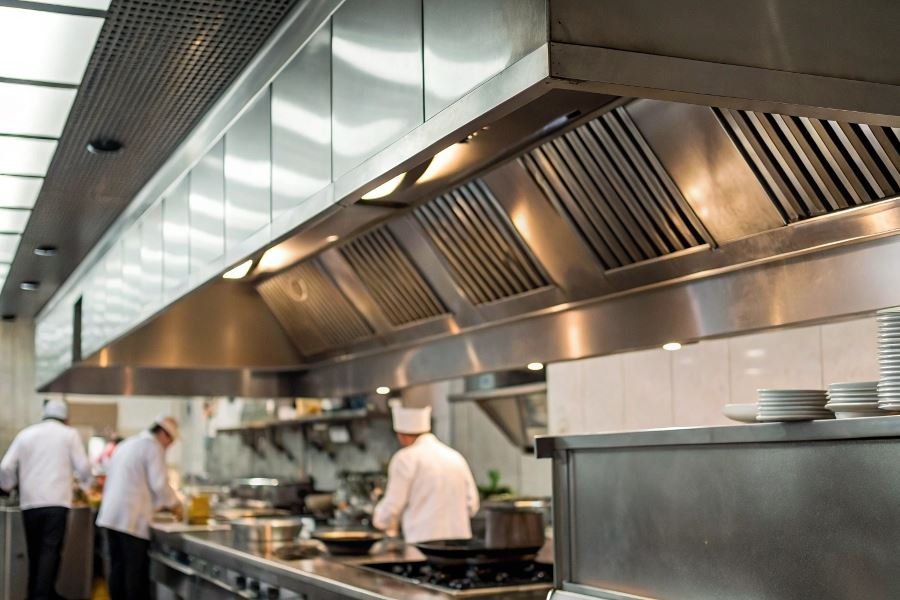
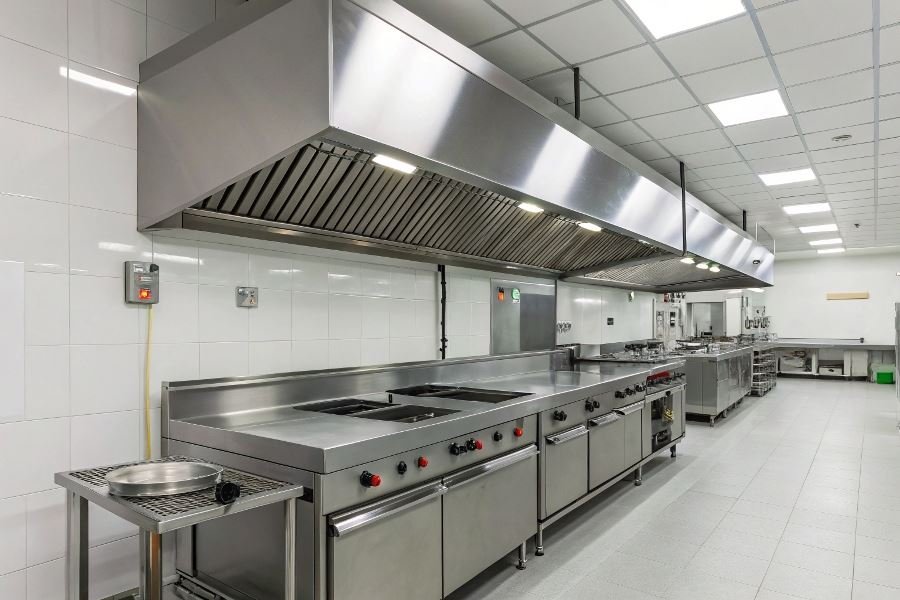
Behind every successful restaurant and food manufacturing facility lies an unsung hero: the exhaust hood system. These critical components do far more than simply remove cooking odors. They extract grease-laden vapors, control indoor air quality, maintain comfortable working temperatures, and prevent dangerous buildup of combustion by-products. Without proper ventilation, commercial kitchens quickly become unbearable—and potentially hazardous—environments.
The energy consumption crisis in traditional systems
Traditional exhaust systems operate on a simple but inefficient principle: extract massive volumes of air regardless of actual cooking activity. This brute-force approach creates a perfect storm of energy waste:
- Heating/cooling losses: Conditioned air gets sucked out and replaced with outside air that must be re-treated
- Constant fan operation: Motors run at full capacity even during low-activity periods
- Oversized equipment: Systems designed for peak loads waste energy during normal operations
The financial impact is substantial. Many food production facilities see ventilation accounting for 25-40% of their total energy bills—a cost that directly impacts bottom lines in an industry with notoriously thin margins.
Navigating the regulatory landscape
The ventilation challenge extends beyond economics. The National Fire Protection Association (NFPA) Standard 96, International Mechanical Code (IMC), and local health department regulations create a complex compliance web. These standards, updated regularly since their inception in the 1960s, establish minimum requirements for fire safety, capture efficiency, and air quality.
The regulatory environment isn’t just about restrictions—it’s increasingly becoming a driver of innovation in energy-efficient exhaust technology.
The Game-Changing Trio of Commercial Kitchen Ventilation
When it comes to commercial kitchens, ventilation systems are the unsung heroes working overtime to maintain air quality while silently impacting your bottom line. The latest energy-efficient models of exhaust hoods for food production are revolutionizing how restaurants, bakeries, and industrial kitchens manage both air quality and energy costs. Let’s dive into the three technologies that are making waves in the industry.
Smart Sensors That Think Before They Vent
Demand-controlled ventilation (DCV) systems represent the intelligence revolution in kitchen exhaust technology. Unlike traditional hoods that run at full capacity regardless of cooking activity, DCV systems use sophisticated sensors to detect heat, steam, and cooking effluents in real-time.
The Melink Intelli-Hood system, for example, employs infrared and temperature sensors that continuously monitor cooking conditions. When activity increases, the system ramps up automatically; when it decreases, the system throttles back. This responsive approach can reduce fan energy usage by up to 80% and significantly extend equipment life.
Key performance metrics:
- Energy savings: 30-50% reduction in fan energy consumption
- Payback period: Typically 12-24 months
- Noise reduction: Up to 50% quieter operation during low-demand periods
Reclaiming What Would Be Wasted
Heat recovery exhaust hoods take energy efficiency to another level by capturing thermal energy that would otherwise disappear into the atmosphere. These systems extract heat from exhaust air and repurpose it for space heating or water preheating.
The Halton Heat Recovery Unit can recapture up to 70% of heat energy from exhaust air. This reclaimed energy can then be channeled back into the building’s HVAC system or water heating, creating a virtuous cycle of energy usage.
The beauty of these systems lies in their passive operation—they require minimal maintenance while delivering consistent energy savings year after year.
| Heat Recovery System | Energy Recapture Rate | Annual Savings Potential | Installation Complexity |
|---|---|---|---|
| Air-to-air exchanger | 40-60% | 3, 000−5,000 | Moderate |
| Water-based recovery | 60-70% | 4, 500−7,000 | Complex |
| Heat pump enhanced | 70-80% | 6, 000−9,000 | High |
The Power of Variable Speed Control
Variable frequency drive (VFD) exhaust systems represent the third pillar of modern energy-efficient ventilation. These systems use advanced motor controllers to modulate fan speeds precisely according to demand, eliminating the energy waste associated with constant-speed operation.
The CaptiveAire VFD package allows for infinitely variable speed control, operating fans at exactly the speed required—no more, no less. This granular control translates to dramatic energy savings, particularly during periods of light cooking activity.
Why VFDs matter:
- Motors running at 80% speed consume approximately 50% less energy
- Soft-start capabilities reduce mechanical stress and extend equipment life
- Integration with building management systems allows for centralized control and monitoring
When properly implemented, these three technologies can work in concert to create a ventilation system that’s not just energy-efficient but also more effective at maintaining air quality. The initial investment may be higher than conventional systems, but the operational savings typically deliver ROI within 2-3 years, with some facilities reporting complete payback in as little as 18 months.
For food production facilities operating at scale, combining these technologies can reduce ventilation-related energy costs by 40-60%, representing tens of thousands of dollars in annual savings while simultaneously improving working conditions and reducing environmental impact.
Turning Investment into Profit with Energy-Efficient Hoods
When facility managers implement energy-efficient exhaust hoods in food production environments, they’re not just installing equipment—they’re making a strategic business decision that affects operational costs for years to come. Let’s dive into the practical aspects of implementation and the compelling financial returns these systems deliver.
Smart installation transforms facility performance
Installing energy-efficient exhaust hoods requires thoughtful planning that begins well before the first mounting bracket goes up. The process typically demands:
- Comprehensive airflow analysis to determine optimal placement
- Structural assessment to ensure proper support systems
- Integration with existing HVAC infrastructure
- Compliance verification with local building and fire codes
Facility integration isn’t just about physical fit—it’s about creating a cohesive system. Modern energy-efficient hoods from manufacturers like Halton and CaptiveAire come equipped with sophisticated sensors that communicate with building management systems, creating a responsive ventilation ecosystem that adjusts in real-time to cooking conditions.
The most successful installations occur when hood systems are treated as part of a holistic kitchen ventilation strategy rather than standalone components.
For retrofit projects, facility managers should anticipate 3-5 days of kitchen downtime—significantly less than the 7-10 days required just a decade ago, thanks to modular designs and pre-fabrication advancements.
Maintenance protocols that protect your investment
Energy-efficient exhaust hoods deliver their promised ROI only when maintained properly. The maintenance equation has fundamentally changed with these advanced systems:
| Maintenance Aspect | Traditional Hoods | Energy-Efficient Models |
|---|---|---|
| Filter cleaning | Weekly | Monthly (self-cleaning options available) |
| System inspection | Quarterly | Semi-annually |
| Sensor calibration | Not applicable | Annually |
| Expected lifespan | 10-15 years | 15-20+ years |
The operational benefits extend beyond energy savings. Facilities using demand-controlled ventilation hoods report:
- Improved kitchen comfort with reduced ambient noise levels
- 40-60% reduction in makeup air requirements, lowering HVAC loads
- Enhanced fire safety through advanced suppression integration
- Extended equipment life due to optimized operating conditions
The numbers that make CFOs smile
The financial story of energy-efficient exhaust hoods is compelling, especially when examining the complete cost picture. Initial investment typically runs 30-40% higher than conventional systems, with premium models from Melink or Greenheck commanding $15,000-25,000 per hood installation.
However, the ROI timeline tells the real story:
- Energy savings of $3,000-5,000 annually per hood in typical commercial kitchens
- Reduced HVAC capacity requirements saving $7,000-10,000 in initial construction costs
- Labor savings of approximately $2,000 annually through reduced maintenance
- Utility rebates often covering 15-30% of initial investment
For a medium-sized food production facility with five hood systems, the math becomes undeniable: complete investment recovery in 2.5-3.5 years, followed by decades of operational savings.
The most sophisticated operations are implementing variable frequency drives (VFDs) with their hood systems, creating dynamic ventilation that responds to actual cooking conditions rather than running at constant speeds. These intelligent systems from Intelli-Hood can reduce fan energy consumption by up to 90% during idle periods.
When evaluating these systems, the question isn’t whether you can afford to implement energy-efficient exhaust hoods—it’s whether you can afford not to.
Discover the top 3 energy-efficient exhaust hoods revolutionizing commercial kitchens in 2025. Compare demand-controlled ventilation, heat recovery systems, and VFD technology to reduce energy costs while maintaining optimal ventilation standards.
Discover the top 3 energy-efficient exhaust hoods revolutionizing commercial kitchens in 2025. Compare demand-controlled ventilation, heat recovery systems, and VFD technology to reduce energy costs while maintaining optimal ventilation standards.