Ever wondered why some recordings sound crystal clear with every instrument perfectly defined, while others blur into an indistinct audio soup? The secret often lies not in expensive microphones or vintage preamps, but in a less glamorous hero: the multitrack crossover.
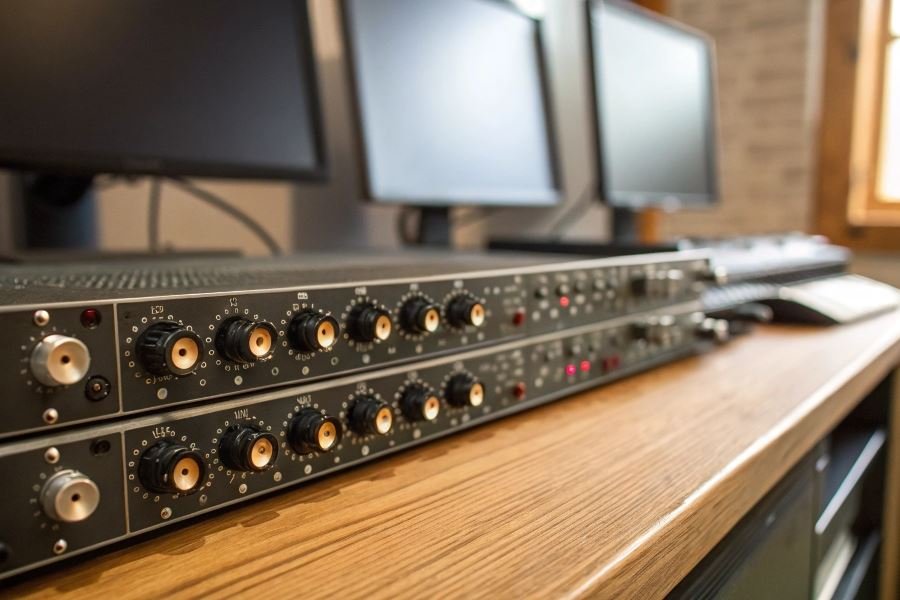
At its core, a multitrack crossover is an audio processing tool that divides sound into separate frequency bands, allowing engineers to route specific frequency ranges to different amplifiers and speakers. Think of it as a sophisticated traffic controller for sound—directing low frequencies one way, mids another, and highs somewhere else entirely. This frequency division creates a foundation for pristine audio reproduction that simply can’t be achieved any other way.
The evolution of this technology tells a fascinating story. In the 1950s, studios relied on simple passive crossovers with limited flexibility. By the 1970s, active crossovers emerged, revolutionizing studio monitoring capabilities. The digital revolution of the 1990s brought programmable DSP-based systems that transformed what engineers could achieve in the mixing environment.
“The difference between good and great sound often comes down to how effectively you manage the frequency spectrum.” — Bob Katz, mastering engineer
Today’s multitrack crossovers don’t just separate frequencies—they fundamentally reshape how engineers approach sound design. By isolating frequency bands, they eliminate phase issues that muddy mixes, prevent frequency masking where instruments compete for the same sonic space, and allow for precise control over dynamics processing.
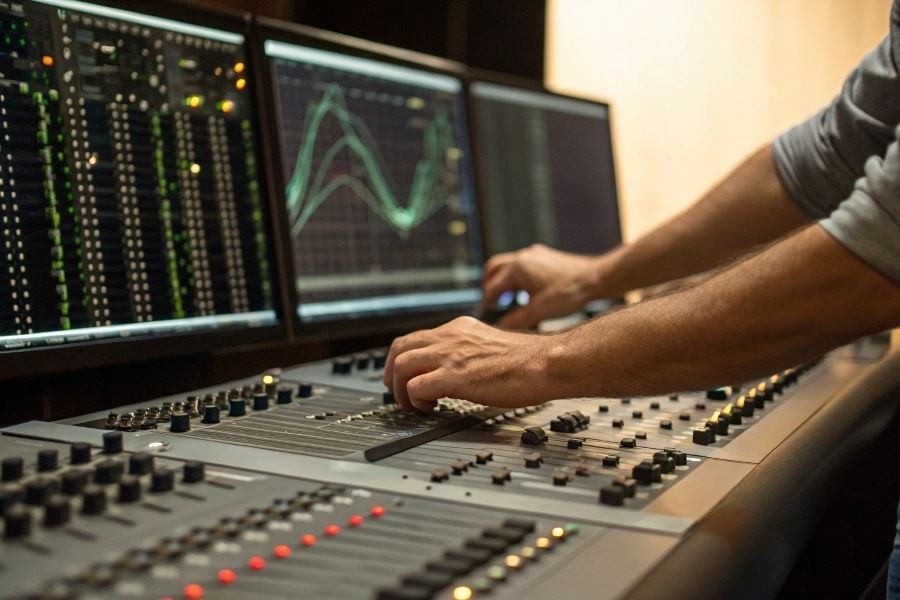
The impact on mixing precision cannot be overstated. When bass frequencies are cleanly separated from mids and highs, engineers can apply compression, EQ, and effects with surgical precision, creating mixes with remarkable clarity, depth, and dimension.
Essential Scenarios for Multitrack Crossovers in Studio Production
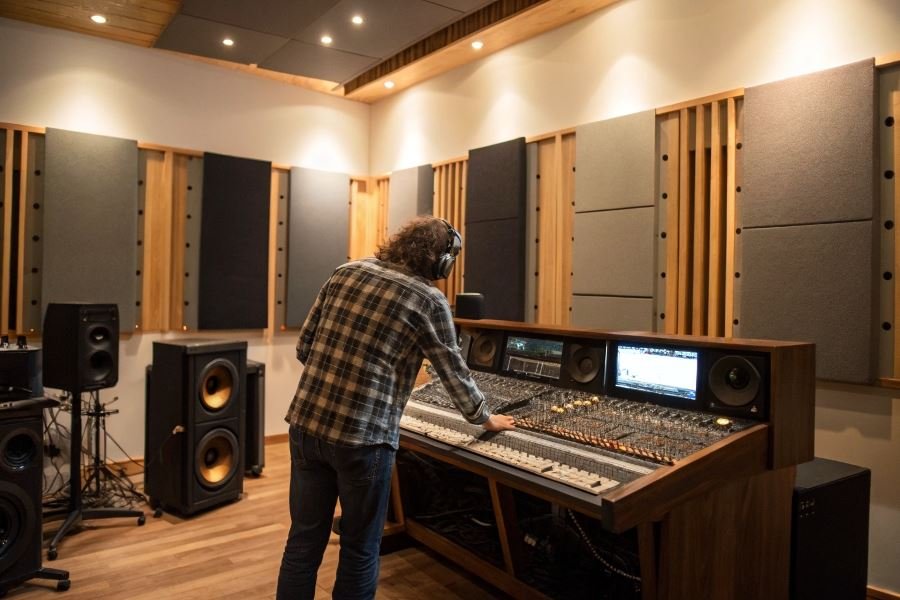
The modern recording studio has evolved into a complex ecosystem where signal routing and frequency management can make or break a production. Multitrack crossovers represent specialized audio processing tools that divide frequency spectrums across multiple channels, enabling unprecedented control over how sound is monitored, recorded, and mastered.
When working with advanced audio production setups, understanding multitrack crossovers: when they are necessary in the studio becomes critical for achieving professional results. These specialized frequency-dividing networks aren’t just technical luxuries—they’re essential problem-solvers in specific production scenarios that demand precise frequency management across multiple audio paths.
Multi-speaker Monitoring Systems
Advanced monitoring environments require sophisticated frequency distribution to function properly. Consider a 5.1 surround sound setup where low frequencies below 80Hz are routed exclusively to a dedicated subwoofer while mid and high frequencies are distributed to satellite speakers.
The precision of this frequency division directly impacts monitoring accuracy and translation quality.
A professional-grade multitrack crossover like the Behringer DCX2496 provides 24-bit/96kHz processing with independent control over crossover points, allowing engineers to:
- Set precise crossover frequencies for each speaker component
- Apply independent EQ to each frequency band
- Time-align drivers for phase coherence
- Store multiple monitoring configurations for different mixing scenarios
| Speaker Component | Typical Frequency Range | Crossover Point |
|---|---|---|
| Subwoofer | 20Hz – 80Hz | 80Hz |
| Woofer | 80Hz – 2kHz | 2kHz |
| Tweeter | 2kHz – 20kHz | N/A |
Complex Recording Sessions
When capturing multiple instrument groups simultaneously, multitrack crossovers become invaluable tools for managing frequency interactions. Consider a live orchestra recording where brass, strings, woodwinds, and percussion all compete for sonic space.
Strategic frequency management through multitrack crossovers allows engineers to:
- Route low-frequency content from bass instruments to dedicated processing chains
- Separate mid-range frequencies where vocal intelligibility lives
- Isolate high-frequency content for specialized compression techniques
- Prevent phase cancellation between overlapping frequency bands
The Waves MultiRack platform exemplifies how this approach has evolved into the digital domain, allowing real-time frequency splitting across multiple tracks during complex recording sessions.
Mastering Projects Requiring Precision
The mastering stage represents perhaps the most critical application for multitrack crossovers.
When finalizing productions for commercial release, mastering engineers often employ multiband processing to apply different treatments to distinct frequency ranges. This approach allows for:
- Compressing low frequencies without pumping mid-range content
- Enhancing stereo width in higher frequencies while maintaining mono-compatible bass
- Applying different saturation characteristics to specific frequency bands
- Controlling dynamic range with unprecedented precision
The legendary Weiss DS1-MK3 digital mastering processor demonstrates how this concept has been refined for world-class mastering facilities, offering transparent frequency division with minimal phase distortion.
Frequency-specific processing has become the hallmark of professional mastering, with multitrack crossovers serving as the foundation for this approach. By isolating frequency bands, engineers can solve problems that would be impossible to address with full-bandwidth processing alone.
Implementing Multitrack Crossovers in Studio Environments
Digital vs analog crossover battleground
The debate between digital and analog multitrack crossovers has intensified as studio technology evolves. Analog crossovers, with their warm, natural sound characteristics, continue to hold their ground in high-end studios. The Ashly Audio XR-1001 and DBX 223XL deliver transparent frequency division with minimal phase distortion—a quality purists swear by.
Digital crossovers, however, have made remarkable strides since their introduction in the late 1990s. Modern DSP-based solutions like the XILICA Solaro QR and Biamp Tesira offer unprecedented precision and flexibility:
| Feature | Analog Crossovers | Digital Crossovers |
|---|---|---|
| Frequency Precision | ±0.5dB typical | ±0.1dB or better |
| Filter Types | Limited (typically 12/18/24dB) | Extensive (6-48dB, custom shapes) |
| Latency | Near zero | 0.5-10ms depending on processing |
| Programmability | Manual adjustments only | Savable presets, remote control |
| Integration | Hardware connections only | Network/software integration |
The deciding factor often comes down to workflow and sound signature rather than technical specifications. Many engineers implement hybrid solutions, using analog crossovers for main monitoring systems and digital processing for specialized applications or experimental setups.
Seamless studio integration strategies
Integrating multitrack crossovers into existing studio environments requires thoughtful planning. The signal chain placement is critical—ideally positioned between the mixing console/DAW outputs and power amplifiers.
For digital integration, modern interfaces like Universal Audio Apollo or RME Fireface provide dedicated expansion ports or digital I/O that connect directly to DSP crossover systems. This maintains signal integrity through the digital domain until the final D/A conversion.
Analog integration demands meticulous attention to gain staging and cable quality to preserve signal integrity.
When retrofitting older studios, consider these integration points:
- Insert points on the master bus
- Monitor controller outputs
- Dedicated aux sends for multi-way monitoring
- Direct DAW outputs through secondary interfaces
The Dangerous Music Monitor ST and similar monitor controllers offer elegant solutions for incorporating crossovers without disrupting established workflows.
Crossover point mastery for optimal sound
Setting appropriate crossover points remains both science and art. While textbooks suggest standard divisions (80Hz, 250Hz, 2.5kHz), real-world implementation demands context-specific adjustments.
For nearfield monitoring in acoustically treated spaces, consider these starting points:
- Low/Mid crossover: 75-90Hz (steeper slopes in smaller rooms)
- Mid/High crossover: 2.2-3.2kHz (depending on driver capabilities)
Slope selection significantly impacts driver interaction. While 24dB/octave Linkwitz-Riley filters provide excellent acoustic summing at crossover points, some engineers prefer 18dB/octave slopes for more natural-sounding midrange reproduction.
The most overlooked aspect of crossover implementation is phase alignment between bands.
Digital systems like the LAKE Controller and miniDSP platforms offer precise delay adjustment capabilities, allowing time-alignment between drivers—critical for accurate transient reproduction and imaging.
When optimizing crossover settings:
- Begin with manufacturer recommendations
- Measure frequency response at listening position
- Adjust crossover points to compensate for room modes
- Fine-tune by ear using reference material
- Verify with measurement tools like Smaart
The ultimate goal isn’t technical perfection but musical translation—ensuring your productions sound consistent across playback systems while revealing mix problems that might otherwise remain hidden.
Discover when multitrack crossovers become essential for professional audio production. Learn how these specialized tools enhance frequency separation, improve monitoring accuracy, and elevate your studio mixes to professional standards.
Discover when multitrack crossovers become essential for professional audio production. Learn how these specialized tools enhance frequency separation, improve monitoring accuracy, and elevate your studio mixes to professional standards.