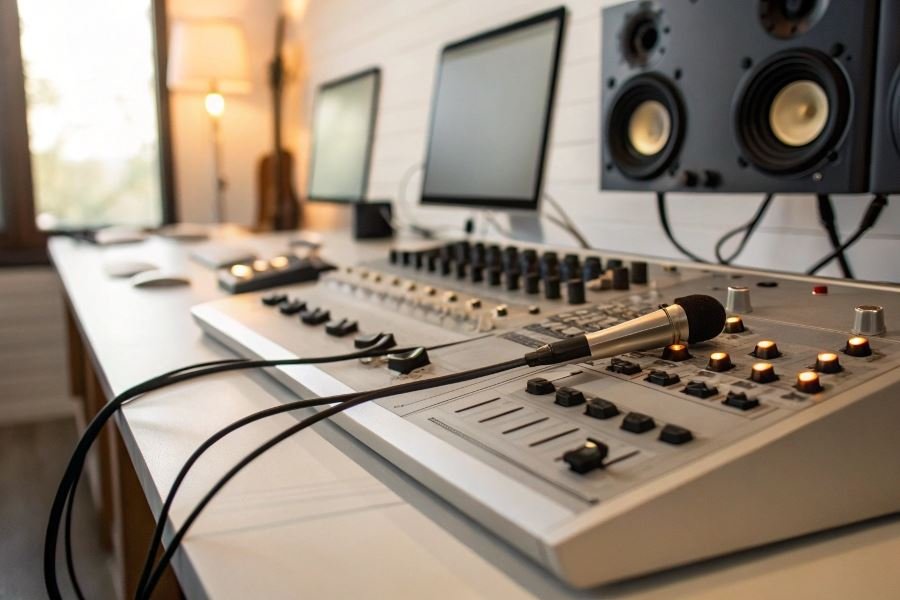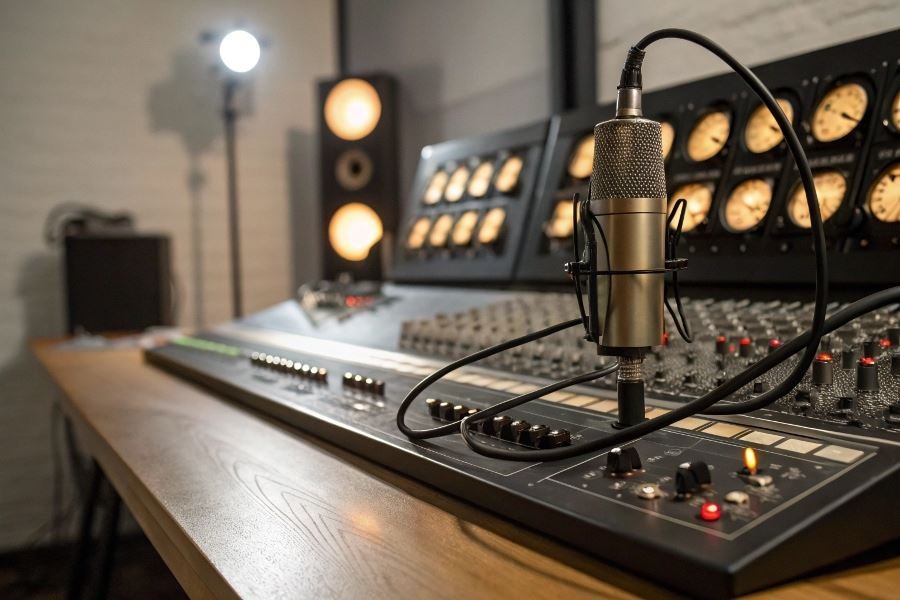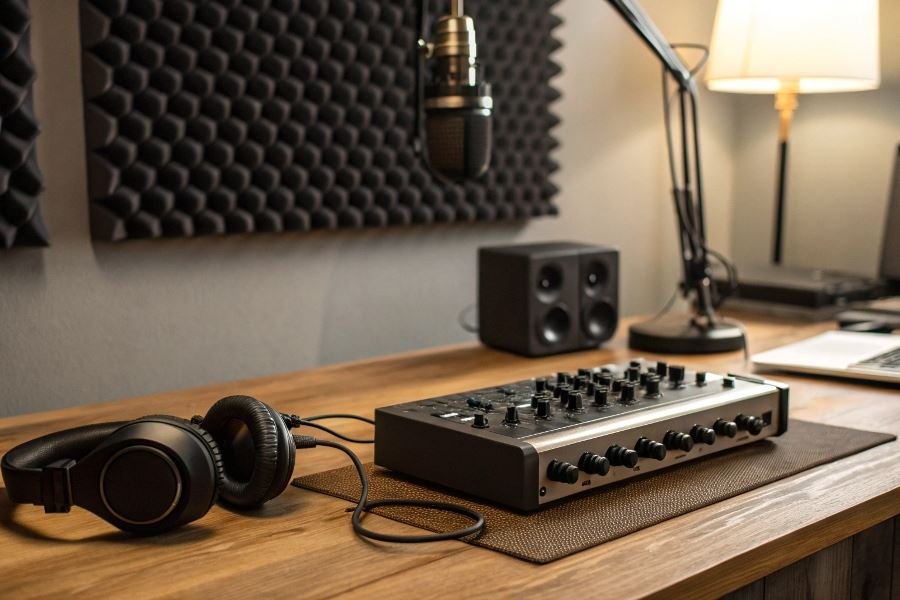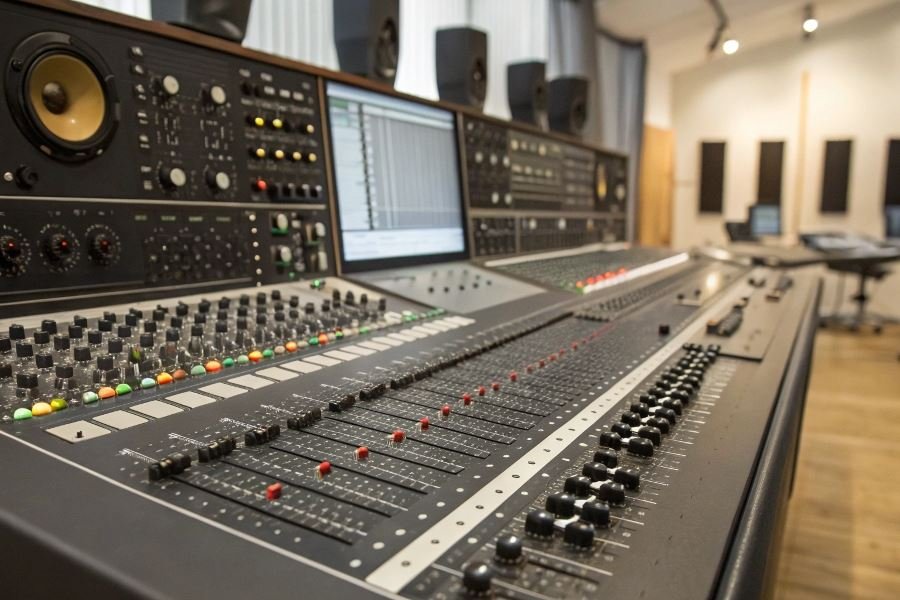
Ever wondered how your favorite albums achieve that perfect spatial sound where every instrument seems to exist in its own dimension? The secret lies in professional multichannel audio interfaces—the unsung heroes of modern music production, live sound, and audio engineering.
Multichannel audio interfaces serve as the critical bridge between analog sound sources and digital recording environments. These sophisticated devices convert multiple audio signals simultaneously, allowing producers and engineers to capture, process, and manipulate sound with unprecedented precision. Unlike consumer-grade equipment, professional interfaces deliver the pristine signal quality and technical flexibility demanded by serious audio professionals.
The technology behind these interfaces has evolved dramatically. What once required rack-mounted equipment costing tens of thousands of dollars now fits comfortably on a desktop. Modern interfaces leverage high-resolution converters capable of capturing audio at up to 192kHz/24-bit quality—far exceeding human hearing capabilities. Thunderbolt and USB-C connectivity has revolutionized data transfer speeds, virtually eliminating latency issues that plagued earlier generations.
Where multichannel interfaces shine
These powerful tools find their home in diverse audio environments:
- Recording studios: Capturing full bands with isolated tracks for each instrument
- Live sound production: Managing complex stage setups with dozens of microphones
- Post-production facilities: Creating immersive soundscapes for film and television
- Broadcast environments: Ensuring seamless audio integration for live events
The selection of an appropriate interface depends primarily on channel count, connectivity options, and converter quality. Professional engineers often prioritize preamp transparency, while project studios might value versatility and compact form factors.
The right multichannel interface doesn’t just record sound—it preserves the emotional impact of a performance while opening new creative possibilities.
Technical Specifications That Make or Break Audio Interfaces
When diving into the world of multichannel audio interfaces, understanding the technical specifications becomes your compass for navigating through countless options. These aren’t just numbers on a spec sheet—they’re the foundation of your recording quality, workflow efficiency, and ultimately, your creative output.
The process of selecting multichannel audio interfaces requires careful consideration of several critical technical factors that will determine how well the device serves your specific audio production needs. From connectivity options to conversion quality, each specification plays a crucial role in the overall performance of your recording setup.
Input/Output Configuration: Your Creative Canvas
The I/O configuration is perhaps the most fundamental consideration when selecting an interface. This determines how many simultaneous audio sources you can record and monitor.
Typical configurations include:
- 2×2 (two inputs, two outputs) – Entry-level home studios
- 4×4 – Small project studios
- 8×8 – Professional home studios
- 16+ – Commercial recording facilities
Beyond the numbers, the types of connections matter significantly. Most interfaces offer a mix of:
- XLR inputs for microphones
- TRS/TS inputs for line-level instruments
- ADAT optical for expansion
- S/PDIF for digital connections
- MIDI I/O for controlling external gear
The Focusrite Scarlett 18i20 exemplifies versatility with eight mic preamps, ADAT expansion for an additional eight channels, and comprehensive monitoring options—all in a single rack unit.
Sample Rate and Bit Depth: The Resolution Equation
These specifications determine the resolution of your digital audio—essentially how accurately the analog sound is captured and reproduced.
| Specification | Standard | Professional | High-Resolution |
|---|---|---|---|
| Sample Rate | 44.1/48 kHz | 88.2/96 kHz | 176.4/192 kHz |
| Bit Depth | 16-bit | 24-bit | 32-bit float |
Higher isn’t always better—it depends on your application. While 44.1kHz/16-bit is CD quality, professional recording typically uses 48kHz/24-bit or higher to provide headroom during mixing and mastering.
The Universal Audio Apollo x8 delivers exceptional conversion quality with 24-bit/192kHz capability and remarkably transparent sound reproduction that has become an industry standard.
Preamp Quality: The First Link in Your Signal Chain
Preamps amplify microphone signals to usable levels, and their quality directly impacts your recordings.
Key preamp specifications include:
- Maximum gain (typically 45-70dB)
- Equivalent Input Noise (EIN) (lower is better, -125dB or better is excellent)
- Total Harmonic Distortion (THD) (lower numbers mean cleaner sound)
The Audient iD44 features console-grade preamps derived from their ASP8024 mixing desk, offering exceptional headroom and clarity for demanding recording applications.
Latency Performance: The Invisible Barrier
Latency—the delay between input and output—can make or break the recording experience. Low latency is crucial for real-time monitoring while recording.
Factors affecting latency include:
- Driver quality – Manufacturer-optimized drivers typically outperform generic ones
- Buffer size settings – Lower buffers reduce latency but increase CPU load
- DSP capabilities – Onboard processing allows for zero-latency monitoring
The RME Fireface UFX+ stands out with its TotalMix FX software and rock-solid drivers, delivering consistently low round-trip latency under 3ms—a performance level that remains unmatched by many competitors.
When evaluating interfaces, remember that published specifications tell only part of the story. Real-world performance, driver stability across different operating systems, and manufacturer support are equally important considerations that will impact your daily workflow for years to come.
The Ultimate Multichannel Audio Interface Showdown
Professional studio-grade powerhouses
Professional multichannel interfaces represent the pinnacle of audio conversion technology. The Antelope Audio Orion 32+ stands as a formidable contender with 32 analog inputs and outputs, delivering pristine 24-bit/192kHz conversion. Its ultra-low latency performance and proprietary FPGA-based effects processing make it a centerpiece in commercial studios where multiple simultaneous recordings are standard practice.
The Universal Audio Apollo x16 offers 16 channels of elite-level conversion with its exceptional dynamic range exceeding 133dB. What truly distinguishes this interface is the onboard HEXA-core processing, allowing real-time application of UA’s legendary analog-modeled plugins with virtually zero latency.
For those requiring maximum channel density, the Focusrite Red 16Line delivers 16 analog inputs/outputs plus 32 channels of Dante connectivity. Its dual Thunderbolt 3 ports enable daisy-chaining multiple interfaces for massive recording setups.
| Interface | Analog I/O | Digital I/O | Sample Rate | Connectivity |
|---|---|---|---|---|
| Antelope Orion 32+ | 32×32 | 64 (MADI) | Up to 192kHz | USB/Thunderbolt |
| UA Apollo x16 | 16×16 | 16 (ADAT) | Up to 192kHz | Thunderbolt 3 |
| Focusrite Red 16Line | 16×16 | 32 (Dante) | Up to 192kHz | Thunderbolt 3 |
Mid-range workhorses for project studios
The project studio segment offers impressive capabilities without requiring a second mortgage. The PreSonus Quantum 2626 delivers 26×26 I/O with remarkably low latency (under 1ms) through its Thunderbolt 3 connection. Eight XMAX preamps provide clean gain with plenty of headroom for dynamic recordings.
MOTU’s 828es brings versatility with its hybrid USB/Thunderbolt connectivity and built-in DSP mixing. The interface features 28 inputs and 30 outputs, including two front-panel instrument inputs with exceptional impedance matching for direct guitar recording.
The Arturia AudioFuse 8Pre combines eight transparent DiscretePRO preamps with ADAT expansion capability, allowing growth to 16 channels. Its dual-protocol connectivity (USB-C and ADAT) makes it exceptionally flexible for various studio configurations.
| Interface | Preamps | Total I/O | Special Features | Price Range |
|---|---|---|---|---|
| PreSonus Quantum 2626 | 8 | 26×26 | Sub-1ms latency | $599-699 |
| MOTU 828es | 2 | 28×30 | Built-in DSP effects | $849-949 |
| Arturia AudioFuse 8Pre | 8 | 16×20 | Dual-mode operation | $699-799 |
Budget-friendly multichannel marvels
Affordable multichannel interfaces have dramatically improved in recent years. The Behringer UMC1820 delivers 18 inputs and 20 outputs with eight MIDAS-designed preamps at a fraction of premium interface prices. While its converters don’t match high-end alternatives, they provide remarkably clean performance for the investment.
The Focusrite Scarlett 18i20 remains a perennial favorite, offering eight preamps with Focusrite’s renowned “Air” mode that emulates their ISA transformer-based designs. Its comprehensive software bundle adds substantial value.
For those seeking expandability, the Tascam US-16×08 provides 16 inputs and 8 outputs with eight Ultra-HDDA microphone preamps. Its DSP mixer allows creating custom monitor mixes with zero-latency monitoring.
| Interface | Preamps | Max I/O | Connectivity | Approx. Price |
|---|---|---|---|---|
| Behringer UMC1820 | 8 | 18×20 | USB 2.0 | $299 |
| Focusrite Scarlett 18i20 | 8 | 18×20 | USB-C | $499 |
| Tascam US-16×08 | 8 | 16×8 | USB 2.0 | $299 |
The ideal multichannel interface ultimately depends on your specific recording needs, future expansion plans, and budget constraints. Professional interfaces offer uncompromising quality for commercial applications, mid-range options balance performance with affordability, while budget interfaces provide remarkable capability for home studios and mobile recording setups.
Discover how to select the perfect multichannel audio interface with our comprehensive guide covering technical specifications, preamp quality, connectivity options, and top recommendations for every budget and studio setup.
Discover how to select the perfect multichannel audio interface with our comprehensive guide covering technical specifications, preamp quality, connectivity options, and top recommendations for every budget and studio setup.