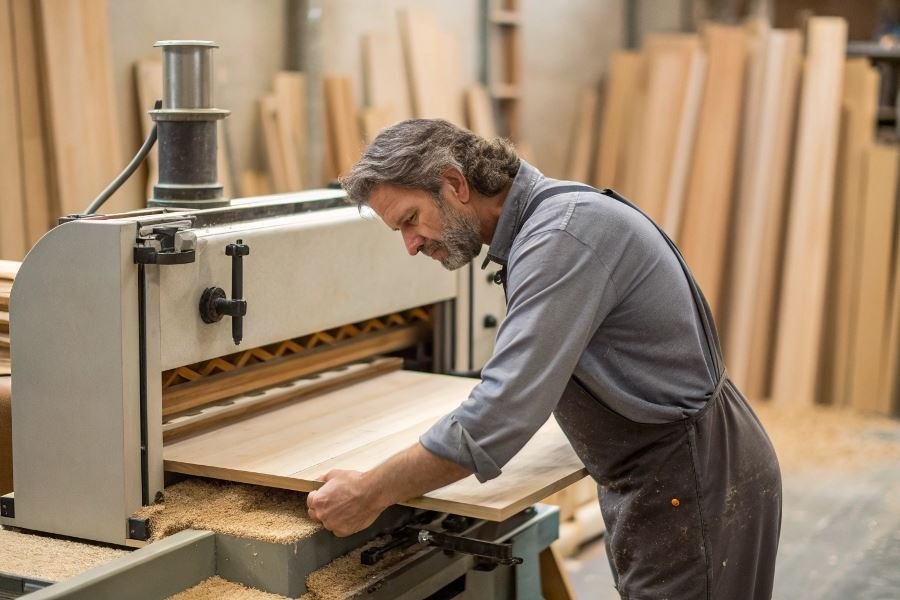
Ever run your hand over a freshly planed piece of maple and felt that glass-smooth finish? That’s the magic of a quality planer at work.
Woodworking transforms from frustrating to fulfilling when you have the right tools at your disposal. Among these essential tools, the planer stands as a game-changer for anyone serious about craftsmanship. Whether you’re restoring antique furniture or building custom cabinets, understanding how to choose the right planer for your home workshop can dramatically elevate your woodworking projects.
The craftsman’s equalizer
At its core, a planer serves one critical purpose: creating perfectly flat, uniform surfaces and bringing lumber to precise thicknesses. Unlike sandpaper that merely smooths, a planer actually removes material with remarkable precision—often down to 1/64 of an inch. This capability transforms rough-sawn lumber into workable material, potentially saving you hundreds of dollars compared to purchasing pre-dimensioned stock.
Planer varieties for the home craftsman
Benchtop planers dominate the home workshop scene, offering impressive capability in a compact footprint. These machines typically handle boards up to 12-13 inches wide and are priced between 300−700.
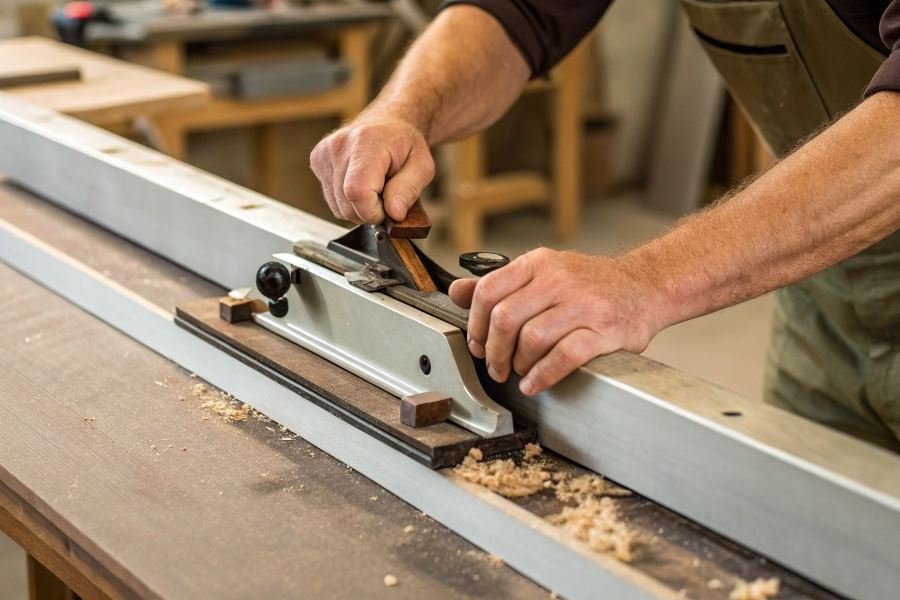
Hand planers remain relevant even in modern workshops. From block planes for detail work to jack planes for rapid stock removal, these manual tools offer unparalleled control and connection to your material.
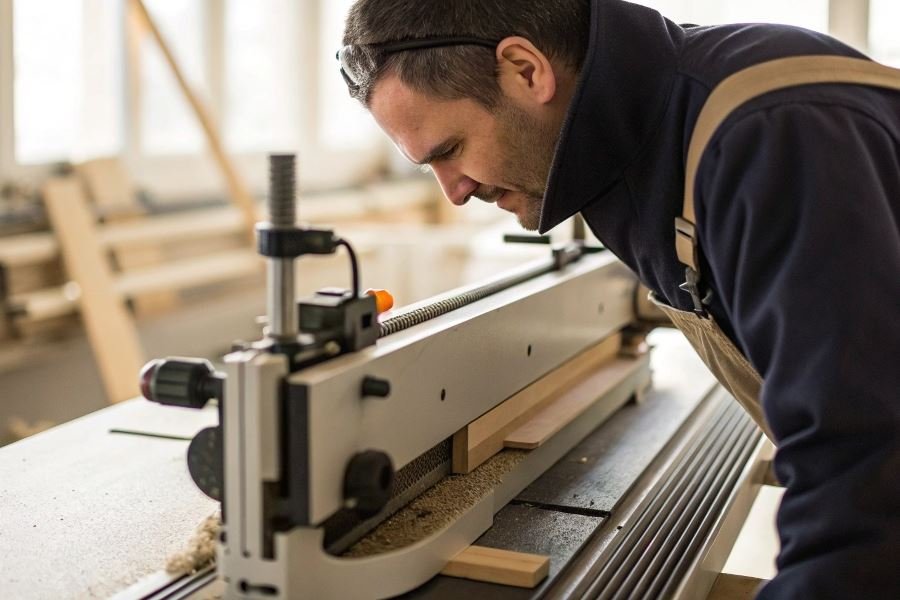
Jointer-planer combos provide dual functionality for space-conscious workshops, though they require workflow adjustments when switching between operations.
Matching the machine to your mission
Before investing, consider your typical projects:
- Will you primarily work with construction lumber or exotic hardwoods?
- Do you need to process rough-cut lumber or just fine-tune pre-milled boards?
- How much space can you realistically dedicate to this tool?
The answers to these questions will guide you toward a planer that becomes not just a purchase, but a workshop partner for years to come.
Essential Factors for Selecting the Perfect Planer
When setting up a home workshop, few tools can transform rough lumber into finished masterpieces quite like a quality planer. Selecting the right machine requires balancing several critical factors that will directly impact your woodworking results and overall experience.
The process of how to choose a planer for a home workshop involves evaluating specific technical specifications against your particular needs. While manufacturers tout various features, understanding which ones truly matter for your projects will save you both money and frustration down the road.
Power and Capacity: The Heart of Performance
The motor rating of a planer determines what it can handle. For home workshops, planers typically range from:
- Benchtop models: 10-15 amp motors (1.5-2 HP)
- Stationary models: 2-5 HP motors
A 15-amp motor provides sufficient power for most hobbyist applications, handling hardwoods up to 6 inches wide. For regular work with harder species like maple or oak, consider models with at least 2 HP.
Feed rate—measured in feet per minute (FPM)—affects both efficiency and finish quality:
| Planer Type | Typical Feed Rate | Best For |
|---|---|---|
| Entry-level | 16-26 FPM | Occasional use |
| Mid-range | 23-30 FPM | Regular projects |
| Professional | 30+ FPM | Production work |
Cutting Width and Depth: Dimensional Capabilities
Width capacity determines the maximum board size your planer can accommodate. Most benchtop models handle 12-13 inches, while stationary units can process boards up to 20 inches wide.
Depth of cut represents how much material you can remove in a single pass:
- Light pass: 1/32″ (finishing work)
- Medium pass: 1/16″ (dimensioning)
- Heavy pass: 1/8″ (rough dimensioning)
Remember that deeper cuts require more power and produce rougher surfaces, often necessitating additional passes for a finished result.
Build Quality and Durability: Long-term Investment
The cutting head design significantly impacts performance and maintenance requirements:
- Straight knife heads: Traditional, less expensive, require more frequent sharpening
- Helical or spiral cutterheads: Premium option with individual carbide inserts that can be rotated when dull
Look for cast iron tables rather than stamped steel for stability and vibration reduction. Solid infeed and outfeed tables prevent snipe—those annoying deeper cuts at board ends.
Noise Levels and Dust Collection: Workshop Livability
Planers are notoriously loud, often exceeding 90 decibels. Models with noise-dampening features or enclosed designs offer some relief, but hearing protection remains essential.
Effective dust collection prevents both health hazards and machine maintenance issues:
- 4″ dust port: Minimum for adequate collection
- Built-in blower: Helps direct chips to collection system
- Shrouded cutterhead: Improves collection efficiency
Workshop Space and Portability: Practical Considerations
Assess your available space honestly:
| Planer Type | Footprint | Weight | Considerations |
|---|---|---|---|
| Benchtop | 2-3 sq ft | 65-90 lbs | Can be stored when not in use |
| Stationary | 6-12 sq ft | 300-600 lbs | Requires dedicated space |
For limited spaces, consider a DeWalt DW735X benchtop planer that offers excellent performance while remaining movable. If space permits, the Powermatic 15HH provides professional-grade results with its helical cutterhead.
The ideal planer balances these factors against your specific needs and budget. By prioritizing the features most relevant to your woodworking style, you’ll find a machine that delivers consistent results for years to come.
Top Planers That Will Transform Your Home Workshop
Best Entry-Level Planer for Beginners
The WEN 6552T stands as the quintessential gateway planer for woodworking newcomers. This 13-inch benchtop model delivers remarkable value at approximately $399, making professional-quality surfacing accessible without breaking the bank.
What truly distinguishes the WEN 6552T is its granite table—an ingenious design choice that provides exceptional stability and reduces friction compared to traditional cast iron surfaces. The 15-amp motor powers through softwoods with ease, while the three-blade cutting system produces finishes that belie its “beginner” classification.
Key specifications:
- 13-inch width capacity
- 6-inch thickness capacity
- 25,500 cuts per minute
- Granite infeed/outfeed tables
- Dust port for workshop cleanliness
For beginners, the intuitive depth adjustment system (with clear 1/16-inch increment markings) removes the guesswork from your first planing projects. While it may struggle with the hardest exotic woods at maximum depth, it handles pine, maple, and oak—the staples of most starter projects—with impressive consistency.
Best Mid-Range Planer for Regular Hobbyists
As your skills and projects grow more ambitious, the DeWalt DW735X represents the sweet spot between performance and investment at around $649. This 13-inch powerhouse has earned its reputation as the gold standard in mid-range planers.
The DW735X’s dual-speed gearbox is a game-changer, allowing you to switch between 96 cuts per inch (for dimensioning) and 179 cuts per inch (for finishing). This versatility essentially gives you two machines in one, eliminating the need for excessive sanding after planing.
The three-knife cutter head design delivers 30% longer knife life than comparable models, while the automatic carriage lock reduces snipe without manual adjustments.
| Feature | Specification |
|---|---|
| Motor | 15 Amp, 20,000 RPM |
| Max Width | 13 inches |
| Max Depth | 1/8 inch per pass |
| Feed Rates | 14 FPM or 26 FPM |
| Weight | 92 pounds |
The included infeed/outfeed tables and extra set of knives (a $90 value) make this package particularly attractive for serious hobbyists who plan to use their planer regularly but don’t quite need industrial-grade throughput.
Best Professional-Grade Planer for Serious Woodworkers
For those who’ve outgrown benchtop limitations, the Jet JWP-15HH represents a significant leap in capability at approximately $2,999. This 15-inch stationary planer with helical cutterhead technology delivers workshop-altering performance.
The helical head design, with its 68 four-sided carbide inserts, revolutionizes your planing experience in three critical ways:
Dramatically reduced noise – Operating at approximately 30% lower decibels than straight-knife systems
Superior cut quality – Especially on figured woods and difficult grain patterns that would tear out with traditional knives
Maintenance simplicity – When a cutting edge dulls, simply rotate the insert rather than replacing or resharpening entire blades
With its 3HP motor and robust cast iron construction, the JWP-15HH handles production-level workloads that would stall lesser machines. The parallelogram design maintains table-to-cutterhead alignment automatically, ensuring consistent thickness across your workpieces even after years of heavy use.
For serious woodworkers who view their planer as a long-term investment, the initial price premium pays dividends through superior results and significantly reduced downtime for maintenance.
Discover the top 5 planers for your home workshop with our comprehensive guide. Learn how to select the perfect planer based on power, cutting capacity, durability, and workshop size to elevate your woodworking projects.
Discover the top 5 planers for your home workshop with our comprehensive guide. Learn how to select the perfect planer based on power, cutting capacity, durability, and workshop size to elevate your woodworking projects.