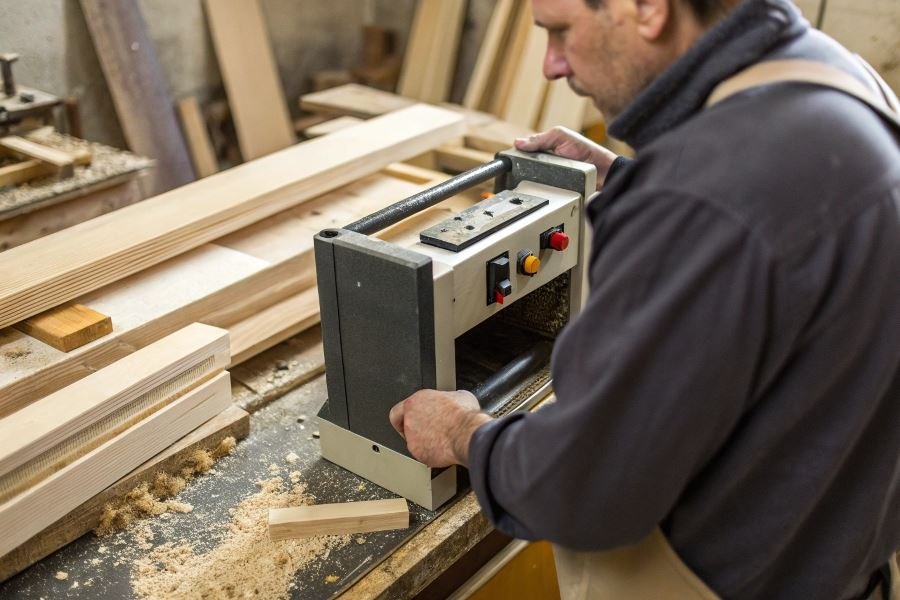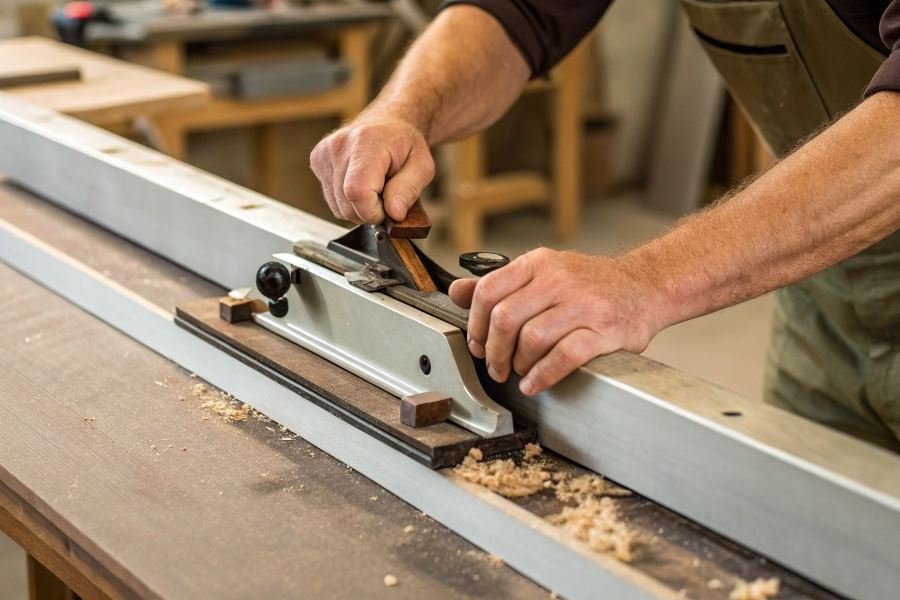
Ever watched a master craftsman effortlessly feed rough lumber into a planer and pull out perfectly dimensioned boards with glass-smooth surfaces? That magic doesn’t happen by accident—it’s the result of meticulous setup before the first shaving ever flies.
The difference between amateur and professional results often lies not in technique or experience, but in those crucial minutes spent preparing your machine. A properly configured planer doesn’t just deliver better results; it dramatically reduces the risk of kickback, torn grain, and the dreaded snipe that can ruin an otherwise perfect piece.
At its core, proper planer setup revolves around three critical components: the feed system, the cutterhead assembly, and the bed. Each requires specific attention before you process a single board. The feed rollers must grip without marring, the cutterhead must be perfectly parallel to the bed, and the bed itself must provide consistent support throughout the entire cutting operation.
Essential tools for precision setup include:
- A machinist’s straightedge (at least 24″ long)
- Feeler gauges for measuring tiny gaps
- Dial indicator for perfect parallelism
- Cleaning supplies for removing pitch and debris
Remember that a planer is essentially a precision instrument disguised as a rugged workshop tool. Treat the setup process with the same care you’d give to calibrating fine measuring equipment, and your projects will showcase the difference in every smoothly planed surface.
Mastering Planer Setup: The Foundation of Perfect Woodworking
The difference between amateur and professional woodworking often comes down to preparation. A properly configured planer transforms rough lumber into precisely dimensioned stock with glass-smooth surfaces. Learning how to properly set up a planer before work isn’t just about following steps—it’s about establishing a ritual that ensures consistent, professional results every time you step into the shop.
Inspect and Clean with Purpose
Begin your setup by thoroughly examining the planer bed and components. Dust, resin, and debris are the silent saboteurs of precision woodworking. Use compressed air to blast away loose particles, followed by a thorough wipe-down with mineral spirits on a lint-free cloth.
Pay special attention to the bed rollers. These often collect pitch and sawdust that can transfer imperfections to your workpiece. A clean bed reduces friction, allowing wood to glide through with minimal resistance and preventing those frustrating stop marks that ruin otherwise perfect passes.
The cleanliness of your planer bed directly correlates to the quality of your finished surface. What takes 3 minutes to clean can save hours of sanding later.
Dialing in the Perfect Depth
Accurate cutting depth is non-negotiable for precision woodworking. Most modern planers feature digital readouts, but don’t trust them blindly. Use a quality caliper to verify the actual cutting depth against the displayed measurement.
When adjusting depth settings, remember this golden rule: never remove more than 1/16″ (1.6mm) per pass on hardwoods. For wider boards, reduce this to 1/32″ (0.8mm) to prevent motor strain and tearout.
Blade Alignment: The Heart of Performance
Your planer’s cutting performance lives or dies by blade condition and alignment. For machines with disposable blades, check for nicks or dullness before each significant project. For helical or spiral cutterheads, rotate any damaged carbide inserts to present a fresh cutting edge.
Alignment requires precision tools:
- Dial indicator for measuring cutterhead runout
- Feeler gauges for knife projection
- Straight edge for checking parallelism
Critical measurement: Ensure each knife extends exactly the same distance from the cutterhead. Even a 0.001″ difference can create visible ridges in your workpiece.
Table Support: The Unsung Hero
The infeed and outfeed tables serve as critical support systems that prevent snipe—those annoying deeper cuts at the beginning and end of boards.
| Table Position | Optimal Setup | Common Mistake |
|---|---|---|
| Infeed | Slightly below bed level (0.002-0.004″) | Setting too high causes stock to bounce |
| Outfeed | Exactly level with the bed at final thickness | Setting too low creates trailing end snipe |
For longer stock, supplement your planer’s tables with roller stands positioned at the same height. This prevents board sag that can result in inconsistent thickness across the workpiece.
Test Before You Commit
The final and perhaps most crucial step is running test cuts on scrap material that matches your project wood. This validates all your setup work and reveals any issues before you risk valuable stock.
Make a series of progressive passes, reducing depth with each cut, and evaluate:
- Surface smoothness
- Thickness consistency from end to end
- Presence of snipe or tearout
- Accuracy of thickness settings
Pro tip: Keep a dedicated “setup board” of consistent density that you use exclusively for testing machine settings. This provides a reliable reference point for evaluating performance.
By following these essential setup procedures, you’ll transform your planer from a basic thickness-reduction tool into a precision instrument capable of producing furniture-grade components with minimal additional work.
Sustaining Precision Through Proper Planer Maintenance
Creating Your Pre-Flight Checklist
The difference between professional-grade results and amateur hour often comes down to one thing: consistency. Creating a pre-work planer setup checklist transforms random success into repeatable excellence. Start by documenting your optimal settings for different materials and thicknesses. Include knife height, feed rate, and depth-of-cut specifications for each common material you process.
Your checklist should include:
- Knife inspection (sharpness, nicks, alignment)
- Table flatness verification
- Dust collection system check
- Infeed/outfeed table alignment
- Depth gauge calibration
- Safety guard positioning
Pro tip: Laminate your checklist and keep it mounted near your planer. The best checklist is the one you actually use.
Smart Maintenance Schedules That Prevent Downtime
Preventive maintenance isn’t just for industrial settings—it’s the secret weapon of efficient workshops everywhere. Your planer requires different attention at different intervals:
| Timeframe | Maintenance Tasks |
|---|---|
| Before Each Use | Visual inspection, quick alignment check |
| Weekly | Dust removal from all surfaces, lubrication of moving parts |
| Monthly | Belt tension check, thorough cleaning of feed rollers |
| Quarterly | Bearing inspection, motor brush examination |
| Annually | Complete disassembly and deep cleaning, replacement of worn parts |
The DeWalt maintenance guide recommends applying dry lubricant to the lead screws and columns every 10 hours of operation for their planers. Meanwhile, Powermatic suggests checking knife alignment after processing approximately 20 board feet of hardwood.
Remember that maintenance frequency should increase proportionally with usage intensity and hardness of processed materials.
Solving Setup Problems Before They Ruin Your Project
Even meticulously maintained planers occasionally develop issues. Recognizing and addressing these problems early prevents wasted material and frustration.
Snipe elimination: Those annoying deeper cuts at board ends typically result from improper table support. Adjust your infeed and outfeed tables to be perfectly parallel with the cutterhead. For longer stock, use roller stands positioned at precisely the same height as your planer bed.
Inconsistent thickness: When your planer produces boards with varying thickness, check for:
- Loose locking mechanisms on the height adjustment
- Debris on the table surface
- Worn feed rollers with insufficient grip
- Excessive play in the raising/lowering mechanism
Tear-out and chipping: This common issue often stems from:
- Dull knives (replace or sharpen immediately)
- Excessive depth of cut (reduce to under 1/16″ for hardwoods)
- Improper feed direction relative to grain pattern
The finest woodworkers aren’t those who never encounter problems—they’re the ones who identify and solve issues before the material is compromised.
By implementing these systematic approaches to planer maintenance, you’ll extend the life of your equipment while ensuring each piece that passes through emerges with the precision and quality your work demands.
Learn the 5 essential steps for properly setting up your planer before work. This comprehensive woodworker's guide covers inspection, depth adjustment, blade alignment, table setup, and testing for perfect results every time.
Learn the 5 essential steps for properly setting up your planer before work. This comprehensive woodworker's guide covers inspection, depth adjustment, blade alignment, table setup, and testing for perfect results every time.