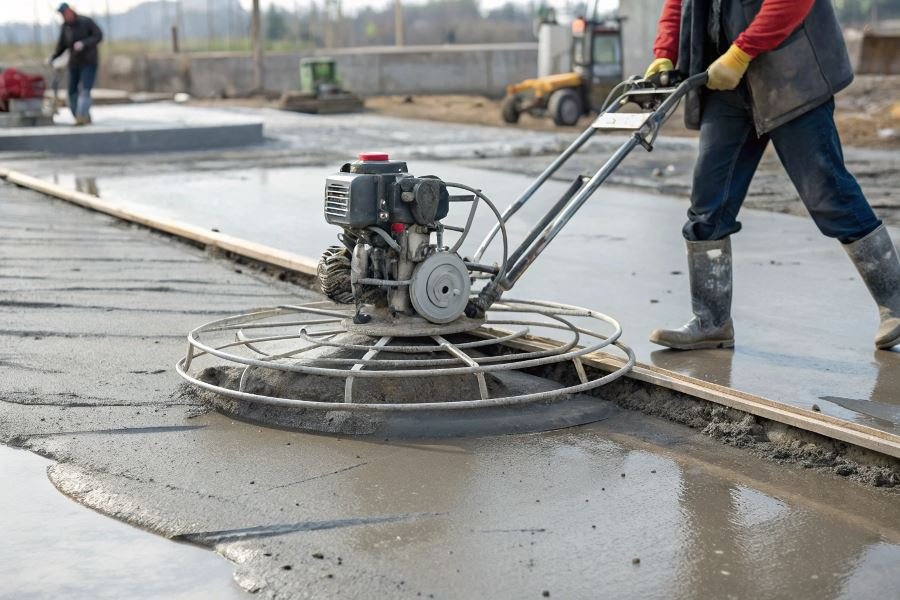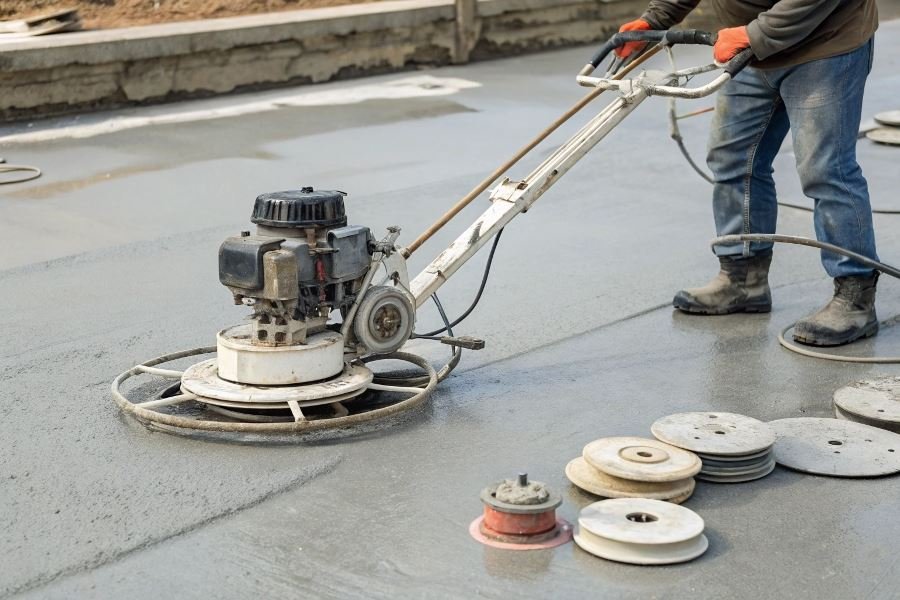
Ever watched a master craftsman transform rough concrete into a glass-like surface? That magic happens at the intersection of skill and proper equipment selection—with disc diameter playing the starring role you’ve probably never considered.
When professionals debate the perfect concrete finish, diameter isn’t just a specification—it’s the foundation of quality. The diameter of your trowel machine disc determines not just how much surface area you cover, but how the entire machine interacts with your concrete at its most vulnerable stage. Think of it as choosing between a surgeon’s scalpel and a butter knife; both cut, but with dramatically different results.
The diameter-quality connection is undeniable. Larger discs (typically 36-48 inches) distribute pressure more evenly across wider areas, creating smoother finishes on expansive surfaces. Meanwhile, smaller diameters (24-30 inches) offer precision for detailed work and tighter spaces. This isn’t merely about convenience—it’s about achieving the exact compaction and surface texture your project demands.
Machine control transforms dramatically with diameter changes. A 24-inch disc provides nimble maneuverability around columns and edges, while a 46-inch model delivers stability and consistent pressure—but requires significantly more operator strength. The physics are simple: smaller diameters create more responsive machines; larger ones provide momentum and consistency.
The market currently offers standard diameters ranging from 24 to 48 inches, with the most common being:
- 24-30 inches: Ideal for residential and detail work
- 36 inches: The versatile middle-ground for mid-sized commercial projects
- 46-48 inches: The commercial standard for large warehouse and industrial floors
Your diameter choice isn’t just a technical decision—it’s the difference between exhaustion and efficiency, between amateur results and professional excellence.
Choosing the Right Trowel Machine Disc Diameter
When precision meets efficiency in concrete finishing, the diameter of your power trowel disc becomes the unsung hero of your project’s success. Professional contractors know that selecting the appropriate trowel machine disc diameter isn’t just about what’s available—it’s about matching the tool to the specific demands of the job at hand.
The concrete finishing industry has evolved dramatically since the first mechanical trowels appeared in the 1930s. Today, understanding which diameter of the trowel machine disc to choose for different tasks can mean the difference between a mediocre finish and professional-grade results that stand the test of time. Let’s dive into the specifics of each size category and discover when to deploy them for maximum effectiveness.
Small Diameter Discs: Precision in Tight Quarters
Small diameter trowel discs, typically ranging from 24 to 36 inches, excel in environments where space comes at a premium. These compact powerhouses deliver exceptional maneuverability in:
- Residential bathrooms where fixtures and walls create obstacles
- Elevator shafts requiring vertical concrete finishing
- Stairwells with their inherently confined dimensions
- Detailed decorative concrete work demanding precision control
The 24-inch models represent the most maneuverable option, allowing operators to navigate within mere inches of walls and columns. Meanwhile, the 36-inch variants offer a sweet spot between maneuverability and productivity, covering approximately 25% more surface area per pass than their 24-inch counterparts.
“Small diameter trowels aren’t just about fitting into tight spaces—they’re about delivering precision where every square inch matters.”
Medium Diameter Discs: The Versatility Champions
Medium diameter discs (36-48 inches) have earned their reputation as the Swiss Army knives of concrete finishing. These versatile performers balance coverage speed with reasonable maneuverability, making them ideal for:
- Residential foundations and garage floors
- Medium-sized commercial spaces like retail locations
- Outdoor patios and decorative concrete installations
- Multi-room projects with varying spatial constraints
The 42-inch diameter has become particularly popular among contractors who handle diverse project portfolios. This size offers approximately 36% more coverage than a 36-inch model while maintaining enough maneuverability to work around typical residential and light commercial obstacles.
| Disc Diameter | Approximate Coverage Rate | Ideal Application |
|---|---|---|
| 36 inches | 3,000 sq ft/hour | Detailed residential work |
| 42 inches | 4,100 sq ft/hour | Mixed residential/commercial |
| 48 inches | 5,200 sq ft/hour | Open commercial spaces |
Large Diameter Discs: Industrial-Scale Efficiency
When square footage becomes the primary consideration, large diameter discs (48+ inches) demonstrate their unmatched efficiency. These productivity monsters shine in:
- Warehouse floors spanning tens of thousands of square feet
- Big-box retail spaces requiring consistent finishes across vast areas
- Industrial facilities with open floor plans
- Airport terminals and other massive public infrastructure
The 60-inch ride-on trowels represent the pinnacle of concrete finishing efficiency, capable of processing up to 10,000 square feet per hour—nearly triple what a 36-inch walk-behind model can accomplish.
Efficiency bonus: Many contractors working large commercial projects deploy dual ride-on trowels with overlapping 48-inch or larger discs, effectively doubling productivity while maintaining finish consistency across expansive slabs.
The diameter selection ultimately comes down to balancing three critical factors: the physical constraints of your workspace, the required production rate, and the finish quality specifications. By matching these considerations to the appropriate disc diameter, you’ll maximize both efficiency and results on every concrete project you tackle.
Choosing the Perfect Trowel Machine Disc Diameter
When finishing concrete, the diameter of your power trowel disc isn’t just a specification—it’s the foundation of your results. Professional contractors understand that selecting the right disc diameter can mean the difference between a mediocre finish and flawless craftsmanship. Let’s dive into how to make that critical selection with confidence.
Matching disc diameter to project demands
The relationship between project requirements and disc diameter is surprisingly nuanced. For large, open commercial floors, 46-48 inch diameter discs deliver maximum productivity—covering approximately 30% more surface area per pass than their 36-inch counterparts. However, bigger isn’t always better.
For residential basements or confined spaces with obstacles, 24-36 inch diameter discs provide the maneuverability essential for quality results. As Husqvarna notes in their technical specifications, smaller diameter discs allow operators to work within 2-3 inches of walls and columns—a critical advantage in complex layouts.
The golden rule of trowel disc selection: Match your diameter to your space constraints first, then optimize for production speed.
Concrete curing conditions also influence diameter choice. In rapid-setting environments, multiple smaller machines often outperform a single large-diameter unit, allowing teams to address different sections at optimal timing windows.
Cost-benefit analysis across diameter options
The economics of disc diameter selection extend far beyond the initial purchase price:
| Disc Diameter | Initial Investment | Productivity Rate | Labor Savings | Best Applications |
|---|---|---|---|---|
| 24-30″ | $800-1,500 | 1,500-2,000 sq ft/hr | Minimal | Tight spaces, patch work |
| 36″ | $1,800-3,000 | 2,500-3,000 sq ft/hr | Moderate | Residential, medium commercial |
| 46-48″ | $3,500-5,000+ | 3,500-4,500 sq ft/hr | Significant | Large commercial, industrial |
The productivity differential becomes particularly significant on projects exceeding 10,000 square feet. While larger diameter discs require higher initial investment, they typically deliver ROI within 8-12 large projects through reduced labor costs and faster completion times.
As Wacker Neuson data demonstrates, ride-on trowels with 48-inch diameter discs can finish concrete at nearly twice the rate of walk-behind models with 36-inch discs—a compelling advantage for deadline-driven commercial work.
Maintenance implications of diameter selection
Maintenance requirements scale with disc diameter in ways that impact your total cost of ownership:
Larger diameter discs (46-48″) typically:
- Require more frequent blade replacements due to greater surface contact
- Need more powerful engines that demand more rigorous maintenance schedules
- Have higher replacement part costs (approximately 30-40% premium)
Conversely, smaller diameter discs offer maintenance advantages through:
- Reduced wear patterns and longer blade life
- Simpler mechanical systems with fewer failure points
- Lower replacement costs and more universal parts availability
Maintenance intervals should be adjusted proportionally to disc diameter. While a 36-inch machine might need blade inspection every 8-10 hours of operation, 48-inch models often benefit from 6-hour inspection cycles to prevent uneven wear patterns.
The maintenance equation also includes operator fatigue—smaller diameter machines typically create less operator strain during manual operation, potentially reducing workplace injuries and associated costs.
By carefully weighing project requirements, economic factors, and maintenance considerations, contractors can select trowel machine disc diameters that deliver professional results while optimizing their operational efficiency and bottom line.
Discover how to select the perfect trowel machine disc diameter for your concrete projects. Learn which sizes work best for confined spaces, residential jobs, or large commercial applications to achieve professional-quality finishes.
Discover how to select the perfect trowel machine disc diameter for your concrete projects. Learn which sizes work best for confined spaces, residential jobs, or large commercial applications to achieve professional-quality finishes.