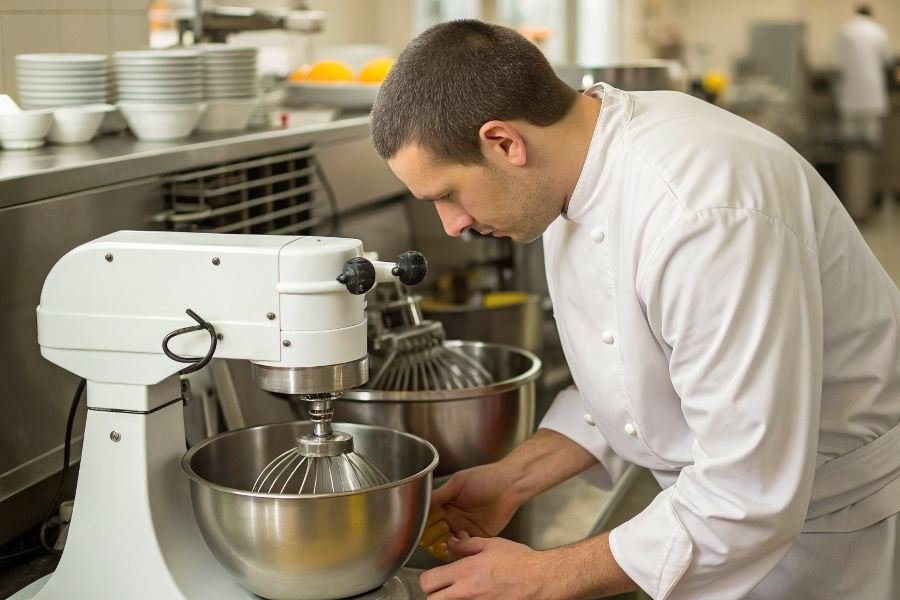
Ever watched a master baker transform simple ingredients into a symphony of textures and flavors? Behind that magic stands an unsung hero: the professional bakery mixer. These powerhouse machines aren’t just oversized versions of what sits on your kitchen counter—they’re precision instruments that can make or break a bakery’s reputation.
Professional mixers serve as the cornerstone of commercial bakery operations, handling everything from delicate pastry doughs to dense artisanal bread formulations. Unlike their home-kitchen cousins, these workhorses are built to perform consistently through punishing 12-hour shifts, mixing hundreds of pounds of dough daily without breaking a sweat.
Commercial-grade vs. consumer mixers: Worlds apart
The difference between professional and consumer mixers goes far beyond size. Professional models feature industrial-grade motors with sophisticated cooling systems, precision-engineered gearing, and torque capabilities that would literally tear a household mixer apart. While a home stand mixer might struggle with two pounds of bread dough, commercial planetary mixers effortlessly handle 50+ pounds in a single batch.
The mixer lineup: Tools for every baking challenge
Bakeries typically employ several distinct mixer types:
- Planetary mixers: The versatile workhorses with rotating attachments
- Spiral mixers: Dough specialists that mimic hand-kneading motions
- Horizontal mixers: High-volume production machines for consistent results
Each design serves specific purposes, from developing gluten in bread doughs to gently folding delicate batters. The right mixer doesn’t just mix—it develops structure, incorporates air, and ultimately defines the character of the final product.
Essential Performance Features That Define Bakery Mixers
Professional bakers know that behind every perfect loaf and flawless pastry stands a reliable mixer doing the heavy lifting. The difference between mediocre results and consistent excellence often comes down to the equipment’s capabilities. When evaluating key features of professional mixers for bakeries, three critical aspects determine whether a machine will become your kitchen’s MVP or its biggest bottleneck.
Power That Performs Under Pressure
The heart of any professional mixer is its motor—the powerhouse that determines what your machine can handle. Commercial bakery mixers typically range from 1/3 horsepower for small operations to massive 3+ horsepower models for industrial production.
A small artisan bakery producing specialty breads might find a 1/2 HP Hobart N50 perfectly adequate, while a busy production facility needs the muscle of a 2 HP Globe SP62P to power through hundreds of pounds of dough daily.
Motor efficiency matters as much as raw power. Look for mixers with thermal overload protection that prevents burnout during intensive mixing sessions. The best models maintain consistent torque even when resistance increases—crucial when your dough reaches that critical gluten development stage.
| Bakery Type | Recommended Power | Daily Production Capacity |
|---|---|---|
| Small Specialty | 1/3 – 1/2 HP | 5-20 lbs dough |
| Medium Bakery | 3/4 – 1 HP | 20-100 lbs dough |
| Large Production | 1.5 – 3+ HP | 100+ lbs dough |
Bowl Considerations: Size, Material, Mobility
Bowl capacity directly impacts production volume, but bigger isn’t always better. Oversized bowls for small batches result in inadequate mixing, while undersized bowls require multiple batches that slow production.
The material composition affects both performance and longevity. Stainless steel bowls dominate professional settings for good reason:
- Durability: Withstands thousands of mixing cycles
- Sanitation: Non-porous surface prevents bacterial growth
- Temperature stability: Maintains consistent dough temperature
- Corrosion resistance: Stands up to acidic ingredients
Premium models like the KitchenAid Commercial offer bowls with reinforced rims that resist warping even after years of heavy use. For high-volume operations, consider mixers with bowl lifts or trolley systems that reduce strain on staff when handling large quantities.
Speed and Precision: The Science of Perfect Mixing
The difference between amateur and professional results often comes down to speed control. Entry-level commercial mixers typically offer 3 speeds, while advanced models provide up to 12 distinct settings for precise control.
Variable speed transmission systems deliver two crucial benefits:
- Gentle incorporation of delicate ingredients at low speeds
- Powerful development of gluten structures at higher speeds
The Univex SRM60+ exemplifies precision engineering with its infinitely variable speed control that allows bakers to dial in the exact RPM needed for specific recipes.
Smart mixers now incorporate digital timers and programmable settings that ensure consistency across batches. Some advanced models even feature automatic speed adjustment based on resistance detection—slowing down when the dough thickens and speeding up when ingredients need incorporation.
For specialty bakeries working with artisanal doughs, planetary mixing action provides superior results by reaching every part of the bowl. The most sophisticated models offer multiple mixing attachments that can be swapped to achieve different folding, whipping, and kneading actions depending on the product being prepared.
When selecting your bakery’s next mixer, remember that the right combination of power, capacity, and speed control creates the foundation for consistent quality that keeps customers coming back.
Advanced Features That Define Elite Bakery Mixers
Construction Materials That Withstand Punishment
Professional bakery mixers aren’t just larger versions of home appliances—they’re engineering marvels built to withstand relentless daily use. The difference starts with the materials. While consumer mixers often use plastic housings and zinc-alloy gears, commercial units feature all-metal construction with stainless steel bowls that resist pitting and corrosion.
The most durable models from manufacturers like Hobart and Globe use die-cast metal bodies with powder-coated finishes that withstand flour dust, water splashes, and cleaning chemicals. Their internal components feature hardened steel gears rather than nylon or fiber alternatives that can wear down under heavy loads.
The transmission system reveals the true quality of a professional mixer. Premium models employ heat-treated steel gears running in oil baths rather than grease-packed systems that break down over time. This construction difference explains why commercial mixers often carry 5-10 year warranties while consumer models typically offer just 1-2 years of coverage.
Attachment Systems That Expand Possibilities
The versatility of a professional mixer depends largely on its attachment system. Modern commercial mixers feature quick-release attachment hubs that accept specialized tools beyond the standard paddle, whip, and dough hook.
| Attachment Type | Primary Function | Benefit to Bakeries |
|---|---|---|
| Spiral Dough Hook | High-hydration doughs | 30% faster development with less heat transfer |
| Wire Whip | Meringues, creams | Incorporates air without overbeating |
| Flat Beater | Batters, frostings | Even mixing without dead spots |
| Pastry Knife | Pie crusts, biscuits | Cuts fat into flour without warming |
| Vegetable Slicer | Prep work | Eliminates need for separate equipment |
The most versatile systems from KitchenAid Commercial and Univex feature power take-off ports that drive everything from meat grinders to pasta extruders. This attachment compatibility creates substantial long-term value by eliminating the need for separate specialized equipment.
Smart bakeries invest in mixers with standardized attachment systems that ensure future compatibility even as models evolve.
Maintenance Requirements That Won’t Break The Bank
The true cost of a professional mixer extends far beyond the purchase price. Elite models are designed with maintenance accessibility that dramatically reduces downtime and service expenses.
Leading manufacturers like Robot Coupe design their mixers with easily accessible grease points and removable panels that don’t require complete disassembly for routine maintenance. This accessibility can save thousands in service calls over the equipment’s lifespan.
The most maintenance-friendly models feature:
- Self-lubricating planetary drives that require attention only annually
- Sealed electronic controls resistant to flour dust infiltration
- Removable bowl guards that simplify cleaning
- Diagnostic systems that identify issues before catastrophic failure
The smartest investment isn’t necessarily the cheapest mixer—it’s the one with the lowest total cost of ownership across its operational life.
When evaluating long-term value, consider parts availability and service networks. Established manufacturers maintain replacement part inventories for decades, while budget brands often discontinue support after just a few years. This difference becomes critical when a $50 part can mean the difference between a quick repair and replacing a $5,000 mixer.
The maintenance manual tells the real story—if it includes detailed preventative maintenance schedules and clear repair procedures, the manufacturer has designed the mixer for longevity rather than planned obsolescence.
Discover the 7 crucial features of professional bakery mixers that impact performance and ROI. From power capacity to attachment versatility, learn what separates industrial-grade equipment from standard mixers for your commercial kitchen.
Discover the 7 crucial features of professional bakery mixers that impact performance and ROI. From power capacity to attachment versatility, learn what separates industrial-grade equipment from standard mixers for your commercial kitchen.