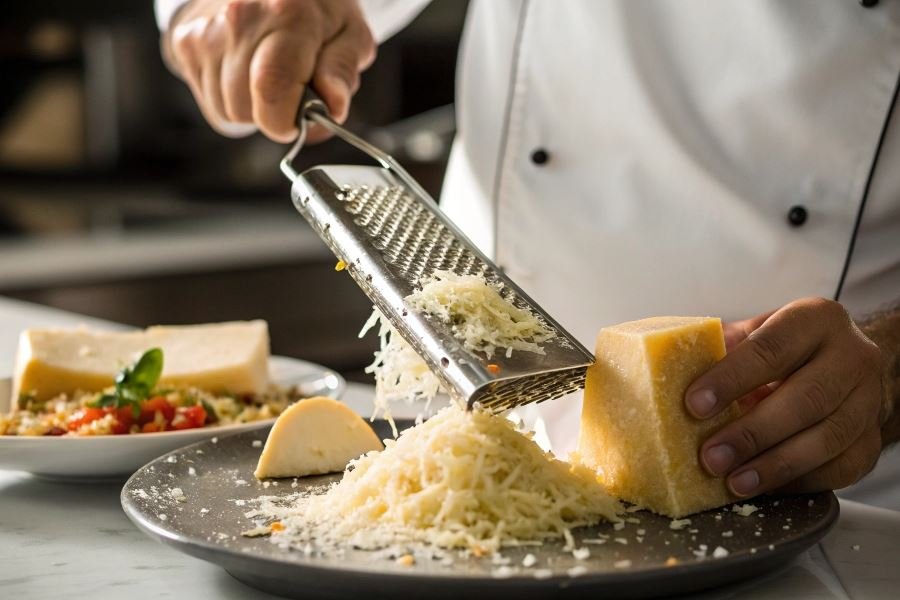
Ever watched a chef transform a humble block of Parmigiano-Reggiano into a cloud of savory perfection in seconds? That’s not just skill—it’s having the right tool for the job.
Behind every perfectly executed risotto and meticulously garnished pasta dish stands a quality cheese grater that most diners never see. In professional kitchens, where consistency and efficiency determine success, selecting the proper cheese grater isn’t merely a purchasing decision—it’s an investment in culinary excellence.
The difference between mediocre and magnificent often comes down to texture and distribution. When cheese is grated properly, it melts uniformly, distributes evenly, and releases optimal flavor compounds. A professional-grade grater creates precisely the right size and shape of cheese particles that can make a Caesar salad transcendent or a cacio e pepe unforgettable.
Flavor science meets presentation artistry
The size and shape of grated cheese particles dramatically affect both taste perception and visual appeal. Microplane-style graters create feathery wisps that melt instantly on contact with hot dishes, while box graters produce heartier shreds that maintain structural integrity in baked applications.
“The texture of grated cheese affects not just how it melts, but how flavor compounds are released on the palate.” — Culinary Institute of America
Key selection factors for professional environments
When evaluating graters for commercial use, consider:
- Construction materials: Stainless steel offers durability and resistance to acidic foods
- Ergonomics: Handle design and stability during high-volume use
- Versatility: Multiple grating surfaces for different textures
- Cleaning efficiency: Critical for maintaining food safety standards
- Durability: Ability to withstand thousands of uses without dulling
The right grater doesn’t just save time—it elevates every dish it touches.
Essential Features That Make or Break Professional Cheese Graters
When equipping a commercial kitchen, the humble cheese grater deserves serious consideration. Far from being a basic tool, professional-grade graters can dramatically impact food preparation efficiency, consistency, and even staff comfort during long shifts.
Selecting the right cheese grater for a professional kitchen environment requires balancing several critical factors including material quality, ergonomic design, and versatility across different cheese varieties. The difference between a mediocre grater and an exceptional one becomes apparent during high-volume service periods when every second and every motion counts.
Material Matters: Stainless Steel vs. Ceramic
The foundation of any quality cheese grater is its material composition. This choice affects everything from durability to food safety.
Stainless steel dominates the professional market for good reason:
- 18/10 grade stainless steel (18% chromium, 10% nickel) offers superior corrosion resistance
- Maintains sharpness through thousands of uses
- Dishwasher safe and sanitizable to commercial standards
- Withstands the rigors of high-volume kitchen environments
Ceramic alternatives have emerged as specialized options with distinct advantages:
- Non-reactive with acidic ingredients
- Extremely hard surface that maintains sharpness
- No metallic transfer to delicate cheeses
- Often lighter weight than all-metal options
| Material | Durability | Sharpness Retention | Cleaning Ease | Price Range |
|---|---|---|---|---|
| 18/10 Stainless | Excellent | Very Good | Excellent | $35-120 |
| Ceramic Blades | Good | Excellent | Good | $45-150 |
| Carbon Steel | Very Good | Excellent | Fair | $30-90 |
Ergonomics: Preventing Kitchen Staff Fatigue
The physical toll of repetitive kitchen tasks cannot be overstated. Ergonomic design elements make a substantial difference during extended prep sessions.
Handle design represents the most critical ergonomic factor:
- Soft-grip silicone or rubberized handles reduce hand strain
- Angled grips that maintain natural wrist position
- Non-slip surfaces for secure handling even with wet hands
Weight distribution plays a surprisingly important role:
- Balanced tools reduce wrist fatigue
- Heavier base/lighter handle combinations provide stability without strain
- Consideration for both right and left-handed users
Frame stability ensures consistent results with minimal effort:
- Wide bases prevent tipping during vigorous grating
- Rubber feet or silicone grips prevent counter sliding
- Frames that accommodate collection containers underneath
Versatility: Multiple Grating Surfaces for Texture Control
Professional kitchens demand tools that can handle diverse applications. The best cheese graters offer multiple grating surfaces.
Essential grating options include:
- Ultra-fine microplane surface for hard cheeses like Parmigiano-Reggiano
- Medium shred for versatile applications with semi-hard cheeses
- Coarse grating for melting cheeses like cheddar and mozzarella
- Slicing surface for uniform cheese slices
Box graters with 4-6 surfaces provide maximum versatility in a single tool, while dedicated single-surface graters often deliver superior results for specific applications.
The most innovative professional graters now include interchangeable drums or plates that allow quick transitions between textures without requiring multiple tools—saving valuable storage space and reducing equipment investment.
When evaluating versatility, consider not just cheese varieties but also other ingredients your kitchen regularly processes, from citrus zest to chocolate and vegetables, ensuring your grater selection delivers maximum utility across your menu.
The Professional’s Guide to Cheese Graters
When it comes to commercial food preparation, the humble cheese grater transforms from a basic kitchen tool into a critical piece of equipment that can make or break your kitchen’s efficiency. Professional kitchens demand tools that deliver consistency, speed, and precision—qualities that separate restaurant-grade graters from their home-kitchen counterparts.
Box graters dominate high-volume operations
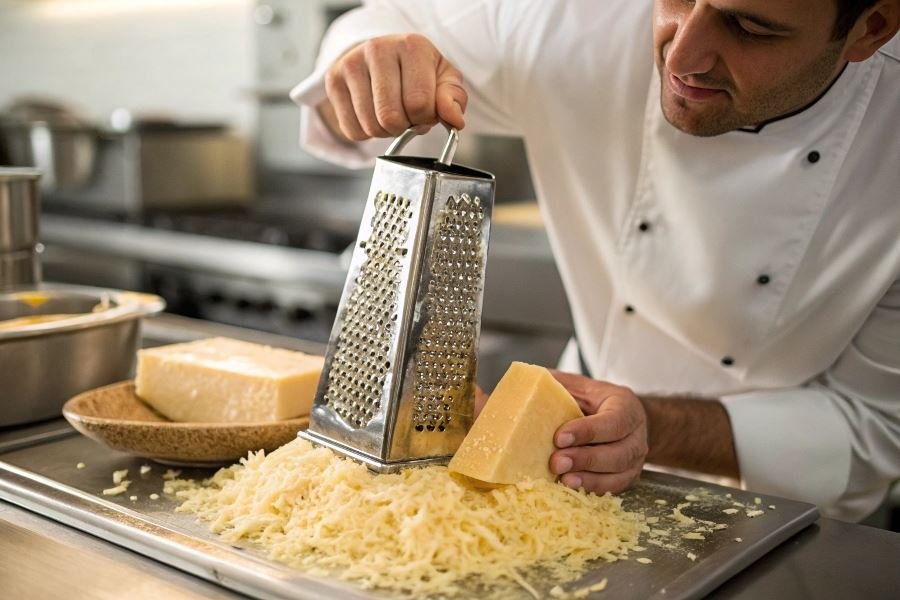
The workhorse of professional kitchens, box graters offer versatility that few other tools can match. These four-sided powerhouses typically feature different grating surfaces, allowing chefs to switch between coarse shreds, fine grates, and even slicing with a simple quarter turn.
What makes box graters particularly valuable in commercial settings is their stability during high-volume production. The wide base and substantial weight prevent sliding, while the large grating surface accommodates significant cheese blocks.
The efficiency advantage comes from the ability to process approximately 2-3 pounds of cheese in under 10 minutes—critical during busy service periods.
However, box graters do present limitations in professional environments:
- Manual operation becomes labor-intensive during extreme volume requirements
- Consistency can vary between staff members
- Cleaning between different cheese types requires thorough attention
The Winco SG-1 stainless steel box grater represents the gold standard, with its commercial-grade construction and dishwasher-safe design that withstands the rigors of professional use.
Rotary graters deliver unmatched production consistency
When consistency is non-negotiable, rotary cheese graters emerge as the professional’s choice. These mechanical marvels use a drum-and-crank system that produces uniform cheese shreds with minimal effort.
The production advantages are substantial:
| Feature | Benefit to Commercial Kitchens |
|---|---|
| Consistent output | Every portion identical in size and texture |
| Speed | Process 5+ pounds in under 10 minutes |
| Reduced fatigue | Mechanical advantage reduces staff strain |
| Portion control | Predictable yield from known input weight |
The Nemco Easy Grating Machine exemplifies commercial-grade rotary technology, with interchangeable drums that allow kitchens to switch between fine, medium, and coarse grates without purchasing multiple units.
For pizzerias and Italian restaurants where cheese is a cornerstone ingredient, rotary graters often become the centerpiece of prep stations, allowing continuous production without the hand fatigue associated with traditional graters.
Microplane precision elevates plating and garnishing
When presentation demands perfection, microplane and rasp-style graters deliver unparalleled precision. These razor-sharp tools create feather-light cheese shavings that melt instantly on hot dishes or create delicate garnishes that transform plating from adequate to exceptional.
The surgical precision of microplanes makes them indispensable for:
- Creating snow-like Parmesan dustings over pasta dishes
- Producing zest-fine cheese accents for salads and appetizers
- Generating melt-in-your-mouth texture for tableside service
The Microplane Professional Series offers commercial-grade durability with photo-etched stainless steel that maintains sharpness through thousands of uses.
The difference between good and exceptional plating often comes down to the tools used for finishing touches. A professional microplane transforms ordinary cheese into an extraordinary garnish.
While microplanes excel at precision work, they’re not designed for volume production. Their specialized role in the professional kitchen focuses on quality over quantity—the final touch that elevates dishes from merely prepared to masterfully crafted.
Discover how to select the perfect cheese grater for your professional kitchen with our comprehensive guide. Learn about essential materials, ergonomic designs, and specialized grater types that enhance efficiency, presentation, and flavor in commercial food preparation.
Discover how to select the perfect cheese grater for your professional kitchen with our comprehensive guide. Learn about essential materials, ergonomic designs, and specialized grater types that enhance efficiency, presentation, and flavor in commercial food preparation.