Did you know that the right drying technology can reduce energy costs by up to 40% while extending garment life by years? The humble drying cabinet—often overlooked in conversations about dry cleaning innovation—has quietly revolutionized how professionals handle everything from delicate silks to heavy leathers.
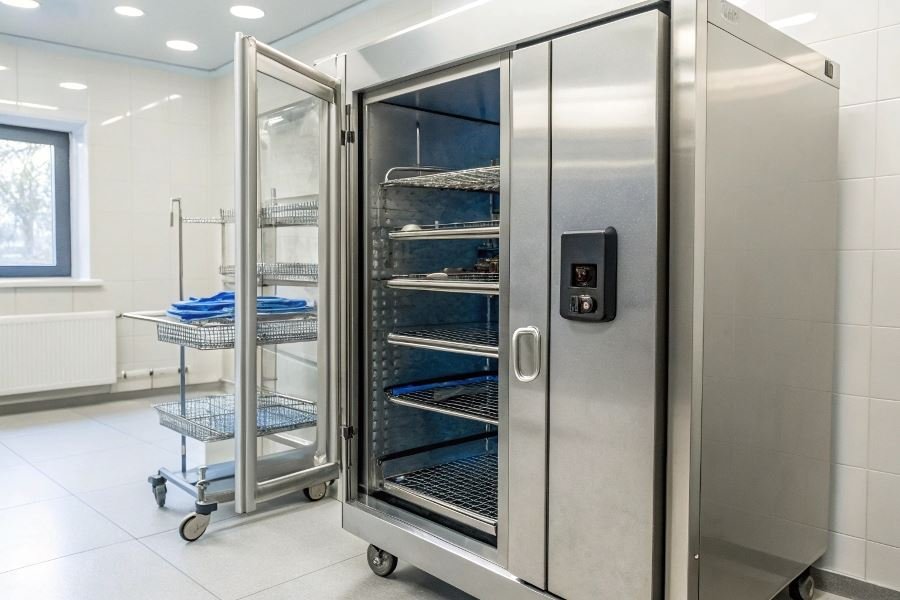
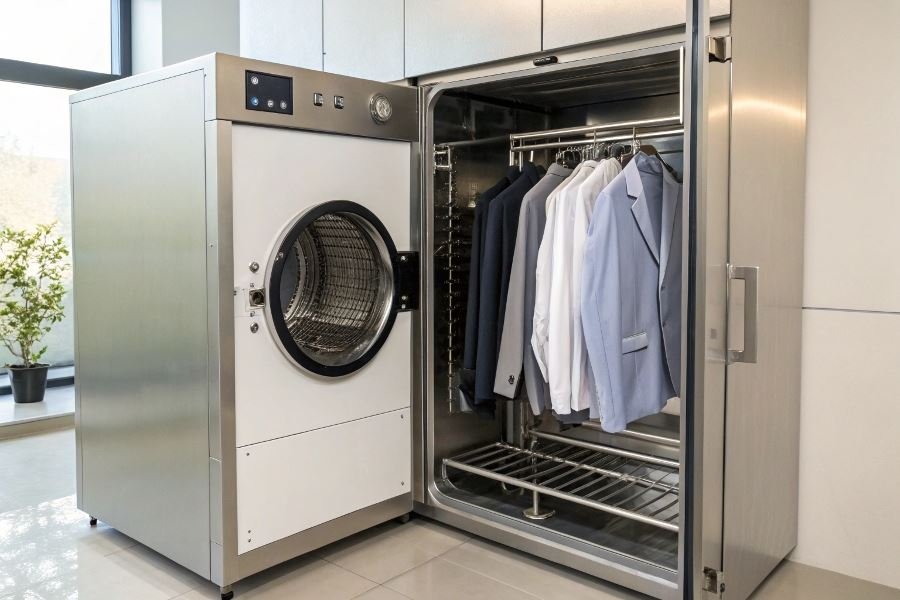
Drying cabinets are specialized equipment designed to remove moisture from garments and textiles in controlled environments. Unlike conventional tumble dryers that agitate fabrics, these cabinets use precision-controlled airflow and temperature systems to dry items hanging in their natural shape. This seemingly simple distinction makes all the difference for maintaining garment integrity and professional results.
The evolution of this technology tells a fascinating story of innovation. Early commercial drying methods relied primarily on air-drying or rudimentary heated rooms. By the 1950s, the first purpose-built drying cabinets emerged, but they were essentially glorified closets with heating elements. Today’s models feature programmable microprocessors, humidity sensors, and energy recovery systems that would have seemed like science fiction to cleaners of previous generations.
Why specialized cabinets outperform conventional methods:
- Shape preservation: Garments dry while hanging, eliminating creasing and distortion
- Temperature precision: Digital controls maintain ideal conditions for specific fabrics
- Humidity management: Active moisture extraction prevents mildew and odors
- Energy efficiency: Modern cabinets use up to 70% less energy than traditional drying methods
For professionals handling high-value garments, these cabinets aren’t just equipment—they’re insurance against the costly mistakes that conventional drying methods risk every day.
The Ultimate Guide to Drying Cabinet Technology
Drying cabinets represent the unsung heroes of modern dry cleaning operations, offering specialized solutions for garments that demand careful handling. These sophisticated machines have revolutionized how businesses approach delicate fabrics, specialty items, and moisture-sensitive materials. Let’s dive into the fascinating world of professional drying technology and explore the distinct advantages each system brings to the table.
The landscape of drying cabinets for dry cleaning: types and features continues to evolve with technological advancements that prioritize fabric care, energy efficiency, and operational flexibility. Understanding the nuances between different systems can dramatically impact both your operational costs and customer satisfaction levels.
Heat Pump Drying: The Efficiency Champion
Heat pump drying cabinets stand at the forefront of energy-efficient technology in the dry cleaning industry. These systems operate on a closed-loop principle that recycles heat rather than generating it anew with each cycle.
Key advantages include:
- Energy consumption reductions of 40-60% compared to conventional systems
- Temperature precision within ±2°F for exceptional fabric protection
- Extended garment lifespan due to lower operating temperatures
- Significantly reduced carbon footprint for environmentally conscious operations
The Electrolux Professional TS560 exemplifies this technology, utilizing advanced moisture sensors that automatically adjust drying parameters based on real-time fabric conditions. This intelligent approach prevents over-drying while ensuring complete moisture removal from even the most challenging materials.
Condenser Technology: Moisture Management Masters
Condenser drying cabinets excel in environments where external venting proves challenging or impossible. These self-contained systems extract moisture from garments and convert it to water for easy disposal.
The condensation process involves cooling humid air to force water vapor to transition to liquid state, effectively removing moisture without excessive heat.
| Feature | Benefit |
|---|---|
| No external venting required | Flexible installation options |
| Closed-system operation | Consistent performance regardless of ambient conditions |
| Water collection systems | Eliminates humidity release into surrounding spaces |
| Programmable humidity sensors | Customizable drying profiles for different fabric types |
The Miele Professional PT8257 condenser cabinet delivers exceptional results for businesses with space constraints or installation limitations, offering 15 specialized programs for everything from delicate silks to heavy outerwear.
Vented Systems: Airflow Optimization
Vented drying cabinets represent the traditional approach to moisture removal, utilizing direct airflow pathways to channel humid air outside the facility. Modern vented systems have evolved significantly from their predecessors.
Installation considerations include:
- Proper ducting with minimal bends (each 90° turn reduces efficiency by approximately 5%)
- Exterior wall access for exhaust placement
- Backdraft dampers to prevent cold air infiltration
- Makeup air systems for operational balance
The Maytag Commercial MDG series incorporates advanced airflow engineering that creates multi-directional currents within the cabinet, eliminating cold spots and ensuring uniform drying across all garment surfaces.
These systems typically offer the fastest drying times in the industry, making them ideal for high-volume operations where throughput represents a critical business metric. Their straightforward design also translates to lower initial investment costs and simplified maintenance requirements.
Making Smart Choices: Drying Cabinet Features That Matter
When investing in drying cabinets for your dry cleaning operation, the details make all the difference between merely adequate performance and exceptional results. Let’s dive into the critical features that separate standard equipment from game-changing technology.
Right-sizing for business demands
The capacity of your drying cabinet directly impacts throughput and profitability. Most professional models range from compact 5kg units to industrial-scale 30kg powerhouses. The key question isn’t just “how big?” but “how efficient for your specific workflow?”
A mid-sized operation processing 100 garments daily might find optimal performance with a 15kg cabinet that allows for multiple daily cycles rather than a larger unit that sits half-empty. Consider not just today’s volume but your three-year growth projection.
Physical dimensions matter tremendously in space-constrained environments:
| Cabinet Type | Typical Footprint | Height | Capacity | Ideal For |
|---|---|---|---|---|
| Compact | 24″ x 30″ | 72″ | 5-8kg | Boutique cleaners, supplemental capacity |
| Standard | 32″ x 36″ | 78″ | 10-15kg | Medium operations, specialized items |
| Industrial | 48″ x 42″ | 84″ | 20-30kg | High-volume facilities, commercial contracts |
Remember that clearance requirements for ventilation and maintenance access can add 30% to your space needs beyond the stated dimensions.
Control systems that deliver precision
Modern drying cabinets have evolved far beyond simple timers and temperature dials. Advanced microprocessor controls now offer unprecedented precision that directly translates to better results and longer garment life.
The difference between basic and advanced control systems is stark:
Basic systems offer preset programs with limited customization, while intelligent systems provide:
- Moisture sensors that automatically adjust cycle length
- Temperature monitoring accurate to within 1°F
- Programmable memory for custom cycles by fabric type
- Remote monitoring capabilities via smartphone apps
- Preventative maintenance alerts
Electrolux Professional and Schulthess lead the industry with intuitive touchscreen interfaces that allow operators to create specialized programs for delicate fabrics, heavily soiled workwear, or water-repellent outerwear.
The economics of efficiency
Energy consumption represents 15-20% of operational costs for the average dry cleaning business. The most efficient drying cabinets now feature:
- Heat pump technology that reduces energy use by up to 60%
- Recirculation systems that capture and reuse heated air
- Variable-speed fans that adjust to load size
- Automatic shutdown when optimal dryness is reached
The financial impact is substantial. A cabinet with heat pump technology might cost $3,000 more upfront but save $1,200 annually in energy costs—paying for itself in just 2.5 years while reducing carbon footprint.
When evaluating efficiency, look beyond the purchase price to calculate total cost of ownership:
“The true cost of drying equipment isn’t what you pay at purchase, but what you pay every month in utilities, maintenance, and labor hours.”
The most sophisticated models from Miele Professional and Girbau now include energy monitoring dashboards that track consumption patterns and identify optimization opportunities, giving owners unprecedented visibility into operational costs.
By carefully weighing capacity needs, control sophistication, and energy performance, you’ll select equipment that not only meets today’s requirements but positions your business for long-term success.
Discover modern drying cabinet technologies for professional dry cleaning operations. Compare heat pump, condenser, and vented systems while learning key selection criteria for energy efficiency, capacity, and advanced controls to optimize your cleaning business.
Discover modern drying cabinet technologies for professional dry cleaning operations. Compare heat pump, condenser, and vented systems while learning key selection criteria for energy efficiency, capacity, and advanced controls to optimize your cleaning business.