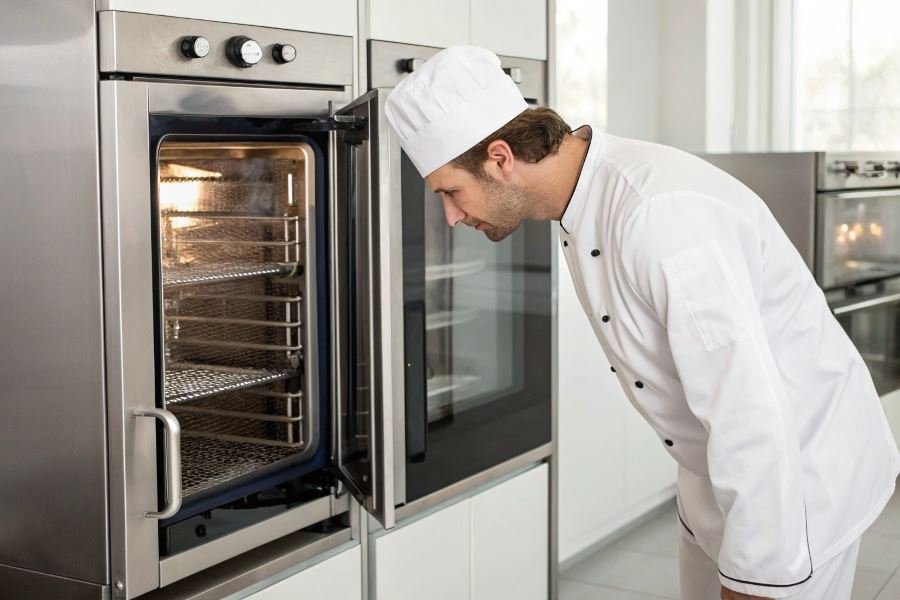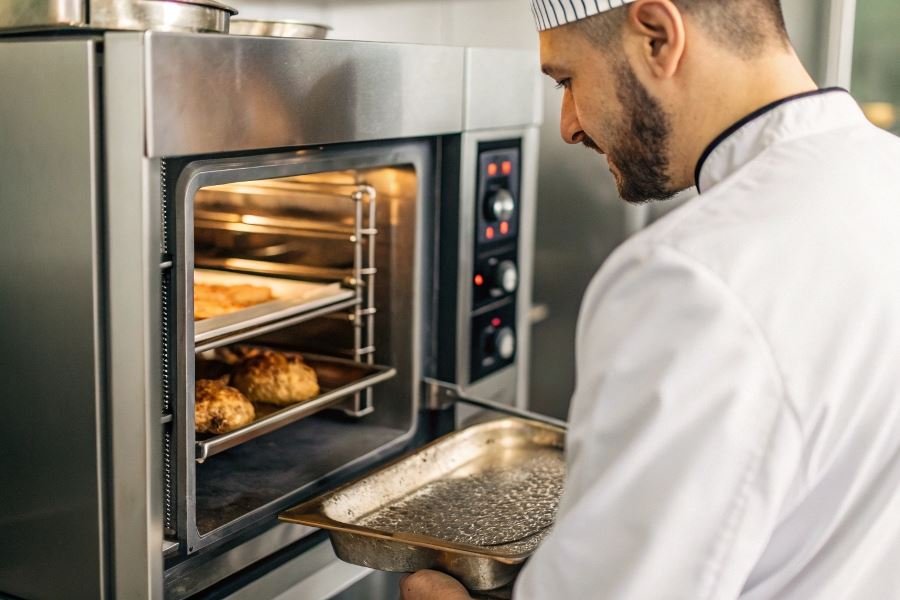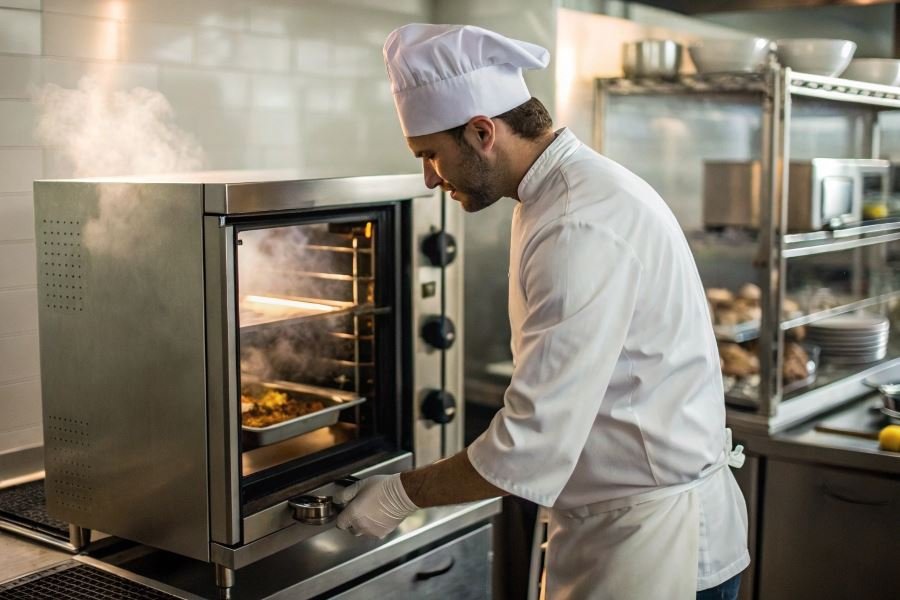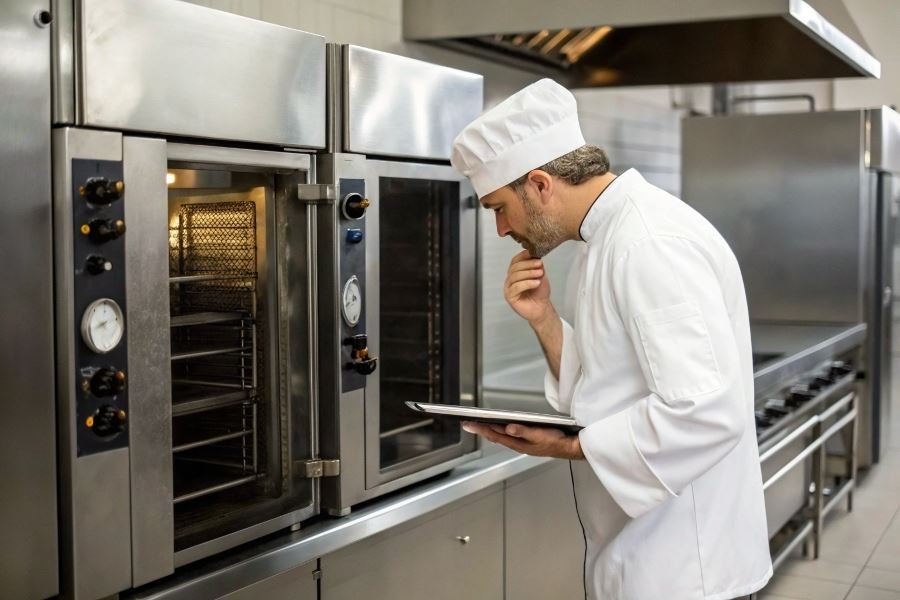
Ever watched a chef produce perfectly roasted meats, steamed vegetables, and baked desserts from the same piece of equipment? That’s the magic of combi ovens – the Swiss Army knife of professional kitchens that’s increasingly finding its way into high-end residential spaces.
Combi ovens represent the pinnacle of cooking versatility, combining three distinct cooking methods in one powerful unit: convection (dry heat), steam, and a combination of both. This culinary trifecta allows chefs to roast, steam, bake, grill, and even sous-vide with precision that was once impossible from a single appliance.
The market for these versatile workhorses has exploded, with global sales projected to reach $3.5 billion by 2027. Restaurant kitchens have embraced combi ovens for years, but now discerning home chefs are discovering their transformative potential, driving a 15% annual growth in residential installations.
The electric vs. gas decision
When selecting between electric and gas models, three critical factors should guide your decision:
-
Infrastructure availability: Your existing utility setup may dictate your choice, as retrofitting can be costly.
-
Recovery time: Gas models typically heat up faster and recover temperature more quickly after door openings – crucial during high-volume service.
-
Precision control: Electric units often provide more consistent low-temperature performance, making them superior for delicate items like pastries and fish.
The difference extends beyond the power source – each type brings distinct advantages to your cooking approach, affecting everything from flavor development to operational costs.
Electric vs Gas Combi Ovens: The Ultimate Performance Showdown
When selecting commercial kitchen equipment, few decisions impact daily operations more than choosing between electric and gas combi ovens. These versatile workhorses have revolutionized professional kitchens, combining convection, steam, and combination cooking modes in a single unit. The comparison between electric and gas combi ovens reveals significant differences that directly affect your bottom line, cooking results, and operational workflow.
Energy Efficiency and Cost Considerations
Electric combi ovens typically achieve 70-80% energy efficiency, converting most input energy directly into heat. In contrast, gas models generally operate at 40-60% efficiency due to heat loss through combustion. However, the efficiency equation isn’t quite so straightforward.
Cost analysis reveals surprising truths: While gas units consume more energy by BTU, natural gas typically costs 30-45% less than electricity per equivalent energy unit. A commercial Rational iCombi Pro electric model might cost 3.50−4.00 per hour to operate, while its gas counterpart might run 2.75−3.25 hourly.
Long-term operational math favors gas in regions with high electricity rates, potentially saving 2, 000−3,000 annually for high-volume operations.
Cooking Performance and Temperature Control
| Feature | Electric Combi Ovens | Gas Combi Ovens |
|---|---|---|
| Heat-up time | 3-5 minutes | 5-8 minutes |
| Temperature precision | ±1-2°F | ±3-5°F |
| Recovery time | Faster | Slower |
| Humidity control | More precise | Less precise |
Electric models deliver superior temperature precision and faster recovery times after door openings. The Alto-Shaam Vector electric combi ovens maintain temperature variations within 1-2°F, critical for delicate pastries and precise sous vide applications.
Gas combi ovens excel with higher maximum heat output, reaching temperatures up to 575°F versus the typical 550°F maximum in electric models. This makes them particularly valuable for high-heat applications like pizza and bread baking where that characteristic flame-kissed finish is desired.
Installation Requirements and Space Considerations
Electric installation requires:
- Adequate electrical capacity (typically 208-240V, three-phase)
- No ventilation for combustion air
- Simpler utility connections
Gas installation demands:
- Gas line installation (natural gas or propane)
- Proper ventilation for combustion gases
- More complex safety systems
- Often requires professional installation
Space efficiency tips: Electric models can be installed virtually anywhere with adequate electrical service, while gas units require proper clearances for combustion air and ventilation. The Convotherm 4 series offers stackable electric models that maximize vertical space utilization—impossible with most gas units due to ventilation requirements.
Maintenance Needs and Longevity Expectations
Electric combi ovens typically offer:
- 8-12 year average lifespan
- Lower maintenance costs ($400-600 annually)
- Fewer moving parts and potential failure points
- Simpler troubleshooting
Gas models generally require:
- More frequent maintenance ($600-900 annually)
- Professional service for gas components
- Additional attention to burners, igniters and gas valves
- More complex descaling procedures
The maintenance differential can add 1, 500−2,500 to the total cost of ownership over a gas combi oven’s lifetime.
Both types require regular descaling, but electric models generally have more automated cleaning systems. The Henny Penny FlexFusion combi ovens feature advanced self-cleaning systems that significantly reduce maintenance time regardless of power source.
When weighing these factors, consider your specific operational needs, utility costs, and cooking applications to determine which type will deliver the best return on investment for your commercial kitchen.
Making the Right Choice: Electric vs Gas Combi Ovens
When investing in commercial kitchen equipment, few decisions impact your operation quite like choosing between electric and gas combi ovens. These versatile workhorses deliver exceptional results—but which power source aligns with your specific culinary needs and business goals?
Electric Combi Ovens Shine in These Settings
Electric combi ovens have carved out a dominant position in certain environments for good reason. Their precision temperature control makes them the preferred choice for:
Bakeries and patisseries where consistent, even heat distribution is non-negotiable for delicate pastries and breads. The stable heat environment prevents hot spots that can ruin a perfect croissant or soufflé.
Fine dining establishments benefit from electric models’ ability to maintain exact humidity levels—critical when preparing sous vide dishes or delicate fish that require moisture retention without overcooking.
Hotels and catering operations appreciate electric units for their quick recovery times between temperature changes, allowing seamless transitions between cooking methods during high-volume service periods.
Electric combi ovens also excel in:
- Locations with limited ventilation requirements
- Kitchens with existing robust electrical infrastructure
- Operations prioritizing lower initial installation costs
- Environments where noise reduction is valuable
Gas Combi Ovens Deliver in These Scenarios
Gas-powered combi ovens command respect in high-volume, energy-intensive operations where their advantages become most apparent:
Large-scale production kitchens leverage gas models’ faster heat-up times and recovery rates—cutting precious minutes from cooking cycles when feeding hundreds or thousands.
24/7 operations like hospitals and correctional facilities benefit from the typically lower operational costs of gas, especially in regions where natural gas prices remain competitive compared to electricity rates.
Restaurants with flame-cooking traditions appreciate how gas combi ovens can impart subtle flavor characteristics that electric models simply can’t replicate.
The ideal environments for gas combi ovens include:
- Facilities with existing gas lines and infrastructure
- Regions with high electricity costs but affordable natural gas
- Operations requiring maximum cooking power and recovery
- Kitchens with robust ventilation systems already in place
ROI Analysis: The Long Game Matters
When evaluating the investment proposition of combi ovens, looking beyond the price tag reveals the true cost story:
| Factor | Electric Combi Ovens | Gas Combi Ovens |
|---|---|---|
| Initial Purchase | Generally 10-15% lower | Higher upfront cost |
| Installation | Simpler, lower cost | More complex, requires ventilation |
| Energy Efficiency | 70-85% efficient | 40-60% efficient |
| Maintenance | Fewer moving parts | More components to service |
| Lifespan | 7-10 years average | 8-12 years average |
| Utility Costs | Higher in most regions | Lower operating costs |
The breakeven calculation often favors gas models in high-volume operations running 8+ hours daily, where the higher initial investment is offset by lower energy costs within 2-3 years.
Smart operators consider utility rate trends when making this decision. With commercial electricity rates showing volatility in many markets, gas models provide some insulation against future energy price increases.
For sustainability-focused businesses, electric combi ovens paired with renewable energy sources like solar can dramatically reduce carbon footprint while providing long-term cost stability—an increasingly important consideration for brand reputation and regulatory compliance.
The ultimate value proposition extends beyond simple energy calculations to include labor savings, food quality consistency, and reduced product waste—areas where both electric and gas combi ovens deliver substantial returns compared to conventional cooking equipment.
Discover the key differences between electric and gas combi ovens with our comprehensive comparison. Learn about energy efficiency, cooking performance, installation requirements, and which type offers better long-term value for your specific needs.
Discover the key differences between electric and gas combi ovens with our comprehensive comparison. Learn about energy efficiency, cooking performance, installation requirements, and which type offers better long-term value for your specific needs.