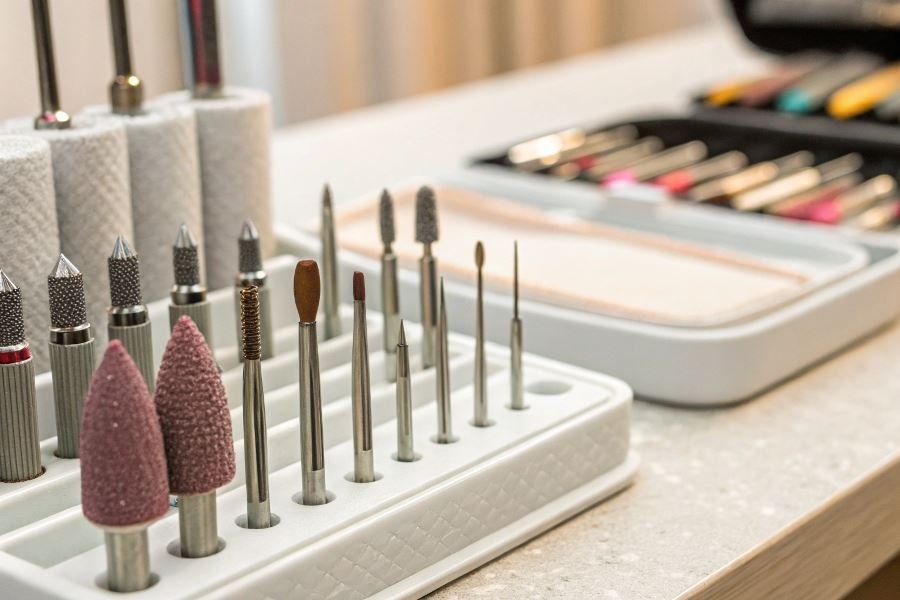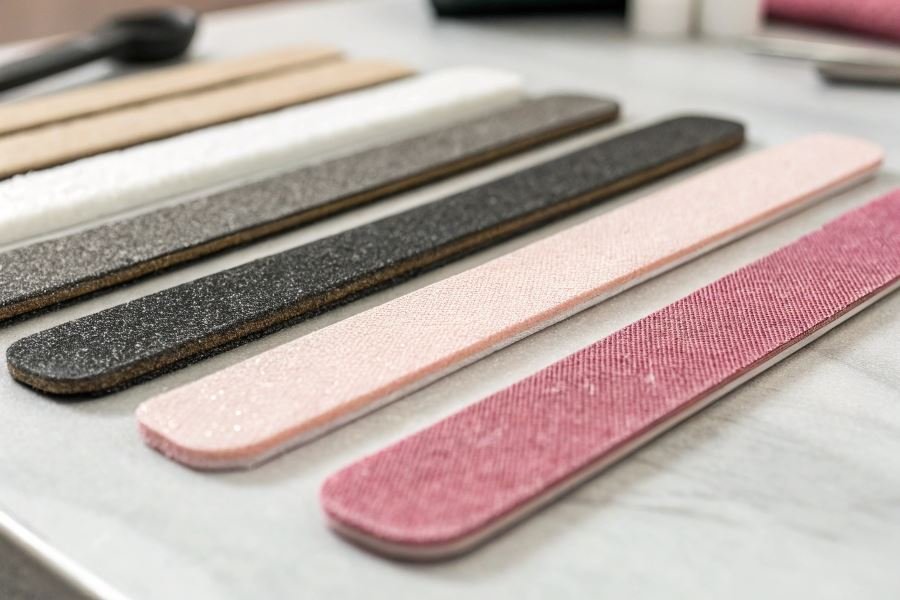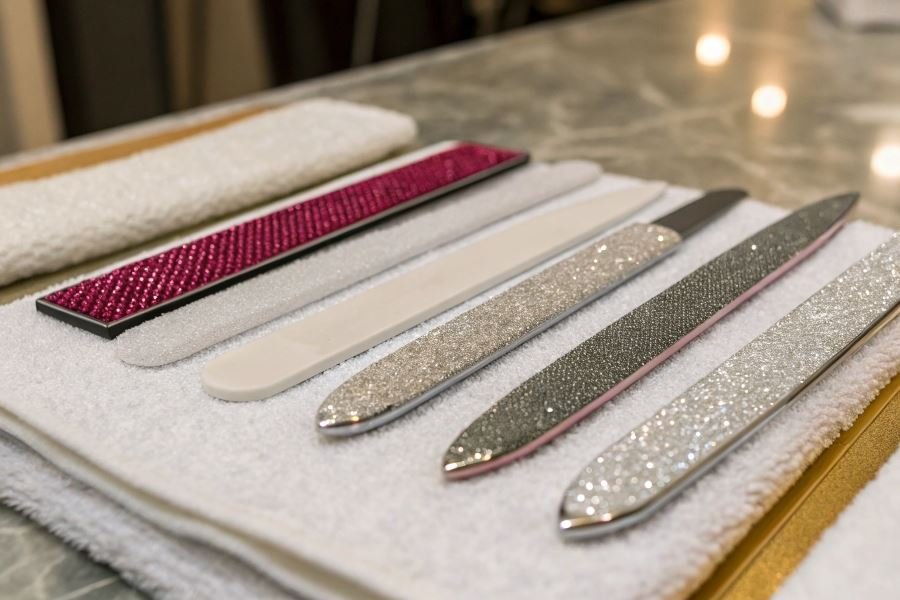
Ever wondered why your manicure at home never quite matches the salon finish? The secret might be sitting right in your drawer. Professional nail files—those unassuming tools that separate amateur attempts from flawless finishes—have evolved dramatically since their ancient origins.
The journey of professional nail files traces back to ancient Egypt, where nobility used polished stones and pumice to shape their nails. Fast forward to the 1830s when the first modern emery boards appeared, and we’ve now entered an era where professional nail files are engineered with scientific precision. Today’s professional files are designed with specific grits, shapes, and cores that household versions simply can’t match.
Material matters more than you think. Professional nail files typically feature industrial-grade abrasives bonded to specialized cores, while household versions often use lower-quality materials that wear quickly and unevenly. The difference? Professional files create microscopically smooth nail edges that resist splitting and breaking.
“The grit number on a professional file isn’t just marketing—it’s a precise measurement of abrasive particle size that determines how the file interacts with the nail structure.”
What truly separates professional files is their longevity and consistency. While a drugstore emery board might last through a handful of manicures, professional files can maintain their effectiveness for months or even years with proper care. They’re designed to work with—not against—the natural nail structure, preventing the micro-tears that lead to breakage and splitting.
The evolution of precision
Professional nail files have undergone remarkable refinement, particularly in the last two decades. The introduction of ceramic, glass, and sapphire crystal materials has revolutionized how professionals approach nail shaping. These materials allow for incredibly precise filing without generating excessive heat or causing nail trauma.
The Engineering Behind Professional Nail Files
When you hold a professional nail file, you’re gripping a precision tool engineered specifically for consistent, controlled nail shaping. The differences between professional files and household analogs go far beyond price point—they represent fundamentally different approaches to nail care technology.
Professional nail technicians understand that the tools they select directly impact client satisfaction and service quality. Professional files for nail files: differences from household analogs become immediately apparent when examining material composition, grit specifications, and ergonomic design features. These distinctions aren’t merely marketing—they translate to tangible performance differences that affect both the nail technician’s efficiency and the client’s experience.
Material Composition: The Foundation of Performance
Professional nail files typically feature premium core materials that dramatically outperform household options:
| Material Type | Professional Files | Household Files | Durability |
|---|---|---|---|
| Stainless Steel | Common in high-end files | Rare | 1+ years with proper care |
| Tempered Glass | Crystal technology | Low-quality glass | 3-6 months professional use |
| Ceramic | Precision-engineered | Basic ceramic | 6+ months with sanitization |
| Padded Cushion Core | Multi-layer construction | Single layer | 2-3× longer lifespan |
The professional-grade Diamancel files, for instance, incorporate industrial diamond particles permanently embedded in nickel plating—a manufacturing process that creates files capable of withstanding thousands of services while maintaining consistent performance.
Grit Variations: The Science of Precision
Grit specifications matter tremendously in professional settings. While household files typically offer one or two generic surfaces, professional files feature precisely calibrated grit measurements:
- 80-100 grit: Aggressive reduction for artificial nail systems
- 180-240 grit: Refined shaping for natural nails
- 600-1200 grit: Finishing and buffing for high-gloss results
Professional nail technicians often work with complete grit systems rather than single files. The Kupa Inc professional series, for example, offers calibrated progression through multiple grit levels, allowing technicians to move systematically from shaping to finishing without damaging the nail plate.
Ergonomic Excellence: The Human Factor
The ergonomic advantages of professional files represent perhaps the most overlooked difference between professional and household options. Consider these design elements exclusive to professional tools:
- Balanced weight distribution that reduces technician fatigue during extended services
- Contoured gripping surfaces engineered for precision control
- Specialized shapes designed for specific nail types and techniques
- Sanitization-friendly materials that withstand disinfection protocols
The Antoine de Paris professional files exemplify this approach with anatomically correct handles that reduce repetitive stress injuries—a critical consideration for technicians performing multiple services daily.
Professional files also feature specialized edge designs that prevent catching and tearing during use. This seemingly minor detail makes a significant difference in service quality and client comfort, particularly when working with thin or damaged natural nails.
The investment in professional nail files delivers measurable returns through improved efficiency, consistent results, and extended tool lifespan—making them essential equipment for serious nail professionals committed to excellence.
Making the Smart Investment: Professional vs Household Nail Files
When it comes to nail care tools, the decision between professional-grade files and household options isn’t just about price—it’s about value, performance, and long-term satisfaction. Let’s break down what really matters when making this choice.
The True Cost of Quality
Professional nail files typically range from $15 to $50 for premium options, while household varieties might cost just $2 to $10. But focusing solely on the price tag misses the bigger financial picture.
A professional-grade Kupa Inc file might cost $30 upfront but can last through 500+ filing sessions before showing significant wear. Compare this to a drugstore emery board that dulls after just 5-10 uses, and the math becomes compelling:
| File Type | Initial Cost | Uses Before Replacement | Cost Per Use |
|---|---|---|---|
| Professional | $30 | 500+ | $0.06 or less |
| Household | $5 | 5-10 | 0.50−1.00 |
The professional option delivers up to 16 times more value per dollar spent. This calculation doesn’t even factor in the superior results and reduced filing time that professionals enjoy.
Maintaining Your Investment
Professional files don’t just last longer—they’re designed for maintenance:
- Sanitization capability: Professional files can withstand alcohol, acetone, and autoclave sterilization without degradation
- Washability: Many can be cleaned with soap and water without losing grit effectiveness
- Resurfacing options: Some metal-core files can be resurfaced when worn
Household files, by contrast, are generally disposable. Paper emery boards absorb moisture and bacteria, making them impossible to properly sanitize. Even budget “washable” files typically lose their effectiveness after just a few cleanings.
The longevity difference isn’t just about durability—it’s about maintaining hygienic standards throughout the file’s lifespan.
Finding Your Perfect Match
Different users have different needs, and the right choice depends on your specific situation:
For Occasional Home Users
If you file your nails once weekly or less, a middle-ground option like a Glass Nail File ($8-15) offers the best balance. These files:
- Last significantly longer than emery boards
- Can be washed and sanitized
- Provide smoother results than budget options
- Work well on natural nails
For Frequent Users or Natural Nail Enthusiasts
If you maintain your natural nails regularly or are particular about shape and finish, investing in a professional cushioned file (100/180 grit) from brands like Medicool makes sense. The precision and control justify the $15-25 investment.
For Enhancement Services
Those working with gel, acrylic, or dip powder systems—whether professionally or at home—will find professional files non-negotiable. The precision, durability, and specialized grits (80-240) available from professional brands like Young Nails are essential for proper application and maintenance.
The bottom line: Professional nail files aren’t just for professionals. They’re for anyone who values efficiency, consistent results, and long-term economy. When you factor in longevity, performance, and maintenance capabilities, professional files aren’t just better—they’re actually more affordable over time.
Discover why professional nail files outperform household options with superior materials, specialized grits, and ergonomic designs. Learn how quality differences impact results and longevity for better nail care investments.
Discover why professional nail files outperform household options with superior materials, specialized grits, and ergonomic designs. Learn how quality differences impact results and longevity for better nail care investments.