When the margin for error is measured in seconds, what stands between a worker and disaster? In high-risk industries like chemical manufacturing, oil extraction, and nuclear power generation, the answer is specialized protective workwear—equipment engineered not just for comfort, but for survival.
Specialized workwear sets represent purpose-built protective systems designed to shield workers from industry-specific hazards that can maim, poison, or kill. Unlike conventional uniforms, these integrated systems combine multiple protective elements—from flame-resistant fabrics to chemical-impervious barriers—creating comprehensive defense against environmental threats.
The regulatory landscape governing protective workwear has evolved dramatically since OSHA’s establishment in 1970. Today’s standards like NFPA 70E for electrical hazards and ANSI/ISEA 107 for high-visibility clothing don’t merely suggest—they mandate specific performance requirements, with non-compliance carrying penalties up to $145,027 per violation.
“Protection isn’t just about having gear—it’s about having the right gear that meets or exceeds every applicable standard.”
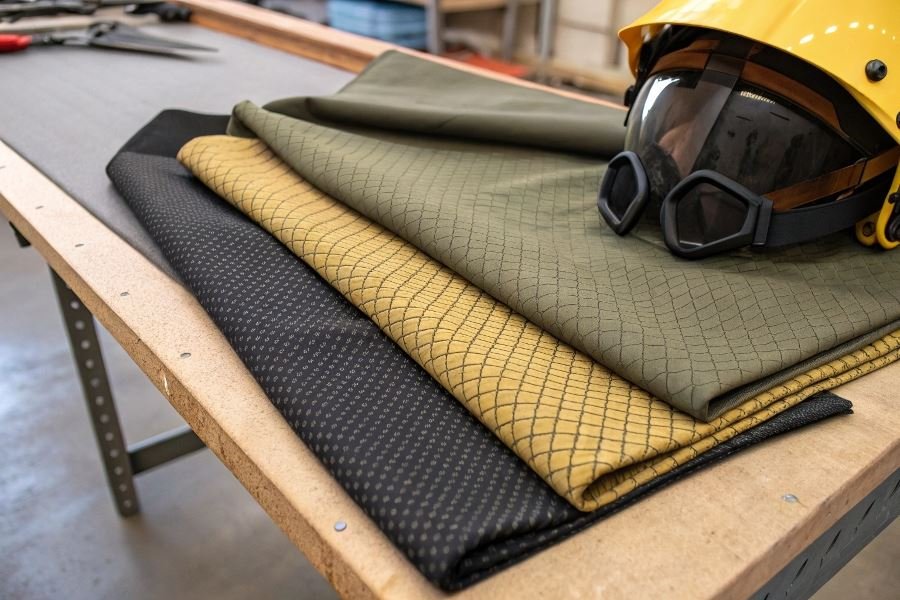
What truly revolutionized the field was the materials science breakthrough of the 1980s. Traditional cotton coveralls have given way to advanced composites like Nomex® and Kevlar® that can withstand temperatures exceeding 700°F without breaking down. Modern protective fabrics now incorporate carbon nanotubes, phase-change materials, and smart textiles that can detect hazardous conditions and alert wearers before exposure occurs.
The evolution continues with wearable technology integration, creating protective systems that not only shield workers but monitor vital signs, environmental conditions, and even worker location—transforming workwear from passive protection to active safety management systems.
The Anatomy of Protection: Engineering Safety in Extreme Environments
When lives hang in the balance, specialized workwear becomes the critical barrier between workers and potentially devastating hazards. The engineering behind these protective systems represents some of the most innovative material science and design thinking in the industrial safety sphere.
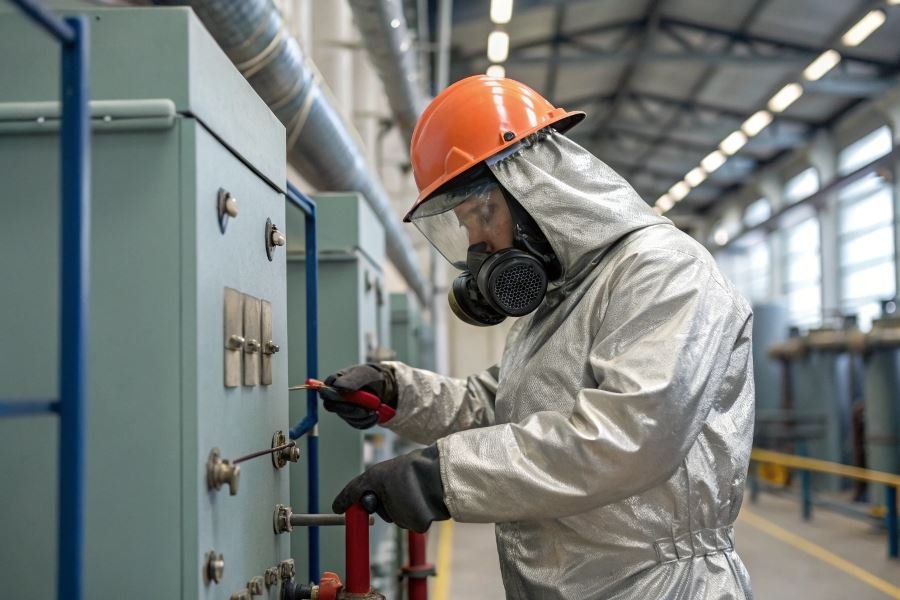
Modern specialized workwear sets for hazardous industries have evolved far beyond simple coveralls and hard hats. Today’s protection systems integrate multiple defense layers working in concert to shield workers from chemical splashes, arc flashes, extreme temperatures, and flying debris. These comprehensive systems represent the culmination of decades of research, countless field tests, and unfortunately, lessons learned from industrial accidents.
Head-to-toe integration redefines protection
The most effective protective gear operates as a unified system rather than disconnected pieces. This integration manifests in several key ways:
- Sealed interfaces between components prevent hazardous materials from penetrating vulnerable junctions
- Compatibility engineering ensures respirators work seamlessly with helmets and eye protection
- Mobility optimization balances protection with the practical need for workers to perform complex tasks
The difference between adequate and exceptional protection often comes down to these connection points. For example, DuPont’s Tychem suits feature taped seams and specialized closures that maintain integrity even during vigorous movement, while 3M’s integrated respiratory systems connect directly to protective hoods without compromising seal integrity.
Material science at the frontline
The fabrics and composites in today’s protective gear bear little resemblance to workwear of previous decades:
| Material Innovation | Primary Protection | Industry Application |
|---|---|---|
| PTFE-laminated fabrics | Chemical permeation | Chemical manufacturing |
| Meta-aramid blends | Flash fire/Arc flash | Oil & gas operations |
| Cut-resistant composites | Lacerations/Punctures | Mining and fabrication |
| Liquid metal-resistant textiles | Molten metal splashes | Foundry operations |
These advanced materials often incorporate multiple protective properties. For instance, Milliken’s FR (flame-resistant) fabrics not only self-extinguish but also wick moisture to prevent heat stress—a leading cause of workplace accidents when workers remove protection due to discomfort.
Industry-tailored solutions
Different hazardous environments demand specialized adaptations:
Oil and gas workwear features hydrocarbon-resistant outer layers, anti-static properties to prevent spark ignition, and often includes H₂S gas indicators that change color when exposed to this deadly gas common in petroleum operations.
Mining protection prioritizes visibility in low-light conditions, incorporates reinforced impact zones at shoulders and knees, and features specialized dust barriers to prevent silicosis and other respiratory diseases.
Chemical manufacturing gear employs sophisticated barrier technologies with documented breakthrough times for specific compounds. Ansell’s chemical suits, for example, provide detailed permeation data for hundreds of industrial chemicals, allowing safety managers to select appropriate protection for specific exposure risks.
The most effective specialized workwear doesn’t just protect—it enhances worker performance through ergonomic design, weight reduction, and climate management features that reduce fatigue and cognitive load during critical operations. This human-centered approach to protection engineering represents the future of industrial safety in our most challenging work environments.
Maximizing Safety Through Smart Workwear Decisions
The quality markers that truly matter
When lives are on the line, workwear quality isn’t just a preference—it’s a necessity. The difference between standard and exceptional protective gear often comes down to material composition and construction techniques. Flame-resistant (FR) garments, for instance, should contain aramid fibers like those used in DuPont Nomex or Kevlar, which maintain integrity even when exposed to temperatures exceeding 700°F.
Certification standards tell the real story. Look beyond marketing claims to verify compliance with industry benchmarks like NFPA 2112 for flash fire protection or ASTM F1506 for arc flash protection. These aren’t just bureaucratic checkmarks—they represent rigorous testing under conditions that simulate real-world hazards.
The fit factor cannot be overstated. Properly sized workwear provides full range of motion without excess material that could catch on equipment. Many leading manufacturers like Carhartt FR now offer ergonomic designs with pre-bent sleeves and articulated knees that move naturally with workers.
The most expensive workwear isn’t always the safest—but the cheapest rarely is.
Investment thinking in protective equipment
When analyzing workwear costs, the initial purchase price represents just the tip of the financial iceberg. A comprehensive cost-benefit analysis must factor in:
| Cost Factor | Budget Workwear | Premium Workwear |
|---|---|---|
| Initial Investment | $150-300/set | $400-800/set |
| Replacement Frequency | 6-12 months | 2-3 years |
| Productivity Impact | Moderate | Minimal |
| Injury Risk | Higher | Lower |
| Annual Total Cost | Higher | Lower |
The math becomes clear when you consider that premium FR coveralls might cost $250 more upfront but last three times longer than budget alternatives. Factor in reduced downtime from fewer replacements and the enhanced protection that potentially prevents costly injuries, and the premium option often delivers superior ROI.
Smart procurement strategies can further optimize value. Bulk purchasing, standardizing on interchangeable components, and establishing relationships with manufacturers can yield discounts of 15-25% while ensuring consistent quality and availability.
Extending workwear lifespan through proper care
Even the highest quality protective gear will fail prematurely without proper maintenance. Implementing a systematic inspection protocol is essential—daily visual checks for tears, thinning, or contamination, combined with weekly more thorough examinations of seams, closures, and reflective elements.
Laundering practices dramatically impact performance longevity. Many specialized workwear items require specific cleaning protocols:
- FR garments should never be washed with fabric softeners, which can create a flammable residue
- Chemical-resistant clothing often needs neutralization procedures before standard cleaning
- High-visibility elements require gentle washing to preserve reflective properties
Documentation creates accountability. Implementing a tracking system for each workwear set—recording purchase date, inspection history, and exposure incidents—provides data-driven insights for optimizing replacement cycles.
The replacement decision should be triggered by clear criteria rather than arbitrary timelines. 3M and other safety leaders recommend immediate replacement when garments show signs of:
- Thinning material or visible wear patterns
- Compromised closures (zippers, buttons, hook-and-loop)
- Contamination that cannot be fully removed
- Exposure to significant hazard events, even if damage isn’t visible
By treating specialized workwear as a critical safety system rather than a consumable expense, organizations can simultaneously enhance protection and optimize their safety investment.
Discover industry-leading protective workwear sets engineered for extreme hazards. Our comprehensive guide examines cutting-edge materials, compliance standards, and essential safety features that safeguard workers in high-risk environments like oil & gas, mining, and chemical manufacturing.
Discover industry-leading protective workwear sets engineered for extreme hazards. Our comprehensive guide examines cutting-edge materials, compliance standards, and essential safety features that safeguard workers in high-risk environments like oil & gas, mining, and chemical manufacturing.