Ever wondered why some nail designs look flawlessly professional while others fall flat? The secret often lies not in the polish, but in what applies it.
Behind every stunning nail masterpiece stands an arsenal of specialized brushes, each designed with specific techniques in mind. Professional nail artists understand that brush selection isn’t merely about preference—it’s about precision, control, and artistic possibility. The right brush transforms challenging techniques into achievable art.
Anatomy of excellence
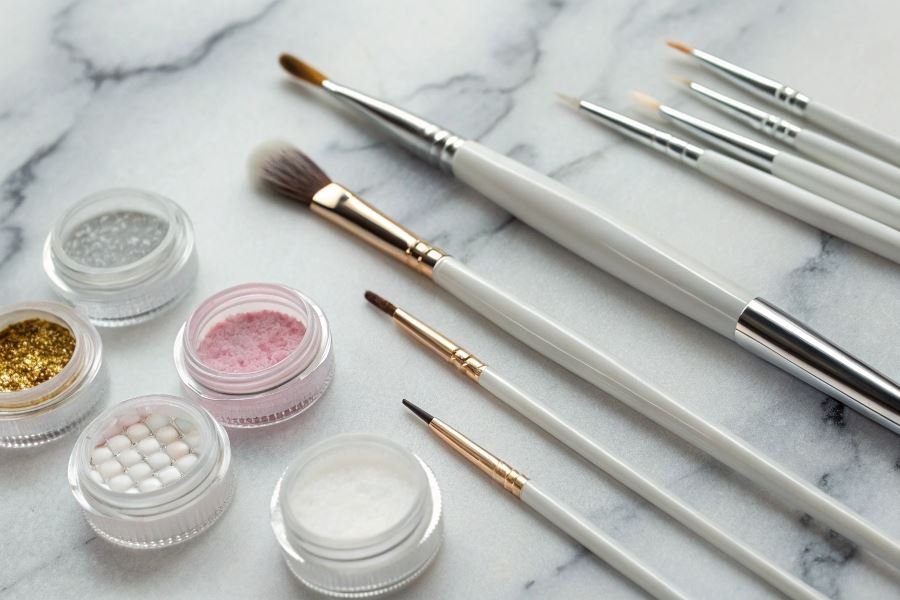
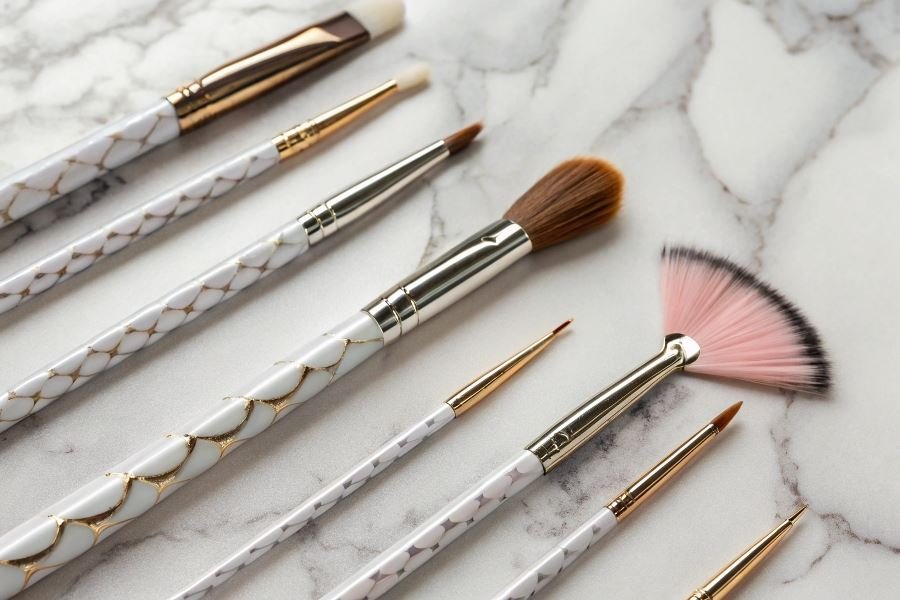
Quality nail brushes consist of three critical components: handle, ferrule, and bristles. The handle provides balance and control, while the ferrule (the metal part connecting handle to bristles) ensures durability. But the true magic happens in the bristles themselves.
“The difference between amateur and professional nail art often comes down to brush quality. Premium bristles hold product differently, release it more precisely, and maintain their shape through hundreds of applications.”
Premium brushes feature bristles that respond intuitively to pressure changes, allowing for everything from whisper-thin lines to bold strokes. Natural bristles (often kolinsky sable) excel at detailed work, while synthetic options offer versatility for gel applications.
The brush-result relationship
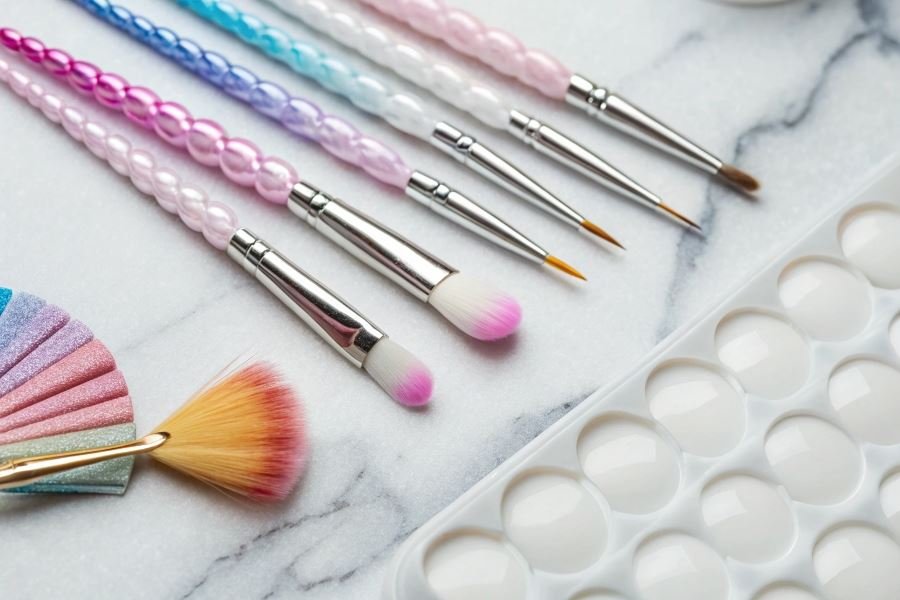
The impact of proper brush selection becomes immediately apparent in the final design. Fine detailing brushes with pointed tips create crisp lines and intricate patterns impossible with standard brushes. Fan brushes blend colors seamlessly for gradient effects, while angled brushes make French tips effortless.
When artists match technique to tool, designs gain dimension, precision, and professional polish that clients instantly recognize—and are willing to pay premium prices to obtain.
The Brush Arsenal for Nail Design Mastery
Selecting the right tools transforms ordinary nail services into extraordinary art. Professional nail technicians understand that brushes are the extensions of their creativity—each designed with specific purposes that unlock different techniques and effects. Understanding what brushes are needed for different nail design techniques is crucial for achieving professional-quality results that clients will rave about.
Flat Brushes: The Foundation Builders
Flat brushes serve as the workhorses in any nail artist’s collection. With their wide, rectangular shape and straight-cut bristles, these brushes distribute product evenly across the nail surface.
Base coat application becomes effortless with a medium-width flat brush (6-8mm). The broad surface covers the nail quickly while maintaining control around cuticles. For gradient techniques, flat brushes excel at creating smooth color transitions by gently dabbing and blending adjacent polish shades.
Premium flat brushes typically feature synthetic bristles that resist acetone damage, extending their lifespan significantly compared to natural hair alternatives.
| Flat Brush Width | Best Used For | Recommended Material |
|---|---|---|
| 4-6mm | Precise base application, small nails | Synthetic nylon |
| 8-10mm | Standard application, ombré effects | Synthetic taklon |
| 12-15mm | Quick coverage, dramatic gradients | Synthetic kolinsky |
When selecting flat brushes, firmness matters as much as width. Stiffer bristles provide better control for polish application, while slightly more flexible options excel at creating soft gradient effects.
Detail Brushes: Precision Instruments
Detail brushes transform nail canvases into miniature masterpieces. These fine-tipped tools feature tapered points that allow for incredible precision.
Line work brushes (sizes 00-1) create everything from geometric patterns to delicate stripes. The finest detail brushes, sometimes called liner brushes, taper to nearly a single hair point, enabling artists to create intricate designs like florals, lace patterns, and even portraiture on larger nail surfaces.
For the most demanding detail work, look for brushes with:
- Natural kolinsky sable hair for superior paint retention
- Metal ferrules that won’t corrode with acetone exposure
- Balanced handles that reduce hand fatigue during detailed sessions
The difference between amateur and professional nail art often comes down to brush quality—premium detail brushes maintain their points longer and hold the perfect amount of product.
Fan Brushes: Texture and Dimension Creators
Fan brushes might be the most distinctive-looking tools in the nail artist’s collection, with their splayed bristle arrangement creating unique effects impossible to achieve with other brush types.
Blending capabilities make fan brushes essential for creating marble effects, feathered designs, and subtle color transitions. The spread bristles distribute product in a diffused pattern, perfect for:
- Creating realistic stone textures
- Applying fine glitter in graduated patterns
- Achieving airbrushed effects without an airbrush machine
- Crafting delicate feather designs
Pro tip: When using fan brushes for texture effects, load minimal product and use a light touch. Building up layers gradually creates more realistic dimension than heavy application.**
Fan brushes come in various widths, with smaller fans (4-6mm) offering more control for detailed texturing and larger fans (10-15mm) excelling at full-nail effects. For maximum versatility, a medium-width fan brush with natural-synthetic blended bristles provides the perfect balance of control and effect.
The right brush collection transforms limitations into possibilities. By understanding the unique capabilities of flat, detail, and fan brushes, nail artists can confidently approach any design challenge with the perfect tool for the job.
Brush Care: The Secret to Nail Design Longevity
Cleaning Different Brush Types Properly
Professional nail artists know that brushes are investments, not disposables. Each brush type demands specific cleaning protocols to maintain optimal performance.
For acrylic brushes, immediate cleaning is non-negotiable. After each use, wipe excess product on a lint-free wipe, then swirl (don’t soak!) in monomer for 10-15 seconds. Follow with a gentle reshape using your fingers. Never use acetone on natural hair brushes—it strips essential oils and causes splaying.
Gel brushes require different treatment. After application, wipe excess product and clean with a brush cleaner specifically formulated for gel residue. Products like OPI Expert Touch or CND Offly Fast remove stubborn gel without damaging bristles. For synthetic gel brushes, a quick wipe with 91% isopropyl alcohol works effectively.
Detail and art brushes demand precision cleaning. Use a small dish of acetone for synthetic bristles or brush cleaner for natural hair. Gently swirl, then wipe on a lint-free pad. For fine detailing brushes, reshape the tip immediately while damp using your fingers.
The first 30 seconds after use determine 90% of your brush’s lifespan.
Storage Solutions That Preserve Quality
Proper storage extends brush life dramatically. The cardinal rule? Never store brushes bristle-down—gravity pulls moisture into the ferrule, loosening it over time.
Horizontal storage in dedicated brush cases prevents bristle deformation while protecting tips from damage. For traveling nail technicians, roll-up canvas brush holders with individual sleeves prevent cross-contamination and bristle damage.
For stationary setups, consider these options:
| Storage Type | Best For | Maintenance Required |
|---|---|---|
| Acrylic Stands | Daily use brushes | Weekly dusting |
| Magnetic Holders | Metal ferrule brushes | Monthly repositioning |
| Brush Guards | Expensive detail brushes | Replace every 3 months |
| Canvas Rolls | Complete collections | Wash quarterly |
Temperature and humidity control matter significantly. Store brushes away from direct sunlight, extreme temperature fluctuations, and bathroom humidity. The ideal environment mirrors art supply storage: cool, dry, and consistent.
Recognizing When Replacement Is Necessary
Even with impeccable care, brushes have lifespans. Knowing when to retire them saves frustration and ensures consistent results.
For acrylic brushes, replacement indicators include:
- Bristles that remain splayed after cleaning
- Ferrule loosening from the handle
- Inability to form a precise point
- Significant bristle loss during application
Gel brushes typically need replacement when bristles become permanently stained or stiff, affecting product application. Most professional gel brushes maintain optimal performance for 6-8 months with proper care.
Detail brushes require more frequent replacement, especially when used with pigments or glitters. When precision diminishes or bristles begin fraying, it’s time for a new brush—typically every 3-4 months for daily users.
The investment in quality brushes pays dividends in application precision. A $30 kolinsky acrylic brush with proper care outlasts five $10 alternatives, while delivering superior results throughout its lifespan.
Remember that different techniques stress brushes differently. 3D nail art brushes face more pressure than flat application brushes, potentially shortening their useful life despite excellent care.
By implementing these professional-grade maintenance practices, your nail design brushes will deliver exceptional performance, precision, and value—transforming them from mere tools into reliable partners in your artistic journey.
Discover the perfect brushes for every nail design technique! From flat brushes for gradients to detail brushes for intricate art, learn how to choose, use, and maintain professional tools for stunning manicures.
Discover the perfect brushes for every nail design technique! From flat brushes for gradients to detail brushes for intricate art, learn how to choose, use, and maintain professional tools for stunning manicures.