
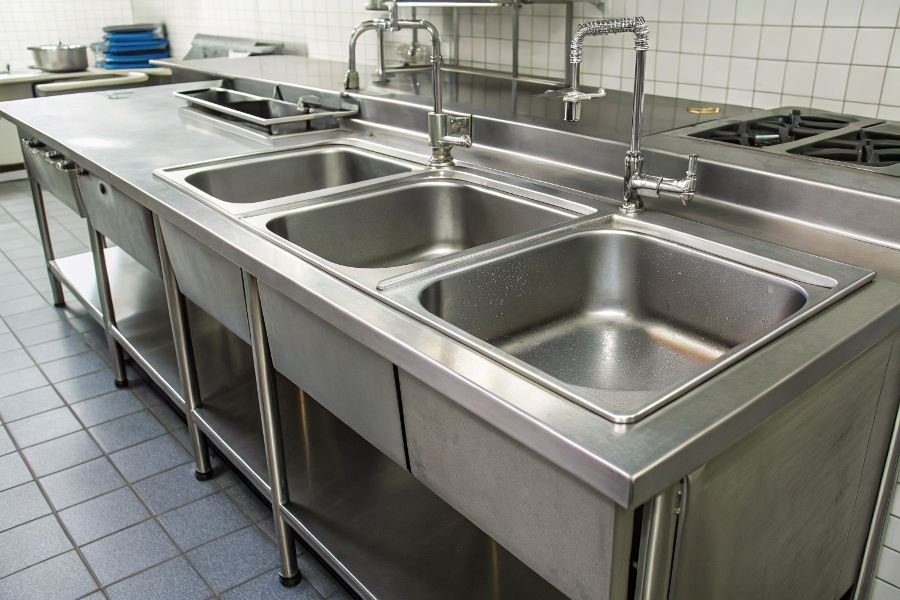
Ever walked into a restaurant kitchen and noticed how everything revolves around the sinks? Probably not—and that’s exactly the point. When commercial sinks function perfectly, they become invisible. When they fail, they can bring an entire operation crashing down.
Behind every immaculate plate at your favorite restaurant lies a carefully orchestrated washing system. The humble sink—often overlooked during restaurant planning—actually serves as command central for food safety, operational efficiency, and regulatory compliance.
“The sink is the heartbeat of sanitation in commercial kitchens,” notes the National Restaurant Association’s food safety guidelines. Health departments across the country mandate specific requirements for commercial sinks, including dedicated handwashing stations separate from food preparation areas, three-compartment washing systems for proper sanitization, and materials that resist bacterial growth.
But compliance is just the beginning. Thoughtfully selected sinks dramatically impact workflow. A poorly positioned sink creates bottlenecks during rush periods. Inadequate basin depth leads to splashing and cross-contamination risks. Insufficient drainboard space means nowhere to place freshly washed items.
The financial implications extend beyond the initial purchase. Water efficiency features can reduce utility bills by up to 30%, while ergonomically designed sinks minimize staff fatigue and potential workplace injuries.
When selecting commercial sinks, restaurant owners must balance immediate budgetary constraints against long-term operational needs. The right sink doesn’t just meet health codes—it elevates the entire kitchen’s performance.
The Ultimate Commercial Sink Selection Guide
Restaurant kitchens demand equipment that can withstand relentless daily use while meeting strict health codes. At the heart of any commercial kitchen operation sits the humble yet critical washing sink—a workhorse that can make or break your kitchen’s efficiency. Selecting the right commercial sink requires careful consideration of materials, configurations, and installation requirements that align with your specific operational needs.
When establishing criteria for choosing a washing sink for a restaurant, three fundamental factors stand out: material quality, size configuration, and installation specifications. Each element plays a crucial role in determining whether your sink will be a long-term asset or a recurring headache.
Stainless Steel: The Gold Standard
Stainless steel dominates the commercial sink market for good reason. Not all stainless steel is created equal, however. The difference lies in the grade:
- 304 stainless steel (18/8): Contains 18% chromium and 8% nickel, offering superior corrosion resistance and durability. Ideal for most restaurant environments.
- 316 stainless steel: Includes molybdenum for enhanced protection against harsh chemicals and salt environments. Perfect for seafood preparation areas.
- 430 stainless steel: More affordable but less resistant to corrosion. Suitable for light-duty applications or budget constraints.
The gauge (thickness) matters significantly—lower numbers indicate thicker, more durable material. Commercial kitchens should prioritize 14-16 gauge sinks that resist denting and vibration during heavy use.
Maintenance requirements vary by finish. Standard brushed finishes hide scratches better than mirror finishes, while specialized antimicrobial coatings can reduce bacterial growth by up to 99.9% between cleanings.
Configuration: Finding Your Perfect Compartment Count
The configuration decision typically revolves around operational workflow:
| Configuration | Best For | Typical Dimensions |
|---|---|---|
| Single Compartment | Bar areas, prep stations | 18-24″ width |
| Double Compartment | Standard wash/rinse setup | 33-48″ width |
| Triple Compartment | Full wash/rinse/sanitize protocol | 54-72″ width |
Double compartment sinks offer the versatility most restaurants need, providing separate wash and rinse areas. For establishments handling raw proteins or requiring strict sanitization protocols, triple compartment models become essential to meet health department requirements for the wash-rinse-sanitize sequence.
Consider depth carefully—standard 14″ depths work for most applications, but prep sinks may benefit from shallower 10-12″ depths, while pot washing stations might require deeper 16-18″ basins.
Installation: The Details That Make or Break
Proper installation ensures your sink functions flawlessly for years. Key considerations include:
-
Plumbing compatibility: Ensure your sink’s drain size (typically 1.5″ to 2″) matches existing plumbing or plan for adapters. Pre-drilled faucet holes must align with your chosen fixtures.
-
Mounting options:
- Drop-in models: Easier installation but create seams that can trap debris
- Undermount designs: Provide seamless countertop transitions but require solid surface countertops
- Wall-mounted units: Maximize floor space and simplify cleaning
- Space utilization: Allow minimum 24″ clearance on either side of the sink for efficient workflow. Consider drainboard integration for additional workspace in tight kitchens.
ADA compliance may require specific heights (34″ maximum rim height) and insulation for exposed pipes if the sink will be accessible to all staff members.
The right commercial sink balances material quality, practical configuration, and thoughtful installation to create a functional centerpiece for your kitchen operations. Investing time in proper selection pays dividends through improved workflow efficiency and reduced maintenance headaches for years to come.
Beyond Basics: Advanced Sink Selection for Restaurant Success
Ergonomic Design That Powers Productivity
Restaurant kitchens are high-pressure environments where staff spend hours at washing stations. The right ergonomic design isn’t just about comfort—it’s about maximizing efficiency and preventing costly injuries.
The optimal sink height sits between 36-38 inches, aligning perfectly with most workers’ waist height. Height-adjustable models are gaining traction, allowing customization for different staff members throughout shifts. Leading manufacturers like Advance Tabco now offer hydraulic-lift systems that can accommodate workers of varying heights.
Consider sink depth carefully—too shallow and you’ll face constant splashing; too deep and shorter staff will strain their backs. The sweet spot? A 10-12 inch bowl depth provides ample washing space while remaining accessible.
The handle design might seem trivial until you’ve operated a busy kitchen. Wrist-operated handles or foot pedals eliminate the need to touch faucets with contaminated hands, reducing cross-contamination risks while improving workflow. T&S Brass offers sensor-activated faucets that have shown to reduce water usage by up to 30% while improving hygiene protocols.
Water and Energy Efficiency That Protects Your Bottom Line
Modern commercial sinks aren’t just workhorses—they’re sophisticated tools for resource management. Pre-rinse spray valves with flow rates of 1.28 gallons per minute (compared to older 3-5 GPM models) can save restaurants an average of 300−500 annually per sink station.
| Sink Feature | Potential Annual Savings | Initial Investment |
|---|---|---|
| Low-flow aerators | 150−250 | 15−30 |
| Sensor faucets | 300−450 | 200−400 |
| Insulated sink bowls | 75−125 | 100−200 |
Insulated sink bowls maintain water temperature longer, reducing the energy needed for constant reheating. This seemingly small feature can translate to measurable utility savings over time.
Water recirculation systems are the next frontier in commercial sink efficiency. These systems filter and reuse rinse water for pre-washing, cutting water consumption by up to 50% in high-volume operations. While the initial investment ranges from 1, 200−2,500, the ROI typically materializes within 18-24 months.
Specialized Features That Transform Workflow
The difference between standard and exceptional sink stations often comes down to thoughtfully designed accessories.
Integrated backsplashes (ideally 8-10 inches high) prevent water damage to walls while creating a seamless, sanitary surface that’s easy to clean. Look for models with curved corners rather than 90-degree angles, which eliminate hard-to-clean crevices where bacteria thrive.
Drainboards aren’t just convenient—they’re workflow multipliers. Double-sided drainboards create dedicated zones for soiled and clean items, preventing cross-contamination. Eagle Group offers customizable configurations with drainboards that can support up to 14 standard dish racks per hour.
The latest innovation? Modular sink systems with interchangeable components. These allow restaurants to reconfigure washing stations seasonally or as menu offerings evolve. Removable cutting boards, specialized colanders, and dedicated sanitizing compartments transform standard sinks into multi-functional workstations.
Smart accessories like pull-out spray hoses with adjustable pressure settings can reduce cleaning time by up to 25%, particularly valuable during peak service periods when every second counts.
When selecting these features, prioritize seamless integration rather than standalone additions—unified systems eliminate the crevices and joints that harbor bacteria and complicate cleaning protocols.
Discover the essential criteria for selecting the perfect restaurant washing sink that meets health code requirements while maximizing workflow efficiency. Learn about material options, size configurations, and ergonomic features that ensure compliance and durability.
Discover the essential criteria for selecting the perfect restaurant washing sink that meets health code requirements while maximizing workflow efficiency. Learn about material options, size configurations, and ergonomic features that ensure compliance and durability.

