Ever wondered why some elite operators can wear their helmets for 18-hour missions while others develop excruciating headaches after just two? The answer lies not in toughness, but in the intricate science of ergonomics.
When selecting armored head protection, most buyers fixate exclusively on ballistic ratings and threat levels. Yet the most critical factor for real-world effectiveness isn’t stopping power—it’s whether you’ll actually wear it when it matters. The perfect helmet unworn offers zero protection.
The evolution of armored helmet design tells a fascinating story of human-centered innovation. Early military helmets from World War I were essentially metal bowls with rudimentary suspension systems. By contrast, today’s advanced models feature multi-point adjustment systems, precision-engineered padding, and weight distribution technologies that seemed impossible just decades ago.
The protection paradox
Modern helmet designers face what experts call “the protection paradox”—the constant tension between adding protective elements and maintaining wearability. Each additional layer of ballistic material adds weight, heat retention, and potential pressure points.
“A helmet that causes distraction through discomfort becomes a liability rather than an asset in high-stress situations.” – International Journal of Protective Equipment, 2023
The most advanced manufacturers now employ 3D head-mapping technology to create shells that conform to various head shapes. This represents a dramatic shift from the “one-size-fits-most” approach that dominated the industry until the early 2000s.
Finding your perfect fit
The difference between adequate and optimal fit isn’t just comfort—it’s survival. A properly fitted helmet:
- Distributes weight evenly across the head
- Minimizes movement during rapid acceleration
- Maintains consistent coverage during dynamic activities
- Reduces fatigue during extended wear periods
The revolution in comfort technology hasn’t come at the expense of protection. Rather, it’s enhanced it by ensuring operators maintain situational awareness without the distraction of discomfort.
The Science of Helmet Comfort: Why Ergonomics Matter
When professionals put their lives on the line, the last thing they need is equipment that causes discomfort or distraction. The difference between a well-designed armored helmet and a subpar one isn’t just about protection—it’s about operational effectiveness. Comfort and ergonomics of armored helmets: key parameters when choosing can make the difference between maintaining focus during critical moments and being distracted by equipment limitations.
Weight distribution that works with your body
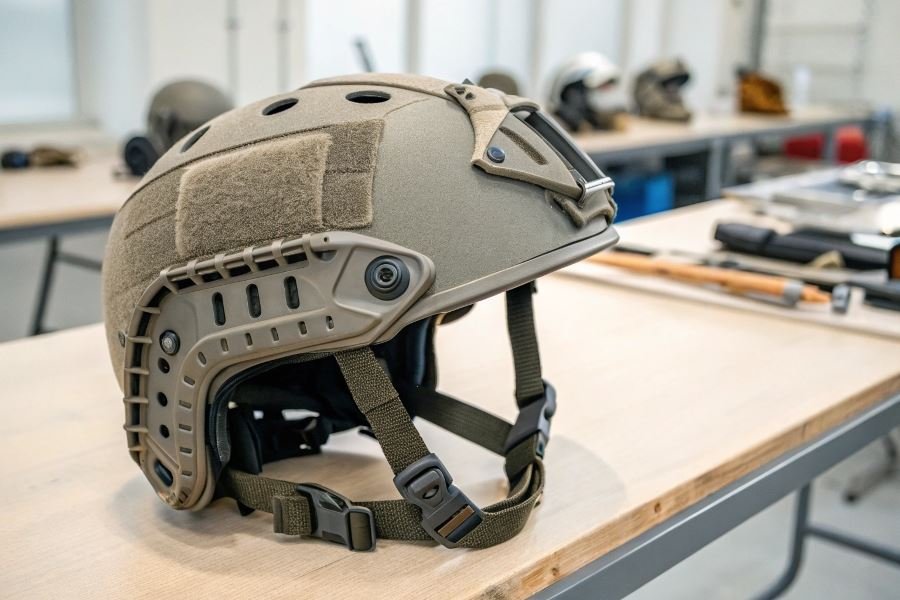
The most advanced ballistic protection means nothing if the helmet creates neck strain or fatigue. Modern armored helmets have evolved significantly from their predecessors, with manufacturers like Team Wendy and Ops-Core pioneering designs that distribute weight evenly across the head.
The science of balance in helmet design involves careful consideration of the center of gravity. A well-balanced helmet positions weight closer to the skull’s centerline rather than front-loaded or top-heavy designs that create leverage against neck muscles. This seemingly small detail can prevent chronic neck issues and reduce fatigue during extended operations.
Premium helmets typically weigh between 2.5-3.5 pounds, with elite models achieving protection-to-weight ratios that were impossible just a decade ago.
Interior systems that adapt to you
The contact points between helmet and head determine long-term wearability. Modern interior padding systems have transformed from the basic webbing of military helmets from the 1980s to sophisticated multi-layer comfort systems.
Advanced interior systems feature:
| Feature | Benefit |
|---|---|
| Memory foam padding | Conforms to individual head shape |
| Modular pad placement | Allows customization for different head shapes |
| Moisture-wicking fabrics | Reduces heat buildup and improves comfort |
| Impact absorption layers | Provides additional protection during impacts |
The MTEK FLUX system exemplifies this evolution with its tool-less adjustment capability, allowing operators to fine-tune fit in seconds rather than minutes.
Ventilation: The overlooked essential
Heat management within armored helmets represents one of the most significant advances in modern designs. Cognitive performance decreases measurably as body temperature rises, making ventilation channels more than just a comfort feature.
Strategic vent placement creates passive airflow that pulls heat away from the scalp even when stationary. Active ventilation systems in premium models can reduce interior temperatures by up to 10°F compared to traditional designs.
Field of vision that doesn’t compromise
The peripheral vision limitations of older helmets created dangerous blind spots. Today’s ergonomic designs feature cut patterns that extend visibility to nearly 180 degrees horizontally while maintaining protection for vital areas.
The visibility-protection balance requires sophisticated engineering, with manufacturers using computer modeling to identify the minimum material needed for protection while maximizing the field of view. The difference between 160° and 170° of horizontal vision might seem minor until you’re scanning for threats in a dynamic environment.
Integration capabilities for modern operations
The final ergonomic consideration involves compatibility with essential communication and sensory equipment. Modern helmets feature standardized mounting points for:
- Night vision devices
- Communication headsets
- Tactical cameras
- Respiratory protection
The 3M Peltor ComTac headset integration capabilities demonstrate how crucial this compatibility has become, with dedicated channels and mounting points that maintain helmet stability while accommodating additional equipment.
When evaluating armored helmets, these ergonomic factors collectively determine whether the helmet becomes a seamless extension of the operator or a constant reminder of equipment limitations. The best designs disappear from consciousness, allowing complete focus on the mission at hand.
Making the Right Choice for Comfort in Armored Helmets
When selecting an armored helmet, the difference between adequate protection and exceptional protection often comes down to comfort and ergonomics. After examining the technical specifications and protection standards, it’s time to focus on making a selection that will serve you well through extended wear periods while maintaining its protective qualities.
Matching helmets to mission requirements
The perfect helmet doesn’t exist—but the perfect helmet for your specific needs absolutely does. Start by honestly assessing your operational environment:
- Urban tactical scenarios demand helmets with excellent peripheral vision and communication system integration
- Extended field operations require lightweight designs with superior ventilation
- Vehicle-centric missions need profiles that accommodate headsets and allow proper scanning without neck strain
A helmet that excels for a SWAT team member might prove unbearable for a border patrol agent spending 12-hour shifts in desert heat. The Team Wendy EXFIL Ballistic excels in adaptability across various scenarios, while the Ops-Core FAST series prioritizes weight reduction for extended operations.
The most advanced ballistic protection becomes worthless if discomfort forces you to remove it when you need it most.
Long-term comfort considerations
When evaluating helmets for extended wear, look beyond the initial “fitting room” comfort:
| Comfort Factor | Why It Matters | Warning Signs |
|---|---|---|
| Weight distribution | Prevents neck strain and fatigue | Hot spots on skull after 2+ hours |
| Padding compression | Maintains fit over time | Loosening fit after several months |
| Suspension system | Distributes impact and weight | Pressure points during movement |
| Ventilation efficiency | Prevents heat buildup | Excessive sweating within 30 minutes |
The military’s extensive research shows that even minor discomfort compounds dramatically after the 4-hour mark. The 3M Ultra Light Weight Ballistic Bump Helmet addresses this with its innovative suspension system that maintains comfort during 8+ hour operations.
Extended wear testing should be part of your evaluation process. A helmet that feels fine for 20 minutes in a store might become unbearable after 3 hours in the field. If possible, arrange for trial periods that mimic your actual usage patterns.
Maintaining ergonomic integrity
Even the most ergonomically advanced helmet will degrade without proper maintenance. Preserving comfort requires systematic care:
- Regular padding inspection – Look for compression, hardening, or deterioration quarterly
- Suspension system maintenance – Check and tighten adjustment points monthly
- Ventilation pathway clearing – Remove debris from air channels after dusty operations
- Shell-to-padding interface – Verify secure attachment points haven’t loosened
The Galvion Batlskin Viper system includes replaceable comfort components specifically designed to maintain ergonomic properties throughout the helmet’s ballistic lifespan.
Remember that environmental factors accelerate degradation. Extreme heat can deform padding, while saltwater exposure can stiffen adjustment mechanisms. Document your maintenance schedule and keep records of replacement parts to ensure consistent protection and comfort.
By thoughtfully evaluating your specific needs, considering long-term wear factors, and implementing proper maintenance protocols, you’ll select an armored helmet that provides not just protection, but protection you’ll actually wear when it matters most.
Discover how modern armored helmets balance protection with comfort. Learn key ergonomic factors including weight distribution, padding systems, ventilation, field of vision, and equipment compatibility for optimal performance and extended wear.
Discover how modern armored helmets balance protection with comfort. Learn key ergonomic factors including weight distribution, padding systems, ventilation, field of vision, and equipment compatibility for optimal performance and extended wear.