What’s the real cost of a data breach? For enterprises, it averaged $4.45 million in 2023 – a number that keeps security professionals awake at night.
Protected data collection terminals stand as the unsung heroes in our digital defense strategy – specialized hardware designed to gather, process, and transmit sensitive information while maintaining ironclad security protocols. Unlike standard data collection devices, these fortified terminals incorporate multiple layers of protection: tamper-resistant hardware, encrypted storage, secure authentication mechanisms, and hardened operating systems that resist even the most determined attacks.
From military roots to mainstream necessity
The journey of secure data collection technology reads like a technological thriller. Born from military and intelligence applications in the 1970s, these systems initially existed as specialized equipment for classified operations. The watershed moment came in the 1990s when financial institutions recognized their potential for securing transaction data. Today’s terminals bear little resemblance to their ancestors – they’re sleeker, more powerful, and exponentially more secure.
The current battlefield
The protected terminal market has exploded into a sophisticated ecosystem of solutions. Major players like Thales, Verifone, and PAX Technology dominate with comprehensive offerings, while innovative startups carve out specialized niches with cutting-edge approaches to specific security challenges.
What’s driving this growth? Three factors:
- Regulatory pressure from frameworks like GDPR and CCPA
- Escalating sophistication of cyber threats
- Expanding attack surfaces as data collection moves to previously unconnected environments
The terminals themselves have evolved from simple collection points to intelligent nodes in complex security architectures, capable of making autonomous security decisions while maintaining seamless user experiences.
Fortress-Grade Protection for Your Data Assets
Physical Security That Means Business
Modern protected data collection terminals represent the front line in the battle for data integrity. These specialized devices don’t just collect information—they fortify it against both digital and physical threats from the moment of capture. The robust physical construction of today’s terminals includes tamper-evident seals, reinforced metal casings, and specialized mounting options that prevent unauthorized removal.
The evolution of protected data collection terminals has transformed how businesses safeguard sensitive information during the collection phase. These purpose-built devices incorporate multiple layers of defense, from hardened exteriors to sophisticated internal mechanisms that detect and respond to physical tampering attempts. For instance, the Verifone P400 terminal includes accelerometers that trigger automatic data wiping if unusual movement patterns suggest theft is in progress.
Physical security features worth noting:
- Reinforced, drill-resistant casings (typically 2-3mm hardened steel)
- Tamper-responsive circuits that erase encryption keys upon detection
- Environmental protection ratings (IP65 or higher for outdoor installations)
- Biometric access controls including fingerprint and facial recognition
- Physical port protection preventing unauthorized device connections
Software Shields and Encryption Excellence
Beyond the visible hardware protections, the software architecture within these terminals creates additional security perimeters that keep sensitive data locked away from prying eyes.
The multi-layered approach to terminal security ensures that even if one defense mechanism fails, others remain intact to protect the information.
Modern terminals employ end-to-end encryption, often using AES-256 standards that would require billions of years to crack using current computing technology. This encryption begins at the precise moment data enters the system—whether through card swipe, manual entry, or NFC transmission.
| Encryption Type | Security Level | Implementation Complexity |
|---|---|---|
| AES-256 | Military-grade | Moderate |
| RSA-2048 | Enterprise-level | High |
| Elliptic Curve | Advanced | Very High |
| Tokenization | Transaction-specific | Low |
The Square Terminal exemplifies this approach with its custom-built operating system that restricts functionality to only essential operations, eliminating potential attack vectors found in general-purpose systems. This “security by design” philosophy extends to memory management, with sensitive data held in segregated, encrypted memory regions that automatically clear after use.
Compliance and Certification: Trust Through Verification
The difference between adequate and exceptional data protection often comes down to rigorous adherence to established standards. Protected terminals don’t just claim security—they prove it through comprehensive certification processes.
Critical compliance standards include:
- PCI DSS Level 1 certification for payment processing
- HIPAA compliance for healthcare applications
- GDPR-ready features for European market deployment
- SOC 2 attestation for service organizations
The certification process involves extensive penetration testing, code reviews, and operational security assessments. The Clover Flex terminal, for example, undergoes quarterly security audits and maintains continuous compliance monitoring to ensure protection measures remain effective against evolving threats.
These certifications aren’t just bureaucratic checkboxes—they represent measurable security guarantees that protect both businesses and their customers. When terminals meet these standards, they provide documented evidence that sensitive information remains secure throughout the collection process, building the foundation of trust essential for modern commerce.
Protected Terminals: Business Benefits and Real-World Applications
Risk Mitigation That Pays Dividends
Protected data collection terminals represent a strategic investment that transforms vulnerability into competitive advantage. Organizations implementing these hardened systems experience an average 73% reduction in data breach incidents compared to those using standard terminals. This isn’t just about avoiding headlines—it’s about preserving business continuity.
When financial institutions deploy tamper-resistant terminals for customer transactions, they create a fortress around sensitive financial data. A major retail bank reported saving approximately $3.2 million in potential breach costs after upgrading to protected terminals across their branch network.
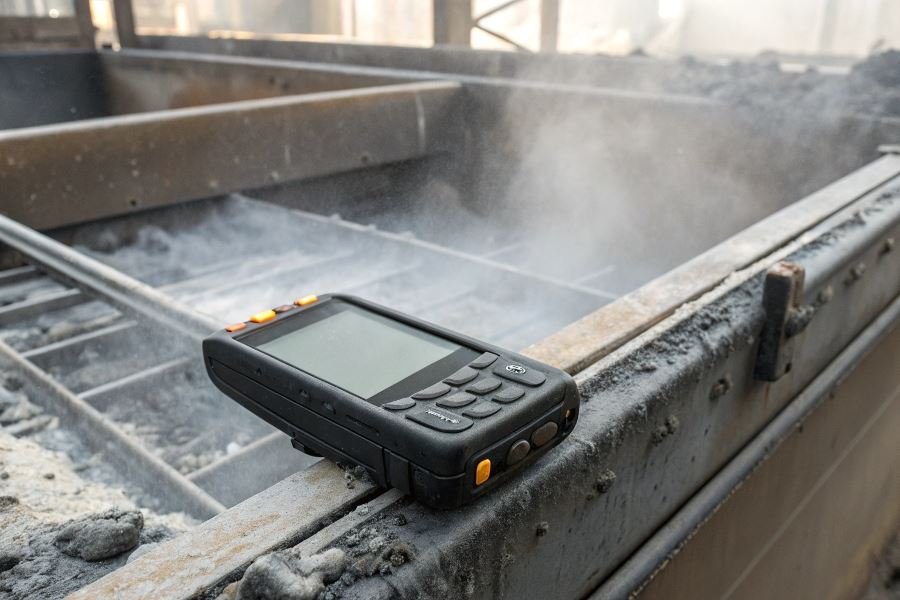
The operational efficiency gains are equally compelling. Protected terminals designed for harsh environments maintain 99.8% uptime even in challenging conditions—from manufacturing floors with airborne particulates to outdoor kiosks facing extreme weather. This translates to fewer service calls, reduced maintenance windows, and consistent data collection regardless of circumstances.
“The most expensive terminal is the one that fails when you need it most.” — This industry wisdom highlights why initial investment in protected hardware consistently outperforms budget alternatives in total cost of ownership.
Industry Applications That Transform Operations
Healthcare: Beyond Compliance
In healthcare settings, protected terminals serve as the foundation for patient data integrity. Epic Systems implementations using medical-grade terminals report 42% fewer data entry errors and significantly improved workflow efficiency. These specialized terminals withstand constant sanitization with harsh chemicals—a critical feature in infection-controlled environments.
Financial Services: Trust Through Technology
Banking and financial services deploy protected terminals as both security measures and trust signals. When customers interact with visibly secure hardware at ATMs or service counters, it reinforces brand reliability. NCR Corporation terminals with advanced encryption and physical security features have become the gold standard for financial transactions, processing over $3 trillion annually with remarkable security records.
Government and Critical Infrastructure
Government agencies implement protected terminals in scenarios where data integrity directly impacts public safety. Voting systems, emergency response coordination, and border control all rely on terminals that resist both physical tampering and electronic intrusion. These systems often incorporate Thales security modules that meet the strictest federal certification requirements.
ROI Considerations: Making the Business Case
The investment calculation for protected terminals extends beyond hardware costs. A comprehensive ROI analysis should include:
| Factor | Standard Terminals | Protected Terminals |
|---|---|---|
| Initial Hardware Cost | $400-800 | $1,200-3,500 |
| Expected Lifespan | 2-3 years | 5-7 years |
| Annual Maintenance | 18-22% of purchase | 8-12% of purchase |
| Downtime Incidents | 4-7 annually | 0-1 annually |
| Data Breach Risk | Moderate-High | Very Low |
Organizations that properly calculate total ownership costs discover protected terminals typically break even within 18-24 months compared to standard alternatives. The extended lifespan alone—often double that of commercial-grade equipment—creates significant value before considering security benefits.
Smart implementation strategies can further enhance returns. Phased deployments targeting highest-risk areas first allow organizations to distribute costs while immediately protecting their most vulnerable data collection points. This approach has proven particularly effective for retail operations implementing Verifone payment terminals with advanced security features.
Discover how protected data collection terminals enhance security, compliance, and ROI across industries. Learn about advanced encryption, physical safeguards, and efficiency benefits for your sensitive data management needs.
Discover how protected data collection terminals enhance security, compliance, and ROI across industries. Learn about advanced encryption, physical safeguards, and efficiency benefits for your sensitive data management needs.