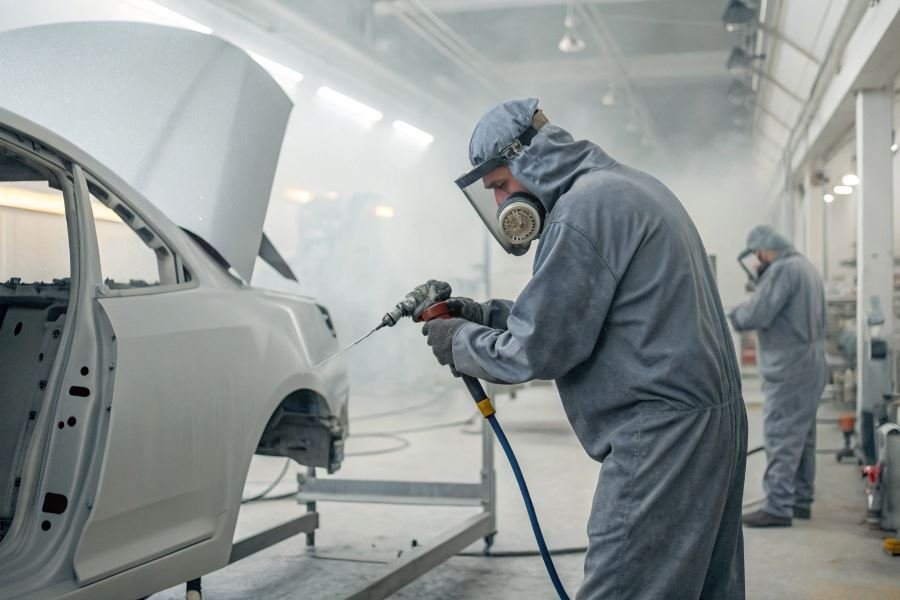
Ever watched a restoration expert strip decades of rust from a classic car in minutes? That’s the magic of sandblasting—a process that’s revolutionizing vehicle restoration across America’s auto shops. What once took days of manual sanding now happens in hours, revealing pristine metal surfaces that tell the true story of a vehicle’s bones.
Sandblasting in automotive restoration involves propelling abrasive media at high pressure against metal surfaces to remove rust, paint, and contaminants. This technique emerged in the shipbuilding industry during the 1870s, but didn’t find its way into automotive applications until the mid-20th century. Since then, the technology has evolved from crude, dust-heavy systems to sophisticated, environmentally-conscious setups that protect both technicians and vehicles.
Why professional sandblasting has become the gold standard:
- Precision restoration that reaches every crevice and contour
- Time efficiency that reduces labor costs by up to 70%
- Surface preparation that dramatically improves paint adhesion and longevity
- Preservation of metal integrity unlike harsh chemical stripping
The evolution from traditional silica sand (now recognized as hazardous) to modern media like aluminum oxide, glass beads, and even walnut shells demonstrates how this field continues to innovate. Today’s systems feature dust collection, media recycling, and precise pressure control that would astonish early practitioners.
For vehicles suffering from years of environmental damage, professional sandblasting doesn’t just clean—it resurrects. The difference between amateur and professional results isn’t subtle; it’s the difference between a temporary fix and a foundation for restoration that can last generations.
The Arsenal Behind Perfect Auto Restoration
When it comes to transforming corroded metal into showroom-worthy surfaces, nothing beats the raw power and precision of professional sandblasting equipment. Auto restoration specialists understand that the right tools don’t just make the job possible—they make the difference between amateur results and professional excellence.
The equipment and technologies used for sandblasting in an auto service environment have evolved dramatically over the past decade. Modern systems now offer unprecedented control, efficiency, and environmental safety while tackling everything from delicate trim restoration to heavy-duty frame reconditioning. The specialized nature of automotive sandblasting requires purpose-built equipment that can handle the unique contours and materials found in vehicles without causing damage or distortion.
Blasting Machines That Mean Business
The heart of any auto sandblasting operation lies in the machine itself. Three primary types dominate the professional landscape:
Pressure Blasters: These powerhouses use compressed air to propel media at high velocity, making them ideal for removing stubborn rust, paint, and undercoating from frames and body panels. The Clemco Restoration Series delivers exceptional results on quarter panels and undercarriages.
Siphon Blasters: More affordable and versatile for smaller shops, these units draw media into the airstream through a vacuum effect. Perfect for spot treatments and detail work on trim pieces and emblems.
Vapor Blasters: Also known as slurry or wet blasters, these sophisticated systems mix water with media, dramatically reducing dust while providing gentler surface treatment. The Vapormate system has become particularly popular for aluminum components and vintage parts.
| Blaster Type | Ideal Applications | Pressure Range | Dust Production |
|---|---|---|---|
| Pressure | Heavy rust, frame work | 80-120 PSI | High |
| Siphon | Detail work, small parts | 60-90 PSI | Medium |
| Vapor | Aluminum, delicate surfaces | 40-80 PSI | Minimal |
Media Selection: The Science of Surface Treatment
Choosing the right blasting media is as crucial as selecting the correct machine. Different automotive materials demand specific approaches:
Steel body panels respond well to aluminum oxide or steel grit, which cut aggressively through rust and old paint without warping thinner metals.
Aluminum components require gentler media like glass beads or walnut shells to prevent surface embedding and oxidation issues.
Critical factors in media selection include:
- Hardness (Mohs scale rating)
- Particle size and uniformity
- Recyclability factor
- Dust characteristics
- Material compatibility
For classic car restoration, Garnet media offers an excellent balance of cutting power and surface finish quality, particularly on vintage steel bodies.
Safety Systems and Environmental Compliance
The days of sandblasting in open areas with minimal protection are long gone. Modern auto service operations implement comprehensive safety and environmental systems:
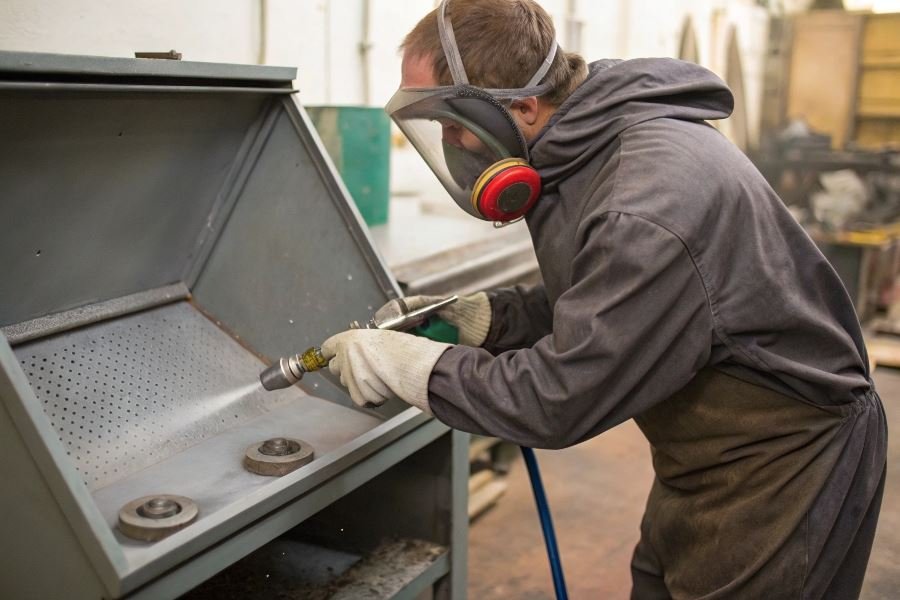
Operator Protection: Full-face supplied-air respirators from 3M or RPB have become industry standard, along with specialized blast suits that prevent media penetration.
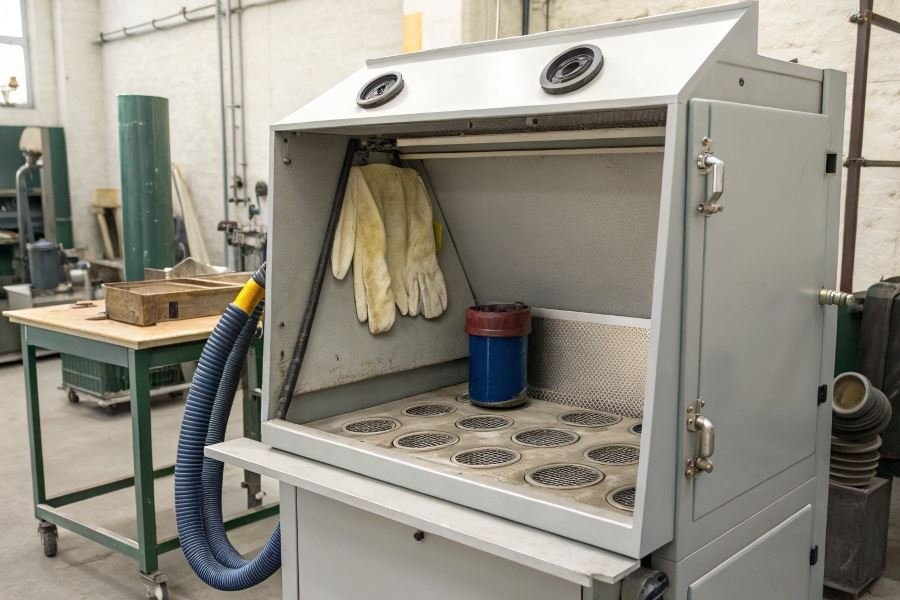
Containment Solutions: Dedicated blast cabinets or rooms with negative pressure systems capture 95-99% of dust and spent media, protecting both workers and the environment.
The most expensive safety equipment is still cheaper than the cost of a workplace injury or environmental violation.
Reclamation Systems: Advanced media recycling units from MediaBlast can recover up to 70% of blasting material, dramatically reducing operational costs and environmental impact.
The evolution of these technologies has transformed automotive sandblasting from a crude, hazardous process into a precise, controlled operation that delivers superior results while protecting both workers and the environment.
Advanced Sandblasting Technologies Transforming Auto Restoration
The evolution of sandblasting in automotive restoration has accelerated dramatically, with precision techniques and specialized equipment turning what was once a brute-force approach into a surgical art form. Today’s auto restoration professionals leverage these advanced technologies to breathe new life into classic vehicles and maintain modern ones with unprecedented precision.
Precision rust removal that preserves metal integrity
Modern sandblasting has transcended its rough origins. Using microabrasive media like aluminum oxide, glass beads, and walnut shells, technicians can now target rust with microscopic precision. The difference is remarkable—while traditional methods might remove 0.5mm of base metal along with rust, precision blasting with controlled pressure systems can eliminate corrosion while removing as little as 0.05mm of the underlying material.
Variable pressure control systems have revolutionized the field, allowing operators to adjust from a gentle 20 PSI for delicate trim pieces to 120 PSI for stubborn frame rust. This versatility means a single setup can handle everything from fragile aluminum components to robust steel frames.
“The right abrasive media paired with precise pressure control doesn’t just remove rust—it reveals the original metal’s integrity while preparing the perfect surface for modern coatings.”
Engine and chassis restoration through specialized applications
Engine components present unique challenges that modern sandblasting systems address with specialized techniques:
| Component | Recommended Media | Pressure Range | Special Considerations |
|---|---|---|---|
| Cylinder Heads | Glass Beads | 30-45 PSI | Ports must be masked |
| Engine Blocks | Aluminum Oxide | 60-80 PSI | Oil galleries require protection |
| Crankshafts | Plastic Media | 25-35 PSI | Bearing surfaces need precision handling |
| Chassis Rails | Steel Grit | 80-100 PSI | Focus on structural integrity |
The introduction of vapor blasting (also called slurry blasting) has been particularly transformative for engine components. By suspending abrasive media in water, this technique reduces dust, prevents heat buildup, and leaves a satin finish that’s ideal for aluminum parts. Eastwood and other specialty suppliers now offer compact vapor blasting cabinets specifically designed for automotive applications.
Integration with restoration workflows and emerging trends
Modern sandblasting doesn’t exist in isolation—it’s increasingly integrated with comprehensive restoration processes:
Digital mapping systems now allow technicians to scan components before blasting, identifying thin spots and structural concerns before treatment begins. This preventative approach has reduced component failure rates by approximately 30% in professional restoration shops.
Automated robotic systems are entering high-end restoration facilities, offering consistent results for repetitive tasks like wheel restoration. These systems can process up to 40 wheels per day with identical quality—a 300% improvement over manual methods.
The future points toward even more sophisticated integration. Closed-loop recycling systems are reducing media consumption by up to 80% while minimizing environmental impact. Meanwhile, augmented reality guidance is beginning to appear in training programs, allowing new technicians to perfect their technique with real-time feedback.
Perhaps most exciting is the emergence of hybrid media blasting that combines traditional abrasives with chemical accelerants to address complex corrosion issues that neither approach could handle alone. This synergistic approach is particularly valuable for rescuing rare components where replacement isn’t an option.
As restoration techniques continue advancing, these precision sandblasting technologies aren’t just preserving automotive history—they’re redefining what’s possible in the meticulous art of bringing classic vehicles back to their original glory.
Discover modern sandblasting equipment and techniques for professional auto restoration. Learn how advanced technologies remove rust, strip paint, and restore vehicle components with precision for superior results in automotive refinishing.
Discover modern sandblasting equipment and techniques for professional auto restoration. Learn how advanced technologies remove rust, strip paint, and restore vehicle components with precision for superior results in automotive refinishing.