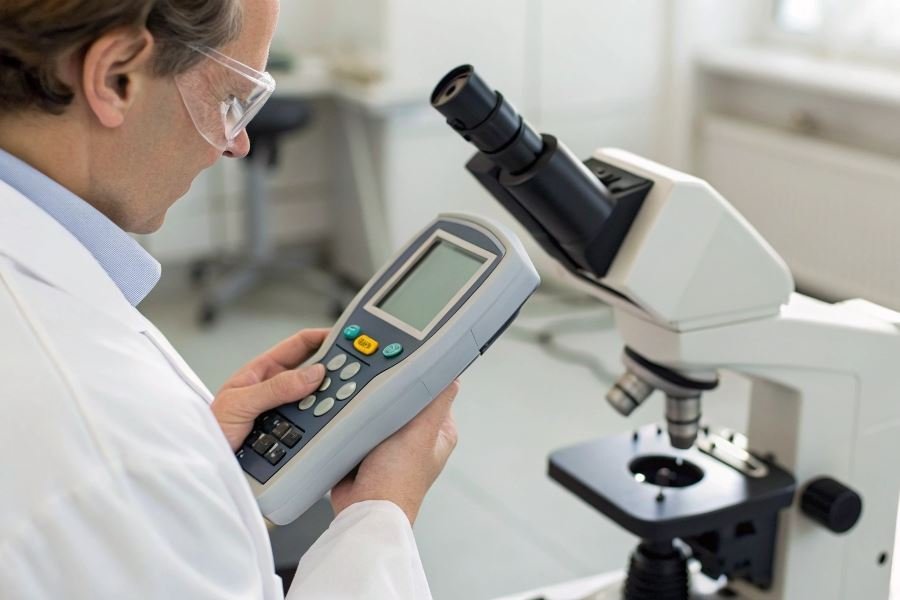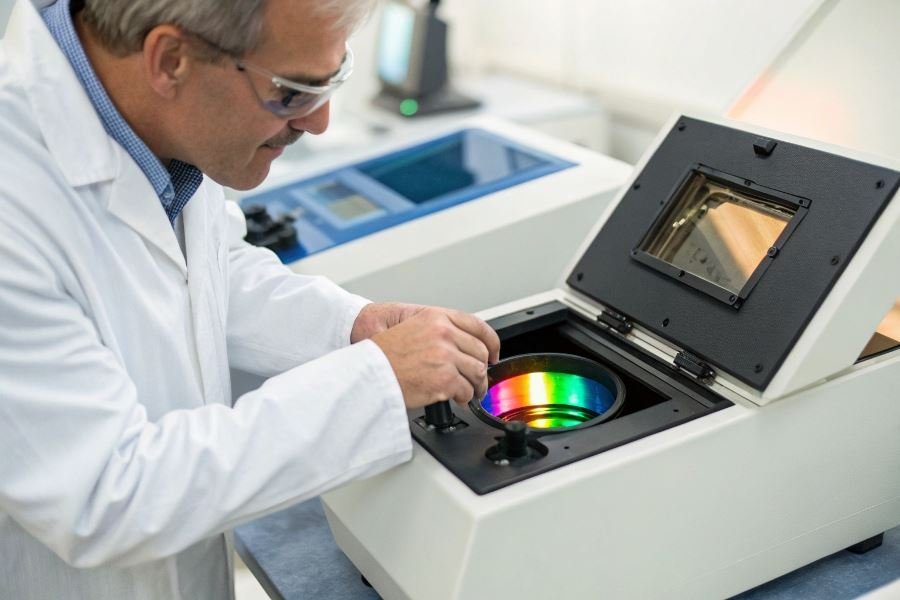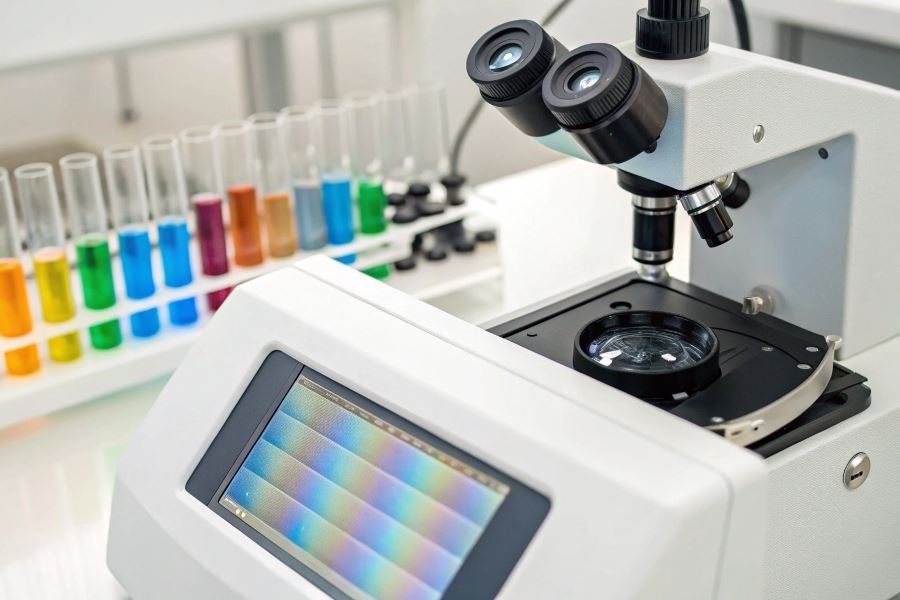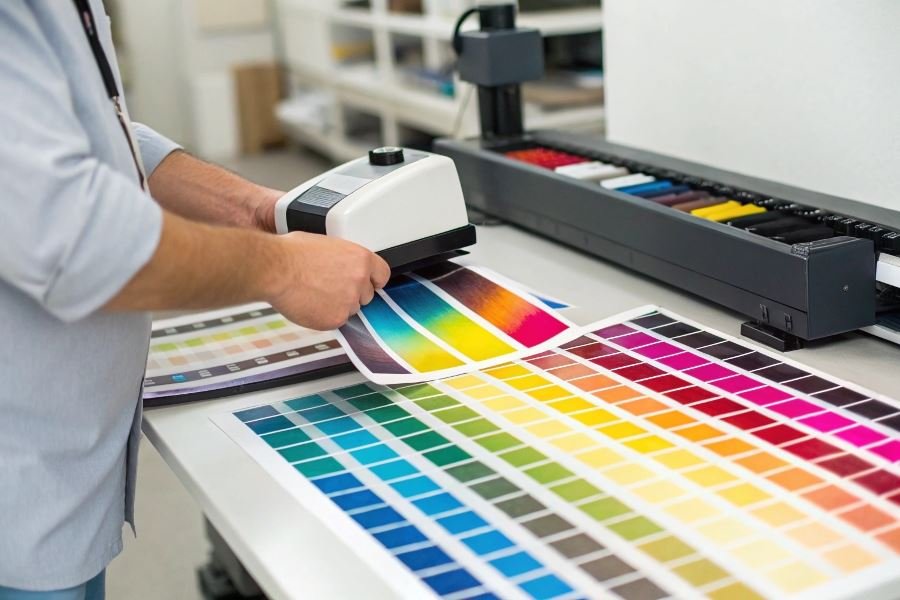
Ever wondered why some printed materials look vibrant and true-to-life while others fall flat? The secret weapon in professional printing isn’t just high-end printers—it’s the humble spectrophotometer, a device that’s revolutionizing how we achieve color perfection.
At its core, a spectrophotometer is precision engineering dedicated to one mission: measuring exactly how objects reflect light across the visible spectrum. For printers, this translates to unprecedented color accuracy. Unlike the human eye, which can be deceived by surrounding colors and lighting conditions, spectrophotometers provide objective, numerical data about color values.
“Color accuracy isn’t just aesthetic—it’s financial. Brand colors that drift even slightly can cost companies millions in lost recognition and trust.”
The journey to selecting the right spectrophotometer begins with understanding what makes these devices indispensable in modern printing workflows. When a client expects their logo to appear identical across business cards, brochures, and billboards, spectrophotometers make this consistency possible through precise measurement and calibration.
Since their introduction to commercial printing in the 1980s, spectrophotometers have evolved dramatically. Early models were bulky laboratory equipment requiring specialized training. Today’s market offers everything from handheld devices that connect to smartphones to sophisticated inline systems that monitor color during production runs—ensuring that what you see on screen matches what comes off the press with remarkable fidelity.
The technology continues advancing, with newer models offering improved accuracy, faster readings, and integration with color management software that transforms raw spectral data into actionable adjustments for printers seeking perfection in every project.
Technical Specifications That Make or Break Your Spectrophotometer
When diving into the world of color measurement for printing, the technical specifications of your spectrophotometer aren’t just numbers on a spec sheet—they’re the difference between color consistency and costly reprints. The right device becomes an extension of your quality control process, while the wrong one can introduce variables that undermine your entire workflow.
Evaluating spectrophotometers for printing: selection criteria requires understanding three critical technical aspects that separate professional-grade instruments from the pretenders. Let’s examine what truly matters when your reputation depends on color accuracy.
Measurement Geometry: The Foundation of Accuracy
The geometry of your spectrophotometer determines what you’re actually measuring and when you should use it:
0°/45° Geometry captures color as the human eye sees it by illuminating the sample at 0° and measuring at 45°—or vice versa. This geometry:
- Excludes specular reflection (gloss)
- Excels for process control in offset, digital, and flexographic printing
- Provides results that correlate with visual assessment
Sphere Geometry (d/8°) captures total appearance by collecting light from all angles:
- Includes or excludes specular component with the press of a button
- Ideal for measuring metallics, pearlescents, and textured surfaces
- Essential for formulation and quality control of specialty inks
The geometry you choose isn’t about better or worse—it’s about matching your measurement method to your specific application.
Spectral Resolution and Wavelength Range
The spectral capabilities of your instrument determine how precisely it can differentiate similar colors:
| Specification | Entry-Level | Professional | Premium |
|---|---|---|---|
| Wavelength Range | 400-700nm | 360-740nm | 340-780nm |
| Spectral Resolution | 20nm | 10nm | 3.5nm |
| Color Space Support | Limited | Comprehensive | All + Custom |
Why this matters: Higher spectral resolution detects subtle metamerism issues that can cause colors to match perfectly under one light source but shift dramatically under another. Extended wavelength ranges capture optical brighteners and UV treatments that affect how whites and bright colors appear.
Repeatability, Accuracy, and Agreement
These three specifications form the holy trinity of measurement reliability:
Repeatability measures how consistently an instrument delivers the same result when measuring the same sample repeatedly. Look for:
- ΔE*ab ≤ 0.01 for white tile measurements
- Standard deviation values under 0.03 for critical applications
Accuracy indicates how close measurements are to absolute colorimetric values:
- Average ΔE*ab ≤ 0.15 compared to industry standards
- BCRA tile set verification capabilities
Inter-instrument Agreement determines whether multiple devices will provide consistent readings:
- ΔE*ab ≤ 0.25 between instruments of the same model
- Critical for multi-location operations or client/supplier relationships
The X-Rite eXact and Konica Minolta FD-7 represent the gold standard in these specifications, while the Techkon SpectroDens offers excellent performance at a more accessible price point.
Remember that the best specifications on paper mean nothing if the instrument isn’t properly maintained and calibrated. Even premium devices require regular certification to maintain their performance over time.
Beyond Basics: Advanced Selection Criteria for Spectrophotometers
Software Integration That Actually Works
The most sophisticated spectrophotometer hardware becomes virtually useless without seamless software integration. Modern printing workflows demand devices that speak the same language as your existing systems.
Leading solutions like X-Rite ColorCert and Techkon SpectroDens offer robust SDK packages that integrate with popular workflow management systems. What separates exceptional integration from merely functional is bidirectional communication – where color data flows seamlessly between your spectrophotometer and production software.
Consider these integration capabilities:
| Integration Feature | Benefit | Implementation Complexity |
|---|---|---|
| API accessibility | Custom workflow development | Moderate to High |
| Cloud synchronization | Real-time data sharing across locations | Low |
| Legacy system compatibility | Protection of existing investments | Varies |
| Automated reporting | Reduced manual documentation | Low |
The difference between struggling with data silos and enjoying frictionless color management often comes down to integration quality rather than measurement accuracy.
Form Factor Decisions
The portability versus benchtop debate isn’t simply about convenience – it’s about matching your measurement strategy to production realities.
Portable spectrophotometers shine in environments requiring:
- Multiple press checks throughout production
- Cross-facility consistency verification
- Client approvals at various locations
- Limited bench space in production areas
Benchtop models deliver advantages in:
- Measurement stability and repeatability
- Higher optical resolution capabilities
- Controlled measurement environment
- Continuous operation scenarios
The Konica Minolta FD-7 represents the evolution of portable devices that approach benchtop precision, while the Barbieri Spectro LFP qb exemplifies how benchtop units can handle diverse substrates that portable units struggle with.
The ideal form factor aligns with your measurement frequency, location diversity, and precision requirements – not just your budget.
Total Cost Beyond Purchase Price
The sticker price of a spectrophotometer typically represents just 40-60% of its five-year ownership cost. Smart buyers evaluate:
Calibration Requirements
Devices requiring daily calibration add hidden labor costs. Some models like the Techkon SpectroDens feature extended calibration intervals, reducing downtime and maintenance labor by up to 70%.
Consumables and Maintenance
Lamp replacement, white reference tile renewal, and service contracts vary dramatically between manufacturers. Annual maintenance costs can range from 5% to 15% of the initial purchase price depending on the model and usage patterns.
Longevity Considerations
The expected useful life of professional spectrophotometers ranges from 5-10 years, but this varies based on:
- Build quality (metal vs. plastic components)
- Environmental protections (dust/humidity resistance)
- Firmware update availability
- Parts availability commitment from manufacturer
The X-Rite eXact 2 commands a premium price but offers a demonstrably lower total cost of ownership through extended calibration intervals, robust construction, and comprehensive service plans.
When evaluating total cost, factor in productivity gains from faster measurements and reduced errors – these operational efficiencies often outweigh hardware price differences within months of implementation.
Discover how to select the perfect spectrophotometer for your printing operations with our comprehensive guide to measurement geometries, spectral resolution, and workflow integration for achieving professional color accuracy and print precision.
Discover how to select the perfect spectrophotometer for your printing operations with our comprehensive guide to measurement geometries, spectral resolution, and workflow integration for achieving professional color accuracy and print precision.