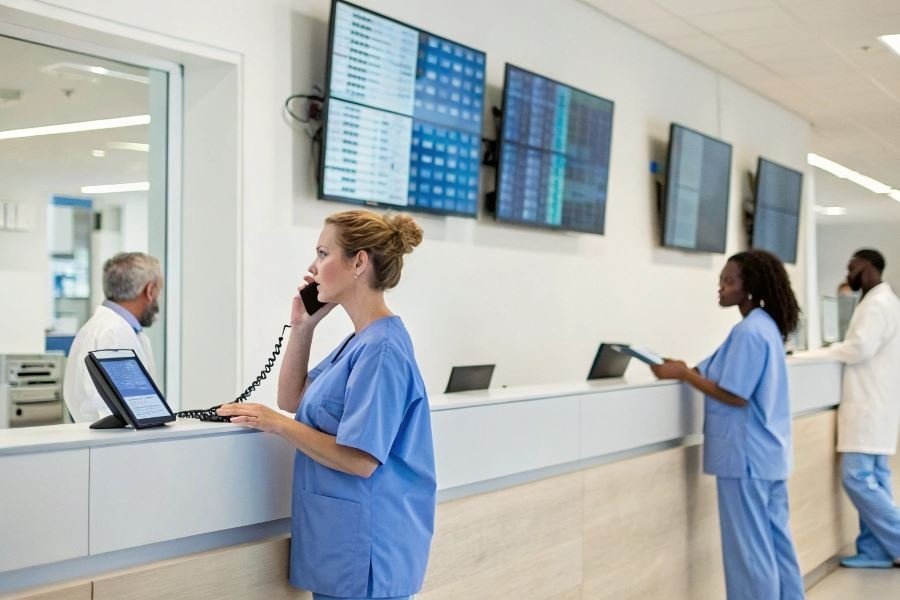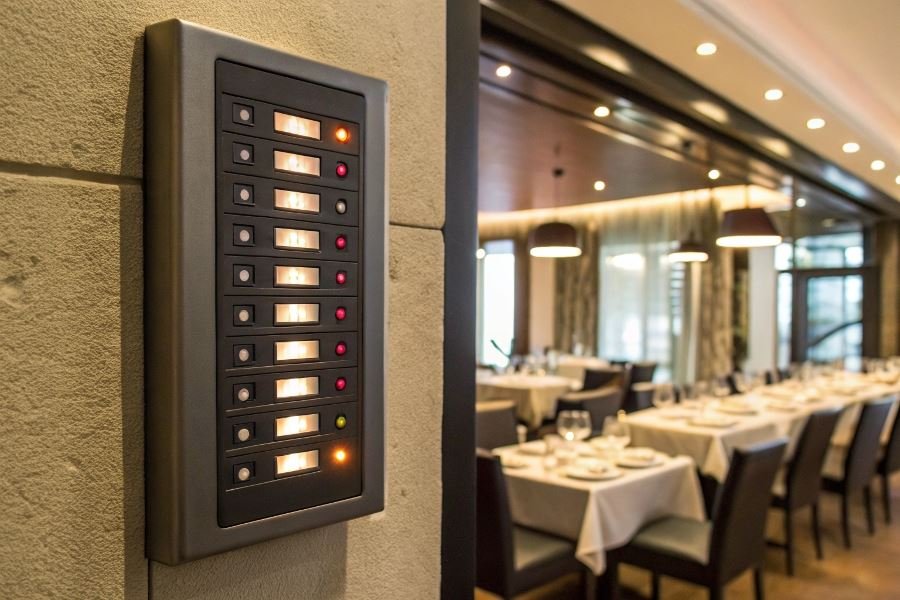
Ever watched a restaurant operate during peak hours? That seamless dance between kitchen and waitstaff isn’t magic—it’s technology at work. Staff call systems have quietly revolutionized operations across industries, from healthcare to hospitality, creating invisible efficiency networks that power exceptional service.
Staff call systems are specialized communication networks that enable instant staff-to-staff notifications, typically through wireless pagers, mobile apps, or dedicated devices. These systems eliminate shouting across rooms, reduce response times, and create measurable accountability in environments where seconds matter. The market has evolved dramatically since the first rudimentary buzzers appeared in the 1970s, with today’s solutions offering analytics, integration capabilities, and cloud management.
The foundation of exceptional service
When evaluating manufacturers, decision-makers should prioritize three critical factors: reliability under pressure, scalability as operations grow, and integration capabilities with existing systems. The best manufacturers don’t just sell hardware—they provide comprehensive service ecosystems that adapt to specific industry needs.
“The difference between good and exceptional service often comes down to communication speed. In healthcare, it can literally save lives.” — Healthcare Technology Review
The staff call systems landscape is being reshaped by several key trends: AI-powered predictive analytics that anticipate busy periods, smartphone integration replacing dedicated hardware, and enhanced data collection that transforms simple alerts into business intelligence. Leading manufacturers are racing to incorporate these innovations while maintaining the simplicity that made these systems indispensable in the first place.
The Innovators Behind Modern Staff Call Systems
The hospitality and healthcare industries rely heavily on efficient communication systems to deliver exceptional service. Staff call systems have evolved dramatically, with three manufacturers consistently setting the gold standard for quality, innovation, and reliability.
When examining the top 3 manufacturers of staff call systems, we find a fascinating landscape of technological innovation and customer-focused design. Each company brings unique strengths to the table, from cutting-edge wireless technology to robust integration capabilities that streamline operations across diverse environments.
Jtech: Pioneering Wireless Solutions
Jtech, a division of HME Wireless, has established itself as a frontrunner in staff call technology since its founding in 1988. Their product portfolio includes:
- IStation – Their flagship touchscreen call system
- GuestCall IQ – Advanced paging system with customizable alerts
- PagerGenius – Cloud-based management platform
Jtech’s distinctive approach centers on their patented SureCall™ technology, which ensures 99.9% transmission reliability even in crowded RF environments. Their systems operate on a dedicated frequency band, minimizing interference from other wireless devices.
What sets them apart: Jtech’s systems feature industry-leading battery life (up to 72 hours on a single charge) and the ability to integrate with over 20 different POS systems.
Retekess: Accessibility Meets Innovation
Retekess has rapidly gained market share by focusing on cost-effective solutions without compromising on essential features. Founded in 2009, they’ve expanded their offerings to include:
- TD174 – Waterproof call button system
- TT107 – Queue management system with voice prompts
- T119 – Multi-channel wireless calling system
Retekess has pioneered the use of digital signal processing in their transmitters, allowing for exceptional range (up to 500 meters in open areas) and clear communication even in noisy environments.
Key innovation: Their systems employ frequency-hopping spread spectrum technology, automatically switching between channels to avoid interference.
CallMaster: Enterprise-Grade Solutions
CallMaster focuses exclusively on high-end, enterprise-grade staff call systems for luxury hospitality and healthcare facilities. Their comprehensive product line includes:
- CM-Elite – Fully customizable staff call platform
- HealthAlert – Specialized system for healthcare settings
- ServiceTrack – Analytics platform for response time optimization
CallMaster’s proprietary SmartLink™ technology enables seamless integration with building management systems, creating a unified operational environment.
Technical edge: Their systems feature military-grade encryption and redundant backup systems, ensuring 24/7 reliability in mission-critical environments.
Comparative Analysis: Making the Right Choice
| Feature | Jtech | Retekess | CallMaster |
|---|---|---|---|
| Starting Price | $1,200 | $450 | $3,500 |
| Warranty | 2 years | 1 year | 5 years |
| Response Time | <3 seconds | <5 seconds | <2 seconds |
| Support Hours | 24/7 | Business hours | 24/7 |
| Installation | Professional | DIY or Professional | Professional only |
Reliability metrics show CallMaster leading with 99.99% uptime, followed closely by Jtech at 99.9%, while Retekess maintains a respectable 99.5%.
Customer support satisfaction surveys reveal CallMaster and Jtech tied at 92% positive ratings, with Retekess at 85%. However, Retekess offers the fastest average response time for technical issues at just 4 hours.
The pricing structure reflects each manufacturer’s market positioning, with Retekess offering the most accessible entry point for small businesses, Jtech targeting the mid-market with scalable solutions, and CallMaster focusing exclusively on premium installations where performance justifies the investment.
When selecting a staff call system, the decision ultimately hinges on your specific operational requirements, budget constraints, and growth projections rather than simply choosing the most feature-rich option.
Making the Right Choice: Navigating Staff Call System Manufacturers
When investing in a staff call system, the decision extends beyond simply picking a brand name. The right choice can transform operational efficiency, while the wrong one might leave you with costly regrets. Let’s distill what truly sets apart our top three manufacturers and how to match their strengths to your specific needs.
Key differentiators that matter
The battle between HME Wireless, JTECH, and LRS comes down to several critical factors:
Technology infrastructure – HME Wireless excels with their cloud-based architecture allowing seamless integration across multiple locations. JTECH offers the most robust on-premises solutions with exceptional reliability even during network outages. LRS strikes a balance with hybrid options that adapt to varying infrastructure needs.
Scalability profiles – Each manufacturer approaches growth differently:
| Manufacturer | Small Business | Mid-Market | Enterprise |
|---|---|---|---|
| HME Wireless | ★★★☆☆ | ★★★★☆ | ★★★★★ |
| JTECH | ★★★★★ | ★★★★☆ | ★★★☆☆ |
| LRS | ★★★★☆ | ★★★★★ | ★★★★☆ |
Support structures – HME Wireless provides 24/7 technical assistance with the fastest average response time (under 2 hours). JTECH offers the most comprehensive training programs, while LRS provides the longest standard warranty coverage at 3 years.
The true value of a manufacturer isn’t just in their hardware, but in how they stand behind it when challenges arise.
Industry-specific selection guidance
Different operational environments demand different solutions:
Healthcare settings should prioritize LRS systems for their antimicrobial coatings, HIPAA-compliant messaging features, and integration capabilities with electronic health records. Their silent vibration options are ideal for noise-sensitive environments.
Hospitality venues benefit most from JTECH’s customizable alert options and guest-facing interfaces. Their systems handle outdoor paging effectively (up to 2 miles in open areas) and offer waterproof components for pool and spa zones.
Retail operations typically see the greatest ROI with HME Wireless solutions due to their advanced analytics dashboard that tracks response times and identifies service bottlenecks. Their systems also integrate seamlessly with inventory management software.
Manufacturing facilities should consider LRS for their ruggedized hardware designed to withstand harsh conditions, including dust, extreme temperatures, and high-decibel environments.
Tomorrow’s innovations today
The staff call system landscape continues evolving rapidly. Here’s what to expect from our top manufacturers:
AI-powered predictive alerts are being developed by HME Wireless, using pattern recognition to anticipate service needs before staff is called. Their beta testing shows a 27% reduction in wait times.
Biometric authentication is coming to JTECH’s premium models, allowing staff identification through fingerprint or facial recognition to ensure accountability and security.
Sustainability initiatives from LRS include their upcoming line of solar-powered pagers and biodegradable components, reducing both operational costs and environmental impact.
Cross-platform integration capabilities are expanding across all three manufacturers, with APIs becoming more robust and accessible even to organizations without dedicated IT departments.
The ideal staff call system isn’t necessarily the most expensive or feature-rich, but rather the one that aligns perfectly with your operational requirements, growth trajectory, and industry-specific challenges. By understanding these key differentiators and upcoming innovations, you’re now equipped to make a decision that will serve your organization not just today, but well into the future.
Discover the top 3 staff call system manufacturers with our comprehensive guide comparing features, technologies, and pricing. Find the perfect solution for your business needs with insights on reliability, support, and industry-specific recommendations.
Discover the top 3 staff call system manufacturers with our comprehensive guide comparing features, technologies, and pricing. Find the perfect solution for your business needs with insights on reliability, support, and industry-specific recommendations.