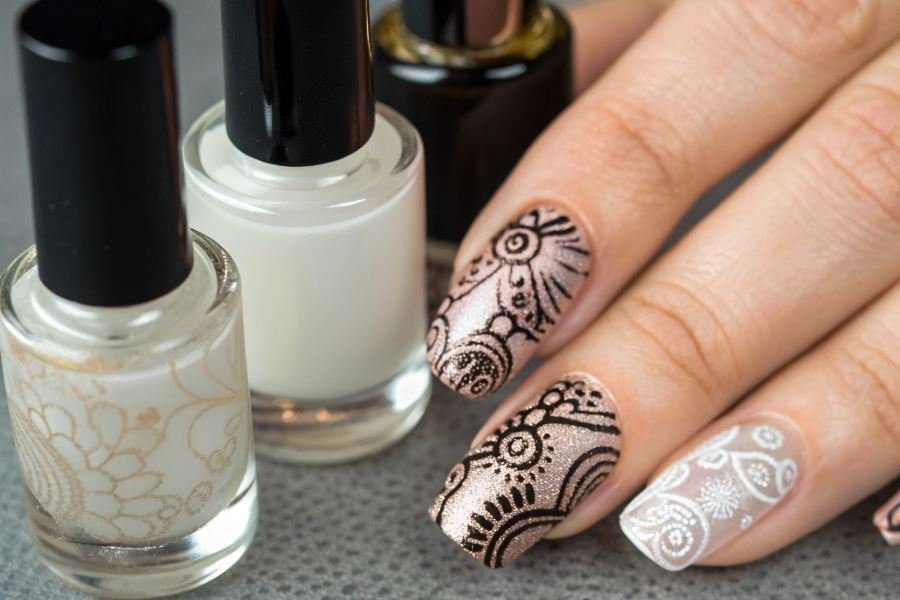
Did you know that nail stamping searches have increased by 78% in the past three years? This artistic technique has transformed from a niche hobby into a mainstream beauty phenomenon, with enthusiasts ranging from casual DIYers to professional nail technicians.
At the heart of every successful nail stamp lies a crucial but often overlooked component: stamping liquid. This specialized formula acts as the transfer medium that picks up intricate designs from stamping plates and delivers them flawlessly to your nails. Think of it as the unsung hero of the nail art world—without quality stamping liquid, even the most beautiful designs remain trapped on their metal plates.
“The difference between budget and premium stamping liquids is like comparing fast food to fine dining—both satisfy hunger, but the experience and results are worlds apart.”
Understanding these quality differences isn’t just about splurging on luxury products—it’s about making informed investments in your nail art journey. Premium stamping liquids typically offer superior pigmentation, smoother application, and longer-lasting results. Meanwhile, budget options provide accessibility for beginners and those exploring the craft without significant financial commitment.
The quality spectrum matters because it directly impacts your stamping success rate, the vibrancy of your designs, and ultimately, your satisfaction with the final look. Whether you’re creating elegant minimalist patterns or elaborate multi-color masterpieces, the stamping liquid you choose fundamentally shapes your artistic possibilities.
The Quality Chasm: Budget vs Premium Stamping Liquids
The Chemistry Behind the Magic
When examining stamping liquids across the price spectrum, the first and most fundamental difference lies in their chemical composition. Premium formulations typically contain higher-grade polymers, specialized adhesion agents, and professional-grade pigments that work in harmony. Budget alternatives often rely on simpler chemical structures with higher solvent content and fewer binding agents.
The distinction between budget and premium stamping liquids becomes immediately apparent when analyzing their ingredient lists. Premium products frequently feature proprietary blends developed through extensive R&D, while budget options typically use standardized formulations that prioritize cost efficiency over performance. This fundamental difference affects everything from application to final results.
Key ingredient differences:
| Component | Premium Formulations | Budget Formulations |
|---|---|---|
| Pigments | Micronized, high-density | Standard grade, lower concentration |
| Binders | Advanced polymers, silicone-based | Basic acrylics |
| Additives | UV stabilizers, flow improvers | Minimal or absent |
| Solvents | Balanced for optimal drying | Higher percentage, faster evaporation |
Color That Commands Attention
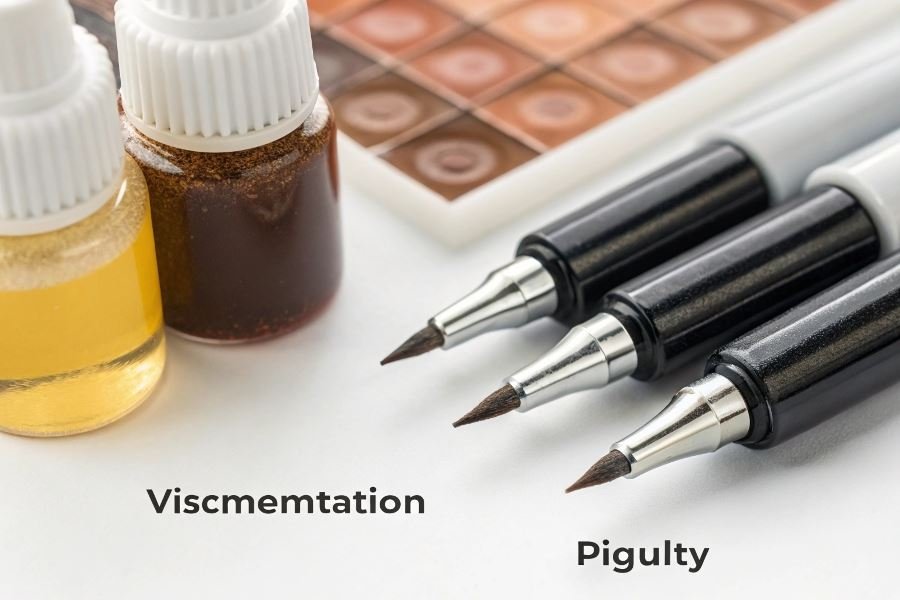
Premium stamping liquids deliver significantly higher pigment loads—often 30-40% more concentrated than budget alternatives. This translates to immediate opacity in a single application, whereas budget options frequently require multiple layers to achieve similar coverage.
The color payoff difference isn’t subtle—it’s dramatic. Premium formulations maintain color integrity throughout the stamping process, with minimal bleeding or smudging. Budget options tend to thin out during transfer, resulting in less defined edges and muted tones.
Color performance metrics:
- Opacity rating: Premium (85-95%) vs Budget (60-75%)
- Color transfer efficiency: Premium (90%+) vs Budget (70-80%)
- Edge definition: Premium (crisp, precise) vs Budget (softer, variable)
Working Time and Application Window
The workability differences between price points create distinctly different user experiences. Premium stamping liquids typically offer a 30-60 second “sweet spot” working time—enough to position and transfer without rushing, yet quick enough to maintain productivity.
Budget formulations often present a frustrating paradox: they either dry too quickly (under 15 seconds), leaving little room for adjustment, or remain tacky for extended periods (2+ minutes), increasing the risk of smudging and transfer issues.
The difference in drying time isn’t just about convenience—it fundamentally affects the quality of the final impression and your overall workflow efficiency.
The Longevity Factor
Perhaps the most compelling distinction emerges after application. Premium stamping liquids create impressions that maintain their integrity for 30-50% longer than budget alternatives. This durability stems from superior adhesion properties and resistance to environmental factors.
When subjected to wear testing, premium formulations typically show minimal degradation after 500+ contact cycles, while budget options begin showing significant wear after just 150-200 cycles. UV resistance testing reveals similar disparities, with premium products maintaining color stability for 12+ months compared to 3-6 months for budget alternatives.
The investment in premium stamping liquids ultimately delivers value through:
- Reduced material waste from failed transfers
- Fewer touch-ups and corrections
- Consistent results across projects
- Superior longevity in finished applications
- Professional-grade appearance that elevates the final product
These performance differences explain why professionals consistently choose premium formulations despite the higher initial investment—the quality gap manifests in every aspect of the stamping process.
Budget vs Premium Stamping Liquids: The Real Value Equation
Breaking down price-to-performance ratios
When examining stamping liquids across the market spectrum, the price differential can be startling. Budget options typically range from $5-15 per bottle, while premium formulations command $20-45 or more. But does triple the price mean triple the performance?
The answer lies in the formulation details. Budget stamping liquids often contain simpler solvent bases with fewer additives, resulting in faster drying times but potentially less image clarity. Premium options typically incorporate:
- Higher-grade pigments with superior opacity
- Specialized polymers for enhanced transfer properties
- Conditioning agents that prevent plate damage
- Slower-drying formulas allowing multiple attempts
The performance gap narrows significantly with proper technique. Many experienced stampers achieve remarkable results with budget liquids through meticulous application and proper surface preparation.
The true cost of stamping liquid isn’t measured per bottle, but per successful impression.
When premium prices become justified investments
Premium stamping liquids prove their worth in specific scenarios where their advanced formulations deliver tangible benefits:
| Scenario | Budget Limitation | Premium Advantage |
|---|---|---|
| Detailed designs | Bleeding at fine edges | Crisp definition on intricate patterns |
| Difficult surfaces | Inconsistent adherence | Reliable transfer to porous/textured materials |
| Production volume | Frequent reapplication | Extended working time and coverage |
| Professional output | Occasional imperfections | Consistent, client-ready results |
The investment in premium products becomes particularly justified when working with expensive base materials. When stamping on high-end leather, specialty papers, or custom textiles, the cost of ruining the base material far exceeds the price difference between stamping liquids.
Smart recommendations for every stamping scenario
For beginners: Start with mid-range budget options ($10-15) from established brands like Ranger or Hero Arts. These provide a forgiving learning curve without significant financial commitment. Focus on mastering basic techniques before blaming results on your materials.
For hobbyists: Maintain a hybrid approach—use budget options for practice and everyday projects, but invest in one premium option for special applications. This balanced strategy maximizes creative output while managing costs effectively.
For professionals: The consistency and reliability of premium formulations from VersaFine or Memento justify their cost through reduced waste and superior results. Consider them essential business tools rather than consumable supplies.
For high-volume producers: Calculate your true cost-per-impression. Premium liquids often require less product per stamp and fewer do-overs, potentially making them more economical at scale despite higher upfront costs.
The smartest approach is application-specific. Even professional stampers might use budget options for bold, simple designs while reserving premium formulations for detailed work requiring precision and longevity.
Discover the real differences between budget and premium stamping liquids for nail art. Compare pigmentation, drying time, and longevity to determine if luxury options truly deliver better results for your manicure investment.
Discover the real differences between budget and premium stamping liquids for nail art. Compare pigmentation, drying time, and longevity to determine if luxury options truly deliver better results for your manicure investment.