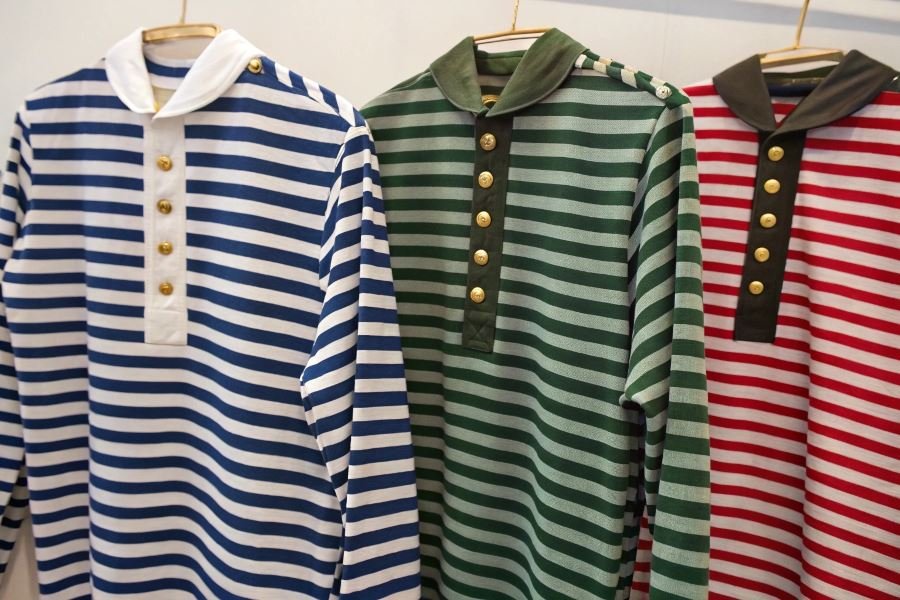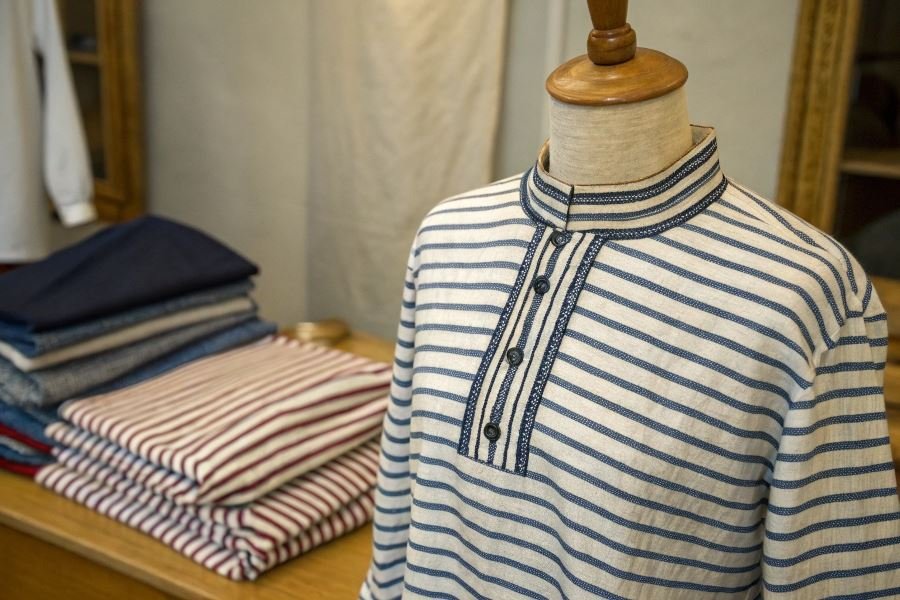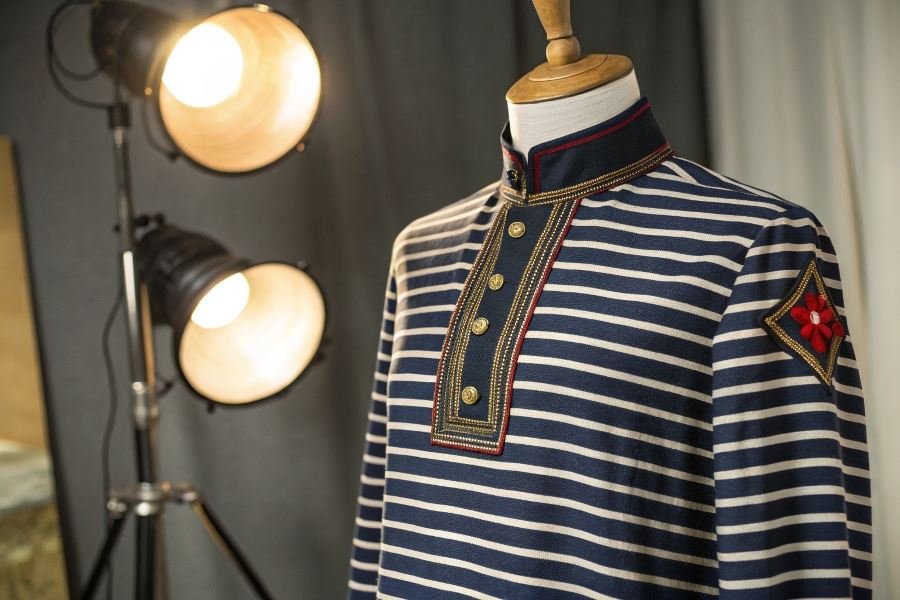
Ever wondered why a banker’s striped shirt feels distinctly different from the striped tee in your weekend wardrobe? The answer lies in centuries of fascinating evolution.
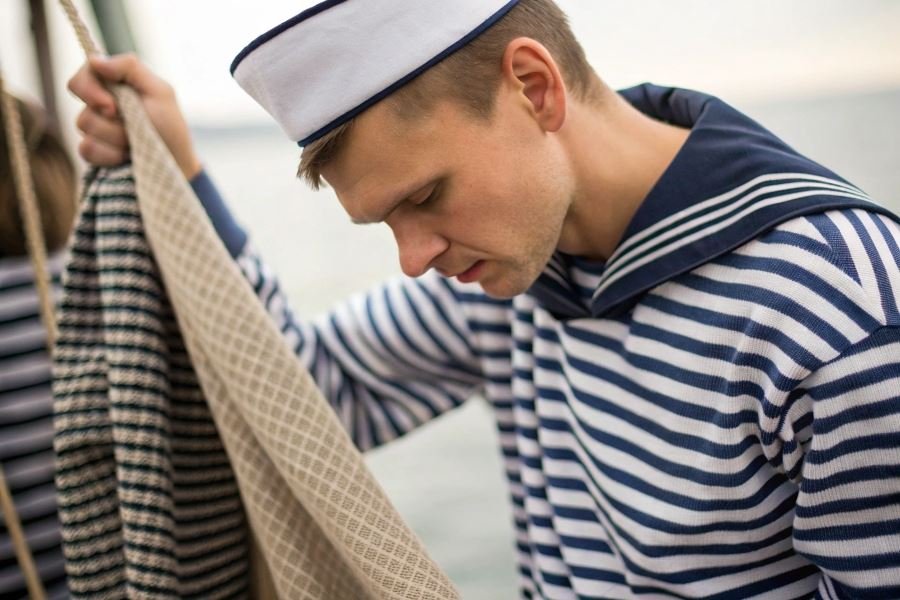
Striped patterns in professional uniforms trace back to medieval times, but truly gained prominence in the 1700s when the British Royal Navy introduced the “navy stripe” to distinguish sailors on crowded decks. These weren’t fashion statements—they were functional identifiers that could mean life or death in battle conditions. By the 1800s, these distinctive patterns had migrated from military contexts to civilian professional settings.
The professional stripe speaks volumes without saying a word. Unlike casual striped shirts, uniform versions feature precise, consistent patterning with specific spacing and width ratios. The traditional Bengal stripe (equal width colored stripes on white) and the pencil stripe (thin colored lines on white) became corporate power symbols by the 1920s, particularly in banking and law.
What truly separates uniform striped shirts from everyday models comes down to three key elements:
The distinguishing factors
- Construction quality: Uniform shirts typically feature higher thread counts (120-200+), reinforced stitching at stress points, and specialized collar structures
- Pattern precision: Stripes align perfectly at seams—a manufacturing challenge that casual shirts often skip
- Fabric composition: Professional uniform shirts use specific cotton blends optimized for wrinkle resistance and breathability during long workdays
This evolution from battlefield identifier to boardroom status symbol represents one of fashion’s most enduring professional codes—one that continues to subtly communicate authority and tradition in our increasingly casual world.
The Engineering Behind Professional Attire
When examining the functional differences between uniform striped shirts and everyday models, we’re really exploring a fascinating world of textile engineering and purposeful design. Professional uniforms aren’t just about appearances—they’re technical garments built to perform under specific conditions.
Material Science Meets Workplace Demands
Uniform striped shirts: differences from everyday models begin at the molecular level with fabric composition. Professional uniform shirts typically feature higher thread counts (180-200 per inch versus 80-120 in casual shirts) and specialized fiber blends optimized for durability. While standard cotton shirts might contain 100% natural fibers, uniform shirts often incorporate:
- Polyester/cotton blends (65/35 or 80/20 ratios)
- Wrinkle-resistant treatments
- Moisture-wicking technologies
- Antimicrobial finishes
These technical fabrics must withstand industrial laundering at high temperatures—often 180°F compared to the 105°F used for regular clothing. They’re also engineered to maintain color integrity through hundreds of wash cycles, with specialized dye-setting processes that prevent the distinctive stripes from fading.
Architectural Approach to Shirt Construction
The construction techniques employed in professional uniform shirts reveal an architectural mindset absent in everyday models. Reinforcement features include:
Double-needle stitching appears throughout stress points, with 8-10 stitches per inch versus the 6-8 found in casual shirts. Seam strength tests show uniform shirts withstanding 15-20% more tension before failure.
Strategic reinforcements appear at collar points, pocket corners, and cuff edges—often invisible to the casual observer but critical for longevity.
| Construction Element | Uniform Shirt | Everyday Shirt |
|---|---|---|
| Collar construction | Fused, 3-ply | Unfused, 2-ply |
| Button attachment | Cross-stitched | Single thread |
| Shoulder yoke | Split yoke | Single piece |
| Side seams | Safety stitch | Single needle |
The buttons themselves tell a story—uniform shirts typically use melamine or specialized resin buttons tested to withstand industrial pressing equipment operating at 300°F, while everyday shirts use standard plastic buttons that would melt under such conditions.
Design Elements With Purpose
Professional environments demand specific design elements that separate uniform striped shirts from their casual counterparts. These purposeful features include:
Functional pocket configurations designed for specific tools or credentials. Security personnel shirts often include hidden document pockets or reinforced areas for badge attachment.
Mobility-enhancing pleats positioned precisely at shoulder blades allow for increased range of motion—critical for service professionals who reach, bend, and stretch throughout their workday.
Color psychology plays a significant role too. The stripe patterns in uniform shirts aren’t arbitrary fashion choices but carefully selected visual cues that communicate hierarchy, department affiliation, or company branding. These patterns undergo visibility testing to ensure recognition at various distances.
The collar structure deserves special attention—uniform shirts feature stabilized collars that maintain their shape throughout a full workday, often incorporating removable stays or permanent stiffeners that casual shirts simply don’t require.
When we examine these engineered differences, it becomes clear that uniform striped shirts represent a specialized category of professional attire where every design decision serves a functional purpose beyond mere aesthetics.
The Ultimate Uniform Striped Shirt Guide
When it comes to professional attire, uniform striped shirts stand in a league of their own. These aren’t your casual weekend button-ups—they’re purpose-built garments designed to project authority, consistency, and brand identity across various professional settings.
Critical selection factors for uniform excellence
Selecting the perfect uniform striped shirt involves more than just picking a pattern you like. The most successful organizations consider these three crucial factors:
Fabric composition and weight determines everything from comfort to longevity. Premium uniform shirts typically feature a cotton-polyester blend (65/35 ratio) that balances breathability with wrinkle resistance. For customer-facing roles in hospitality or retail, consider shirts with moisture-wicking properties that maintain a crisp appearance even during 12-hour shifts.
Stripe pattern and scale communicates subtle messages about your brand. Narrow pinstripes (1-2mm) convey precision and attention to detail—ideal for financial services or legal environments. Wider stripes (5-8mm) project confidence and visibility, perfect for retail staff who need to be easily identified across a showroom floor.
Structural reinforcements separate professional-grade shirts from their casual counterparts. Look for double-stitched seams, reinforced collar stays, and stress-point fortification that can withstand industrial laundering processes without degradation.
The difference between a good uniform shirt and a great one often comes down to the details you can’t see from three feet away.
Maintenance protocols for professional longevity
Uniform striped shirts require specialized care to maintain their professional appearance:
Laundering technique should match the fabric composition. Most commercial uniform shirts benefit from cold water washing with mild detergent, followed by tumble drying on medium heat. Remove promptly to prevent deep-set wrinkles.
Stain management requires immediate attention. Keep a portable stain stick available for staff, and train them on proper application techniques. Oil-based stains (common in food service and automotive industries) require pre-treatment with a degreasing agent before standard laundering.
Storage solutions dramatically extend shirt lifespan. Hanging uniform shirts with proper spacing (minimum 1″ between garments) prevents moisture buildup and maintains structural integrity of collars and cuffs.
Industry-specific recommendations
Different sectors have unique requirements for their uniform striped shirts:
Hospitality and Food Service
| Feature | Benefit |
|---|---|
| Soil-release finish | Repels food stains and oils |
| Moisture-wicking fabric | Maintains comfort in hot kitchens |
| Reinforced buttons | Withstands frequent laundering |
The Cintas Hospitality Collection offers specialized striped shirts with antimicrobial treatments—essential for environments where food safety is paramount.
Corporate and Financial
| Feature | Benefit |
|---|---|
| Higher cotton content (80%+) | Enhanced breathability and comfort |
| Spread collar design | Accommodates wider tie knots |
| French cuff options | Allows for personalized cufflinks |
Brooks Brothers provides corporate-ready striped shirts with non-iron technology that maintains a boardroom-ready appearance throughout demanding days.
Healthcare and Medical
| Feature | Benefit |
|---|---|
| Antimicrobial treatment | Reduces pathogen transmission |
| Color-fast dyes | Withstands bleach and sanitizers |
| Stretch components | Allows freedom of movement |
Landau Uniforms specializes in medical-grade striped shirts designed to withstand the rigorous sanitization protocols required in healthcare settings.
By selecting the right uniform striped shirt for your industry and implementing proper care protocols, you’ll maximize both professional appearance and garment longevity—creating a consistent brand image that resonates with customers and builds team cohesion.
Discover the essential differences between professional uniform striped shirts and casual options. Learn about specialized fabrics, construction techniques, and design features that make uniform shirts stand out in workplace environments.
Discover the essential differences between professional uniform striped shirts and casual options. Learn about specialized fabrics, construction techniques, and design features that make uniform shirts stand out in workplace environments.