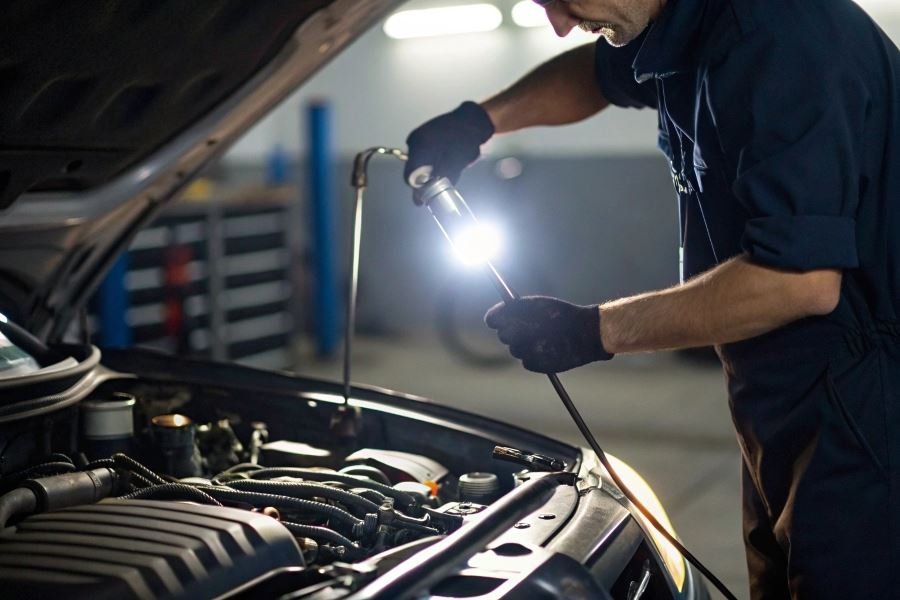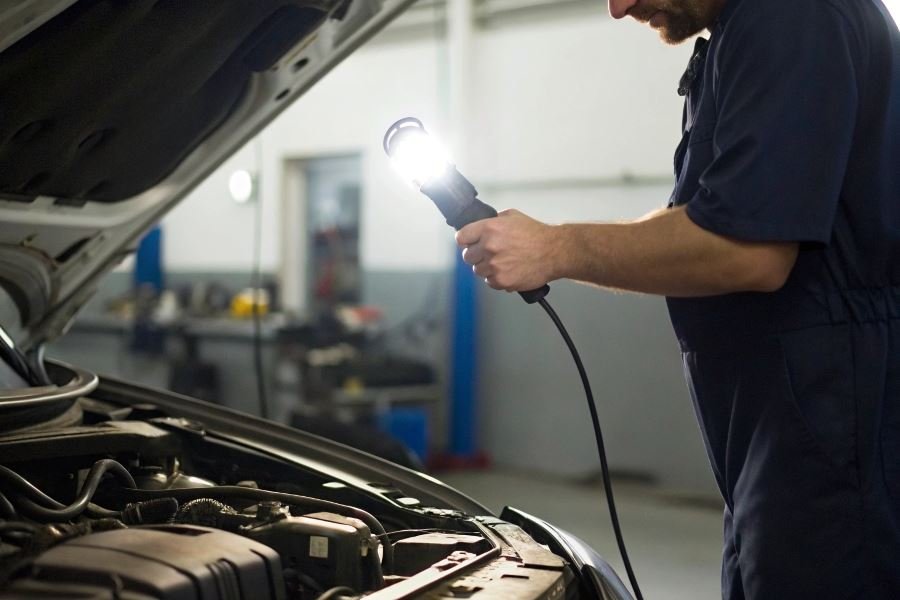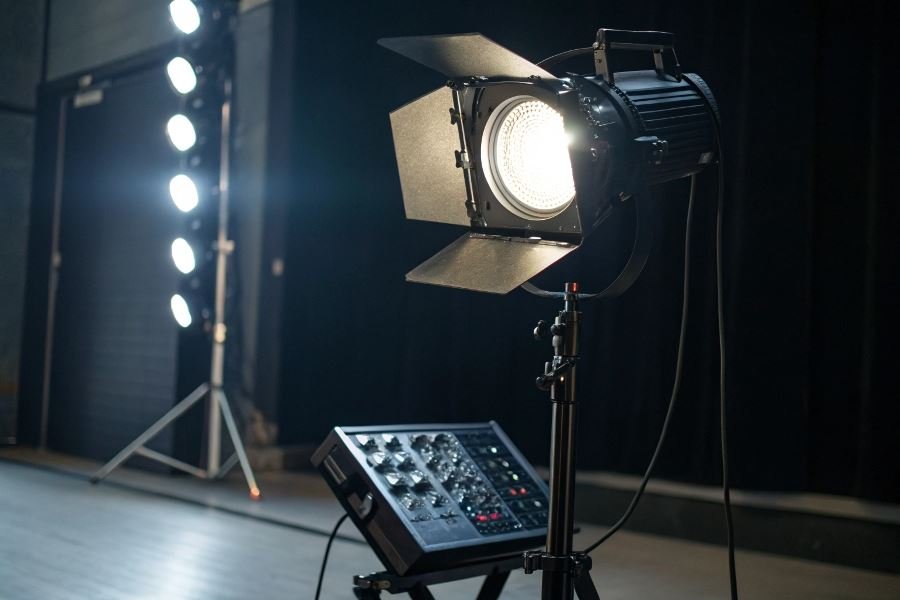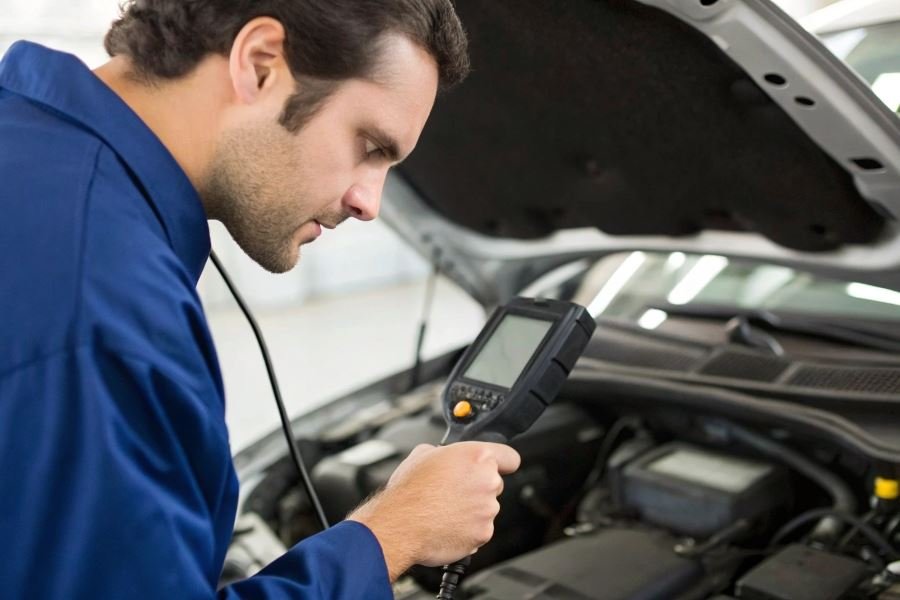
Ever watched a hummingbird’s wings appear to freeze in mid-air under certain lighting? That same principle powers one of automotive diagnostics’ most crucial tools. Stroboscopes—devices that emit precise light pulses to create the optical illusion of “freezing” moving parts—have transformed how mechanics diagnose engine timing issues.
A stroboscope in automotive applications works by flashing light at the exact frequency of a rotating component (typically the crankshaft), making timing marks appear stationary for inspection. This visual “freezing” allows technicians to verify if ignition timing, valve timing, or other critical engine operations occur at the correct crankshaft positions—all while the engine runs at full speed.
The journey from analog to digital stroboscopes tells a fascinating story of precision evolution. Early analog models, which became workshop staples in the 1950s, relied on xenon flash tubes controlled by simple variable resistors. These pioneering tools required manual adjustments and offered limited accuracy—typically ±2-3 degrees of timing precision at best.
The digital transformation
Digital stroboscopes emerged in the 1980s, introducing microprocessor control and fundamentally changing diagnostic capabilities. While analog models depend on mechanical components and manual calibration, digital versions offer:
- Precision timing: Digital models achieve accuracy within ±0.1 degree
- Data storage: The ability to record measurements for comparison
- Advanced triggering: Multiple trigger modes for complex diagnostic scenarios
- Integrated RPM measurement: Real-time engine speed monitoring
The core difference between these technologies lies in their approach to measurement. Analog stroboscopes provide a continuous but approximate reading, while digital versions deliver discrete but highly precise measurements. For today’s complex engine management systems, this distinction often means the difference between an educated guess and a definitive diagnosis.
The Battle of Precision: Digital vs Analog Stroboscopes
Precision that defines performance
When diagnosing engine timing issues, the difference between digital and analog stroboscopes can be measured in fractions of degrees—which translates to real-world engine performance. Digital stroboscopes typically offer precision readings within ±0.1 degrees of crankshaft rotation, while traditional analog models hover around ±0.5 to ±1.0 degrees. This five-to-tenfold improvement isn’t just a specification—it’s the difference between diagnosing a subtle timing issue or missing it entirely.
The question of digital vs analog stroboscopes: which is more effective for automotive diagnostics often comes down to measurement reliability. In controlled tests using calibrated engines, digital models from manufacturers like Snap-on and OTC consistently reproduce readings within 0.2% variance across multiple technicians. Analog counterparts showed variances up to 2.5%—a significant difference when fine-tuning high-performance engines.
Learning curve and workflow integration
Digital stroboscopes have revolutionized the learning process with features like:
- Numerical displays eliminating interpretation errors
- Preset timing marks for common vehicles
- Memory functions for comparing readings
A typical technician reaches proficiency with digital models in approximately 2-3 hours, compared to the 8-10 hours often required for analog mastery. This efficiency gain translates directly to workshop productivity.
However, analog devotees point to the tactile feedback and intuitive feel that comes with manual adjustment. As one master technician put it: “You develop a relationship with an analog strobe—you feel the engine’s rhythm.”
Workshop resilience factors
| Feature | Digital Stroboscopes | Analog Stroboscopes |
|---|---|---|
| Drop resistance | Moderate (3-4 ft) | Excellent (6+ ft) |
| Oil/solvent resistance | Good with protective covers | Excellent |
| Battery dependency | Yes (typically 6-8 hours) | No (line powered) |
| Temperature tolerance | 32°F-120°F optimal range | 0°F-140°F operational range |
| Mean time between failures | 3-5 years | 10+ years |
Workshop environments punish equipment mercilessly. While digital models from Fluke and Launch Tech have made significant durability improvements, analog stroboscopes still dominate in pure resilience. The absence of sensitive electronics and LCD displays means fewer failure points—a consideration for high-volume shops where tools rarely receive gentle handling.
Investment return analysis
The price differential remains substantial:
Entry-level professional models:
- Digital: 350−500
- Analog: 120−200
Professional-grade diagnostic tools:
- Digital: 800−1,200
- Analog: 300−450
This 2.5-3x price difference must be weighed against productivity gains. Workshops performing 5+ timing diagnostics weekly typically recoup the digital investment within 6-8 months through reduced diagnostic time (average 12 minutes saved per procedure) and higher diagnostic accuracy (reducing comeback work by approximately 15%).
For specialty shops focusing on vintage vehicles with mechanical distributors, analog tools often provide better value due to their simplicity and compatibility with older systems. Conversely, shops servicing modern vehicles with complex variable valve timing systems find digital tools indispensable for their precision and ability to interface with other diagnostic equipment.
The ultimate effectiveness equation balances precision requirements, usage frequency, technician experience, and budget constraints—with neither technology claiming universal superiority across all workshop scenarios.
Making the Right Choice: Digital vs Analog Stroboscopes
Digital Stroboscopes Shine in Modern Vehicle Diagnostics
Digital stroboscopes have revolutionized automotive diagnostics with their precision and advanced features. These high-tech instruments excel when working with today’s complex engine management systems, particularly in vehicles manufactured after 2010.
The microprocessor-controlled timing capabilities of digital models like the Fluke 820-2 allow technicians to measure rotational speeds with accuracy within ±0.02% of reading. This precision becomes critical when diagnosing:
- Variable valve timing systems
- Direct injection engines
- Multi-phase ignition timing issues
- Belt-driven accessory systems
Digital stroboscopes offer programmable flash sequences that can synchronize with engine control module data, making them invaluable for modern vehicles with complex timing chains and variable camshaft systems.
The ability to store readings and transfer data to diagnostic software transforms a simple visual inspection into quantifiable diagnostic evidence.
Their LED light sources provide consistent brightness throughout the flash range (typically 30-300,000 FPM), ensuring clear visualization even in challenging engine bay environments. Most digital models feature rechargeable lithium-ion batteries, offering 3-5 hours of continuous operation—perfect for complex diagnostic sessions.
When Analog Stroboscopes Still Get the Job Done
Despite technological advances, analog stroboscopes remain effective tools in specific scenarios:
Classic vehicle restoration represents perhaps the most compelling use case for analog stroboscopes. When working on vehicles manufactured before electronic ignition systems became standard (pre-1980s), analog stroboscopes provide:
- Simplicity that matches the mechanical nature of older engines
- Durability in harsh shop environments
- Cost-effectiveness for occasional use
Analog models like the OTC 3365 typically cost 40-60% less than their digital counterparts, making them accessible for small shops and hobbyists.
| Feature | Analog Stroboscopes | Digital Stroboscopes |
|---|---|---|
| Initial Cost | $80-200 | $300-1,200 |
| Power Source | AC outlet or 12V battery | Rechargeable lithium-ion |
| Light Source | Xenon tube | LED array |
| Accuracy | ±0.5% of reading | ±0.02% of reading |
| Data Storage | None | 20-100 readings |
Analog stroboscopes also shine in basic timing adjustments where absolute precision isn’t critical, such as carburetor synchronization on motorcycles or preliminary distributor timing.
The Future of Automotive Stroboscope Technology
The diagnostic landscape continues to evolve rapidly, with several emerging trends reshaping stroboscope technology:
Wireless connectivity is becoming standard in premium digital stroboscopes, allowing seamless integration with Snap-on and other diagnostic platforms. This enables real-time comparison between measured values and manufacturer specifications.
Augmented reality overlays represent the next frontier, with companies like Bosch developing systems that project timing marks directly onto the technician’s field of vision through smart glasses.
Battery technology improvements have extended operational time to 8+ hours in the latest models, eliminating the need for power cords in most diagnostic scenarios.
The most significant advancement may be AI-assisted interpretation, where stroboscope readings are analyzed against vast databases of known good patterns to suggest potential issues and solutions—transforming these tools from simple visualization devices into comprehensive diagnostic assistants.
As vehicles continue to evolve toward electrification, stroboscope manufacturers are adapting their technology to diagnose high-voltage motor systems, ensuring these tools remain relevant even as internal combustion engines gradually give way to electric powertrains.
Compare digital and analog stroboscopes for automotive diagnostics with our in-depth analysis of precision, usability, and cost-effectiveness. Discover which technology delivers superior results for modern vehicle timing and engine performance testing.
Compare digital and analog stroboscopes for automotive diagnostics with our in-depth analysis of precision, usability, and cost-effectiveness. Discover which technology delivers superior results for modern vehicle timing and engine performance testing.