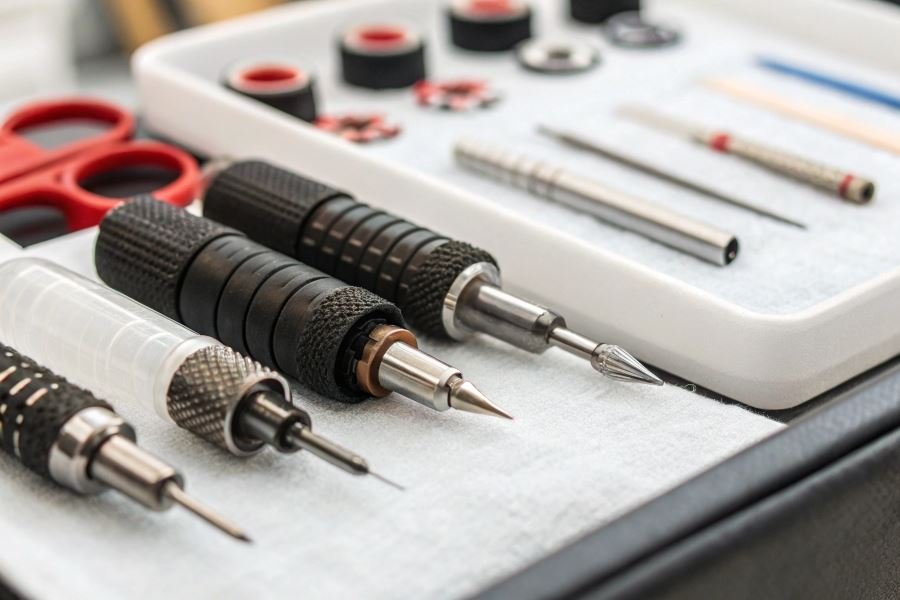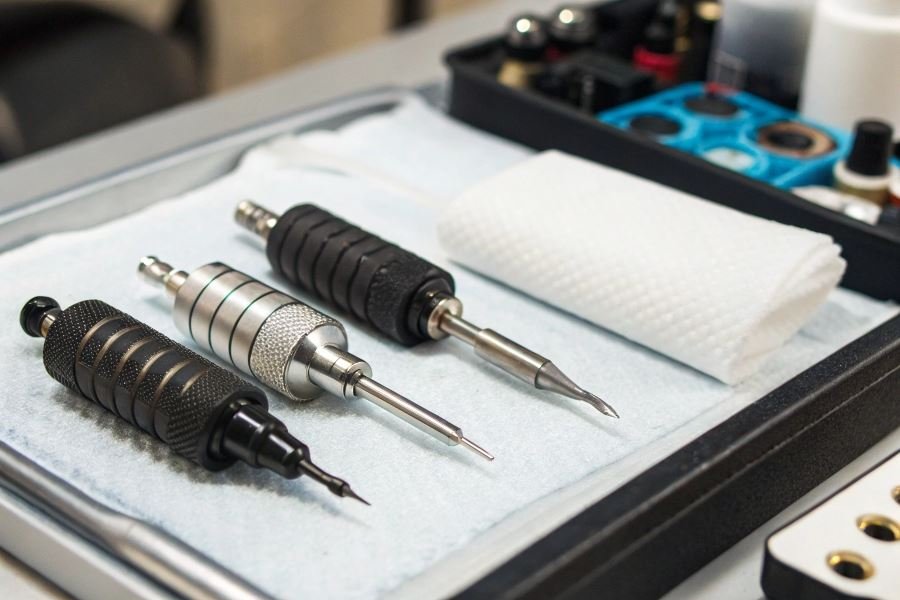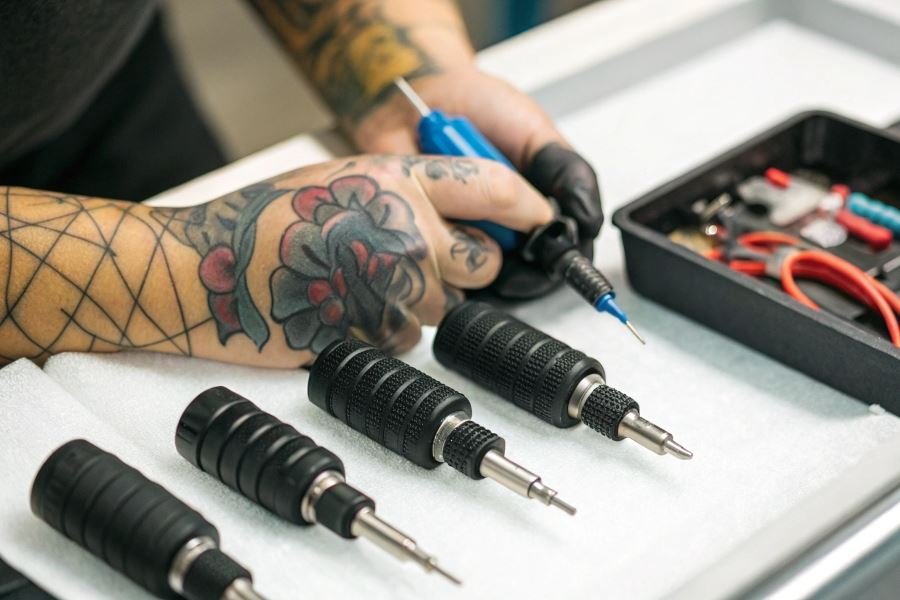
Every tattoo tells a story—but behind each masterpiece lies an invisible battle against microscopic threats. The thin metal barrier between artistic expression and potential infection? Your tattoo needle tips.
The sterilization and proper care of tattoo equipment isn’t merely good practice—it’s the foundation of responsible tattooing. When clients sit in your chair, they’re placing their health in your hands, often without realizing the complex safety protocols that should be happening behind the scenes. A single contaminated needle can transmit bloodborne pathogens including hepatitis B, hepatitis C, and HIV—turning art into a serious health risk.
The regulatory landscape has evolved dramatically since the early days of tattooing. The FDA now classifies tattoo inks as cosmetics and needles as medical devices, while organizations like the Alliance of Professional Tattooists (APT) have established comprehensive guidelines for sterilization procedures. Since 2018, most states have implemented specific health department regulations governing tattoo establishments, though requirements still vary significantly by location.
The sterilization arsenal: Essential tools for safety
Every professional tattoo artist needs a proper sterilization setup including:
- Autoclave – The gold standard for sterilization, reaching temperatures of 270°F under pressure
- Ultrasonic cleaner – For pre-sterilization cleaning that removes biological debris
- Medical-grade disinfectants – For surface cleaning and preparation
- Sterile packaging materials – To maintain sterility after processing
- Disposable gloves – Changed frequently throughout procedures
The investment in proper sterilization equipment isn’t just about compliance—it’s about building client trust and protecting your reputation in an industry where safety awareness continues to grow.
Sterilization Methods That Guarantee Safety
Proper sterilization of tattoo needle tips isn’t just good practice—it’s the critical foundation of professional tattooing. The meticulous process of cleaning and sterilizing these tools demands precision and adherence to established protocols that have evolved through decades of professional practice. When artists commit to comprehensive sterilization and care for tattoo needle tips, they create a complete shield against potential infections and complications that could otherwise compromise client safety.
Let’s dive into the three primary sterilization methods that every serious tattoo professional should master.
Ultrasonic Cleaning: The First Defense
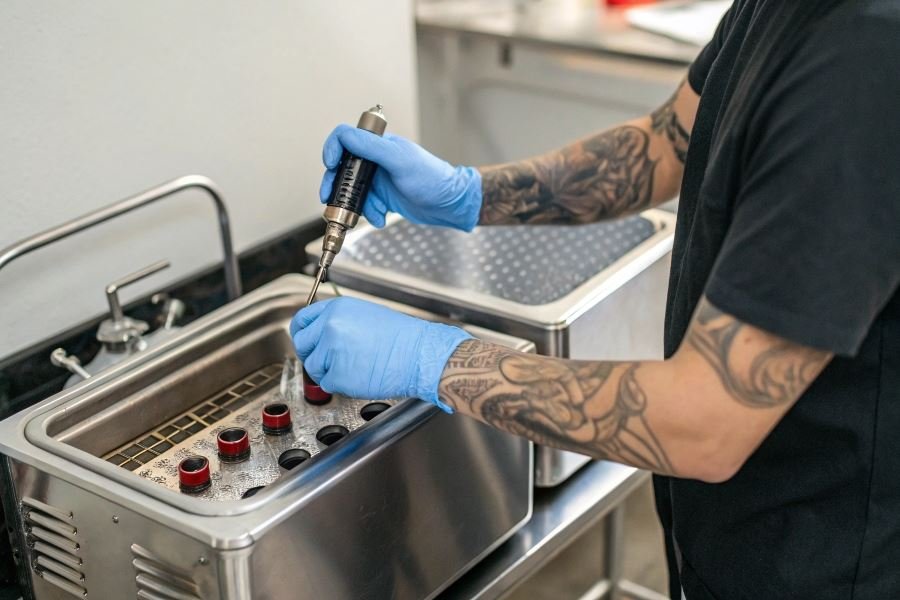
Ultrasonic cleaners represent the initial battleground against contaminants. These devices use high-frequency sound waves to create microscopic bubbles in a cleaning solution—a process called cavitation—that literally shakes contaminants loose from equipment surfaces.
The proper ultrasonic cleaning procedure follows these steps:
- Pre-rinse needle tips to remove visible debris
- Place tips in ultrasonic cleaner with appropriate enzymatic solution
- Run for 10-15 minutes at 40kHz frequency
- Rinse thoroughly with distilled water
- Dry completely before proceeding to sterilization
The effectiveness of ultrasonic cleaning depends significantly on using the correct solution concentration and maintaining the equipment properly.
Professionals who skip this step miss removing organic materials that can shield pathogens from subsequent sterilization efforts—a critical error that compromises the entire process.
Autoclave Sterilization: The Gold Standard
After ultrasonic cleaning, autoclave sterilization delivers the knockout punch to remaining microorganisms. This method uses pressurized steam to achieve temperatures that destroy all microbial life forms.
| Autoclave Type | Temperature | Pressure | Duration | Best For |
|---|---|---|---|---|
| Class B (Pre-vacuum) | 273°F (134°C) | 30-31 psi | 3-4 minutes | All tattoo equipment |
| Class S (Specialized) | 250°F (121°C) | 15-17 psi | 15-20 minutes | Specific materials |
| Class N (Basic) | 250°F (121°C) | 15-17 psi | 30 minutes | Non-hollow items only |
Critical autoclave requirements include:
- Proper packaging of items in sterilization pouches
- Correct loading to allow steam circulation
- Regular spore testing (weekly minimum)
- Detailed documentation of each cycle
- Maintenance according to manufacturer specifications
The Statim and Midmark autoclaves have become industry standards, offering rapid cycle times while maintaining sterilization integrity.
Chemical Disinfection: The Tactical Support
While not a replacement for autoclave sterilization, chemical disinfection serves as a supplementary method or emergency backup when thermal sterilization isn’t immediately available.
Most effective chemical options include:
- Glutaraldehyde solutions (2%) – Require 10-hour immersion for high-level disinfection
- Hydrogen peroxide (7.5%) – Effective against a broad spectrum of pathogens in 30 minutes
- Quaternary ammonium compounds – Excellent for surface disinfection but insufficient for sterilization
The effectiveness of chemical disinfectants diminishes significantly when organic material remains on surfaces, reinforcing the importance of thorough pre-cleaning.
Chemical disinfection should never replace autoclave sterilization for critical items like needle tips but can serve as an intermediate step in the comprehensive sterilization protocol.
Implementing these three methods in sequence creates a formidable barrier against cross-contamination. The investment in proper equipment, training, and time reflects a professional’s commitment to client safety and industry standards—ultimately protecting both reputation and livelihood in an increasingly scrutinized field.
Professional Tattoo Needle Maintenance: The Definitive Protocol
Proper maintenance of tattoo needle tips isn’t just good practice—it’s the cornerstone of professional tattooing. The difference between mediocre and exceptional tattoo work often comes down to how meticulously artists maintain their tools. Let’s dive into the protocols that separate the professionals from the amateurs.
Daily cleaning rituals that matter
Professional tattoo artists treat their needle tips with almost ceremonial respect. After each session, immediate cleaning is non-negotiable. The process typically involves:
- Ultrasonic cleaning with hospital-grade disinfectants
- Multiple rinses with distilled water
- Complete air drying before storage
Never store partially wet needle tips—this creates a breeding ground for bacteria and can lead to oxidation of metal components. Most professionals use autoclavable containers with silicone inserts to prevent tips from touching each other during storage.
The first 30 minutes after use are critical for preventing biological material from drying and becoming significantly harder to remove.
For reusable tips, storage in sealed, sterile pouches after proper sterilization extends their usable life by up to 40%. Many artists use dedicated cabinets with UV sterilization features for additional protection.
Quality inspection beyond the obvious
Professional inspection goes far beyond a casual glance. Before each use, experienced artists perform a systematic check:
Pre-use inspection checklist:
- Examine packaging integrity for single-use tips
- Verify sterilization indicators have changed color
- Check for manufacturing defects under magnification
- Test needle groupings for alignment and stability
Post-use assessment is equally critical but often overlooked. This is when subtle damage becomes visible—bent needles, microscopic burrs, or compromised soldering points all signal that a tip should be retired.
Many professionals use jeweler’s loupes or digital microscopes to inspect at 10-30x magnification. This level of scrutiny might seem excessive, but when you’re creating permanent art, every detail matters.
Responsible disposal and environmental stewardship
Single-use needle tips create a significant environmental challenge. Professional studios have developed comprehensive disposal protocols that balance safety with sustainability:
| Disposal Method | Safety Rating | Environmental Impact |
|---|---|---|
| Sharps containers | Excellent | Moderate |
| Mail-back systems | Very Good | Low-Moderate |
| Needle clippers | Good | Low |
The industry standard involves using puncture-resistant Sharps containers that are professionally collected and processed. These containers should be filled only to the indicated line—typically 75% capacity—to prevent accidents during handling.
Some forward-thinking studios have adopted needle clipping devices that separate the sharp portion from the metal base, reducing biohazard volume by up to 80%. Companies like Daniels Health offer specialized services for tattoo studios that minimize environmental impact while maintaining strict compliance with biohazard regulations.
Remember: Improper disposal isn’t just unprofessional—it’s illegal in most jurisdictions and carries significant penalties.
The most conscientious professionals also track their waste metrics, actively seeking to reduce their environmental footprint through careful purchasing decisions and exploring reusable options where safety permits.
By adhering to these professional protocols, artists not only protect their clients but also elevate the entire profession through their commitment to excellence and responsibility.
Learn essential tattoo needle sterilization techniques to prevent infections and ensure client safety. Discover ultrasonic cleaning, autoclave procedures, and proper maintenance protocols that meet industry standards for professional tattoo artists.
Learn essential tattoo needle sterilization techniques to prevent infections and ensure client safety. Discover ultrasonic cleaning, autoclave procedures, and proper maintenance protocols that meet industry standards for professional tattoo artists.