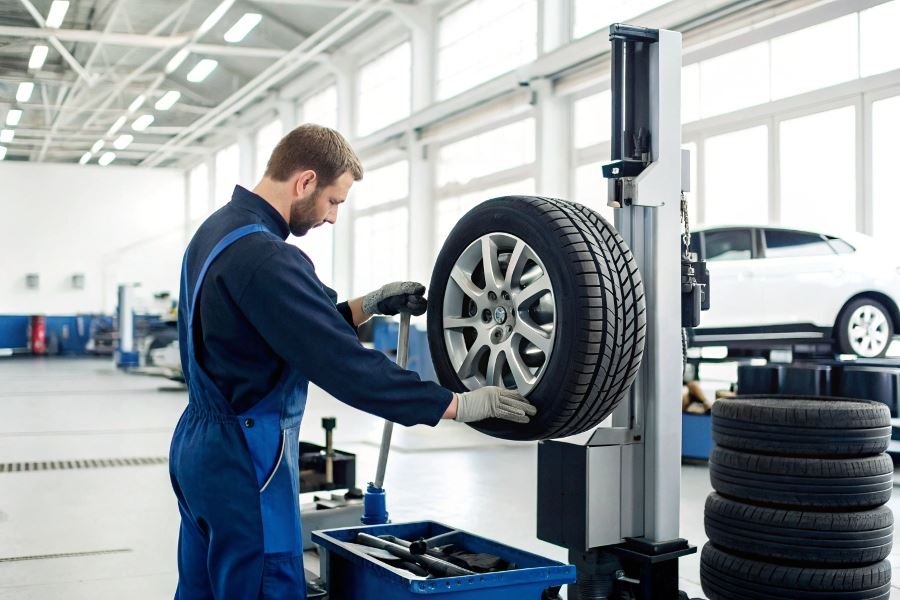
Ever watched a Formula 1 pit crew change four tires in under two seconds? While your auto service doesn’t need that speed, the right equipment makes all the difference between profit and frustration.
The tire changing machine sits at the heart of any successful auto service operation. It’s not just another tool—it’s the workhorse that determines your throughput, technician satisfaction, and ultimately, your bottom line. Choosing the wrong machine is like trying to cut a steak with a butter knife: technically possible, but painfully inefficient.
The efficiency multiplier
A properly selected tire changer doesn’t just save time—it transforms your entire operation. Technicians can handle more vehicles per day with less physical strain, reducing fatigue and potential injuries. The math is simple: faster tire changes = more customers served = increased revenue.
Understanding your options
Today’s market offers three primary categories of tire changing equipment:
- Manual tire changers: Budget-friendly options requiring significant operator effort
- Semi-automatic machines: The middle ground, offering powered table rotation with manual mounting tools
- Fully automatic systems: Premium solutions with pneumatic mounting heads and assist arms
Each category serves different business needs, from small repair shops to high-volume tire centers.
Decision drivers that matter
When evaluating tire fitting equipment, consider these critical factors:
- Volume requirements: How many tire changes do you perform daily?
- Tire types serviced: Standard passenger tires or specialized low-profile/run-flat varieties?
- Available space: Some machines require significant floor area for operation
- Technician experience: More automated machines require less operator skill
- Long-term maintenance costs: Premium machines often offer lower lifetime expenses
The ideal machine balances your current needs with room for business growth, ensuring your investment remains valuable for years to come.
Essential Criteria for Choosing the Right Tire Machine
Selecting the perfect tire fitting machine for your auto service isn’t just a purchase—it’s a strategic investment that directly impacts your operational efficiency, service quality, and bottom line. The marketplace offers everything from basic manual changers to sophisticated fully-automatic systems with integrated wheel balancers. Let’s dive into what truly matters when making this critical decision.
Know Your Operational Demands
The foundation of choosing a tire fitting machine for an auto service begins with a brutally honest assessment of your daily operations. Are you running a high-volume shop servicing 20+ vehicles daily, or a specialized boutique handling premium vehicles at a more measured pace?
Volume metrics matter tremendously. Track your current tire service requests over a two-week period, noting:
- Average daily tire changes
- Peak-hour demands
- Seasonal fluctuations
- Types of vehicles serviced
A neighborhood shop primarily handling passenger vehicles has dramatically different needs than a commercial service center regularly mounting 22.5-inch truck tires. Similarly, if you’re frequently working with run-flat tires or low-profile performance wheels, you’ll need machines with specific capabilities.
Consider future growth patterns. The machine that perfectly meets today’s needs might become a bottleneck in 12 months if your business expands. Most quality tire machines have a service life of 7-10 years—make sure yours can grow with you.
Technical Specifications That Drive Performance
Once you’ve clarified your operational requirements, evaluate machines based on these critical specifications:
| Specification | Entry-Level | Mid-Range | Professional |
|---|---|---|---|
| Rim Diameter Range | 10″-18″ | 10″-24″ | 10″-30″ |
| Clamping System | Manual | Semi-automatic | Fully automatic |
| Bead Breaking Force | 2,500 kg | 3,000 kg | 3,600+ kg |
| Motor Power | 0.75 kW | 1.1 kW | 1.5+ kW |
| Mounting Head Design | Fixed | Pneumatic tilt | Leverless |
Leverless technology deserves special attention for shops handling expensive alloy wheels. These systems eliminate traditional tire irons that can damage delicate wheel finishes. While they command a premium price, the reduction in potential wheel damage claims can quickly offset the investment.
For high-volume operations, look for machines with pneumatic bead depressors and helper arms that reduce operator fatigue and increase throughput. Hunter Engineering and Corghi offer excellent options in this category.
Space Planning and Installation Requirements
The perfect tire machine becomes worthless if it won’t fit your workspace or requires electrical upgrades beyond your budget.
Footprint considerations extend beyond the machine’s dimensions. You need adequate clearance for:
- Operator movement (minimum 3 feet on working sides)
- Tire storage and handling
- Power and air supply connections
- Safety zones
Most professional-grade machines require:
- 220V electrical service (15-20 amp dedicated circuit)
- Compressed air (8-10 CFM at 125-145 PSI)
- Level, reinforced concrete flooring
Pro tip: Request a detailed site survey from your equipment supplier before purchase. They should provide a scaled layout showing exactly how the machine will fit in your workspace.
Remember that installation costs can add 10-15% to your total investment. Budget for proper electrical work, air line installation, and potential floor reinforcement. Cutting corners on installation invariably leads to performance issues and premature equipment failure.
By methodically evaluating these three critical areas—operational needs, technical specifications, and installation requirements—you’ll select a tire machine that delivers exceptional performance and value for years to come.
Making the Final Decision: Your Tire Fitting Machine Investment
When you’re ready to pull the trigger on a tire fitting machine purchase, the decision deserves careful consideration. This equipment represents a significant investment that will impact your auto service operations for years to come. Let’s dive into the brands that dominate the market, understand the true cost of ownership, and match the right machine to your specific business needs.
Top Tire Fitting Machines Face-Off
The market leaders have earned their positions through consistent performance and innovation. Here’s how they stack up:
| Brand & Model | Key Features | Price Range | Best For |
|---|---|---|---|
| Hunter Engineering Revolution | Fully automatic operation, touchless mounting, integrated wheel lift | 25, 000−35,000 | High-volume shops, premium service providers |
| Corghi Artiglio Master | Leverless technology, pneumatic bead breaker, automatic wheel positioning | 18, 000−25,000 | Mid-sized operations with diverse tire services |
| Snap-on EEWH334A | Swing-arm design, dual bead breaker system, pneumatic clamping | 12, 000−17,000 | Smaller shops with space constraints |
The Hunter Revolution stands out with its fully automated operation that reduces technician fatigue and potential for error. The Corghi Artiglio Master offers exceptional versatility for handling specialty tires, while the Snap-on EEWH334A delivers reliable performance at a more accessible price point.
Beyond Purchase Price: The True Cost Calculation
The sticker price is just the beginning of your investment story. A comprehensive ROI analysis should include:
“The cheapest machine often becomes the most expensive over time. Factor in all costs before signing the check.”
Maintenance requirements vary significantly between models. Hunter machines typically demand professional service 1-2 times annually at $500-800 per visit, while some Snap-on models allow for more in-house maintenance, reducing service costs by up to 40%.
Consider these factors in your long-term cost analysis:
- Productivity gains: Higher-end machines can reduce tire changing time by 30-45%
- Energy consumption: Newer models use 15-25% less electricity than previous generations
- Training requirements: Sophisticated machines may require 8-16 hours of initial training
- Warranty coverage: Premium brands typically offer 3-5 year warranties versus 1-2 years for budget options
- Parts availability: Major brands maintain parts inventories for 10+ years
Matching Machine to Mission
Your business profile should dictate your equipment choice:
For high-volume tire specialists (processing 30+ tires daily), the investment in a fully automatic machine like the Hunter Revolution pays for itself through labor savings and reduced injury risk. The initial $30,000 investment typically reaches breakeven within 24-30 months.
Mid-sized general repair shops (10-25 tires daily) find the sweet spot with leverless technology like the Corghi Artiglio. These machines handle specialty tires while maintaining reasonable throughput at a more moderate investment.
Small independent shops with occasional tire work might consider the Snap-on swing-arm models, which deliver reliable performance without breaking the bank. The lower initial investment makes sense when tire service represents less than 20% of your business.
For shops specializing in high-performance or exotic vehicles, the additional investment in touchless technology is non-negotiable. The reduced risk of wheel damage justifies the premium price for businesses serving clientele with $1,000+ wheel sets.
Your tire machine should align with your business strategy, not just your current budget. The right investment expands capabilities, improves efficiency, and ultimately enhances your service offering for years to come.
Discover how to select the perfect tire fitting machine for your auto service based on workload, specifications, and ROI. Compare top brands and find the ideal equipment to maximize efficiency and profitability in your tire changing operations.
Discover how to select the perfect tire fitting machine for your auto service based on workload, specifications, and ROI. Compare top brands and find the ideal equipment to maximize efficiency and profitability in your tire changing operations.