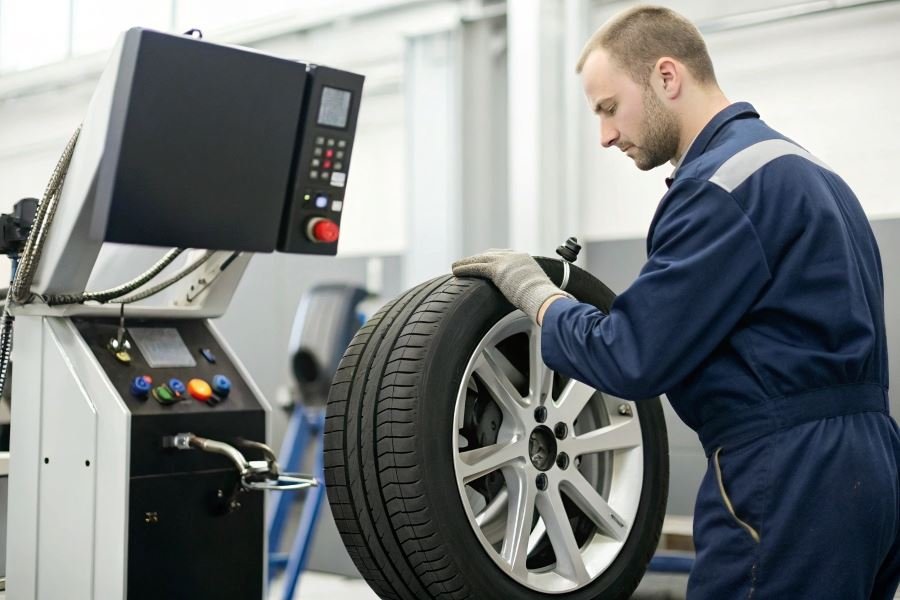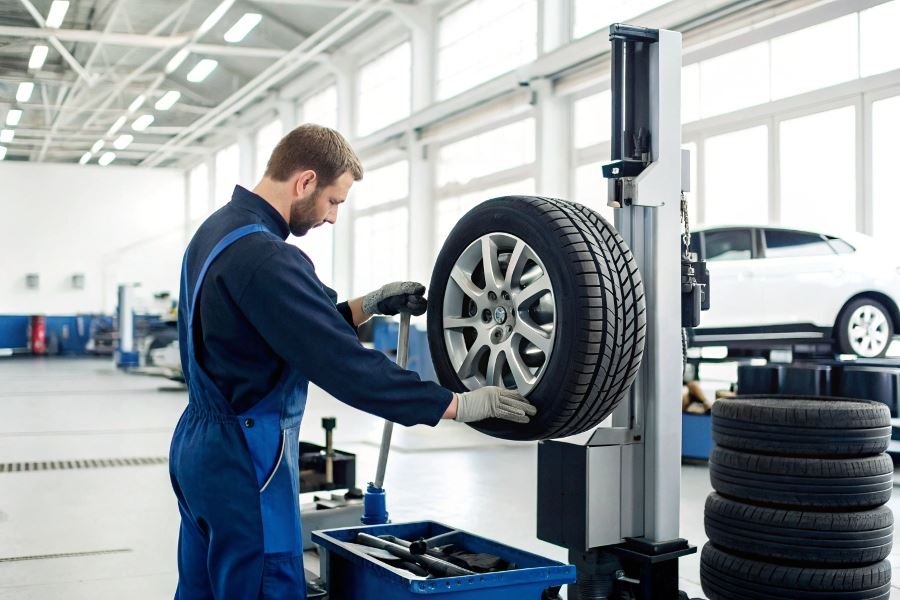
Ever watched a tire shop owner confidently expand their business while others struggle to keep the lights on? The difference often lies in understanding one critical metric: the payback period. For tire fitting operations, this calculation isn’t just financial homework—it’s the compass that guides every equipment purchase decision.
The payback period represents the time required to recover your initial investment in tire fitting equipment through the cash flows it generates. Think of it as answering the question: “How many tire changes will it take before this machine pays for itself?”
Three factors dramatically impact your equipment’s payback timeline:
- Initial investment costs – Including purchase price, shipping, installation, and training
- Revenue generation capacity – How many vehicles you can service per day
- Operating expenses – Maintenance, electricity, labor, and consumables
Calculating this crucial metric involves a straightforward process: divide your total investment by the net annual cash flow the equipment generates. For example, a $25,000 tire changer that nets $8,000 annually has a payback period of approximately 3.1 years.
“The most expensive equipment isn’t always the slowest to pay off. Higher-end machines often deliver efficiency gains that accelerate return on investment.”
Understanding this calculation transforms equipment purchases from intimidating expenses into strategic investments with predictable returns. When you know your numbers, you control your business’s future rather than hoping for the best.
Calculate Your Tire Fitting Equipment Payback Period Like a Pro
When investing in tire fitting equipment, understanding exactly when you’ll recoup your investment isn’t just smart business—it’s essential for survival in the competitive automotive service industry. The financial clarity that comes from calculating how to calculate the payback period of tire fitting equipment gives you both peace of mind and strategic advantage when planning your shop’s growth trajectory.
Nail Down Your Initial Investment
The foundation of any accurate payback calculation starts with a comprehensive accounting of every dollar spent to get your operation running. This isn’t just about the sticker price on that shiny new Hunter Engineering tire changer.
Your initial investment typically includes:
- Core equipment purchases (tire changers, wheel balancers, alignment systems)
- Auxiliary equipment (air compressors, lifts, TPMS tools)
- Installation costs and facility modifications
- Staff training expenses
- Initial inventory requirements
- Permitting and compliance costs
Pro tip: Don’t overlook the “hidden” costs like electrical upgrades or reinforced flooring that might be necessary for heavy equipment installation. These can easily add 15-20% to your projected budget.
Track Your Cash Flow Meticulously
Once operational, you’ll need to calculate the net cash flow your tire equipment generates annually. This requires subtracting all operating expenses from the revenue directly attributable to your tire services.
Revenue sources typically include:
- Tire mounting and balancing services
- Wheel alignment services
- TPMS diagnostics and replacement
- Seasonal tire changeovers
- Tire sales margins (if applicable)
Operating expenses to account for:
- Equipment maintenance and calibration
- Consumable supplies (valve stems, weights, lubricants)
- Utility costs for equipment operation
- Labor costs for tire technicians
- Equipment insurance
- Financing costs on equipment loans
Apply the Payback Formula With Precision
The standard payback period formula is refreshingly straightforward:
Payback Period = Initial Investment ÷ Annual Net Cash Flow
For example, if your total investment in tire fitting equipment was $75,000, and your annual net cash flow from tire services is $25,000, your payback period would be 3 years.
However, for more complex setups with varying annual returns, you’ll need to track cumulative cash flow until it equals your initial investment:
| Year | Annual Cash Flow | Cumulative Cash Flow | Remaining Investment |
|---|---|---|---|
| 0 | -$75,000 (investment) | -$75,000 | $75,000 |
| 1 | $20,000 | -$55,000 | $55,000 |
| 2 | $25,000 | -$30,000 | $30,000 |
| 3 | $28,000 | -$2,000 | $2,000 |
| 4 | $30,000 | $28,000 | Fully recovered |
In this scenario, your payback period is approximately 3.07 years—just over three years to break even.
Interpret Results For Strategic Decisions
The calculated payback period must be evaluated against industry benchmarks. For tire fitting equipment:
- Under 2 years: Excellent investment
- 2-3 years: Good investment
- 3-5 years: Acceptable but monitor closely
- Over 5 years: Consider alternative equipment options or business models
Remember that equipment with longer payback periods isn’t necessarily a poor investment—especially if it offers superior durability, precision, or enables premium services that competitors can’t match with lower-cost alternatives.
By mastering this calculation process, you’ll make equipment decisions based on data rather than guesswork, ensuring your tire fitting operation remains profitable and competitive for years to come.
Maximizing ROI: Optimizing Tire Fitting Equipment Payback
Smart investment in tire fitting equipment requires more than just purchasing hardware—it demands strategic planning to accelerate your return on investment. Let’s dive into proven approaches that can transform your tire shop’s profitability timeline from years to months.
Slashing initial investment costs
The first dollar you don’t spend is the first dollar you don’t need to earn back. Consider these investment-trimming tactics:
Certified pre-owned equipment often delivers 80-90% of new equipment performance at 40-60% of the cost. Major manufacturers like Hunter Engineering and Snap-on offer refurbished tire changers and wheel balancers with warranties nearly comparable to new units.
Leasing arrangements can dramatically reduce upfront capital requirements while providing tax advantages. Equipment financing typically requires only 10-15% down payment, preserving cash flow during critical early business months.
The most overlooked cost-cutting strategy? Modular purchasing. Start with essential equipment and add complementary pieces as revenue grows.
Bundle purchasing from a single manufacturer often yields discounts of 10-20% compared to buying individual pieces from different suppliers. This approach also ensures compatibility between machines and streamlines maintenance.
Accelerating revenue streams
Reducing costs is only half the equation—boosting income completes the ROI picture:
Diversify service offerings beyond basic tire mounting. Adding TPMS service (15 − 25pervehicle)andnitrogeninflation(5-10 per tire) requires minimal additional equipment investment while substantially increasing per-vehicle revenue.
Extended operating hours can maximize equipment utilization. Each additional hour your equipment operates represents accelerated payback without additional capital investment.
Consider this revenue potential comparison:
| Service Type | Average Price | Time Required | Hourly Revenue Potential |
|---|---|---|---|
| Basic Mount & Balance | $80 | 45 minutes | $107 |
| Mount & Balance with TPMS | $120 | 50 minutes | $144 |
| Premium Package (with nitrogen) | $160 | 55 minutes | $175 |
Seasonal promotions targeting winter tire changeovers or summer road trip preparation can create equipment utilization spikes, generating 25-40% more revenue during otherwise average months.
Equipment comparison: Payback analysis
Not all tire equipment delivers equal return on investment:
Entry-level manual equipment ($5,000-8,000) offers payback periods of 6-8 months but limits throughput to 8-10 vehicles daily and increases labor costs.
Mid-range semi-automatic systems ($12,000-18,000) typically achieve payback within 10-14 months while handling 15-20 vehicles daily with reduced physical demands on technicians.
Premium fully-automatic equipment ($25,000-35,000) from manufacturers like Corghi requires 16-24 months for payback but can process 25-30 vehicles daily with minimal technician strain and superior handling of specialty wheels.
The most efficient approach? Targeted investment matching your specific market. High-volume shops benefit from premium equipment’s throughput, while specialty boutique operations may achieve faster ROI with mid-range equipment supplemented by premium TPMS tools.
By strategically reducing acquisition costs, maximizing service revenue, and selecting equipment that aligns with your business model, you can potentially reduce payback periods by 30-40% compared to industry averages.
Learn how to calculate tire fitting equipment payback period with our step-by-step guide. Discover key factors affecting ROI, investment cost analysis, and strategies to optimize profitability in your automotive service business.
Learn how to calculate tire fitting equipment payback period with our step-by-step guide. Discover key factors affecting ROI, investment cost analysis, and strategies to optimize profitability in your automotive service business.