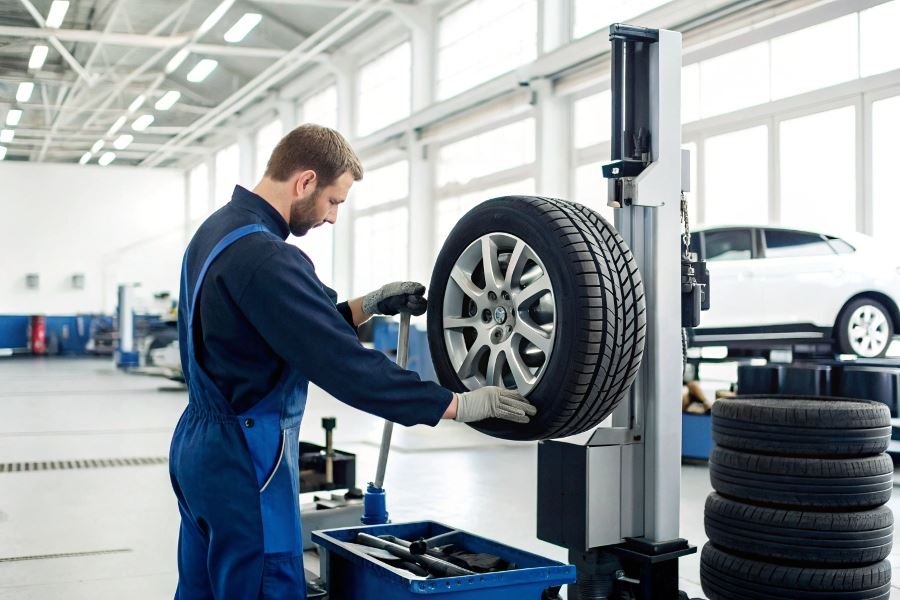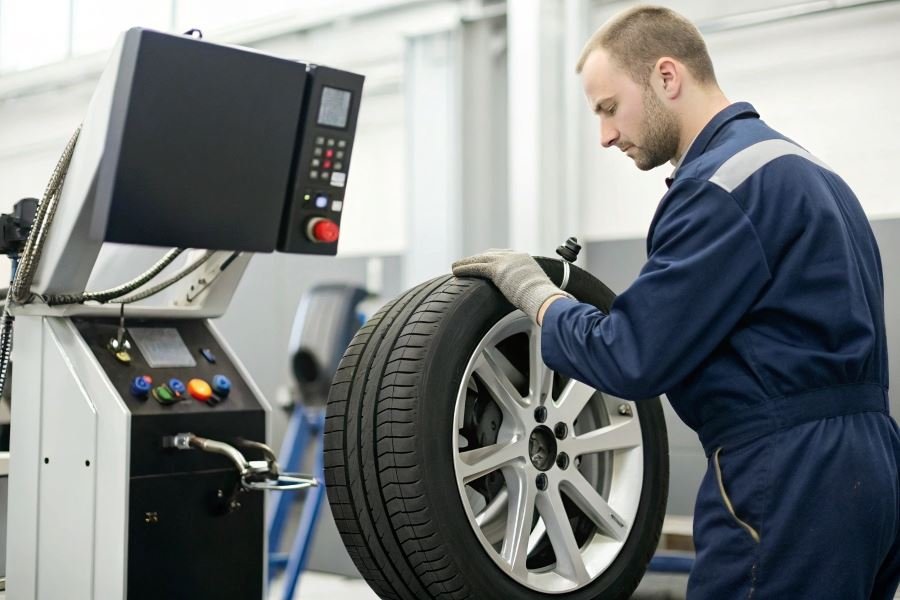
Ever wondered why some tire shops finish a complete wheel change in minutes while others take forever? The secret lies not just in technician skill, but in the equipment they’re using. The humble tire changer—a workshop staple since the 1940s—has evolved dramatically, creating a fascinating divide between automatic and semi-automatic technologies.
The backbone of vehicle maintenance
Tire changers represent the cornerstone of automotive maintenance infrastructure. These specialized machines allow technicians to separate tires from wheels and remount them with precision—a task that would be nearly impossible to perform safely by hand on modern vehicles. As tire technology has advanced with run-flats, low-profile designs, and larger diameters, tire changing equipment has needed to evolve in parallel.
Automatic vs semi-automatic: Understanding the difference
Semi-automatic tire changers require operators to manually position the mounting head, apply leverage, and control most aspects of the tire changing process. They typically feature:
- Manual positioning systems
- Mechanical bead breakers
- Basic tabletop designs
- Lower initial investment (2, 000−5,000)
Automatic tire changers, by contrast, use pneumatic or hydraulic systems to handle most operations with minimal physical effort. Key features include:
- Pneumatic positioning arms
- Hydraulic bead breaking systems
- Computerized controls
- Higher price points (5, 000−15,000+)
Making the right choice for your operation
When deciding between these technologies, consider:
“The right tire changer isn’t about price—it’s about matching your daily workload with appropriate technology.”
- Volume requirements: How many tires do you process daily?
- Tire types: Do you regularly service specialty, run-flat, or low-profile tires?
- Technician experience: Less experienced staff benefit from automatic features
- Space constraints: Semi-automatic models typically have smaller footprints
- Budget realities: Initial investment vs. long-term productivity gains
The choice ultimately depends on balancing immediate costs against long-term efficiency and the specific demands of your customer base.
The Ultimate Showdown: Automatic vs Semi-Automatic Tire Changers
When equipment decisions impact your bottom line, the choice between automatic and semi-automatic tire changers deserves serious consideration. Workshop efficiency hinges on these workhorse machines, with significant differences in performance, labor requirements, and financial implications between the two options.
The debate around automatic vs semi-automatic tire changers: which is better continues to divide automotive professionals. The answer depends largely on your specific business needs, volume expectations, and available resources. Let’s break down the critical factors that should influence your decision.
Speed that pays the bills
Automatic tire changers deliver undeniable advantages in pure throughput. A high-end Hunter automatic changer can process a standard passenger tire in approximately 60 seconds, while semi-automatic models typically require 2-3 minutes per tire. This efficiency gap widens dramatically with specialty tires.
Time comparison for complete tire change (4 tires):
| Tire Changer Type | Standard Tires | Run-flat Tires | Low-profile Tires |
|---|---|---|---|
| Automatic | 4-6 minutes | 8-10 minutes | 6-8 minutes |
| Semi-automatic | 10-15 minutes | 18-25 minutes | 15-20 minutes |
The automatic advantage becomes particularly pronounced during peak seasons when every minute counts.
Operator expertise requirements
Semi-automatic changers demand significantly more operator skill and physical effort. Technicians must manually position the mounting head, apply leverage, and control the bead breaking process—all requiring training and experience to avoid damaging expensive wheels.
Automatic models incorporate pneumatic assist systems, computerized positioning, and preset programs that dramatically reduce the learning curve. A novice can become proficient on an automatic machine in days rather than weeks.
This reduced training requirement translates directly to staffing flexibility and reduced labor costs over time.
Financial considerations beyond the price tag
The initial investment difference is substantial. Quality semi-automatic changers from manufacturers like Ranger typically range from 2, 000−4,000, while automatic systems from Corghi or Hofmann command 7, 000−15,000.
However, the total cost equation includes:
- Labor savings: Automatic changers reduce labor costs by 50-60% per tire
- Damage prevention: Advanced systems minimize expensive wheel damage
- Maintenance requirements: Semi-automatic systems generally have fewer components that can fail
- Power consumption: Automatic systems draw 20-30% more electricity
For high-volume shops processing 20+ tires daily, automatic changers typically reach ROI within 18-24 months through labor savings alone.
Workshop real estate considerations
Space requirements differ significantly:
- Semi-automatic changers: 12-15 square feet
- Automatic changers: 18-25 square feet
Beyond footprint, consider operational clearance. Automatic changers often incorporate swing arms and pneumatic systems requiring additional workspace. Semi-automatic models offer more flexibility in tight quarters.
Workshop integration factors include:
- Power requirements (220V vs. 110V)
- Compressed air capacity (automatic systems require 120-150 PSI consistent supply)
- Floor reinforcement needs (automatic systems weigh 200-400 pounds more)
The right choice ultimately depends on your specific business model, volume expectations, and available resources. High-volume operations benefit dramatically from automatic systems, while smaller shops with space constraints and lower volume may find semi-automatic changers more practical and economically sensible.
Making the Right Choice: Automatic vs Semi-Automatic Tire Changers
When investing in tire changing equipment, the decision between automatic and semi-automatic machines isn’t just about budget—it’s about aligning technology with your specific operational needs. After examining the capabilities of both types, let’s focus on making that critical decision for your business.
Where automatic tire changers excel
Automatic tire changers deliver their greatest value in high-volume environments where efficiency translates directly to profitability. These powerhouses shine in:
Large commercial tire shops processing 30+ tires daily, where the time savings justify the higher investment. One shop owner reported reducing tire change times by 42% after upgrading to a Hunter automatic changer.
Dealership service departments handling premium vehicles with expensive, low-profile tires. The reduced risk of wheel damage pays for itself when working with $500+ wheel sets.
Fleet maintenance facilities where consistent, rapid turnaround is essential. Automatic changers allow technicians to process multiple vehicles with minimal fatigue, maintaining productivity throughout shifts.
The sweet spot for automatic machines is where volume meets complexity—especially with challenging tire types that would otherwise require significant manual effort.
When semi-automatic tire changers make sense
Semi-automatic machines remain the backbone of many successful operations, particularly in these scenarios:
Small to medium repair shops with moderate tire volume (5-15 daily) where the cost-to-utilization ratio favors simpler equipment. The $2,000-5,000 investment typically delivers excellent ROI.
Mobile tire services requiring compact, transportable equipment that can operate with limited power sources. Many Coats semi-automatic models can run on standard power while delivering professional results.
Multi-service garages where tire changing represents only one segment of the business. The lower training requirements and versatility of semi-automatic machines allow multiple technicians to use the equipment effectively.
Semi-automatic changers deliver their greatest value when flexibility and affordability outweigh pure processing speed.
Top recommendations by business profile
| Business Type | Recommended Changer Type | Key Consideration |
|---|---|---|
| High-volume tire specialist | Fully automatic with leverless technology | Processing speed for 25+ tires daily |
| General repair shop | Mid-range semi-automatic | Versatility across common tire types |
| Premium/specialty service | Automatic with wheel protection features | Damage prevention for expensive wheels |
For mixed-use facilities: Consider a quality semi-automatic machine with pneumatic assist features. This provides a middle ground that handles most tire types efficiently without the premium price of fully automatic systems.
For specialty tire services: If you regularly work with run-flats, low-profile performance tires, or oversized wheels, the investment in automatic technology with specific handling capabilities for these challenging applications will quickly pay dividends.
For growing businesses: Start with a high-end semi-automatic model from Ranger or similar manufacturers that offers upgrade paths or additional assist arms. This provides immediate capability with room to expand as your volume increases.
The ideal tire changer isn’t necessarily the most expensive or feature-rich—it’s the one that aligns perfectly with your daily operational requirements while providing room for business growth.
Discover the key differences between automatic and semi-automatic tire changers to make the best investment for your shop. Compare performance, efficiency, and costs to determine which technology matches your business volume and tire service needs.
Discover the key differences between automatic and semi-automatic tire changers to make the best investment for your shop. Compare performance, efficiency, and costs to determine which technology matches your business volume and tire service needs.