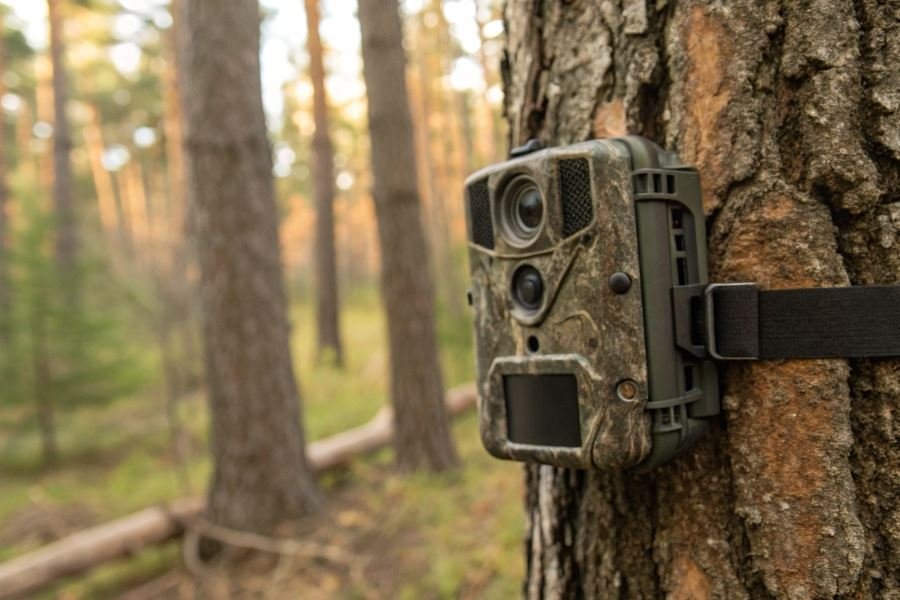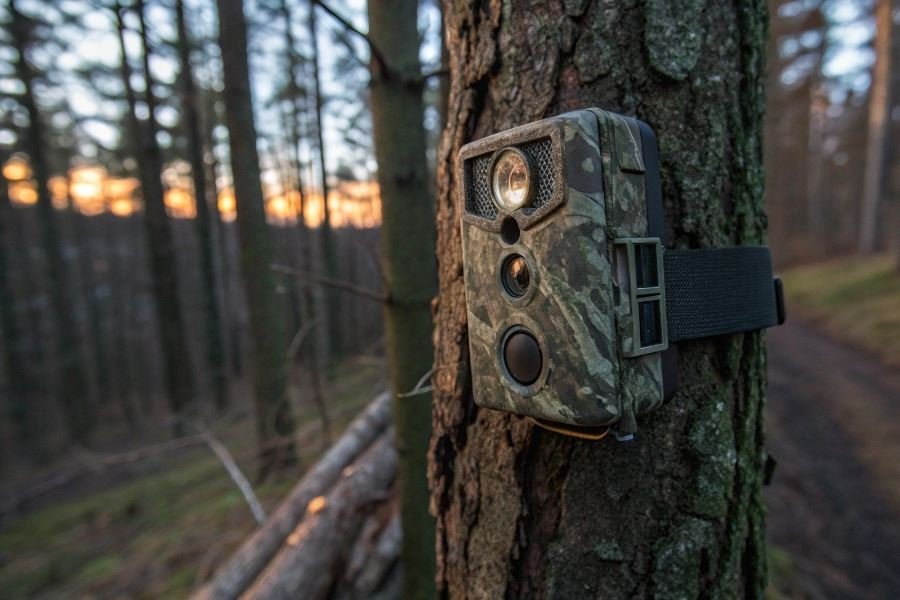
What if you could capture that elusive mountain lion on camera without hiking back every week to change batteries? Wildlife researchers and security professionals are revolutionizing their fields with devices that wait patiently for months—sometimes years—in the harshest environments.
Autonomous camera traps represent the silent sentinels of modern monitoring systems. These specialized devices capture images or video when triggered by motion or heat, operating independently in remote locations without human intervention. Unlike conventional cameras requiring constant attention, these rugged units serve as unblinking eyes in environments ranging from tropical rainforests to arctic tundras, documenting wildlife behavior and securing remote properties with equal efficiency.
Battery performance isn’t just a convenience factor—it’s the lifeblood of these systems. A camera trap with insufficient power becomes nothing more than an expensive paperweight in the field. When deployed in remote locations, every battery change represents significant costs: transportation expenses, researcher time, and potential disruption to wildlife. For security applications, power failures create dangerous vulnerability windows.
The power behind the lens
Modern camera traps utilize several battery technologies, each with distinct advantages:
- Alkaline batteries: Affordable and widely available, offering moderate performance in temperate conditions
- Lithium primary cells: Superior cold-weather performance and significantly longer life, though at higher initial cost
- Rechargeable systems: Often paired with solar panels for potentially indefinite operation in suitable environments
The evolution of power management systems has dramatically extended field life. Today’s premium units employ sophisticated sleep modes, efficient image processing, and adaptive triggering algorithms that maximize every milliamp-hour of available power.
Power Play: Mastering Battery Life in Autonomous Camera Traps
When selecting autonomous camera traps for wildlife monitoring, property security, or research projects, battery performance isn’t just a feature—it’s the lifeline that determines success or failure in the field. The most sophisticated motion detection and crystal-clear image quality become worthless when batteries fail prematurely. Understanding the selection criteria based on battery life for autonomous camera traps can mean the difference between capturing that rare species or missing it entirely.
Battery Types: The Foundation of Longevity
The battery type you choose establishes the baseline for your camera trap’s operational lifespan. Each option presents distinct advantages worth considering:
Lithium batteries reign supreme in cold-weather deployments, offering up to 3-5 times longer life than alkaline alternatives. Energizer Ultimate Lithium batteries maintain performance even at temperatures as low as -40°F, making them ideal for winter monitoring or high-altitude deployments.
Alkaline batteries provide cost-effective power for short-term projects in moderate climates. While they can’t match lithium’s longevity or cold-weather performance, their accessibility and lower initial investment make them practical for certain applications.
Rechargeable options like Nickel-Metal Hydride (NiMH) batteries present an environmentally conscious alternative with impressive cycle life. Modern Panasonic Eneloop Pro NiMH batteries can be recharged up to 500 times while retaining 85% of their capacity after a year in storage.
Power Consumption Factors That Drain Your Batteries
Several operational factors dramatically influence how quickly your camera trap depletes its power source:
| Feature | Power Impact | Battery Life Reduction |
|---|---|---|
| Video recording | Very High | 60-80% |
| Cellular transmission | High | 40-60% |
| IR flash range | Medium | 20-40% |
| Detection frequency | Medium | 15-35% |
| Standby mode efficiency | Low-Medium | 10-25% |
The detection zone settings significantly affect battery consumption. Wider detection areas trigger more activations, while sensitivity adjustments balance between missing important subjects and wasting power on false triggers from moving vegetation.
Trigger speed and recovery time settings create a delicate balance. Faster triggers capture more action but consume more power. The Browning Dark Ops Pro XD demonstrates excellent power efficiency with a 0.15-second trigger speed while maintaining extended battery life through sophisticated power management.
Environmental Factors: The Battery Killers
Environmental conditions can dramatically alter battery performance in ways that specifications sheets rarely address. Temperature stands as the most significant factor—lithium batteries maintain approximately 90% capacity at 32°F, while alkaline batteries drop to about 60% capacity at the same temperature.
Humidity and moisture accelerate battery drain through increased conductivity and potential corrosion. Quality camera traps like the Reconyx HyperFire 2 feature weather-sealed battery compartments that protect against these elements.
Seasonal variations require strategic planning. Summer deployments face higher temperatures that can reduce battery shelf life, while winter conditions demand batteries capable of performing in extreme cold. The Spypoint LINK-MICRO-LTE offers impressive cold-weather performance with its lithium power system optimized for year-round deployment.
By carefully evaluating these battery-related selection criteria, you’ll maximize field time and minimize maintenance trips—ultimately capturing more of what matters while spending less time changing batteries in remote locations.
Maximizing Field Time: Battery Optimization for Autonomous Camera Traps
Tailoring power solutions to field conditions
Selecting the right autonomous camera trap ultimately comes down to matching battery specifications with your deployment scenario. Remote wildlife monitoring in Alaska’s backcountry demands fundamentally different power requirements than short-term urban wildlife studies. The key lies in understanding your specific needs.
For extreme weather deployments, lithium batteries like those used in Reconyx HyperFire 2 models maintain performance down to -20°F, while alkaline batteries struggle below freezing. High-altitude deployments above 8,000 feet similarly benefit from lithium’s stability, offering up to 40% longer operational life compared to standard options.
Deployment duration should drive your battery selection. Short-term studies (1-3 months) can often rely on standard AA alkaline batteries, while seasonal or year-long deployments demand either lithium primaries or rechargeable systems paired with solar panels.
The most expensive camera trap becomes worthless when its batteries fail prematurely in the field.
Cost-benefit analysis of battery options
When evaluating long-term autonomous operation, the initial sticker price tells only part of the story:
| Battery Type | Initial Cost | Operational Life | Cost Per Month | Environmental Impact |
|---|---|---|---|---|
| Alkaline AA (8-pack) | $8-12 | 2-4 months | $2-6 | High waste |
| Lithium AA (8-pack) | $20-30 | 8-12 months | $1.67-3.75 | Moderate waste |
| NiMH Rechargeable + Solar | $80-150 | 3-5 years | $1.33-4.17 | Low waste |
| External 12V | $100-200 | 1-2 years | $4.17-16.67 | Moderate waste |
The math becomes compelling for deployments beyond six months. While lithium batteries carry a premium of roughly 2.5x over alkaline, their extended lifespan and cold-weather performance deliver superior value. For multi-year deployments, solar-rechargeable systems from manufacturers like Browning Trail Cameras offer the lowest total cost of ownership despite higher upfront investment.
Battery capacity directly impacts image capture potential. A standard 8-pack of lithium AAs (approximately 15,000 mAh capacity) typically supports 10,000-15,000 images before depletion. High-drain features like video recording, cellular transmission, or frequent triggering can reduce this by 40-60%.
Emerging battery technologies reshaping the field
The autonomous camera trap landscape is evolving rapidly with several promising developments:
Solid-state batteries are approaching commercial viability, promising energy densities 2-3x current lithium-ion technology with improved cold-weather performance. Early prototypes suggest operational lifespans could extend to 18+ months on a single charge.
Graphene supercapacitors are showing potential for rapid-charge applications, particularly when paired with small solar panels. Spypoint has already incorporated this technology into prototype models that can recharge in minutes rather than hours of sunlight exposure.
Energy harvesting technologies beyond solar are gaining traction. Thermal differential systems that generate power from day/night temperature variations show particular promise for desert deployments where temperature swings exceed 40°F daily.
The most significant advancement may be in power management rather than battery chemistry. Next-generation camera traps from Bushnell incorporate machine learning algorithms that dynamically adjust power consumption based on animal activity patterns, potentially extending battery life by 30-50% in typical deployments.
When selecting your autonomous camera trap, remember that battery performance represents the foundation of successful field deployment—all other features become irrelevant when power fails.
Discover how to select autonomous camera traps based on battery performance. Learn about lithium, alkaline, and rechargeable options, power consumption factors, and environmental considerations for optimal wildlife monitoring and security deployments.
Discover how to select autonomous camera traps based on battery performance. Learn about lithium, alkaline, and rechargeable options, power consumption factors, and environmental considerations for optimal wildlife monitoring and security deployments.