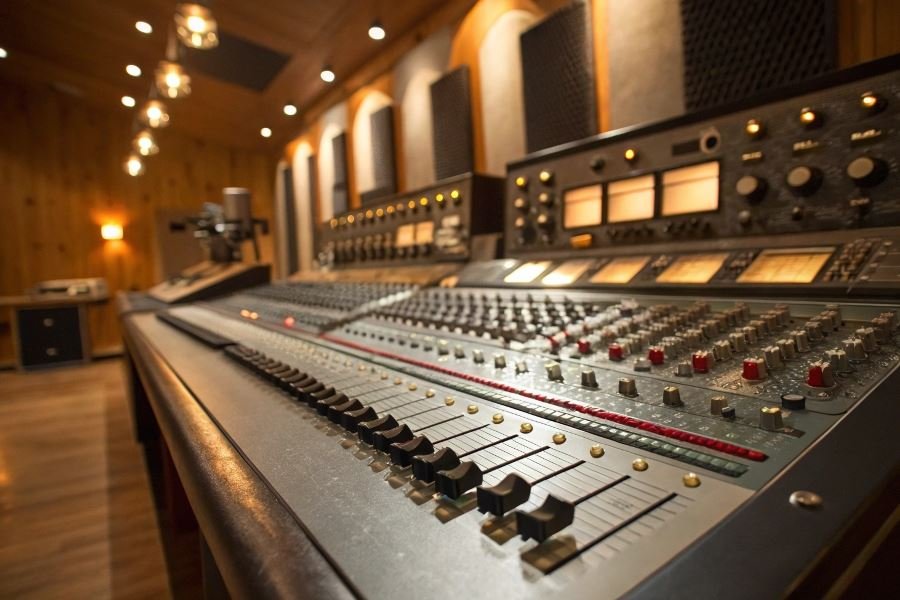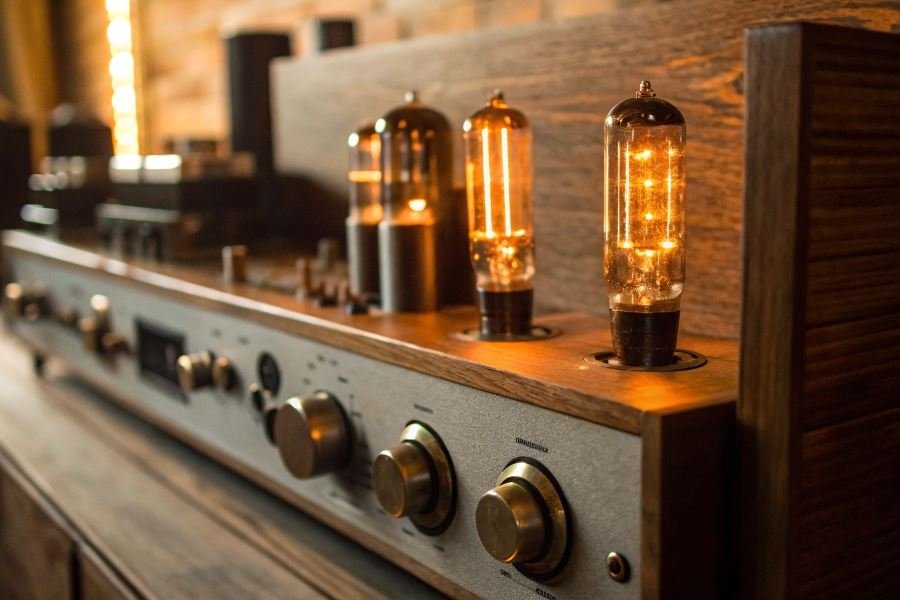
What if the “imperfections” in your audio were actually what made it perfect? This paradox sits at the heart of why tube-sounding summators continue to bewitch audio engineers and producers across the globe.
Tube-sounding summators are specialized audio processing devices that combine multiple audio tracks while imparting the characteristic warmth and harmonic richness associated with vacuum tube technology. Unlike their clinical digital counterparts, these devices don’t just mix signals—they transform them, adding subtle harmonic distortion and compression that many describe as “musical” or “three-dimensional.”
The story of tube technology in audio begins in the early 20th century. Vacuum tubes (or valves) were the essential components in all electronic audio equipment from the 1930s through the 1960s. The legendary Fairchild 670 compressor, introduced in 1959, and the iconic Pultec EQP-1A equalizer became defining sounds of countless classic recordings. Their distinctive sonic character wasn’t viewed as a feature but simply how equipment sounded.
When solid-state technology arrived in the 1970s, promising cleaner signals and greater reliability, tubes were quickly dismissed as outdated technology. Yet something unexpected happened: engineers began to miss that ineffable “glue” that tube equipment provided.
Fast forward to today, and we’re witnessing a remarkable renaissance in tube-based summation. Modern hybrid designs combine the reliability of digital workflows with the sonic benefits of analog summing through tube circuits. Studios ranging from boutique operations to major facilities are investing in these devices, seeking that elusive “analog mojo” that transforms technically perfect digital recordings into emotionally resonant productions.
What makes this resurgence particularly fascinating is that it represents not just nostalgia, but a genuine recognition that sometimes, the measurably imperfect can be the emotionally perfect.
The Technical Magic Behind Tube-Sounding Summators
When audio engineers speak of tube-sounding summators with that gleam in their eyes, they’re not just chasing nostalgia—they’re pursuing a specific sonic character that digital processing often fails to capture. These specialized mixing devices have become essential tools for professionals seeking to infuse their productions with analog character while maintaining modern workflow advantages.
The appeal of tube-sounding summators: features and advantages lies in their ability to transform sterile digital signals into something that feels alive and breathing. This transformation happens through several technical mechanisms that work in harmony to create that coveted “analog sound.” Let’s dive into what makes these devices so special from a technical perspective.
Harmonic Distortion: The Sweet Imperfection
The most distinctive characteristic of tube-based summation is its harmonic distortion profile. Unlike digital distortion, which tends to sound harsh and unpleasant, tube distortion adds even-order harmonics that our ears perceive as musical and pleasing.
When a signal passes through a tube circuit, it generates:
- 2nd order harmonics (one octave above the fundamental)
- 4th order harmonics (two octaves above)
- Other even-order harmonics at progressively lower levels
This creates a natural “rounding” effect that softens transients without dulling the overall sound. Digital summation, by contrast, either adds no harmonics or introduces odd-order harmonics that can sound brittle.
The magic happens when pushing these circuits just enough to generate these harmonics without crossing into obvious distortion territory.
The Warmth Equation: Saturation and Compression
The analog warmth associated with tube summators comes from two interrelated properties:
-
Soft Saturation: As signal levels increase, tubes gradually compress peaks rather than clipping them abruptly. This natural limiting effect creates a perceived loudness and density that engineers chase.
-
Frequency-Dependent Behavior: Tube circuits typically saturate low frequencies more readily than highs, creating a natural “glue” that binds mix elements together.
| Saturation Type | Low Frequency Response | High Frequency Response | Transient Handling |
|---|---|---|---|
| Tube Saturation | Rich, enhanced | Smooth, slightly rolled-off | Naturally compressed |
| Digital Summation | Unchanged | Unchanged | Preserved exactly |
| Transistor Saturation | Tighter, controlled | Can become harsh | More aggressive |
This saturation behavior explains why drums and bass often benefit most dramatically from tube summation—the frequency content interacts perfectly with the circuit’s natural tendencies.
Signal Path Architecture: The Complete Picture
The overall design philosophy behind tube summators extends beyond just the tubes themselves. The entire signal path contributes to the final sound:
Input Transformers often provide initial coloration through subtle saturation and phase shifts. Companies like Rupert Neve Designs have built entire legacies around transformer design.
Tube Stages provide the primary tonal character through their unique distortion characteristics and dynamic response.
Output Section typically includes either another transformer or discrete solid-state circuitry that further shapes the sound.
This multi-stage approach creates a complex interaction that’s impossible to replicate with simple digital algorithms. The signal undergoes subtle changes at each stage, accumulating character that makes mixes sound more cohesive and three-dimensional.
Engineers who understand these technical aspects can leverage tube-sounding summators not just as “magic boxes” but as precise tools for achieving specific sonic goals—bringing depth, dimension and life to otherwise flat digital productions.
Tube-Sounding Summators: Where Warmth Meets Workflow
Mixing scenarios where tube summation shines
Professional mixing engineers don’t just choose equipment for technical specifications—they select tools that deliver results in specific scenarios. Tube-sounding summators have carved out their niche in three critical mixing environments:
Acoustic and orchestral productions benefit tremendously from tube summation’s natural harmonic enhancement. When mixing string quartets or jazz ensembles, the subtle harmonic saturation helps instruments breathe together in the stereo field. The Manley Vari-Mu exemplifies this capability, allowing delicate violin overtones to remain intact while gently compressing dynamic peaks.
Vocal-centric productions gain an immediate advantage through tube summation’s midrange focus. The natural compression curve of tube circuits creates what engineers call the “automatic seat” effect—vocals simply find their place in the mix without excessive EQ adjustments. This is particularly evident when processing background vocal stacks or dialogue for film.
The magic happens when subtle harmonic distortion enhances vocal presence without increasing volume—something digital processing still struggles to replicate authentically.
Vintage-inspired productions practically demand tube summation. When clients request that “classic record sound,” tube summation delivers the cohesive glue that defined recordings from the 1950s through the 1970s. The Thermionic Culture Fat Bustard has become legendary for imparting this quality, especially on drum buses and full mixes.
Tubes versus solid-state: The eternal debate
The differences between tube and solid-state summation extend far beyond simple preference:
| Characteristic | Tube Summation | Solid-State Summation |
|---|---|---|
| Harmonic Profile | Rich in even-order harmonics | Predominantly odd-order harmonics |
| Transient Response | Slightly rounded, musical | Fast, precise, clinical |
| Headroom | Gradual, forgiving saturation | Sharp, defined clipping point |
| Noise Floor | Typically higher (-85dB) | Lower (-95dB or better) |
| Maintenance | Regular tube replacement | Minimal maintenance |
Solid-state summation excels in clinical precision, making it ideal for mastering or genres requiring absolute transparency. However, tube summation offers what engineers call “beneficial coloration”—the subtle saturation that transforms a technically correct mix into a compelling musical experience.
Investment considerations for studio owners
The financial equation for tube summation equipment extends beyond the initial purchase price:
Long-term value retention sets tube equipment apart in the rapidly evolving audio market. While digital interfaces often depreciate 50% within three years, quality tube summators like the Tube-Tech SSA 2B often maintain or even increase their value. Studios report 10-15 year service lifespans with minimal maintenance.
Client attraction factor represents an often overlooked benefit. Studios featuring recognizable tube equipment consistently report higher booking rates. The visual impact of glowing tubes creates tangible client confidence—a marketing advantage that pays dividends beyond sonic benefits.
The true ROI comes from repeat clients who specifically request your “sound,” which becomes your studio’s signature.
Operational costs require consideration. Tube replacement (typically every 2-3 years depending on usage) adds approximately $50-200 annually to maintenance budgets. However, this is offset by the reduced need for additional processing plugins or outboard gear, as the inherent character of tube summation often eliminates the need for additional “character” processors.
For studio owners weighing the investment, tube summation represents not just a sound quality decision but a business differentiation strategy in an increasingly competitive market.
Discover how tube-sounding summators add analog warmth to digital mixes. Learn about harmonic distortion benefits, saturation properties, and why professional studios invest in this classic technology for superior sound quality.
Discover how tube-sounding summators add analog warmth to digital mixes. Learn about harmonic distortion benefits, saturation properties, and why professional studios invest in this classic technology for superior sound quality.