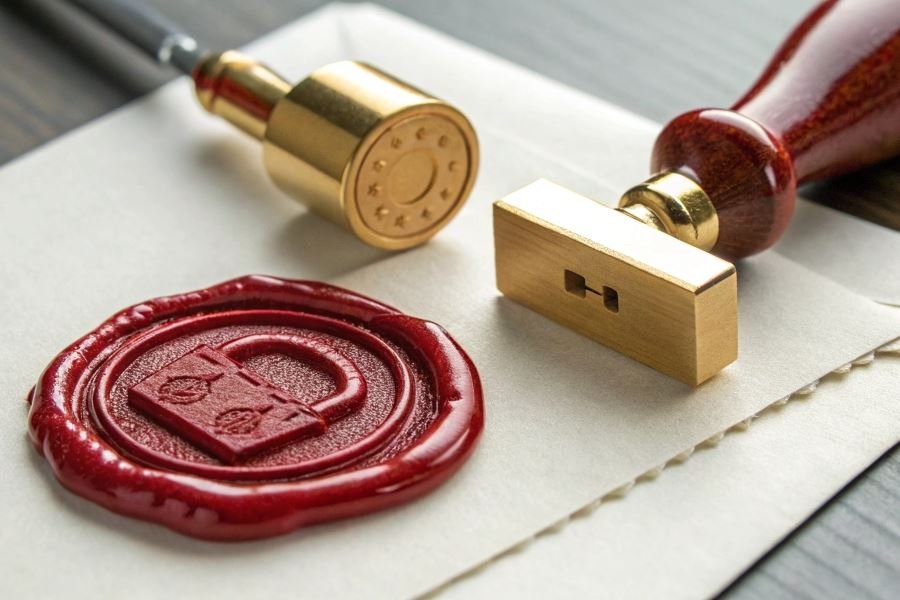
Ever noticed those distinctive colored wax seals on historical banking documents? Behind those vibrant hues lies a fascinating language of trust, security, and authority that has shaped financial institutions for centuries.
When the Medici family revolutionized banking in 15th century Florence, they weren’t just creating financial instruments—they were establishing visual systems of trust. Their distinctive red seals became synonymous with authenticity in an era where forgery meant financial ruin. This wasn’t merely decoration; it was the blockchain of its day.
The color palette of sealing wax in banking evolved from practical necessity into sophisticated symbolism. Royal purple seals, once reserved exclusively for monarchs financing wars and explorations, gradually found their way onto documents from institutions with royal charters. By the 1800s, the Bank of England had established a complex color system where deep green indicated international transactions while amber signified domestic affairs.
“The wax seal was banking’s first security feature—more sophisticated than most realize.” — Banking Security Quarterly
What’s remarkable is how these traditions persist in modern banking. While digital signatures have replaced physical wax, major financial institutions still incorporate these historical color codes into their security features. The crimson thread woven through US currency and the golden holographic seals on premium credit cards aren’t random design choices—they’re deliberate callbacks to centuries-old trust markers.
Even in our digital age, these ancient color symbols continue to whisper messages of authenticity and security to our subconscious minds.
The Secret Language of Sealing Wax in Banking
When you receive that heavy envelope with a wax seal from your financial institution, you’re experiencing more than just old-world charm—you’re witnessing a sophisticated visual communication system. The banking sector has long relied on the color palette of sealing wax to convey specific messages about document importance, security level, and service tier without saying a word.
The tradition of using colored sealing wax in financial communications dates back centuries, with each hue carrying distinct meanings that have evolved alongside modern banking practices. Understanding what different colors mean in the banking sector’s sealing wax palette provides fascinating insight into how financial institutions communicate authority, confidentiality, and prestige through visual cues that most clients never consciously register.
Red: The Mark of Authority
Red sealing wax stands as the quintessential color of banking authority. This crimson messenger has historically signified official communications from the highest levels of financial institutions. When you receive a document sealed with red wax, you’re looking at:
- Official policy changes affecting your accounts
- Legally binding notifications requiring attention
- Communications directly from executive leadership
The tradition of red wax in banking traces back to medieval Europe, where red seals were reserved for royal decrees and official state business. Today’s financial institutions maintain this association with authority, using red wax for their most important client communications.
Black: The Guardian of Secrets
Black sealing wax serves as banking’s signal for absolute confidentiality. This somber hue appears on documents containing:
- High-security financial instruments like certain bonds or trusts
- Sensitive account information requiring special handling
- Documents related to mergers, acquisitions, or major market moves
The psychological impact of black wax is immediate—creating an instinctive understanding that the contents demand discretion. Private banking divisions particularly favor black wax for communications with high-net-worth clients where privacy concerns are paramount.
Gold and Silver: The Hallmarks of Prestige
Nothing communicates premium banking services quite like the metallic gleam of gold or silver wax. These lustrous seals are reserved for:
| Wax Color | Typical Usage | Client Segment |
|---|---|---|
| Gold | Wealth management proposals | Ultra-high-net-worth |
| Gold | Investment opportunity announcements | Private banking clients |
| Silver | Premium credit card invitations | Affluent professionals |
| Silver | Exclusive event invitations | Priority banking members |
The psychological effect is undeniable—these metallic seals trigger associations with precious metals and stored value, perfectly aligning with wealth management services. When clients receive documents sealed with gold or silver wax, they immediately understand they’re being offered something exclusive.
Financial institutions like JP Morgan and Goldman Sachs have perfected the art of using these metallic seals for their most prestigious client communications, creating an immediate visual signal of exceptional service before the envelope is even opened.
The careful selection of sealing wax colors represents one of banking’s most subtle yet effective branding strategies—communicating authority, security, and exclusivity through a tradition that bridges centuries of financial history with modern premium service expectations.
The Strategic Spectrum: Sealing Wax Colors in Modern Banking
Brand Identity Through Custom Color Palettes
The traditional red and gold sealing wax has evolved into a sophisticated branding tool for corporate banking. Leading financial institutions like JPMorgan Chase and Goldman Sachs now commission custom-colored sealing wax that precisely matches their brand palettes. This isn’t mere aesthetics—it’s strategic differentiation in a competitive market.
A private banking division at a major Swiss institution recently introduced a proprietary deep blue wax with gold flecks that costs $175 per application—used exclusively for their ultra-high-net-worth client communications. The color formula remains a closely guarded secret, protected by non-disclosure agreements with their artisanal wax supplier.
The psychology behind these choices runs deep. Financial institutions leverage color theory to evoke specific emotional responses:
| Color | Banking Association | Psychological Effect |
|---|---|---|
| Deep Blue | Trust, stability | Increases perceived security |
| Emerald Green | Wealth, growth | Suggests prosperity and opportunity |
| Burgundy | Heritage, exclusivity | Conveys established expertise |
| Metallic Silver | Innovation, precision | Projects technological advancement |
The customization extends beyond color—some institutions incorporate microscopic identifiers and UV-reactive elements into their wax blends, creating multi-layered authentication systems that merge tradition with cutting-edge security.
Security Through Color Classification
Banking document security has embraced a sophisticated color-coding system that transforms sealing wax from decorative to functional. Document classification now follows a standardized color protocol:
Red wax signifies confidential board communications
Purple denotes regulatory compliance documents
Black indicates legal proceedings or litigation materials
Green represents shareholder communications
The Federal Reserve Bank has standardized a system where different departments utilize specific wax colors for inter-bank communications—creating an instant visual verification system that complements digital security measures.
This color-coding extends to international banking protocols. The SWIFT network (Society for Worldwide Interbank Financial Telecommunication) has implemented a recommendation for physical document authentication that includes seven standardized wax colors corresponding to different security clearance levels.
Digital Authentication Inspired by Wax Traditions
The most fascinating development is how traditional sealing wax colors have inspired digital authentication systems. Banking apps now feature “digital seals” that mirror the color psychology of physical wax seals:
“The visual language of trust established through centuries of wax seal usage provides a psychological foundation that digital banking can leverage for user confidence.”
Citibank’s mobile app recently introduced a security feature that displays a unique color seal when communications are authenticated—the digital equivalent of breaking a wax seal to confirm message integrity.
Blockchain-based document verification systems have adopted “digital wax” interfaces where document security levels are visually represented through color-coded digital seals. These systems combine the psychological comfort of traditional methods with the security of cryptographic verification.
The future points toward augmented reality banking interfaces where digital documents arrive with virtual wax seals that must be “broken” through biometric authentication—merging centuries-old traditions with tomorrow’s technology while maintaining the color psychology that has made wax seals enduring symbols of trust and authenticity.
Discover the rich symbolism behind banking sealing wax colors, from traditional red signifying authority to black representing confidentiality. Learn how modern financial institutions leverage this historical practice for security and branding in today's digital age.
Discover the rich symbolism behind banking sealing wax colors, from traditional red signifying authority to black representing confidentiality. Learn how modern financial institutions leverage this historical practice for security and branding in today's digital age.