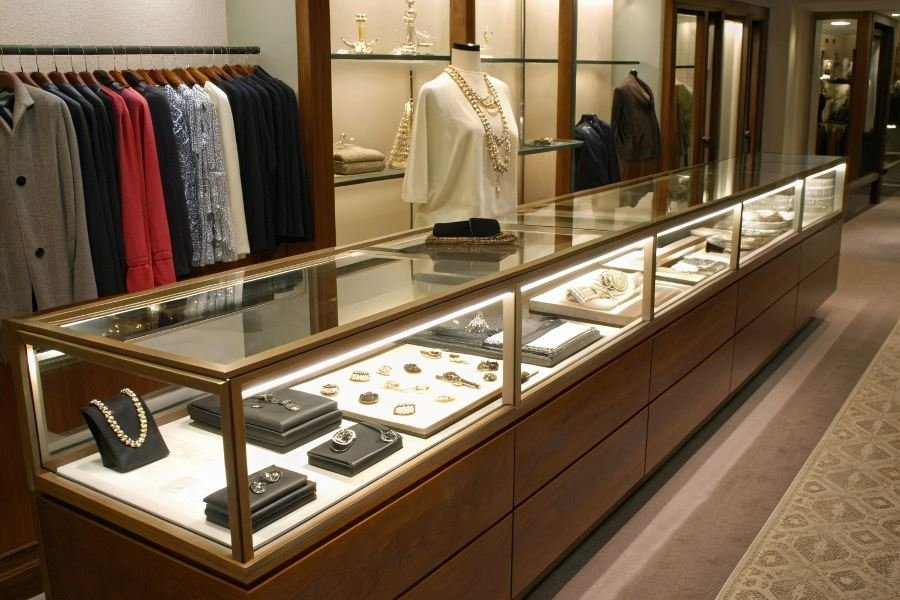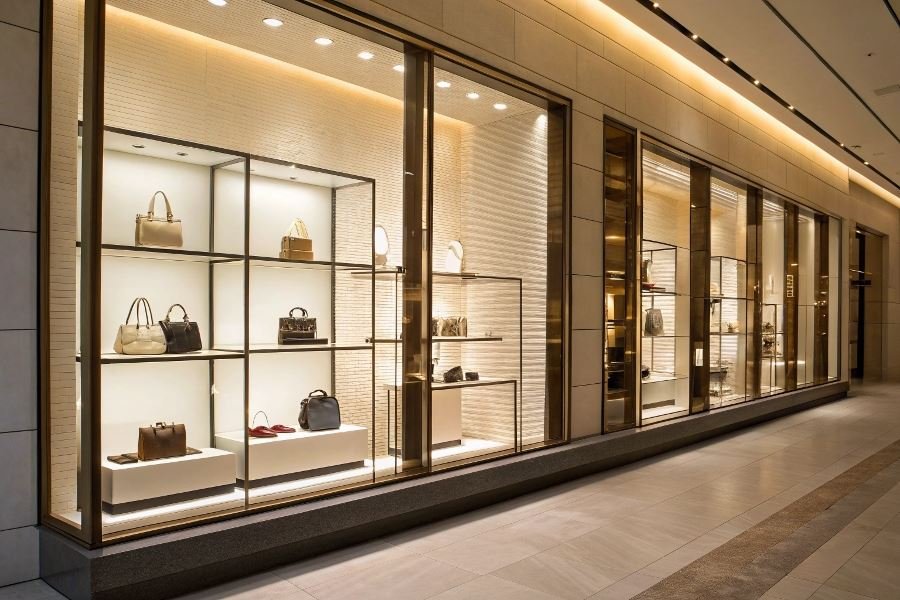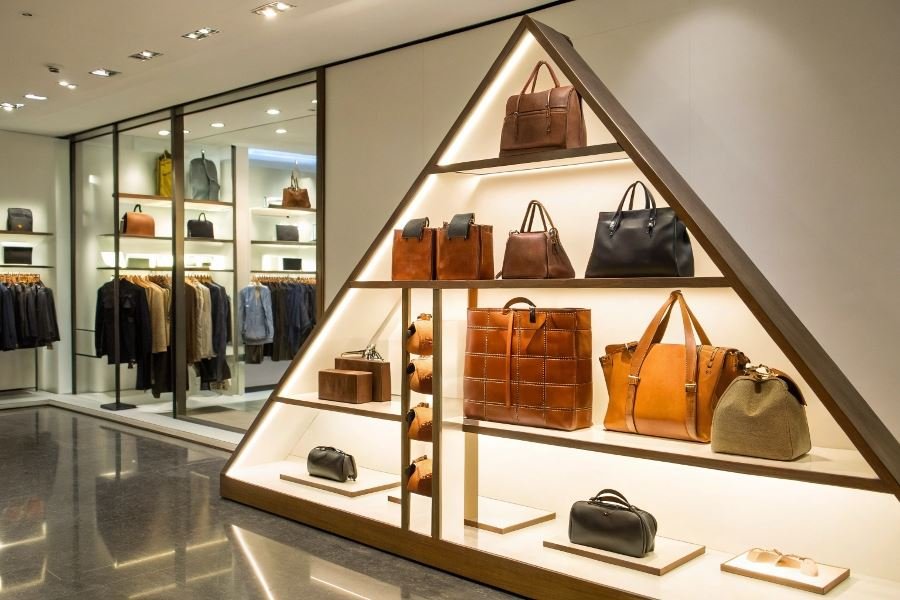
Ever walked into a store and found yourself inexplicably drawn to certain products? That’s no accident. The most successful retailers understand that display cases aren’t just storage—they’re powerful sales tools that can increase revenue by up to 540% when properly optimized.
Strategic product arrangement transforms ordinary merchandise into irresistible offerings. Think of your display case as a silent salesperson working 24/7, communicating value and creating desire without saying a word. The difference between haphazard placement and thoughtful arrangement can dramatically impact your bottom line.
Reading the customer journey
Your customers follow predictable visual patterns when approaching display cases. Research shows that Western shoppers typically scan from left to right and top to bottom—creating a “golden zone” in the upper right quadrant where high-margin items should live. Understanding these behavioral patterns allows you to place products where they’ll receive maximum attention.
Different customer segments navigate displays uniquely: impulse shoppers respond to bold, eye-catching arrangements, while deliberate buyers appreciate logical organization and clear information. By mapping these behaviors, you can create displays that speak directly to your ideal customers.
Working with what you’ve got
Before planning your arrangement strategy, assess your display case’s physical characteristics:
| Case Type | Best For | Limitations |
|---|---|---|
| Horizontal | Wide product range, creating “stories” | Limited vertical visibility |
| Vertical | Showcasing premium items at eye level | Reduced capacity |
| Island | 360° viewing, high-end merchandise | Requires more floor space |
The most effective displays work with these limitations rather than against them. A narrow jewelry case demands different strategies than a sprawling bakery display, but both can be optimized to guide customers toward purchase decisions.
Core Principles of Display Case Mastery
The Rule of Thirds Transforms Ordinary Displays
Visual merchandising isn’t just about placing products—it’s about creating visual stories that captivate customers within seconds. The rule of thirds, borrowed from photography, divides your display case into a 3×3 grid, creating natural focal points where grid lines intersect. These “power points” are where customer eyes naturally gravitate.
When considering how to properly arrange products in a display case, these intersection points become your strategic advantage. Research from the Retail Design Institute shows displays utilizing the rule of thirds experience 32% higher customer engagement than randomly arranged showcases.
Practical application: Place your premium items at these intersection points—typically the upper-right quadrant attracts initial attention in cultures that read left-to-right. Secondary items should cascade from these focal points, creating natural visual pathways.
Creating Magnetic Focal Points
Every compelling display needs a hero—a focal point that anchors the entire presentation. This isn’t merely about featuring your most expensive item; it’s about creating a visual hierarchy that guides the customer journey.
The most successful displays establish clear product hierarchies through:
- Size variation: Contrasting larger statement pieces with complementary smaller items
- Color psychology: Using color blocking or complementary color schemes to direct attention
- Lighting techniques: Spotlighting key items with 2700-3000K warm lighting for luxury goods or 4000-5000K cool lighting for technical products
A Cornell University retail study found that displays with clear focal points held customer attention 26% longer than displays with uniform product placement.
The Density-Space Balance
The relationship between product density and negative space creates the visual rhythm of your display. Overcrowding creates visual fatigue, while too much empty space can make products seem insignificant.
“The space between products speaks as loudly as the products themselves.” – Martin Pegler, visual merchandising authority
The optimal product density varies by industry:
| Industry | Recommended Product Density | Key Considerations |
|---|---|---|
| Luxury Goods | 30-40% | Emphasize exclusivity with generous negative space |
| Electronics | 50-60% | Group compatible items, maintain clear sightlines |
| Bakery/Food | 70-80% | Create abundance impression while preventing visual overwhelm |
| Jewelry | 25-35% | Allow each piece room to “breathe” and catch light |
Advanced technique: Create “visual breathing room” by grouping similar products in odd numbers (3, 5, 7) with varying heights. This creates natural rhythm while maintaining visual cohesion.
Remember that effective display case arrangement isn’t static—it requires regular refreshing and seasonal adjustments. The most successful retailers update their displays every 2-4 weeks, with minor adjustments weekly to maintain customer interest and highlight different products.
By mastering these core principles, your display cases transform from mere storage into powerful sales tools that silently communicate your brand’s value proposition and guide customers toward purchase decisions.
Advanced Display Case Strategies That Drive Sales
Seasonal Rotation Keeps Displays Fresh
The retail landscape demands constant evolution. Smart merchants understand that display cases require regular refreshing—not just annually, but quarterly or even monthly. Seasonal rotation isn’t merely aesthetic; it’s psychological. When customers see the same arrangement repeatedly, they develop “display blindness” and stop noticing your products altogether.
Effective rotation strategies include:
- Theme-based arrangements that align with holidays, seasons, or local events
- Color story transitions that shift gradually throughout the year
- Featured product spotlights that rotate weekly to highlight different inventory
One jewelry store in Chicago increased engagement by 37% after implementing a bi-weekly rotation schedule that highlighted different gemstones and metals. Their display cases became destinations rather than static fixtures.
The most successful display cases tell evolving stories that give customers a reason to look again.
When refreshing displays, maintain some consistency in your overall brand aesthetic while introducing enough novelty to capture attention. Document your most successful arrangements with photos to build a seasonal playbook you can refine year after year.
Lighting That Transforms Ordinary Products
Lighting isn’t just illumination—it’s transformation. The difference between amateur and professional displays often comes down to strategic lighting choices.
Color temperature matters enormously:
- 2700K-3000K: Creates warm, intimate environments ideal for luxury goods
- 3500K-4000K: Neutral lighting that works well for most merchandise
- 5000K+: Crisp, daylight-equivalent lighting that showcases technical details
For maximum impact, implement layered lighting that combines:
| Lighting Type | Primary Purpose | Best For |
|---|---|---|
| Ambient | Overall visibility | Setting the mood |
| Accent | Highlighting specific items | Creating focal points |
| Task | Illuminating details | Jewelry, watches, electronics |
LED technology has revolutionized display lighting with options like Soraa full-spectrum LEDs that reveal true colors and textures. Strategic placement of lights at 30-45 degree angles eliminates harsh shadows while creating subtle dimension.
Remember that different products demand different lighting approaches. Glassware sparkles under directional spotlights, while fabrics benefit from diffused lighting that reveals texture without creating glare.
Measuring What Matters in Display Performance
The most sophisticated displays incorporate performance metrics that go beyond gut feeling. Tracking display effectiveness requires both quantitative and qualitative measures.
Key performance indicators to monitor:
- Conversion rate for products featured in premium display positions
- Dwell time in front of specific display sections
- Touch engagement (how often customers physically interact with displayed items)
- Cross-sell success from intentionally paired products
Modern retailers use heat-mapping technology from companies like RetailNext to analyze customer movement patterns around displays. This data reveals which arrangements naturally draw attention and which areas become “dead zones.”
A/B testing different display configurations provides concrete evidence of what works. One boutique discovered that angling luxury handbags at 15 degrees rather than displaying them straight-on increased sales by 23%.
Document your findings systematically, creating a display performance database that informs future decisions. The most successful merchants treat display case arrangement as an ongoing experiment, constantly refining based on customer behavior and sales data.
Discover proven strategies for properly arranging products in display cases to maximize sales. Learn visual merchandising fundamentals, create effective focal points, and optimize your retail displays for better customer engagement and increased revenue.
Discover proven strategies for properly arranging products in display cases to maximize sales. Learn visual merchandising fundamentals, create effective focal points, and optimize your retail displays for better customer engagement and increased revenue.