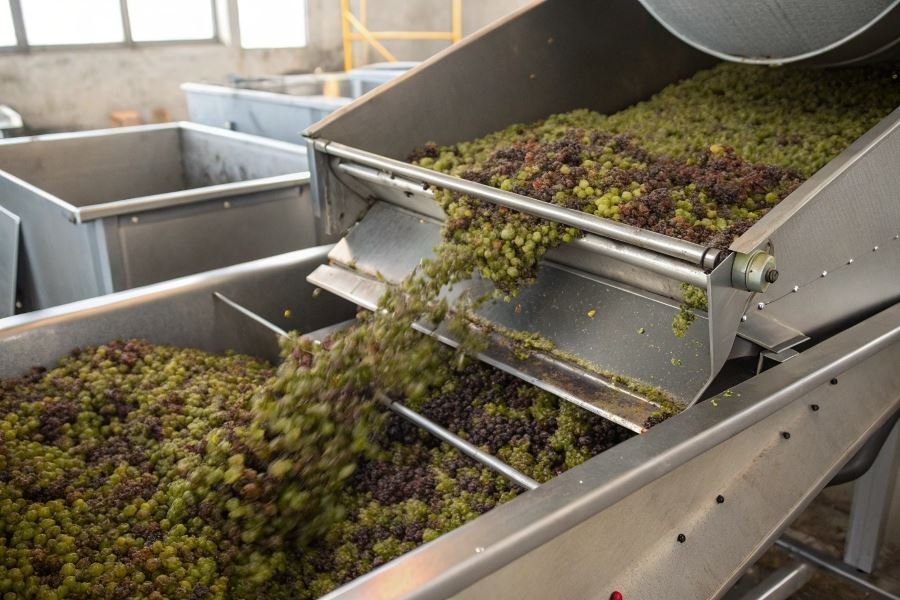
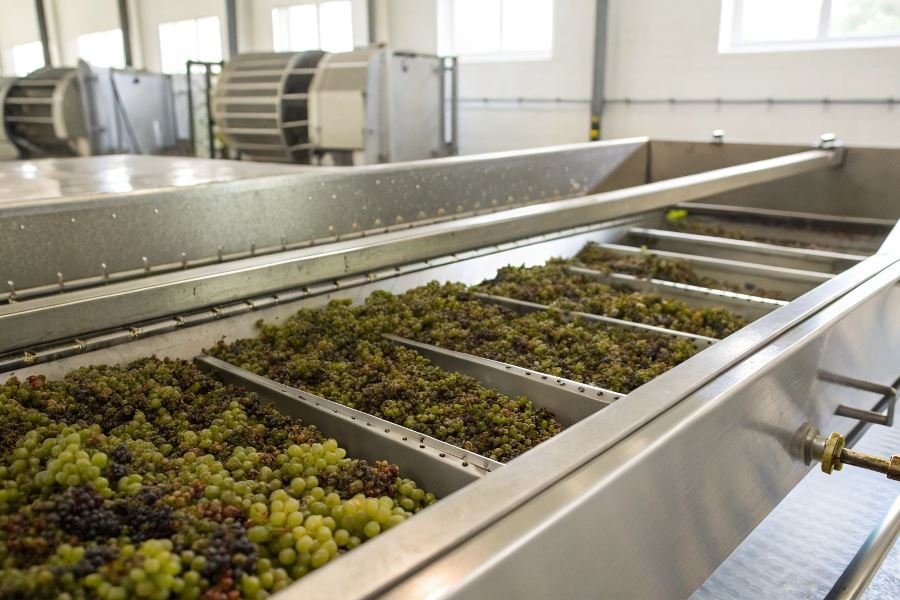
The difference between good wine and exceptional wine often begins before fermentation even starts.
Behind every bottle of artisanal wine lies a crucial but often overlooked hero: the grape separator. This unassuming piece of equipment fundamentally shapes your wine’s character by gently removing stems and leaves while preserving the integrity of your precious fruit. For small wineries, selecting the right separator isn’t just about processing grapes—it’s about honoring your craft and maximizing your limited resources.
Small-scale producers face unique challenges when investing in winemaking equipment. Unlike large commercial operations with dedicated maintenance teams and specialized processing lines, boutique wineries need versatile, reliable machinery that delivers quality results without breaking the bank or requiring excessive space. The separator you choose must align with your production volume, grape varieties, and stylistic goals.
The balancing act of small-batch separation
When evaluating grape separators, small wineries must consider several critical factors:
- Processing capacity: Can it handle your harvest volume efficiently during peak season?
- Gentleness: Does it treat delicate varieties with the respect they deserve?
- Versatility: Will it accommodate different grape varieties and conditions?
- Maintenance requirements: How much time and expertise will upkeep demand?
- Footprint and mobility: Will it fit your space and workflow?
The perfect separator for your winery strikes a balance between mechanical efficiency and gentle handling—preserving the fruit’s natural qualities while removing unwanted material. This balance becomes your competitive advantage, allowing you to create wines that truly express your terroir and craftsmanship.
Technical Essentials for Small Winery Grape Separators
When investing in equipment for your boutique winery operation, the grape separator stands as a pivotal piece of technology that directly influences your final product quality. Selecting the right machine requires balancing several technical factors against your specific production needs and space constraints.
The evaluation criteria for choosing a grape separator for small wineries typically centers around three core technical aspects: processing capacity, separation quality, and physical footprint. Each of these elements plays a crucial role in determining whether a particular model will integrate seamlessly into your winemaking process or become a bottleneck in production.
Processing capacity that matches your harvest
The throughput capacity of your separator must align with your vineyard’s yield and processing timeline. Small wineries typically require machines handling between 1,000-5,000 pounds per hour, though boutique operations may need as little as 500 pounds hourly.
Harvest window considerations become particularly important when selecting capacity. A shorter harvest window demands higher throughput to process fruit at optimal ripeness.
Remember that undersized equipment creates processing backlogs, while oversized machinery represents wasted capital and potentially compromised quality through partial loads.
| Production Size | Recommended Throughput | Typical Machine Class |
|---|---|---|
| Micro (< 1 acre) | 500-1,000 lbs/hr | Manual or small motorized |
| Small (1-5 acres) | 1,000-3,000 lbs/hr | Compact motorized |
| Medium (5-15 acres) | 3,000-5,000 lbs/hr | Mid-range commercial |
Separation efficiency and wine quality impact
The primary function of any separator is to remove stems while preserving berry integrity. This seemingly simple task dramatically influences your final product’s character and quality.
Gentle berry handling should be non-negotiable. Superior separators use rubber-coated components and adjustable speed settings to minimize berry damage, reducing bitter tannin extraction from broken seeds and skins.
The best machines achieve stem removal rates exceeding 98% while keeping berry breakage below 5%. These specifications directly correlate with reduced astringency and improved aromatic expression in finished wines.
Adjustability features allow customization based on varietal characteristics:
- Thicker-skinned varieties like Cabernet Sauvignon tolerate more aggressive separation
- Delicate varieties such as Pinot Noir require gentler handling
- White wine production often benefits from partial stem inclusion for structural elements
Size, mobility and winery space requirements
Small wineries face unique spatial challenges that large producers rarely encounter. Your separator must fit both physically and operationally within your production environment.
Footprint efficiency matters tremendously in boutique operations. Modern compact separators occupy as little as 4 square feet of floor space while offering throughput comparable to machines twice their size just a decade ago.
Mobility features provide significant operational advantages:
- Wheeled units with locking casters allow repositioning between crush pad and storage
- Height-adjustable models integrate with various receiving bins and fermentation vessels
- Collapsible components facilitate off-season storage in space-constrained facilities
The most versatile units for small wineries weigh under 200 pounds, can be operated by a single person, and require standard 110V power, eliminating the need for special electrical installations.
When evaluating separator options, prioritize machines that offer the optimal balance of these technical criteria while remaining within your budget constraints. The right equipment becomes not just a purchase but a quality-enhancing partnership in your winemaking journey.
Making Smart Investments: Evaluating Grape Separators for Small Wineries
When you’re running a small winery, every equipment decision impacts your bottom line and operational efficiency. Grape separators represent a critical investment that can dramatically influence your wine quality and production workflow. Let’s dive into the practical considerations that should guide your selection process.
Budget realities and ROI calculations
The financial equation of grape separator acquisition extends far beyond the initial price tag. Entry-level manual separators start around $2,000, while sophisticated automated systems with advanced sorting capabilities can command 15, 000−30,000.
The cheapest separator is rarely the most economical in the long run.
When calculating ROI, consider these factors:
- Production volume impact: Quality separators typically increase usable juice yield by 5-8%
- Labor savings: Automated systems can reduce processing labor by up to 70%
- Quality premium: Cleaner separation often translates to $2-5 higher bottle prices
For small wineries producing 5,000-10,000 gallons annually, the sweet spot typically falls between 5, 000−12,000 for equipment that balances efficiency with financial prudence.
Maintenance demands and operational costs
The true cost of ownership extends well beyond purchase day. Maintenance requirements vary dramatically between models and directly impact your operational budget.
Maintenance comparison by separator type:
| Separator Type | Annual Maintenance Hours | Replacement Parts Cost | Cleaning Time Per Use | Power Requirements |
|---|---|---|---|---|
| Manual Roller | 5-10 hours | $100-300 | 15-30 minutes | None |
| Semi-automatic | 10-15 hours | $300-700 | 30-45 minutes | 110V/1-2kW |
| Fully Automatic | 15-25 hours | $700-1,500 | 45-60 minutes | 220V/3-5kW |
Stainless steel components from manufacturers like Della Toffola typically offer superior longevity and easier sanitization, reducing long-term maintenance costs despite higher initial investment.
Water consumption for cleaning represents another hidden cost—some models require 50-100 gallons per cleaning cycle, while water-efficient designs might use just 15-30 gallons.
Integration with existing systems and future growth
The most technically perfect separator becomes a liability if it creates workflow bottlenecks or can’t grow with your operation.
Key compatibility considerations:
- Processing capacity alignment: Your separator should handle 10-15% more volume than your crusher to prevent backups
- Physical dimensions: Measure your workspace carefully—many small wineries discover too late that their perfect separator won’t fit through the cellar door
- Power requirements: Ensure your electrical system can support the equipment without expensive upgrades
- Connection standards: Verify inlet/outlet dimensions match your existing crush pad equipment
Forward-thinking wineries select modular systems that can scale. The Bucher Vaslin Delta series, for instance, offers add-on modules that allow capacity expansion without replacing the entire system.
Scalability indicators worth evaluating include:
- Throughput range flexibility (can it operate efficiently at both low and high volumes?)
- Upgrade pathways clearly defined by manufacturer
- Compatibility with industry-standard connections and protocols
By carefully weighing these practical considerations—budget realities, maintenance demands, and system integration—small wineries can select grape separators that deliver immediate quality improvements while supporting long-term growth objectives.
Discover the essential criteria for selecting the perfect grape separator for your small winery. Learn how processing capacity, separation efficiency, budget considerations, and compatibility factors impact your wine quality and production workflow.
Discover the essential criteria for selecting the perfect grape separator for your small winery. Learn how processing capacity, separation efficiency, budget considerations, and compatibility factors impact your wine quality and production workflow.