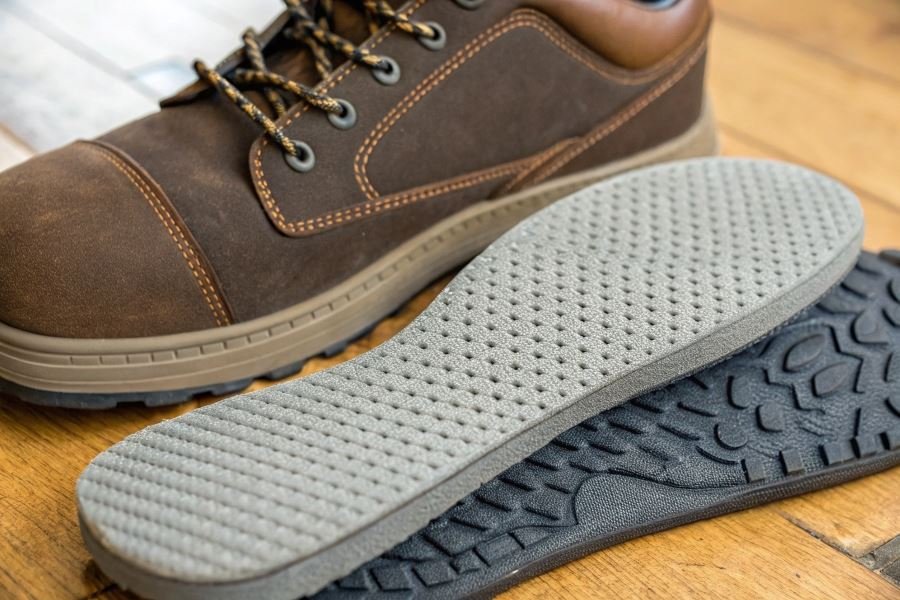
Ever noticed how professional tradespeople can make a pair of work boots last years longer than the average person? The difference often isn’t in the boot—it’s what they put inside it. Quality insoles might be the most overlooked component in extending the life of your $200+ work boots.
When your feet hit the ground, they generate forces up to 1.5 times your body weight with each step. For someone working an 8-hour shift, that’s thousands of impacts daily hammering away at your boot’s internal structure. Premium insoles act as shock absorbers, dramatically reducing this internal battering.
The relationship between comfort and durability isn’t just marketing—it’s physics. Without proper support, your foot moves excessively inside the boot, creating friction that wears down the lining and weakens seams. This “internal sandpaper effect” can cut a boot’s lifespan by 40% or more. Quality insoles stabilize your foot, maintaining the boot’s structural integrity from the inside out.
Think of insoles as preventative maintenance. Just as changing your vehicle’s oil prevents engine damage, adding proper insoles prevents premature breakdown of your boots’ critical components. The heel counter stays firm, the midsole maintains its cushioning, and the upper keeps its shape—all because your foot is properly positioned and supported.
The most compelling reason to invest in quality insoles? They transform how your boots break in. Rather than conforming to misalignments in your gait, they help your boots wear evenly, preventing the premature failure points that typically force early replacement.
Strategic Insole Selection: Tripling Your Work Boot Lifespan
Quality work boots represent a significant investment in your professional equipment arsenal. Yet many overlook how proper insole management can dramatically extend boot longevity while enhancing comfort during those grueling 10-hour shifts. The relationship between insoles and boot lifespan isn’t just about comfort—it’s about structural integrity and performance sustainability.
When considering how to extend the lifespan of work boots with insoles, three strategic approaches stand out from my conversations with master cobblers and industrial footwear specialists. These methods don’t just add months to your boots—they can potentially double or triple their functional lifespan while improving your workday comfort.
Environment-Specific Insole Materials
Your work environment dictates which insole materials will perform best and protect your boots most effectively:
Moisture-intensive environments require waterproof or moisture-wicking materials. Timberland PRO anti-microbial insoles use open-cell polyurethane that prevents moisture accumulation—the primary culprit behind interior boot degradation.
High-impact industrial settings benefit from gel or air-cushioned insoles. These absorb shock that would otherwise transfer to your boot’s midsole, preventing premature compression and structural failure.
Construction sites with varied terrain call for composite insoles combining firm arch support with cushioned heel cups, distributing weight evenly and preventing uneven wear patterns in your boot’s foundation.
“The right insole acts as a sacrificial layer, absorbing damage that would otherwise permanently affect your boot structure.” — Master Cobbler James Danner
Foot Mapping for Precision Support
Understanding your unique foot architecture transforms generic insoles into precision tools for boot preservation:
| Foot Type | Pressure Points | Recommended Insole Features |
|---|---|---|
| Flat Feet | Midfoot, inner edge | Rigid arch support, metatarsal pads |
| High Arches | Heel, ball of foot | Deep heel cups, forefoot cushioning |
| Neutral | Evenly distributed | Moderate support, full-length cushioning |
Pressure mapping technology has revolutionized insole selection. Many specialty footwear retailers now offer digital foot scanning to identify your specific pressure points. This precision prevents localized compression of your boot’s internal structure—often the first step toward catastrophic failure.
Custom-molded options like Superfeet heat-moldable insoles create the ultimate personalized interface between foot and boot, eliminating movement that causes internal abrasion and premature wear.
Strategic Insole Rotation System
Perhaps the most overlooked yet effective strategy involves implementing a deliberate rotation system:
The 48-hour recovery rule dictates that insoles, like boots themselves, need time to fully decompress and dry between uses. Maintaining three pairs in rotation ensures each pair fully recovers before reuse.
Material-specific rotation takes this further—alternating between gel insoles for high-activity days and cork or leather options for stationary work prevents your boots from adapting to a single pressure pattern.
Seasonal rotation acknowledges that winter work requires insoles with thermal properties and moisture management, while summer conditions benefit from cooling materials and enhanced breathability. This targeted approach prevents your boots from experiencing unnecessary stress from inappropriate insole materials.
By implementing these three strategic approaches to insole selection and management, you’re not just buying replacement insoles—you’re investing in a comprehensive boot preservation system that pays dividends through years of extended service life.
Maximizing Boot Life Through Strategic Insole Management
The Science of Boot and Insole Hygiene
Proper cleaning isn’t just about aesthetics—it’s the foundation of boot longevity. Work boots face brutal conditions daily, collecting moisture, debris, and bacteria that can deteriorate materials from the inside out. Start by removing insoles after each wear, especially after heavy activity. This simple habit prevents trapped moisture from becoming a breeding ground for bacteria and fungi that can break down both the insole material and your boot’s internal structure.
For leather work boots, wipe down the exterior with a damp cloth to remove surface dirt, then clean with a quality leather cleaner like Kiwi Leather Cleaner or Red Wing Boot Cleaner. The interior deserves equal attention—use a mixture of equal parts water and white vinegar on a cloth to wipe down the inside, neutralizing odors and killing bacteria without harsh chemicals.
For insoles themselves, hand washing is superior to machine washing, which can break down supportive structures:
- Use mild soap and lukewarm water
- Gently scrub with a soft brush
- Rinse thoroughly to remove soap residue
- Never wring insoles—press between towels instead
- Air dry completely away from direct heat sources
Pro tip: Alternate between two pairs of insoles to ensure each set has 24-48 hours to fully dry between uses. This practice alone can double insole lifespan.
Identifying the Replacement Window
Most quality insoles show predictable wear patterns before they compromise your boots. The average work insole lasts 6-12 months with daily use, but this timeline accelerates with increased activity levels and weight.
Watch for these critical warning signs:
| Warning Sign | What It Means | Action Required |
|---|---|---|
| Compressed heel cup | Shock absorption compromised | Replace immediately |
| Visible cracks in arch support | Structural failure imminent | Replace within 1-2 weeks |
| Persistent foot pain | Support function lost | Replace immediately |
| Uneven wear patterns | Biomechanical support failing | Replace within 2-4 weeks |
| Odor that persists after cleaning | Material breakdown | Replace within 1 month |
The cost of premium replacement insoles is minimal compared to replacing $200-300 work boots prematurely.
The Insole-Boot Care Ecosystem
Insoles work best as part of a comprehensive boot care strategy. These complementary practices create a protective ecosystem around your investment:
Rotation is revolution: Maintain at least two pairs of work boots in rotation. This practice allows each pair to fully dry between wears, preventing the moisture accumulation that breaks down insoles and boot linings. Studies show this simple habit can extend boot life by up to 40%.
Conditioning creates resilience: Apply leather conditioner like Obenauf’s Heavy Duty LP quarterly to maintain leather flexibility and water resistance. Supple leather puts less stress on insoles by allowing natural foot movement rather than forcing insoles to compensate for rigid boot materials.
Strategic waterproofing: Apply targeted waterproofing to seams and stress points with Nikwax Waterproofing Wax to prevent water intrusion that can degrade insoles from above. Focus on toe creases and heel counters where water most commonly enters.
Environmental awareness: Store boots in temperature-controlled environments. Extreme heat accelerates adhesive breakdown between insoles and boot components, while extreme cold can make supportive materials brittle and prone to cracking.
By implementing these maintenance practices as a system rather than isolated tasks, you create a protective framework that extends both insole performance and overall boot lifespan—transforming disposable work equipment into long-term professional assets.
Discover how strategic insole selection can significantly extend your work boots' lifespan. Learn to match materials to your environment, identify optimal support for your foot type, and implement proper maintenance techniques for maximum durability and comfort.
Discover how strategic insole selection can significantly extend your work boots' lifespan. Learn to match materials to your environment, identify optimal support for your foot type, and implement proper maintenance techniques for maximum durability and comfort.