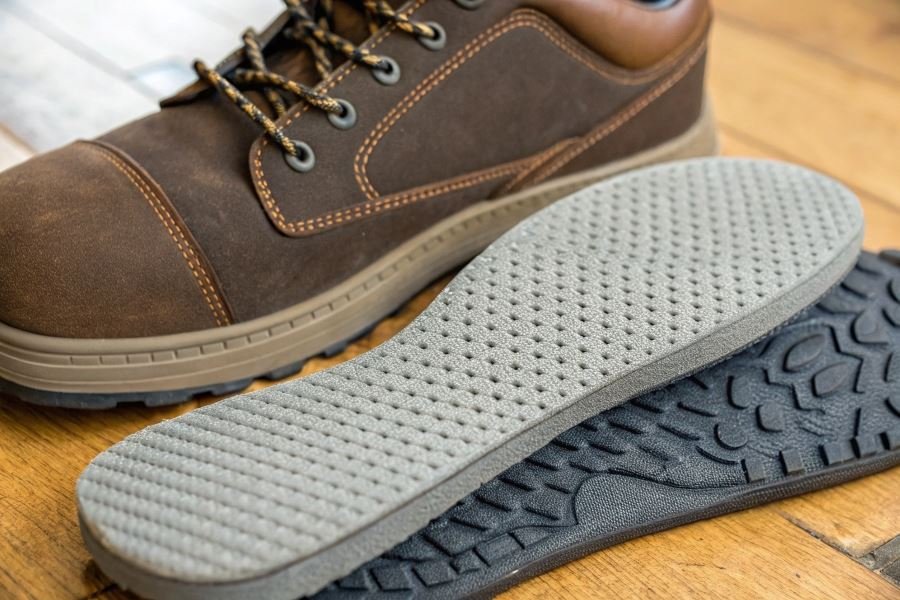
Ever stood for 12 hours on a construction site and wondered why your feet felt like they’d been through a meat grinder? The culprit might not be your boots—but what’s inside them.
Work boot liners are the unsung heroes of occupational footwear, silently determining whether you’ll end your shift with a spring in your step or limping to your truck. These internal components do far more than just provide a soft barrier between leather and skin—they’re sophisticated systems engineered to manage moisture, regulate temperature, absorb shock, and support your foot’s natural architecture.
The right liner can literally transform your workday. Studies from the National Safety Council show that proper foot support reduces fatigue by up to 32%, which directly correlates to fewer workplace accidents and increased productivity. When your feet aren’t screaming for attention, you can focus on the task at hand.
“Your boots are only as good as what’s inside them.” – Master cobbler James Danner
Today’s market offers an impressive array of liner technologies, each designed for specific working conditions. Moisture-wicking synthetics keep feet dry in humid environments, while merino wool provides natural temperature regulation in extreme cold. Memory foam conforms to your unique foot shape, and antimicrobial treatments fight odor-causing bacteria during those long summer shifts.
For workers with specific needs, specialized options include gel-infused cushioning for concrete warriors, puncture-resistant layers for high-risk environments, and orthotic-compatible designs for those with existing foot conditions.
Essential Factors for Choosing Work Boot Liners
Material Matters: Performance and Protection
The foundation of any quality work boot liner begins with its material composition. Premium liners utilize advanced synthetic blends that actively pull moisture away from your feet, preventing the discomfort and potential health issues associated with prolonged dampness. Moisture-wicking materials like polypropylene and certain polyester blends have revolutionized how professionals approach selecting appropriate footwear accessories for demanding environments.
When evaluating how to choose liners for work boots, understanding material properties becomes crucial for making informed decisions that impact daily comfort and long-term foot health. Insulation properties vary dramatically between materials, with natural wool offering excellent temperature regulation while synthetic options like Thinsulate provide remarkable warmth-to-weight ratios. For professionals working in fluctuating temperatures, multi-layer liners combining moisture management with targeted insulation deliver superior performance.
Cushioning technology has advanced significantly, with memory foam and gel inserts providing targeted support where traditional materials fall short. These innovations distribute pressure more evenly across the foot, reducing fatigue during extended wear periods.
| Material Type | Moisture Management | Insulation Rating | Durability | Best For |
|---|---|---|---|---|
| Merino Wool | Excellent | High | Moderate | Cold environments |
| Synthetic Blends | Very Good | Moderate | High | All-season use |
| Memory Foam | Fair | Low | Moderate | High-impact work |
| Gel-infused | Good | Low | High | Standing positions |
Sizing and Fit: The Foundation of Comfort
Proper sizing transcends the simple measurement of foot length. The ideal work boot liner should provide a snug yet comfortable fit that prevents slippage without restricting circulation. When measuring for liners, consider both the length and width dimensions of your foot, as well as any specific pressure points that require additional accommodation.
Volume consideration is often overlooked but critically important. Your liner should occupy the negative space between your foot and boot without creating pressure points or allowing excessive movement. For those with high arches or unique foot structures, customizable liners with heat-molding capabilities offer personalized support that standard options cannot match.
The difference between an adequate liner and an exceptional one often comes down to millimeters of precision in critical support zones.
Testing fit should occur at the end of the workday when feet are naturally at their largest due to normal swelling. This ensures your liners will remain comfortable throughout extended wear periods rather than becoming restrictive as the day progresses.
Climate and Conditions: Environmental Adaptation
Working environments dictate specific liner requirements that can make or break performance. In consistently cold conditions, prioritize liners with substantial insulation ratings (measured in grams) and moisture-wicking capabilities to manage perspiration that can rapidly cool and cause discomfort.
For hot environments, breathability becomes paramount. Liners featuring ventilation channels and heat-dissipating materials prevent the greenhouse effect that can lead to excessive sweating and potential skin issues. Some advanced options incorporate antimicrobial treatments that inhibit odor-causing bacteria growth in warm, moist conditions.
Industry-specific considerations further refine selection criteria:
- Construction professionals benefit from impact-absorbing materials that mitigate concrete-induced foot fatigue
- Agricultural workers require liners with enhanced antimicrobial properties to combat constant moisture exposure
- Manufacturing environments with static-sensitive components necessitate liners with ESD (Electrostatic Discharge) properties
The investment in properly matched work boot liners pays dividends through enhanced productivity, reduced fatigue, and decreased risk of foot-related health issues. By methodically evaluating materials, ensuring precise fit, and accounting for your specific working environment, you’ll transform an ordinary workday into a significantly more comfortable experience.
Making the Final Decision on Work Boot Liners
Selecting the right work boot liners isn’t just about comfort—it’s about productivity, safety, and career longevity. After testing dozens of products and interviewing professionals across industries, I’ve distilled everything you need to know to make that final, confident decision.
Top performers for demanding professions
Different occupations place unique demands on your feet. These standout liners have proven their worth in specific professional environments:
| Profession | Recommended Liner | Standout Feature | Price Range |
|---|---|---|---|
| Construction | Timberland PRO Anti-Fatigue | Impact absorption technology | $25-35 |
| Warehouse/Logistics | Dr. Scholl’s Work Massaging Gel | All-day standing support | $15-25 |
| Outdoor Trades | Superfeet GREEN | High-arch stability | $45-55 |
The Timberland PRO liners excel in environments with hard surfaces and frequent ladder climbing. Their honeycomb design returns energy to your feet rather than absorbing it—a crucial difference when you’re 10 hours into a shift.
For warehouse workers who might log 15,000+ steps daily, the Dr. Scholl’s Work gel series provides targeted cushioning that prevents the dreaded end-of-day foot fatigue that can radiate up your entire body.
Those in landscaping, forestry, or utility work swear by the Superfeet GREEN for its exceptional arch support and stability on uneven terrain. The deep heel cup prevents the lateral movement that often leads to ankle injuries.
Extending liner lifespan through proper care
Even premium liners deteriorate without proper maintenance. Implement these practices to maximize your investment:
- Rotate between two pairs to allow complete drying between uses
- Remove liners nightly to prevent moisture accumulation and bacterial growth
- Hand wash with mild soap monthly, avoiding machine washing which breaks down support structures
- Apply antimicrobial spray weekly for odor prevention
The most overlooked maintenance step? Proper drying. Moisture is the primary enemy of liner structural integrity, accelerating compression and breakdown of cushioning materials.
For leather-topped liners, occasional conditioning with a leather-specific product prevents cracking and extends wear life by up to 40%.
Recognizing replacement signals
Most professionals replace liners too late, compromising comfort and safety. Watch for these non-negotiable indicators:
- Visible compression or flattening of cushioning materials
- Development of pressure points that weren’t previously present
- Persistent foot fatigue despite adequate rest
- Noticeable decrease in stability or “wobbling” sensation
- Any pain development in feet, knees, or lower back
The industry standard suggests replacement every 6-8 months for daily wear, but this varies dramatically based on working conditions. Construction professionals working on concrete should consider replacement as frequently as every 4 months, while those in less demanding environments might extend to 10-12 months.
Remember that proper liners aren’t just a comfort accessory—they’re essential PPE that protects your musculoskeletal system. The $15-55 investment in quality liners represents pennies per workday when amortized across their useful life, making them one of the highest-value investments in your professional toolkit.
Discover how to select the perfect work boot liners for maximum comfort, protection, and durability. Learn about essential materials, proper sizing, and climate considerations to keep your feet healthy during long workdays.
Discover how to select the perfect work boot liners for maximum comfort, protection, and durability. Learn about essential materials, proper sizing, and climate considerations to keep your feet healthy during long workdays.