Ever walked past a store display that made you stop in your tracks? That wasn’t an accident. Behind every successful product presentation lies a critical decision that many overlook: the material of the display stand itself.
The relationship between your products and their display materials is like a silent conversation with potential buyers. When luxury watches rest on sleek glass platforms, they whisper “premium.” When artisanal cheeses sit on rustic wooden boards, they murmur “authentic.” This material-message connection directly impacts whether customers reach for their wallets or walk away.
Selecting the right display material involves balancing three critical factors. First, weight capacity – can your chosen material safely support your products without sagging or collapsing? Second, aesthetic harmony – does the material complement or contrast with your products in a way that enhances visual appeal? And third, durability requirements – will the display withstand the specific environmental conditions and handling patterns in your retail environment?
The material you choose isn’t just a practical decision – it’s a powerful marketing tool. Research from the Journal of Retailing shows that material-appropriate displays can increase product perception value by up to 35% and boost sales conversion rates significantly. Glass displays increase perceived luxury, while sustainable materials like bamboo can enhance eco-friendly product credentials.
Remember: your display stand isn’t just holding your product – it’s telling its story.
Primary Materials for Display Stands: The Perfect Match for Your Products
When selecting display stands for your merchandise, the material choice can make or break your presentation strategy. Materials for display stands should be carefully matched to different types of products based on weight requirements, aesthetic appeal, and environmental conditions. Let’s explore the primary materials that dominate the retail display landscape and discover which ones will showcase your products most effectively.
Wood Display Stands: Timeless Elegance Meets Functionality
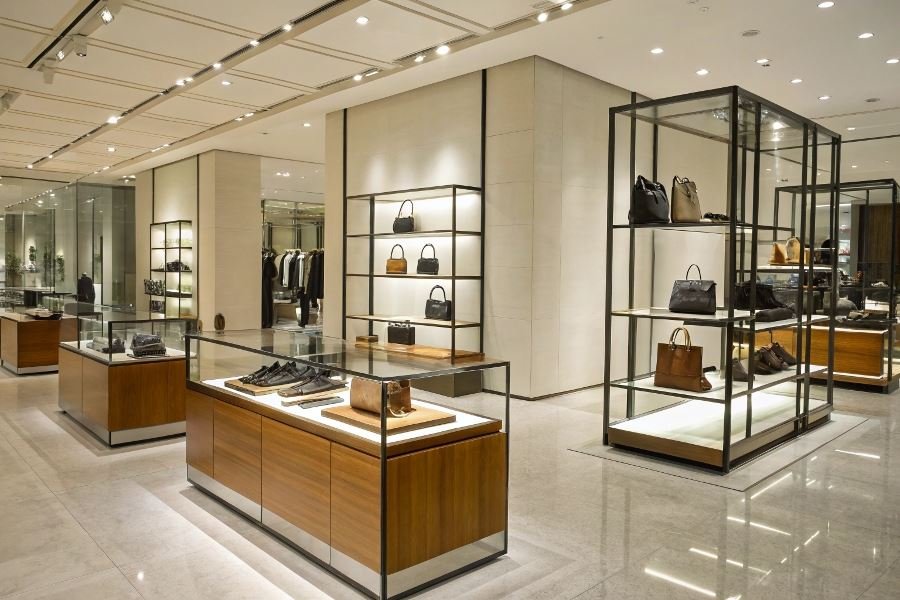
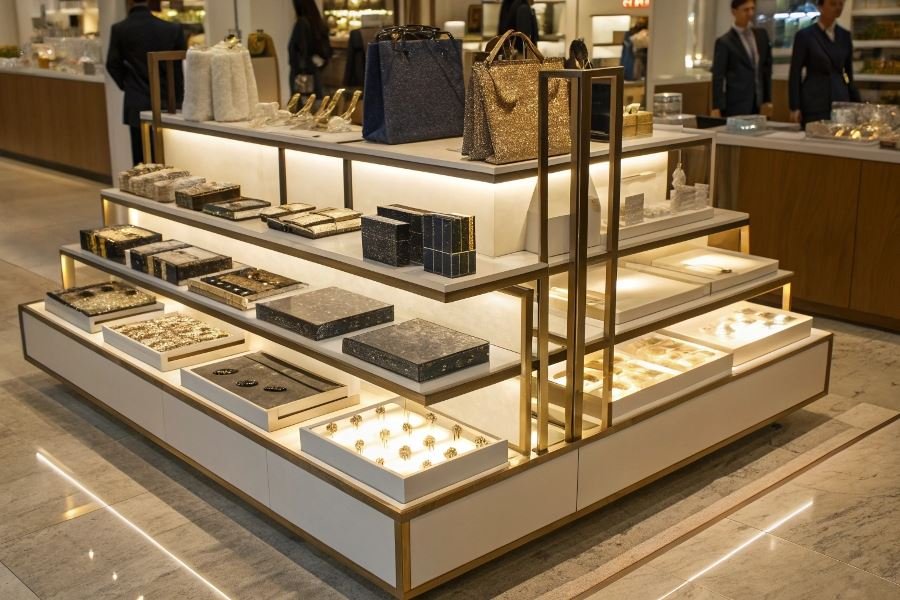
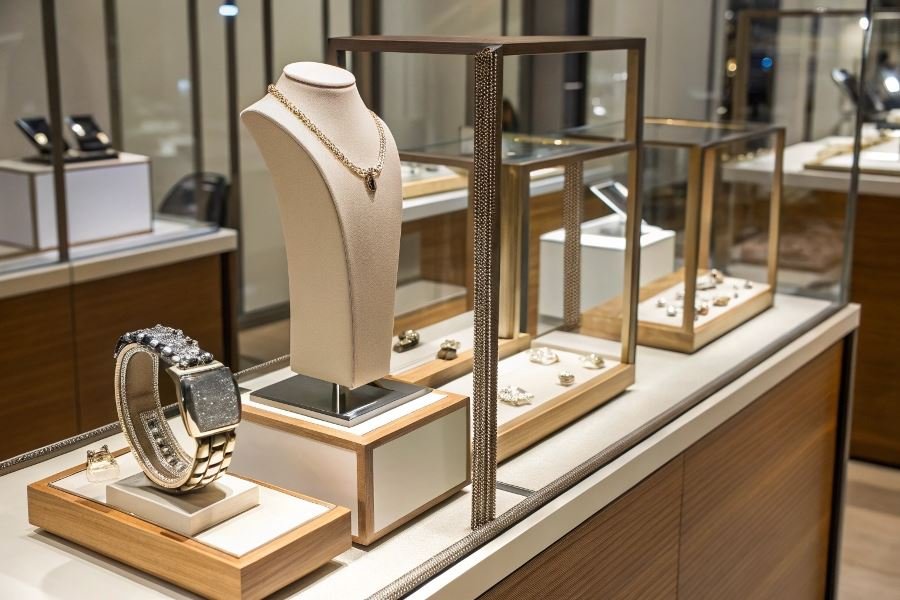
Wood remains the gold standard for creating warm, inviting product displays that convey quality and craftsmanship. Hardwoods like oak, maple, and walnut offer exceptional durability while providing a premium aesthetic that elevates merchandise.
Best for:
- Luxury goods and artisanal products
- Jewelry and watches
- High-end cosmetics
- Boutique clothing items
- Gourmet foods and wines
Wood displays excel in environments where creating an emotional connection matters. Their natural variations and textures add character that mass-produced alternatives simply can’t match.
Limitations include higher maintenance requirements, susceptibility to humidity changes, and typically higher price points compared to synthetic alternatives.
Metal Display Options: Industrial Strength Meets Contemporary Style
Metal displays—crafted from aluminum, steel, or brass—deliver unmatched structural integrity while offering sleek, modern aesthetics that complement contemporary retail environments.
Ideal applications:
- Heavy electronics and appliances
- Tools and hardware
- Sporting equipment
- Industrial products
- Automotive accessories
| Metal Type | Weight Capacity | Corrosion Resistance | Cost Factor |
|---|---|---|---|
| Aluminum | Medium | Excellent | Medium |
| Steel | Very High | Good (when treated) | Low-Medium |
| Brass | High | Excellent | High |
The environmental footprint of metal displays deserves consideration—while initially resource-intensive to produce, their exceptional longevity and recyclability make them increasingly sustainable options for forward-thinking retailers.
Acrylic and Plastic Displays: Versatility and Visual Impact
Acrylic and plastic displays offer unparalleled versatility, combining lightweight construction with remarkable clarity that creates the illusion that products are floating in space.
Perfect for:
- Cosmetics and skincare
- Small electronics and accessories
- Confectionery and packaged foods
- Eyewear and sunglasses
- Stationery and office supplies
The transparency of acrylic creates dramatic visual effects while maintaining focus on the product itself—not the display.
Acrylic’s advantages extend beyond aesthetics; these displays resist shattering, weigh significantly less than glass alternatives, and can be fabricated into virtually any shape imaginable. Modern manufacturing techniques have elevated plastic displays far beyond their utilitarian origins, with high-end acrylics offering glass-like clarity that maintains its appearance for years.
Environmental considerations: While traditional plastics raise sustainability concerns, newer bioplastic and recycled acrylic options are emerging to address these issues, allowing retailers to maintain visual appeal while reducing environmental impact.
The right material choice creates harmony between your products and their presentation, ultimately driving customer engagement and sales. By thoughtfully matching materials to merchandise, you’ll create displays that not only showcase products effectively but reinforce your brand’s values and positioning in the marketplace.
Making the Material Match: Strategic Display Stand Selection
The Decision Matrix for Display Excellence
Selecting the right material for your display stand isn’t just a practical choice—it’s a strategic business decision. The optimal material emerges at the intersection of product requirements, brand positioning, and environmental context. Successful retailers and exhibitors follow a systematic framework that weighs multiple factors simultaneously:
- Product weight and fragility – Heavier items demand sturdier materials like steel or hardwood
- Display duration – Temporary displays can utilize lightweight materials; permanent installations require durability
- Environmental conditions – Indoor vs. outdoor, humidity levels, and temperature fluctuations
- Brand aesthetic – Material finish should complement your visual identity
- Budget constraints – Initial investment vs. long-term value
This decision framework transforms what might seem like a mundane choice into a competitive advantage. As Steelcase research revealed in their 2023 retail environment study, displays that properly match material to product can increase customer engagement by up to 37%.
The Economics of Material Selection
When evaluating display materials, the initial price tag tells only part of the story. A comprehensive cost-benefit analysis reveals surprising insights across product categories:
| Material | Initial Cost | Lifespan | Best For | ROI Factor |
|---|---|---|---|---|
| Acrylic | $$ | 3-5 years | Cosmetics, jewelry, electronics | 2.7x |
| Hardwood | $$$ | 7-10+ years | Luxury goods, artisanal products | 3.5x |
| Metal | $$$ | 10+ years | Heavy products, high-traffic areas | 4.1x |
| Glass | $$$ | 5-7 years | Premium fashion, watches, fragrance | 2.3x |
| Corrugated | $ | 3-12 months | Seasonal items, promotions | 1.8x |
The economics become particularly interesting when analyzing specific product categories. For instance, jewelry displayed on acrylic stands typically generates 22% higher sales than the same pieces on metal stands—despite metal’s longer lifespan. Conversely, artisanal food products on wooden displays outperform plastic alternatives by nearly 30% in premium markets.
Tomorrow’s Display Materials
The display stand industry is undergoing a materials revolution driven by sustainability demands and technological innovation. Three key trends are reshaping the landscape:
Bioplastics and composites are gaining traction as viable alternatives to petroleum-based plastics. These materials, derived from renewable resources like cornstarch and sugarcane, offer comparable durability with significantly reduced environmental impact. Avient Corporation has pioneered bioplastic display components that maintain structural integrity while reducing carbon footprint by up to 65%.
The most exciting developments combine traditional craftsmanship with cutting-edge technology.
Smart materials with embedded technology are transforming passive displays into interactive experiences. Conductive fabrics, thermochromic surfaces, and integrated LED systems create displays that respond to customer proximity or touch. These materials command a premium but deliver measurable engagement benefits.
Circular design principles are perhaps the most significant shift. Forward-thinking retailers are embracing modular display systems made from easily separable materials designed for disassembly and recycling. Interface Inc. has demonstrated that such systems can reduce end-of-life waste by over 90% while maintaining premium aesthetics.
The strategic selection of display materials represents a critical touchpoint between your products and customers. By applying a structured decision framework, conducting thorough cost-benefit analysis, and staying attuned to emerging material innovations, you can create displays that not only showcase your products effectively but also reinforce your brand values and environmental commitments.
Discover the perfect display stand materials for showcasing your products effectively. Compare wood, metal, acrylic, and plastic options to enhance presentation, boost customer perception, and increase sales based on your specific product requirements.
Discover the perfect display stand materials for showcasing your products effectively. Compare wood, metal, acrylic, and plastic options to enhance presentation, boost customer perception, and increase sales based on your specific product requirements.