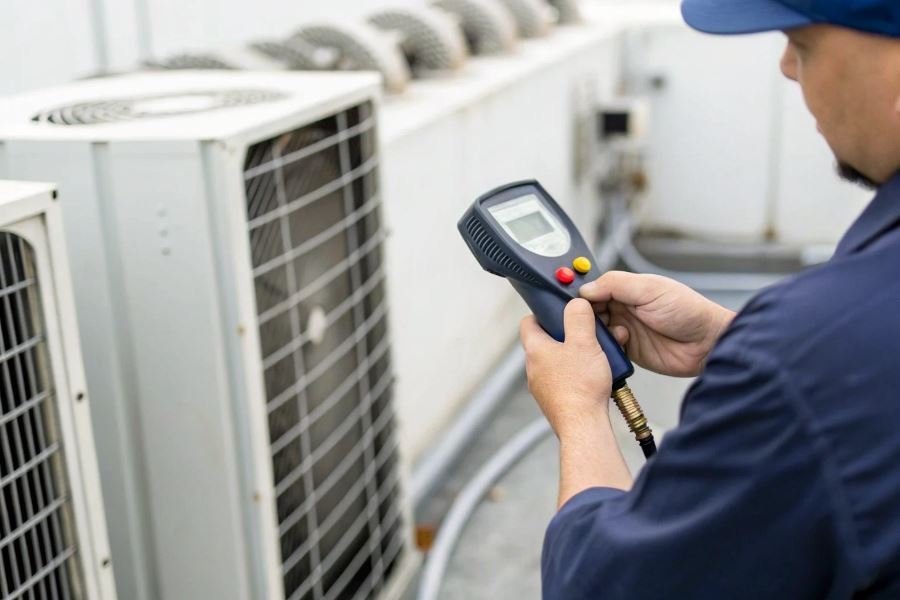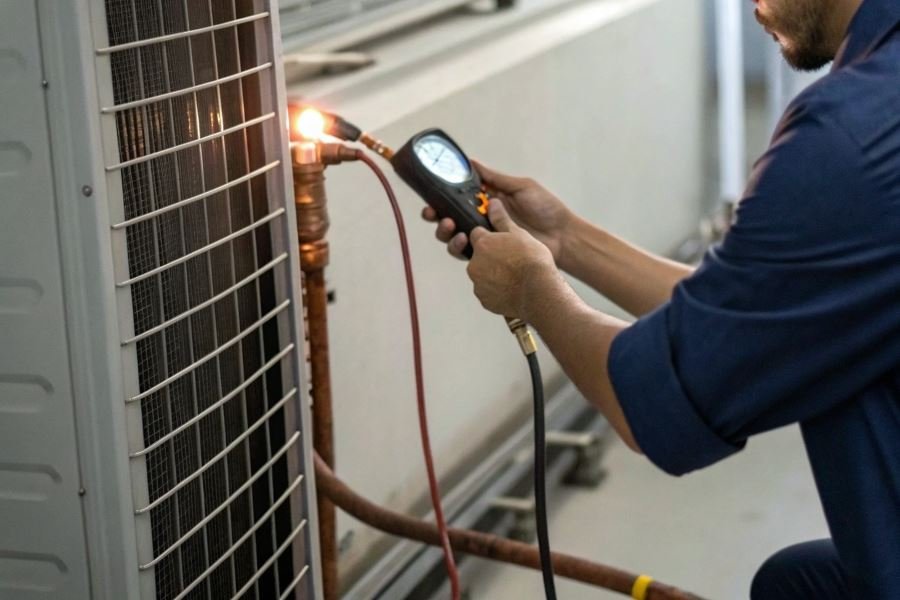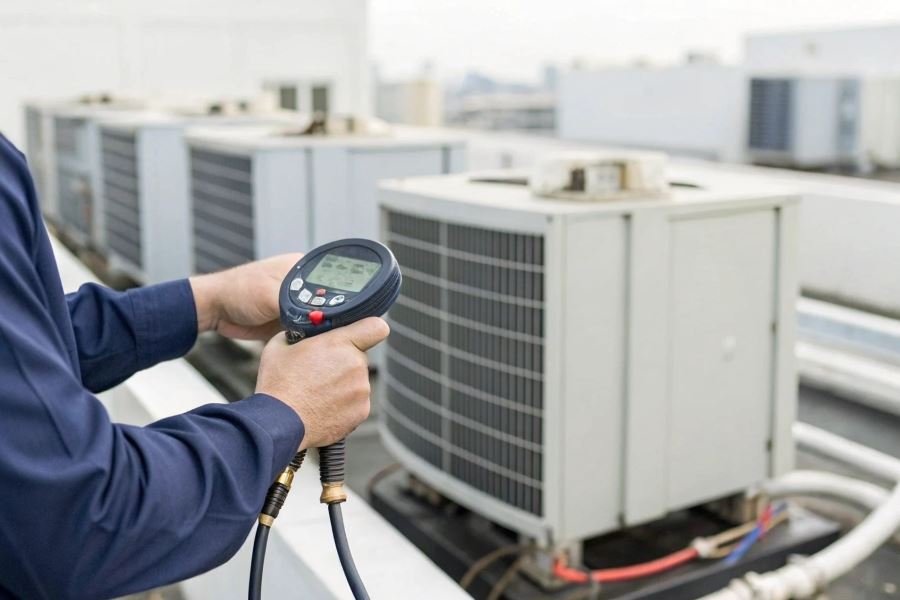
When a refrigeration system fails in the dead of a Siberian winter, it’s not just an inconvenience—it’s potentially catastrophic. This reality drives Russia’s growing demand for sophisticated refrigerant leak detection technology, where finding microscopic escapes of gas can mean the difference between operational excellence and costly system failures.
The Russian HVAC maintenance sector has evolved dramatically since the early 2000s, transforming from basic manual inspections to employing advanced electronic detection systems. With over 17 million commercial refrigeration units operating across the country’s vast territory, from Saint Petersburg’s food processing plants to Vladivostok’s shipping terminals, the stakes couldn’t be higher.
Why detection matters: A single undetected refrigerant leak can increase energy consumption by up to 30% while simultaneously reducing cooling capacity. For industrial facilities where temperature control is mission-critical, this represents not just environmental concerns but significant financial implications.
The Russian market for leak detection equipment presents a fascinating study in contrasts. While international brands maintain strong positions, domestic manufacturers have gained impressive market share by developing specialized equipment designed for Russia’s unique operating conditions—where temperatures can range from -40°C in winter to +40°C in summer.
“The difference between a good detector and a great one isn’t just sensitivity—it’s reliability in extreme conditions,” notes a technical director at one of Moscow’s largest cold storage facilities.
This reliability factor has become the primary battleground where competing brands fight for dominance in a market estimated at $78 million annually and growing at approximately 7% year-over-year.
Russian Refrigerant Leak Detector Market: The Big Three Dominate
When precision meets necessity in HVAC maintenance, refrigerant leak detectors become the unsung heroes of technicians across Russia’s vast territory. The market has evolved significantly, with three manufacturers establishing themselves as the undisputed leaders in this specialized niche.
The most popular brands of refrigerant leak detectors in the Russian market reflect a fascinating blend of international technology adapted for local conditions. These tools have become essential for professionals working in everything from industrial refrigeration to automotive air conditioning repair, with certain brands consistently outperforming others in reliability and accuracy.
Market leaders by the numbers
The Russian refrigerant detection landscape is dominated by three key players:
-
Inficon – Commanding approximately 38% market share, this Swiss manufacturer has become synonymous with precision detection in Russia’s professional HVAC community.
-
Bacharach – With roughly 27% of the market, this American brand has built its reputation on rugged reliability and exceptional sensitivity.
-
Testo – Holding about 21% market share, this German engineering powerhouse offers comprehensive detection solutions that have found particular favor in Russia’s industrial sector.
Technology and price comparison
| Brand | Primary Technology | Detection Threshold | Battery Life | Price Range ($) |
|---|---|---|---|---|
| Inficon | Heated diode | 1.5 g/year | 8-10 hours | 450-1,200 |
| Bacharach | Infrared | 0.5 oz/year | 6-8 hours | 380-950 |
| Testo | Semiconductor | 3 g/year | 10-12 hours | 320-870 |
The technology differences are significant. Inficon’s heated diode technology offers exceptional sensitivity with minimal false positives—a crucial feature when working in Russia’s industrial environments where multiple gases might be present. Bacharach’s infrared sensors provide outstanding accuracy even in extreme temperature conditions, while Testo’s semiconductor approach delivers excellent battery efficiency at a more accessible price point.
Performance in Russian conditions
Russia’s climate presents unique challenges for detection equipment, with temperature extremes that can render lesser devices inoperable. Field testing reveals:
Inficon models consistently perform in temperatures as low as -30°C, making them the preferred choice for Siberian technicians and northern industrial facilities. Their D-TEK models have demonstrated remarkable resilience against condensation issues common in rapid temperature transitions.
Bacharach detectors excel in humid coastal regions like St. Petersburg, where their advanced humidity compensation prevents the false readings that plague less sophisticated units. Their PGM-IR series has become particularly popular among maritime refrigeration specialists.
Testo units deliver exceptional value for urban service technicians in Moscow and other major cities, where their lower price point and reliable performance in moderate conditions make them the practical choice for routine maintenance work.
The verdict from Russian HVAC professionals is clear: while all three brands offer viable solutions, the specific working environment should dictate which detector represents the optimal investment for long-term reliability and accuracy.
Making the Right Choice: Refrigerant Leak Detector Selection in Russia
When technicians face the critical task of finding refrigerant leaks, having the right detector isn’t just convenient—it’s essential. The Russian market offers numerous options, but understanding what drives popularity among professionals reveals the true performance factors that matter.
What makes a detector brand dominate
The most successful refrigerant leak detector brands in Russia have earned their position through a combination of reliability, sensitivity, and value. Inficon detectors consistently rank highly because they deliver exceptional sensitivity—often detecting leaks as small as 3 g/year—while maintaining durability in harsh conditions. Meanwhile, Bacharach has captured market share by offering instruments that provide both accuracy and extended sensor life.
The critical factors influencing brand popularity include:
- Detection technology – Heated diode sensors dominate for precision work, while infrared technology is gaining ground for its versatility
- Sensitivity thresholds – Top performers detect HFCs, HCFCs, and natural refrigerants at levels below 5 g/year
- Battery life – Field technicians favor units offering 8+ hours of continuous operation
- Environmental adaptability – Ability to function in temperature ranges from -20°C to +50°C
Russian professionals particularly value instruments that maintain calibration despite temperature fluctuations common in the country’s diverse climate zones.
Tomorrow’s leak detection landscape
The refrigerant leak detection market is evolving rapidly, with several clear trends emerging:
- Smart connectivity – Integration with mobile applications for data logging and analysis
- Multi-refrigerant capability – Detectors that can identify and quantify various refrigerant types without recalibration
- Miniaturization – Smaller, lighter units with equal or better sensitivity
- Environmental compliance – Enhanced detection of low-GWP refrigerants as regulations tighten
Fieldpiece and Testo are leading this innovation charge, introducing cloud-connected devices that allow technicians to document leaks digitally and generate compliance reports automatically.
Matching detectors to applications
Selecting the appropriate detector requires understanding specific application needs:
| Application Type | Recommended Technology | Key Features to Prioritize |
|---|---|---|
| Commercial HVAC | Infrared or Ultrasonic | Wide refrigerant range, rugged design |
| Industrial Refrigeration | Heated diode | Highest sensitivity, explosion-proof options |
| Automotive A/C | UV dye systems | Portability, visual confirmation |
| Residential | Corona discharge | Cost-effectiveness, simplicity |
For industrial applications where ammonia detection is critical, Danfoss offers specialized detectors with enhanced safety features. Smaller service companies often find Elitech provides the best balance of performance and affordability.
Technician wisdom: The most expensive detector isn’t always the best choice. Match the technology to your daily applications rather than chasing specifications you’ll rarely need.
When making your selection, consider not just the initial purchase price but also the total cost of ownership—including sensor replacement, calibration requirements, and battery life. The most successful technicians in Russia typically maintain multiple detector types, selecting the appropriate tool based on the specific refrigeration system and suspected leak characteristics.
By focusing on these critical factors, professionals can make informed decisions that enhance their leak detection capabilities while maximizing their investment in this essential equipment.
Discover the top refrigerant leak detector brands trusted by HVAC professionals across the US. Compare features, technologies, and performance to find the perfect tool for reliable refrigerant management and maintenance.
Discover the top refrigerant leak detector brands trusted by HVAC professionals across the US. Compare features, technologies, and performance to find the perfect tool for reliable refrigerant management and maintenance.