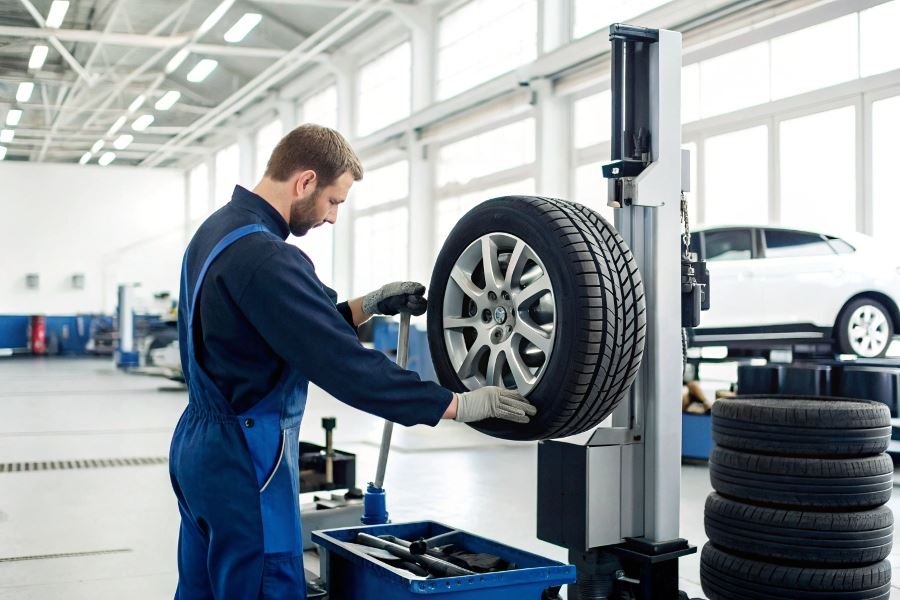
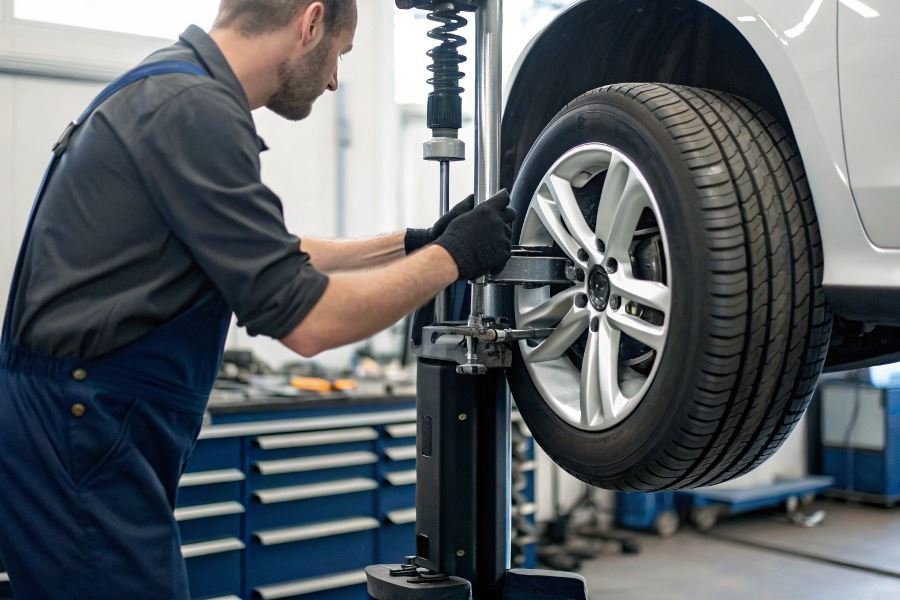
Ever wonder why some fleet operations run like clockwork while others hemorrhage money on vehicle downtime? The difference often comes down to something surprisingly fundamental: their tire fitting equipment.
When a 40-ton commercial vehicle sits idle due to tire issues, it costs approximately 450−750 per day in lost revenue. That’s before factoring in repair costs, missed delivery penalties, and reputation damage. Proper tire maintenance isn’t just about safety—it’s about survival in the competitive logistics landscape.
The commercial truck tire service sector has evolved dramatically since the days of manual tire changers. Today’s equipment incorporates hydraulic systems, computerized balancing technology, and specialized mounting tools designed specifically for the unique challenges of commercial truck tires. With equipment investments ranging from $15,000 for basic setups to over $100,000 for comprehensive systems, making informed selections becomes critical.
The trifecta of selection criteria
When evaluating tire fitting equipment for your truck operation, three primary factors should guide your decision:
- Operational requirements – Consider your fleet size, tire types, and service frequency
- Workshop constraints – Available space, power supply limitations, and technician expertise
- Financial considerations – Initial investment versus long-term operational savings
The most successful operations don’t simply purchase the most expensive equipment—they strategically select tools that align with their specific needs. A regional delivery company with 25 vehicles has fundamentally different requirements than a national fleet with 500 trucks operating across diverse terrains and weather conditions.
Remember: The right equipment doesn’t just change tires—it transforms your maintenance operation from a cost center into a competitive advantage.
Technical Essentials for Truck Tire Fitting Equipment
When investing in tire fitting equipment for commercial trucks, the technical specifications become your roadmap to operational success. The criteria for selecting tire fitting equipment for trucks extends far beyond basic functionality—it’s about finding machinery that delivers consistent performance under demanding conditions while maximizing your workshop’s efficiency.
Load capacity and dimensional compatibility
The fundamental starting point for any truck tire equipment evaluation must be its load capacity. Unlike passenger vehicles, commercial trucks present unique challenges with tires that can weigh upwards of 250 pounds each.
Heavy-duty changers typically offer load capacities between 1,500-3,000 pounds, but the sweet spot for most commercial operations falls around 2,200 pounds. This provides adequate capacity for everything from medium-duty delivery vehicles to Class 8 semi-trucks.
Dimensional compatibility is equally critical:
| Truck Type | Typical Wheel Diameter | Recommended Changer Capacity |
|---|---|---|
| Medium Duty | 17.5″-19.5″ | 13″-26″ capacity |
| Heavy Duty | 22.5″-24.5″ | 14″-58″ capacity |
| Agricultural/OTR | Up to 63″ | Specialized equipment |
The Hunter Engineering TCX645HD exemplifies proper dimensional compatibility with its ability to handle wheel diameters from 14″ to 46″, accommodating most commercial applications without requiring equipment changes.
Power source selection for optimal performance
The power source driving your tire equipment fundamentally shapes its performance characteristics, maintenance requirements, and operational costs.
Pneumatic systems remain the industry standard, offering:
- Explosion-proof operation
- Lower initial investment
- Simpler maintenance protocols
However, hydraulic systems deliver superior torque for stubborn beads and sidewalls. The Corghi HD1400 hydraulic changer generates up to 3,300 ft-lbs of torque—nearly double what comparable pneumatic systems produce.
Electric-powered options have gained traction with:
- Precise speed control
- Lower operational noise
- Independence from compressed air systems
Power source selection should align with your existing infrastructure. Shops with robust air compressor systems may find pneumatic equipment more economical, while operations seeking maximum power regardless of air supply limitations should consider hydraulic alternatives.
Construction quality and durability assessment
The punishing nature of truck tire service demands equipment built to industrial standards. Durability assessment should focus on:
- Frame construction – Look for fully welded steel frames with reinforced stress points
- Motor specifications – Two-speed motors with thermal protection prevent burnout during extended use
- Cylinder quality – Chrome-plated cylinders with proper sealing resist contamination and wear
The difference between consumer-grade and commercial-grade equipment becomes apparent after just months of heavy use.
Evaluate the Rotary R501N’s construction—its one-piece steel frame and reinforced mounting points exemplify the structural integrity necessary for daily commercial use. The bead breaker cylinder alone can withstand over 500,000 cycles before requiring service.
When assessing durability, examine warranty terms carefully. Premium manufacturers typically offer 2-5 year warranties on structural components and 1-2 years on wear items and electronics. This confidence in their equipment speaks volumes about expected service life.
By methodically evaluating these technical criteria—load capacity, power source, and construction quality—you’ll identify equipment that not only meets your immediate needs but continues delivering value throughout its operational lifespan.
Making the Smart Investment in Truck Tire Fitting Equipment
The ROI equation that matters
When investing in truck tire fitting equipment, the upfront cost is just the beginning of the story. A comprehensive cost-benefit analysis reveals that premium equipment often delivers superior returns despite higher initial price tags. Consider that a high-quality Hunter Engineering tire changer might cost $15,000-25,000, while budget alternatives hover around $8,000-12,000. The difference? Premium equipment typically processes 30-40% more tires daily with significantly lower failure rates.
The math is compelling: A shop handling 20 truck tires daily saves approximately 2-3 minutes per tire with premium equipment. That’s 40-60 minutes saved daily, translating to an additional 4-6 tires serviced. At an average service charge of $50-75 per tire, that’s $200-450 in additional daily revenue.
Most quality equipment pays for its premium within 12-18 months while continuing to generate enhanced revenue for years afterward.
Beyond the purchase price
The true cost of ownership extends far beyond the invoice. Premium equipment from manufacturers like Corghi or Rotary typically requires maintenance every 500-700 service hours, while budget alternatives might need attention every 300-400 hours.
Maintenance isn’t just about frequency—it’s about downtime cost. When a machine fails during peak season, the lost revenue can dwarf any savings from purchasing cheaper equipment.
Consider these long-term operational factors:
| Factor | Premium Equipment | Budget Equipment |
|---|---|---|
| Annual maintenance cost | $800-1,200 | $600-900 |
| Average downtime | 1-2 days/year | 3-5 days/year |
| Replacement parts availability | Same/next day | 3-7 days |
| Power consumption | 15-20% lower | Standard |
| Average lifespan | 8-12 years | 4-6 years |
The operational math favors quality: Premium equipment might cost 40% more upfront but delivers twice the service life with half the downtime.
The warranty behind the promise
A manufacturer’s reputation and warranty reveal volumes about equipment quality. Industry leaders like Snap-on Equipment typically offer 3-5 year warranties on structural components and 1-2 years on wear items. Budget manufacturers often limit coverage to 1 year with numerous exclusions.
Warranty depth matters as much as length. Top manufacturers cover:
- Parts replacement
- Labor costs
- On-site service
- Software updates
- Operator error protection
When evaluating warranties, look beyond the headline years to the actual coverage details. A 2-year comprehensive warranty often provides better protection than a 3-year limited warranty with extensive exclusions.
The manufacturer’s service network is equally critical. Hennessy Industries maintains service centers within 100 miles of most U.S. locations, ensuring rapid response when issues arise. Regional manufacturers might offer lower prices but with service delays that can stretch into weeks.
The best equipment investment balances acquisition cost against operational efficiency, maintenance requirements, and manufacturer support. When these factors align, the result isn’t just functional equipment—it’s a competitive advantage that drives profitability for years to come.
Discover essential criteria for selecting high-quality truck tire fitting equipment. Learn about load capacity requirements, power options, and durability factors to maximize safety, efficiency, and ROI in your commercial fleet maintenance operations.
Discover essential criteria for selecting high-quality truck tire fitting equipment. Learn about load capacity requirements, power options, and durability factors to maximize safety, efficiency, and ROI in your commercial fleet maintenance operations.