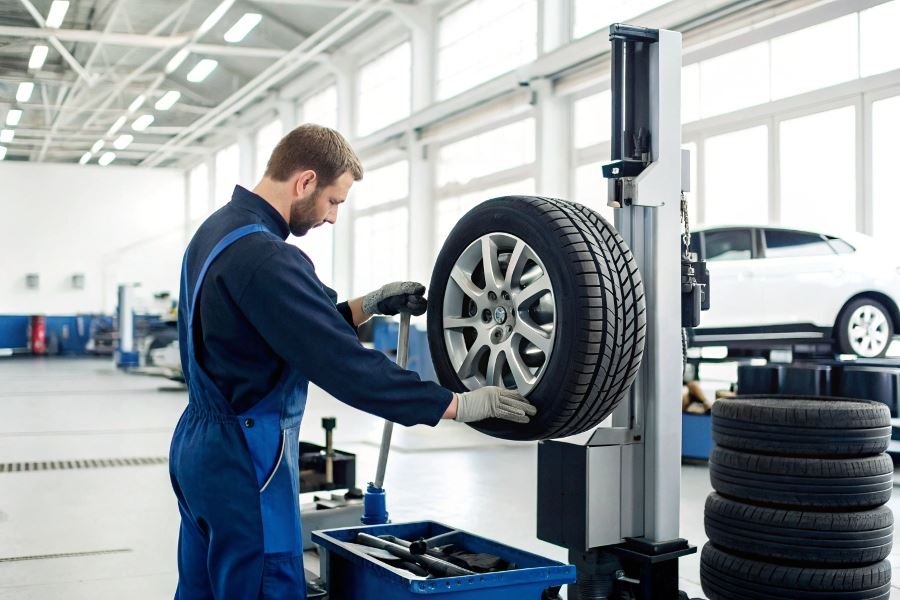
Ever wondered why some auto shops consistently outperform their competition? The secret often lies not in what they do, but in how they acquired the tools to do it.
The market for used tire fitting machines has transformed dramatically as automotive service centers seek to maximize their return on investment. Now that profit margins are tightening across the automotive service industry, savvy shop owners are discovering that pre-owned equipment offers a pathway to premium capabilities without the premium price tag.
When considering what to pay attention to when buying a used tire fitting machine, understanding the current landscape is essential. The secondary market for tire changers has grown by approximately 35% since 2020, creating both opportunities and pitfalls for potential buyers.
The financial advantage
Pre-owned tire changing equipment typically sells for 40-60% below retail pricing, allowing businesses to acquire professional-grade machinery at entry-level costs. A commercial-grade tire changer that might cost $8,000 new can often be found in excellent condition for 3, 500−4,500.
“The depreciation curve on tire equipment is steep in the first year but flattens significantly after that—while the functional lifespan remains remarkably long.”
Navigating common challenges
The used equipment market isn’t without its complications. Buyers frequently encounter:
- Hidden wear issues that aren’t immediately visible during inspection
- Compatibility concerns with modern tire types, particularly run-flats and low-profile designs
- Parts availability for discontinued models
- Training gaps when documentation is missing
The most successful buyers approach used equipment not as a simple transaction but as a strategic investment requiring thorough evaluation and planning.
The Technical Heart of Used Tire Machines
When evaluating a pre-owned tire fitting machine, the devil truly lives in the mechanical details. Smart shop owners know that what to pay attention to when buying a used tire fitting machine often makes the difference between scoring a reliable workhorse and inheriting someone else’s headache. Let’s dive into the critical technical components that deserve your closest scrutiny.
Motor Power That Means Business
The motor serves as the beating heart of any tire machine. A professional-grade tire changer typically requires 1-2 HP for standard passenger vehicles, while commercial machines handling truck tires demand 2-3 HP or more. When inspecting, listen for unusual noises during operation—grinding, whining, or hesitation can signal impending motor failure.
Electrical specifications matter tremendously. Verify the machine’s voltage requirements (typically 110V or 220V) match your shop’s capabilities. Many buyers overlook phase requirements—single-phase for smaller operations versus three-phase for industrial settings. A mismatch means expensive electrical modifications.
The age of the motor often tells a story about remaining service life. Most quality motors from manufacturers like Hofmann or Hunter are designed for 10,000+ operating hours when properly maintained.
Hydraulic System Health Check
The hydraulic system powers the machine’s most demanding functions. When examining used equipment, look for these telltale signs of hydraulic issues:
- Fluid leaks around cylinders or hoses
- Discolored hydraulic fluid (should be clear amber, not milky or dark)
- Slow or jerky movement during operation
- Unusual pressure drops under load
Request maintenance records that document regular fluid changes and filter replacements. Hydraulic systems without proper maintenance history often hide expensive repairs.
| Hydraulic Component | What to Check | Red Flags |
|---|---|---|
| Cylinders | Smooth extension/retraction | Leaking seals, scoring on rods |
| Hoses | Flexibility, no cracks | Hardened rubber, visible wire mesh |
| Pump | Consistent pressure | Unusual noise, overheating |
| Reservoir | Fluid level and clarity | Contamination, low fluid level |
Mounting Head and Clamping System
The mounting head and clamping system directly contact customers’ wheels—making them critical wear points. Examine the mounting head for excessive wear, especially on the plastic protectors that prevent wheel damage. These components from manufacturers like CEMB can cost hundreds to replace if worn.
The clamping system must hold wheels securely without damaging them. Test the clamps through their full range of motion, checking for:
- Smooth, consistent movement
- Proper alignment when fully extended
- No excessive play or wobble
- Complete clamping force across all jaws
Turntable integrity is non-negotiable. Look for flat, level rotation without wobble. Any deviation indicates potential bearing issues or structural damage that could transfer to customers’ wheels.
For machines handling low-profile tires, verify the presence of specialized mounting heads and proper leverless systems. Modern vehicles with expensive alloy wheels demand equipment that won’t cause costly damage.
Remember that replacement parts for discontinued models can become scarce and expensive. Before finalizing any purchase, research parts availability for that specific model—particularly for imported machines where components might require international shipping.
By thoroughly examining these critical technical aspects, you’ll significantly reduce the risk of purchasing equipment that delivers more frustration than value to your operation.
Beyond the Basics: Critical Factors for Used Tire Machine Buyers
When investing in pre-owned tire changing equipment, looking beyond the surface is what separates a savvy purchase from a costly mistake. While basic functionality checks are essential, these three additional factors often determine whether your used tire fitting machine becomes a workshop workhorse or a perpetual headache.
Age and pedigree matter tremendously
The manufacturing date of a tire machine isn’t just a number—it’s a roadmap to its technological relevance and remaining service life. Machines manufactured before 2015 often lack critical safety features and ergonomic improvements that reduce operator fatigue during high-volume periods.
Brand reputation creates a performance ceiling. Industry leaders like Hunter Engineering and Corghi have established their dominance through decades of engineering refinement. Their used equipment typically commands premium prices but delivers proportionate value through:
- Consistent calibration retention
- Superior clamping mechanisms that minimize wheel damage
- More precise bead breaking capabilities
Model reliability varies dramatically even within respected brands. The Coats 70X-series, for instance, earned legendary status for its durability, with many units still operating flawlessly after 15+ years of daily use. Conversely, some budget-friendly models from the early 2010s developed notorious electrical system failures after just 3-5 years.
Parts availability determines long-term viability
Nothing kills productivity faster than a capable machine rendered useless by an unavailable $30 component. Before purchasing, investigate:
- Whether the manufacturer still supports the specific model
- Typical lead times for common replacement parts
- Availability of aftermarket alternatives
The true cost of a tire machine isn’t reflected in its purchase price but in its total operational lifetime.
Technical support accessibility becomes particularly crucial during seasonal rushes. Manufacturers like Snap-on maintain comprehensive technical libraries and responsive support teams for equipment dating back decades, while some imported brands effectively abandon support for models older than five years.
| Brand | Typical Parts Availability | Technical Documentation | Phone Support |
|---|---|---|---|
| Hunter | 15+ years | Excellent | Same-day |
| Corghi | 10+ years | Good | 24-48 hours |
| Ranger | 7-10 years | Fair | 48-72 hours |
| Generic Import | 2-5 years | Poor/Nonexistent | Limited/None |
Seller credibility shapes your experience
The source of your used tire machine often predicts your satisfaction with the purchase. Equipment from established automotive equipment dealers typically undergoes professional reconditioning, including:
- Complete disassembly and cleaning
- Replacement of wear components
- Calibration to factory specifications
- Operational testing under load
Warranty options reveal seller confidence. Even on used equipment, reputable dealers offer 30-90 day coverage on major components. This protection period allows sufficient time to discover any hidden issues during regular operation.
When purchasing from private sellers, documentation becomes your best protection. Request:
- Original purchase records
- Maintenance logs
- Service history
- Calibration certificates
Industry insight: The most reliable used tire machines often come from dealerships upgrading their equipment, not shops going out of business. Dealership-maintained machines typically receive preventative maintenance rather than just emergency repairs.
By thoroughly evaluating these three critical factors—machine pedigree, parts availability, and seller credibility—you’ll dramatically increase your chances of finding a used tire fitting machine that delivers exceptional value and performance for years to come.
Discover essential inspection points for purchasing used tire fitting machines. Learn to evaluate motor power, hydraulic systems, mounting mechanisms, and key factors like parts availability and seller credibility before investing in pre-owned equipment.
Discover essential inspection points for purchasing used tire fitting machines. Learn to evaluate motor power, hydraulic systems, mounting mechanisms, and key factors like parts availability and seller credibility before investing in pre-owned equipment.