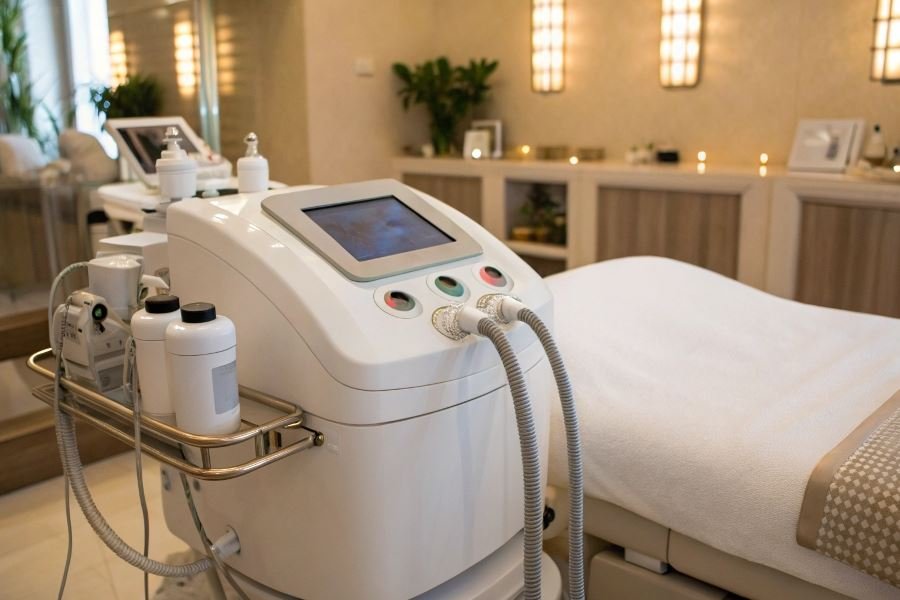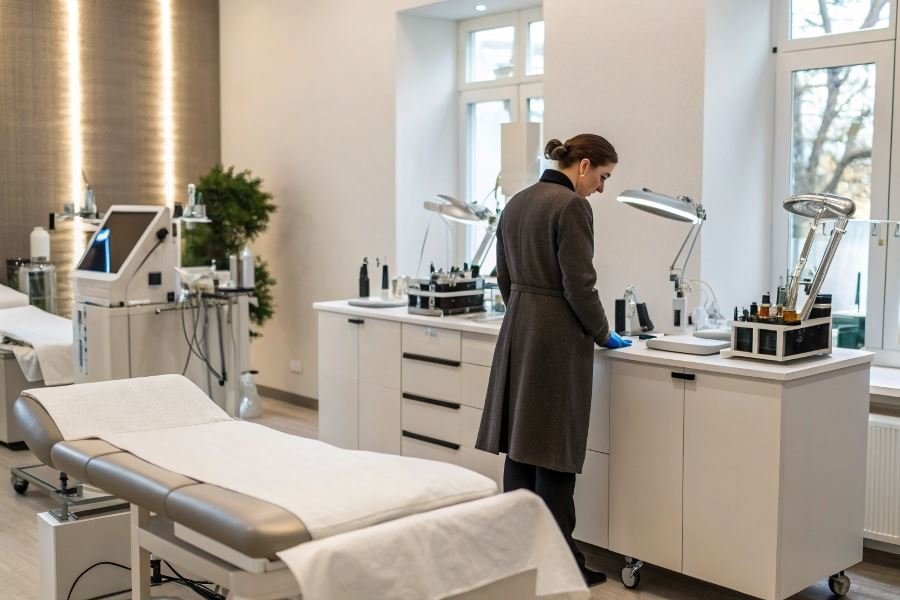
What if your next equipment purchase could double your client retention rate? The decision might seem straightforward—find something that works and fits your budget—but the reality runs much deeper for small beauty salon owners.
Behind every thriving beauty business lies a carefully curated selection of cosmetic devices that perfectly balance effectiveness, profitability, and client satisfaction. The equipment you choose doesn’t just perform treatments; it becomes the heartbeat of your service offerings and shapes your salon’s identity in a competitive marketplace.
The cosmetic device landscape has transformed dramatically in recent years. What once required hospital visits can now be performed in neighborhood salons. Multi-function platforms have replaced single-purpose machines, offering versatility without sacrificing results. Meanwhile, manufacturers have recognized the small salon segment, creating more compact, affordable options without compromising professional-grade performance.
“The right device doesn’t just perform treatments—it tells clients a story about your commitment to results.”
Your equipment selection directly impacts three critical business metrics:
- Client satisfaction – Devices that deliver visible, consistent results build trust and loyalty
- Treatment efficiency – Modern equipment reduces session times while improving outcomes
- Revenue potential – Strategic device selection opens premium service opportunities with higher margins
The most successful salon owners understand that equipment selection isn’t merely a technical decision—it’s a strategic business move that shapes everything from marketing positioning to pricing structure. When clients experience treatments that exceed their expectations, they don’t just return—they become enthusiastic advocates for your business.
Smart Investment Strategies for Beauty Tech
Selecting the right equipment for your beauty salon isn’t just a purchase—it’s a strategic business decision that shapes your salon’s identity, clientele, and profitability. When evaluating criteria for choosing a cosmetic device for a small beauty salon, owners must balance immediate financial constraints against long-term revenue potential while considering their unique space limitations and target market preferences.
Budget Realities: Beyond the Price Tag
The initial investment in cosmetic equipment represents just one financial dimension of your purchase decision. A $15,000 laser hair removal system might seem expensive compared to a $3,000 alternative, but the calculation changes dramatically when you consider:
Lifetime value metrics:
- Treatment revenue per session
- Number of sessions per month
- Expected equipment lifespan
- Maintenance costs
“The most expensive device isn’t always the best investment, but the cheapest rarely is.”
Smart salon owners calculate cost-per-treatment over the device’s lifetime. A premium Candela GentleMax Pro might cost three times more than entry-level alternatives but deliver five times the treatments before requiring service, with faster session times allowing more bookings per day.
Consider financing options that align with your cash flow. Many equipment manufacturers offer payment plans specifically designed for small salons, turning a prohibitive upfront cost into manageable monthly expenses that your new service revenue can cover.
Space Optimization: Making Every Square Foot Count
Small salons face unique spatial challenges that directly impact equipment selection. Multi-function devices that combine technologies (like IPL systems that handle both hair removal and skin rejuvenation) maximize your service menu without consuming precious floor space.
Key spatial considerations include:
| Factor | Impact | Solution |
|---|---|---|
| Footprint | Limits treatment room capacity | Wall-mounted or compact units |
| Mobility | Affects room flexibility | Devices with quality casters |
| Storage | Accessories and consumables | Built-in storage systems |
| Infrastructure | Power, water, ventilation needs | Pre-installation assessment |
The Venus Versa exemplifies smart design for space-conscious salons, offering multiple treatment technologies in a single, mobile platform that can be easily moved between rooms as needed.
Client-Centric Selection: Meeting Market Demand
Your equipment investments should directly respond to your clientele’s needs and preferences. Before purchasing, conduct thorough market research:
Analyze your existing client base:
- Demographic profile (age, gender, income)
- Most requested treatments
- Seasonal demand patterns
- Price sensitivity
Complement this with competitor analysis to identify service gaps in your local market. Perhaps nearby salons offer basic facials but no advanced skin treatments, creating an opportunity for your business to introduce specialized services using technology like HydraFacial MD.
The most successful small salons choose equipment that creates a distinctive competitive advantage rather than simply matching services already saturating the market. This might mean investing in a signature technology that becomes your salon’s calling card—a specialized body contouring system or advanced skin analysis technology that elevates your consultation process.
Remember that equipment selection ultimately shapes your salon’s identity. Each device you bring into your space should align with both your brand vision and the practical realities of your business environment.
Technical Brilliance Meets Business Sense
Device versatility transforms your service menu
The cornerstone of smart equipment investment lies in versatility. Multi-function devices that deliver 3-5 treatment types from a single platform represent the gold standard for small salon economics. The Hydrafacial MD exemplifies this approach, offering cleansing, exfoliation, extraction, and hydration in one system—effectively replacing four separate machines while requiring just 9 square feet of floor space.
Treatment diversity creates multiple revenue streams without multiplying your equipment costs. Consider devices that address complementary concerns: a platform offering both radiofrequency and microneedling capabilities allows you to target both skin tightening and texture improvement from the same investment.
The most successful small salons select equipment that serves their core clientele while attracting new demographics. A strategic approach:
| Treatment Type | Client Retention | New Client Attraction | Revenue Potential |
|---|---|---|---|
| Basic (single function) | Moderate | Low | $100-200/treatment |
| Multi-function | High | Moderate | $150-350/treatment |
| Premium (combined therapies) | Very High | High | $300-800/treatment |
Maintenance economics that protect your margins
Behind every gleaming device lies an ongoing commitment to maintenance—a factor that can dramatically impact profitability. Smart salon owners look beyond the purchase price to understand the total cost of ownership.
Consumable costs vary dramatically between systems. The Venus Versa platform requires approximately $15-25 in disposables per treatment, while some laser systems demand $50-100 in consumables for each client session.
Maintenance contracts typically range from 2, 000−5,000 annually for comprehensive coverage. However, some manufacturers now offer pay-per-use models that align costs directly with revenue generation—an approach particularly valuable for salons in growth phases.
Downtime represents the hidden expense that devastates schedules and client trust. Investigate mean time between failures and average repair turnaround. Local service availability can mean the difference between a 24-hour fix and a two-week revenue gap.
Staff expertise as your competitive advantage
Even the most sophisticated technology requires skilled operators to deliver results. Training requirements vary dramatically:
- Basic operation training: 1-2 days (included with most purchases)
- Advanced technique mastery: 2-4 weeks (often requires additional investment)
- Certification for specialized treatments: 1-3 months (may require external education)
The Sciton JOULE platform exemplifies the training spectrum, offering initial operation training with purchase while providing advanced certification pathways that develop true expertise over time.
Staff retention becomes paramount when investing in sophisticated equipment. Consider creating tiered compensation structures that reward technicians who master advanced treatments, turning your training investment into a retention strategy.
Cross-training capabilities represent another critical factor. Systems that allow multiple staff members to deliver treatments provide scheduling flexibility and protect against revenue disruption when key team members are unavailable.
The most successful small salons develop expertise roadmaps alongside their equipment acquisition plans, ensuring technical capabilities grow in parallel with their technology investments—creating a virtuous cycle where equipment capabilities and staff expertise continuously elevate each other.
Discover the 7 essential criteria for selecting profitable cosmetic devices for your small beauty salon. Learn how to evaluate budget, space requirements, versatility, and maintenance costs to maximize ROI and client satisfaction.
Discover the 7 essential criteria for selecting profitable cosmetic devices for your small beauty salon. Learn how to evaluate budget, space requirements, versatility, and maintenance costs to maximize ROI and client satisfaction.