Ever watched a master tailor reorganize their workspace three times in a single day to accommodate different projects? That’s the reality for many in the sewing industry—until modular tables entered the picture.
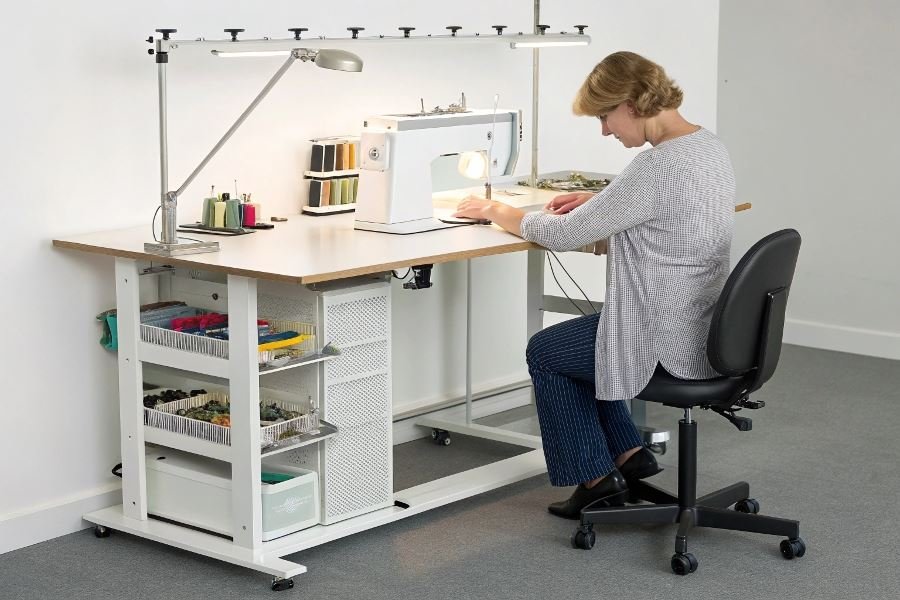
Modular tables for sewing production represent a fundamental shift in how craftspeople and manufacturers approach their workspace design. These customizable, reconfigurable work surfaces allow seamstresses and production managers to adapt their environment to the task at hand, rather than adapting their process to fixed furniture limitations.
The evolution from fixed to flexible has been remarkable. Traditional sewing tables, once immovable fixtures in production facilities, have given way to systems that can transform in minutes. This shift began in earnest during the 1990s when manufacturing principles from automotive industries crossed over into textile production, emphasizing efficiency and adaptability.
“The right table configuration can increase productivity by up to 27% while reducing physical strain on workers.” — American Sewing Guild research findings
When selecting modular tables for your operation, three factors deserve priority consideration:
- Scale compatibility: Ensure your modular system can expand with your business
- Workflow optimization: Tables should facilitate, not hinder, your specific production sequence
- Ergonomic integration: Height adjustability and positioning flexibility protect your most valuable asset—your people
For small batch producers, compact systems with quick-change surfaces might be ideal, while large-scale operations often benefit from interconnected modular networks that can be reconfigured for different production runs without disrupting the entire floor.
Strategic Table Layouts for Sewing Efficiency
The backbone of any productive sewing operation isn’t just the machines—it’s how your workspace flows. Thoughtful arrangement of modular tables for sewing production: layout possibilities extend far beyond simple furniture placement. They’re strategic decisions that can dramatically increase output, reduce worker fatigue, and maximize your available square footage.
Linear Configurations: The Production Powerhouse
Linear layouts represent the classic approach to sewing production efficiency. Think of them as your production line reimagined for the modern workshop:
Straight-line setups create a natural progression from cutting to assembly to finishing. Workers can pass projects down the line with minimal movement, reducing transit time between stations by up to 30% compared to scattered arrangements.
The beauty of linear configurations lies in their adaptability. You can extend them as needed or break them into parallel lines when production demands increase. Many successful operations implement what’s called “progressive bundling”—where each workstation completes a specific task before moving the bundle to the next station.
| Linear Layout Benefits | Implementation Considerations |
|---|---|
| Clear workflow direction | Requires longer wall space |
| Minimizes cross-traffic | Less ideal for collaborative work |
| Easy supervision | May create bottlenecks if improperly balanced |
U-shaped and L-shaped Arrangements: Space Optimization Masters
When square footage comes at a premium, U-shaped and L-shaped configurations deliver exceptional value:
U-shaped layouts create a compact production cell where operators can easily communicate while maintaining workflow efficiency. The central supervisor position allows for quality control at multiple stages simultaneously.
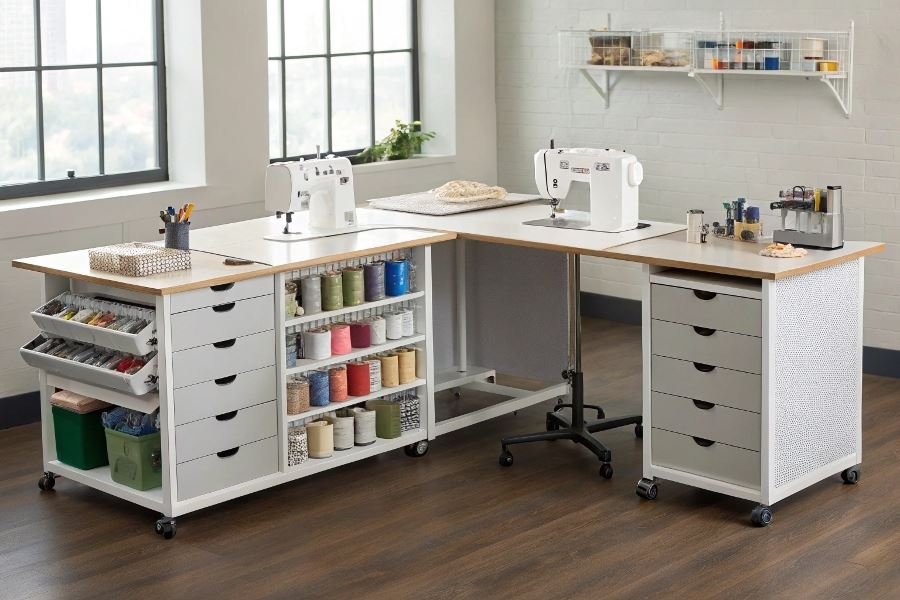
L-shaped arrangements excel in corner spaces or rooms with awkward dimensions. They’re particularly effective for operations that require a clear division between preparation and finishing work.
These configurations typically reduce walking distance by 15-25% compared to linear setups, making them ideal for smaller teams handling complex garments that require multiple operations.
“The right table configuration can reduce production time by up to 20% without changing a single machine or operator.”
Island-style Setups: Collaboration Catalysts
For design-focused operations or teams working on complex, non-linear projects, island-style modular table arrangements shine:
Central island configurations place cutting and pattern work at the center, surrounded by sewing stations. This creates a hub-and-spoke system where materials and information flow naturally from the center outward.
Multiple islands work brilliantly for operations with distinct product lines or teams. Each island becomes a self-contained production unit with its own workflow, reducing cross-team disruptions while maintaining the collaborative benefits.
Island layouts particularly excel in educational environments or fashion studios where knowledge sharing and creative collaboration drive innovation. They naturally encourage operators to assist each other during production surges or complex operations.
The most successful sewing operations often combine elements from multiple layout styles, creating hybrid configurations tailored to their specific production needs, space constraints, and team dynamics. The modularity of modern sewing tables makes this customization not just possible, but remarkably straightforward to implement and adjust as your production evolves.
Transforming Sewing Production with Modular Tables
Modular tables have revolutionized sewing production environments, creating flexible workspaces that adapt to changing needs while maximizing efficiency. When implemented strategically, these systems become the backbone of productive sewing operations, supporting both large-scale manufacturing and boutique production houses.
Seamless integration with existing equipment
The beauty of modular table systems lies in their adaptability to your current setup. Rather than forcing a complete overhaul, quality modular tables complement existing machinery through:
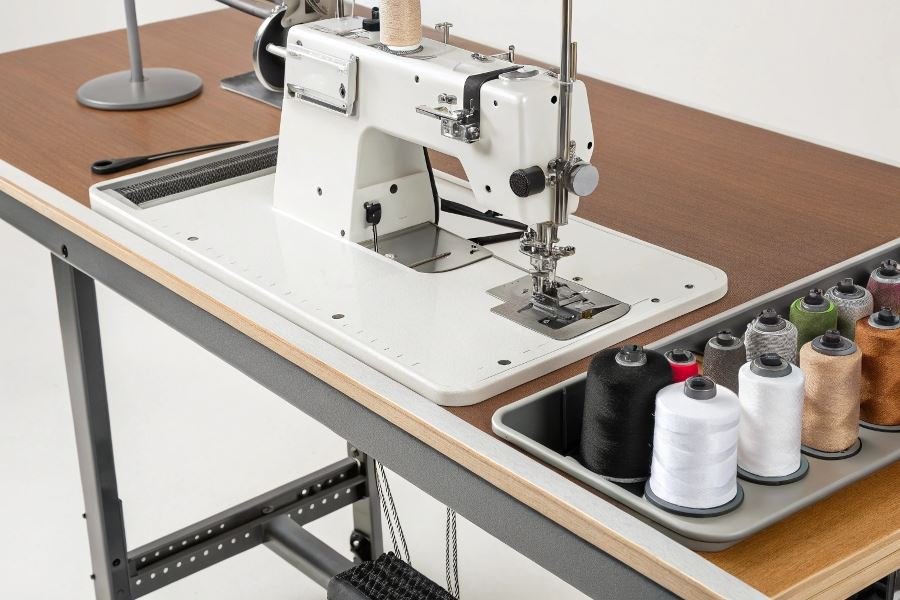
- Height-adjustable surfaces that align perfectly with sewing machine feed heights
- Connector systems that eliminate gaps between workstations
- Cable management channels that keep power cords organized and protected
One production manager at a denim factory in North Carolina reported a 23% increase in throughput after integrating Bernina sewing stations with modular cutting and assembly tables. The key was creating continuous workflows where materials moved effortlessly between stations without awkward transitions or height differences.
The most successful implementations treat modular tables not as furniture but as production equipment that deserves the same strategic consideration as your sewing machines.
When planning integration, start by mapping material flow through your production line. Identify bottlenecks where work accumulates or where operators must make unnecessary movements. These are prime opportunities for modular table solutions.
Customization that solves production challenges
Standard tables rarely address specialized production needs. Modular systems excel through customization options that transform generic surfaces into purpose-built workstations:
| Customization Feature | Production Benefit |
|---|---|
| Interchangeable surface materials | Different textures for different fabrics |
| Integrated measuring grids | Precision cutting without separate tools |
| Tilt-adjustable surfaces | Ergonomic positioning for detailed work |
| Removable center sections | Accommodation for bulky materials |
A bridal wear studio in Chicago implemented modular tables with specialized surfaces—slick polymer for silk handling and textured matte for lace work. By swapping surfaces seasonally based on material needs, they reduced handling damage by 35%.
The compelling economics of modular systems
The initial investment in quality modular tables often exceeds standard furniture costs, but the ROI analysis tells a compelling story:
Short-term returns come from immediate productivity gains. Manufacturers typically report 15-20% efficiency improvements in the first six months through:
- Reduced material handling time
- Decreased worker fatigue
- Fewer errors from improper work positioning
Long-term benefits prove even more substantial:
- Adaptability to changing product lines without purchasing new furniture
- Reduced facility modification costs when reconfiguring production flows
- Extended equipment lifespan through proper ergonomic support
- Lower training costs with standardized workstation designs
A furniture upholstery company in Texas calculated their complete Juki modular table system would pay for itself in 14 months through labor savings alone. Three years later, they’ve avoided an estimated $87,000 in renovation costs by reconfiguring their modular system for four different production layouts as their product mix evolved.
The most successful implementations approach modular tables as production infrastructure rather than mere furniture—an investment in capability rather than an expense. When selected thoughtfully and implemented strategically, these systems become the foundation upon which efficient sewing production thrives.
Discover how modular sewing tables transform production efficiency with strategic layouts. Learn optimal configurations—linear, U-shaped, L-shaped, and island setups—to maximize workflow, save space, and enhance collaboration in your sewing operation.
Discover how modular sewing tables transform production efficiency with strategic layouts. Learn optimal configurations—linear, U-shaped, L-shaped, and island setups—to maximize workflow, save space, and enhance collaboration in your sewing operation.