What if the same technology that powers your smartphone could control a 50-ton manufacturing line? That’s exactly what’s happening on factory floors worldwide.
Industrial touch screen computers represent the critical intersection of rugged durability and intuitive human-machine interaction. Unlike their consumer counterparts, these specialized machines are built to withstand extreme conditions—dust, vibration, temperature fluctuations, and even high-pressure washdowns—while providing operators with responsive, glove-compatible interfaces that streamline complex processes.
The evolution of these systems tells a fascinating story of technological adaptation. What began as rudimentary button panels in the 1970s transformed into early resistive touchscreens by the 1990s. Today’s industrial computers feature multi-touch capacitive displays with processing power that would have seemed impossible just a decade ago.
Where the tough get touching
These hardened digital workhorses have become indispensable across diverse sectors:
- Manufacturing: Controlling production lines, monitoring quality metrics, and enabling real-time adjustments
- Healthcare: Powering medical devices and patient monitoring systems in environments where reliability means life or death
- Transportation: Managing logistics operations and vehicle diagnostics where downtime equals lost revenue
- Energy: Monitoring critical infrastructure in hazardous locations where consumer electronics would fail instantly
The oil and gas industry particularly embraces these systems, deploying them in explosive environments where certified intrinsically safe operation is non-negotiable. Meanwhile, food processing facilities rely on models with seamless surfaces that prevent bacterial growth and withstand sanitizing chemicals.
What makes these industrial interfaces truly revolutionary isn’t just their durability—it’s how they’ve democratized complex industrial control, allowing workers with minimal technical training to operate sophisticated machinery through intuitive visual interfaces.
The Rugged Advantage of Touch-Enabled Industrial Computing
Industrial computers with touch screens represent the perfect fusion of durability and usability in environments where standard consumer electronics simply can’t survive. These specialized machines deliver exceptional performance while withstanding conditions that would quickly destroy conventional systems. Let’s explore what makes these robust computing solutions indispensable across manufacturing floors, utility control rooms, and harsh field deployments.
Built to Withstand the Impossible
The primary advantage of industrial touch screen computers lies in their extraordinary durability. Unlike their consumer counterparts, these machines are engineered from the ground up to operate reliably in environments that would quickly destroy standard equipment.
IP65-IP69K ratings aren’t just marketing jargon—they represent verifiable protection against dust, water jets, and in some cases, high-pressure washdowns. This makes industrial computers with touch screens: advantages and disadvantages worth analyzing for any operation where environmental factors pose significant challenges.
Most industrial-grade models feature:
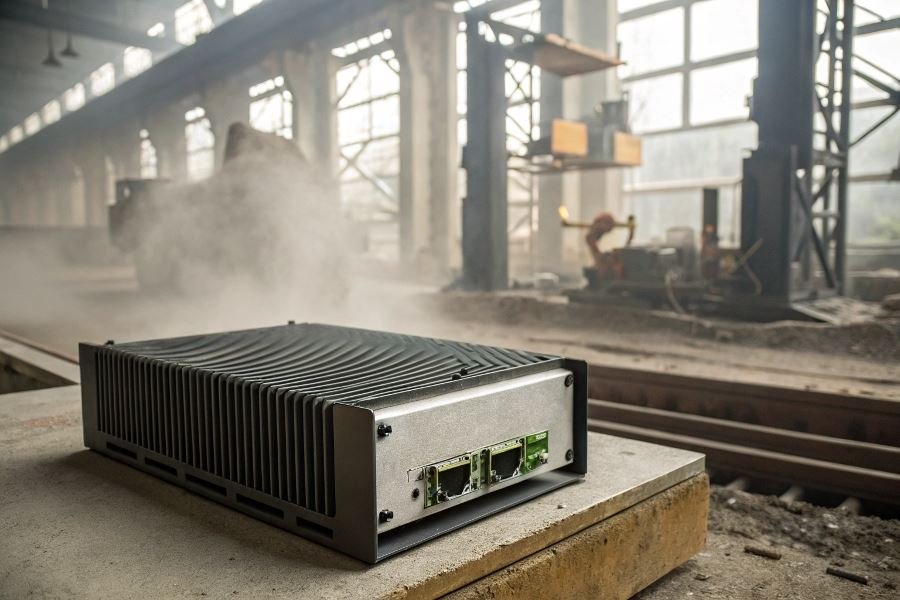
- Fanless cooling systems that eliminate a major failure point while preventing dust ingress
- Operating temperature ranges from -40°F to 185°F (-40°C to 85°C)
- Shock resistance certified to withstand drops and vibrations (typically 50G shock/5G vibration)
- Sealed enclosures preventing contamination from oils, chemicals, and particulates
Advantech industrial PCs, for example, often incorporate specialized coatings that resist chemical damage while maintaining touch sensitivity, even when operators wear gloves.
Operational Efficiency Through Better Interfaces
The touch interface revolutionizes how workers interact with industrial systems, dramatically reducing training time and error rates.
Intuitive gesture controls replace complex keyboard commands, allowing operators to control critical systems with precision even in challenging conditions. This interface advantage translates directly to measurable productivity improvements:
| Improvement Area | Typical Benefit |
|---|---|
| Training Time | 35-45% reduction |
| Task Completion | 20-30% faster execution |
| Error Rate | 15-25% fewer mistakes |
| Downtime | 10-20% reduction |
Allen-Bradley touch panel computers demonstrate how thoughtful interface design can transform complex industrial processes into straightforward visual workflows, reducing cognitive load during critical operations.
Maximum Functionality in Minimal Space
Perhaps the most underappreciated advantage of industrial touch computers is their remarkable space efficiency and integration capabilities.
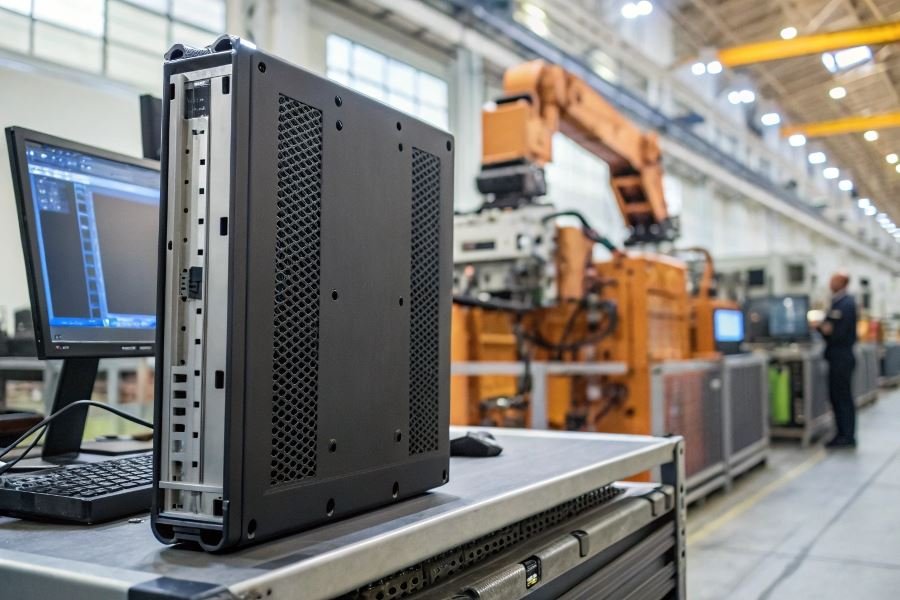
All-in-one designs eliminate the need for separate monitors, keyboards, mice, and protective enclosures—critical in environments where every square inch matters. Modern industrial touch computers often incorporate:
- Multiple I/O options including legacy serial ports alongside modern USB and Ethernet
- Expansion capabilities via PCIe or proprietary slots
- Integrated data acquisition systems
- Built-in wireless connectivity options (Wi-Fi, Bluetooth, cellular)
Siemens industrial PCs exemplify this integration advantage with models that combine HMI functionality, PLC capabilities, and edge computing in footprints smaller than a traditional control panel.
The space savings extend beyond the physical dimensions—these systems typically require less wiring, fewer connection points, and simplified mounting solutions, reducing installation complexity and maintenance requirements while improving overall system reliability.
The Reality Check on Industrial Touch Screens
Industrial touch screen computers represent a technological marvel in manufacturing, logistics, and healthcare environments. But before committing to these robust systems, decision-makers must confront some significant challenges that come with the territory. Let’s dive into the less glamorous side of industrial touch computing.
The premium price of ruggedness
The durability and reliability of industrial touch computers come with a substantial price tag. Entry-level industrial panels typically start at $1,500, while comparable consumer-grade systems might cost just $500. For enterprise-scale deployments, this price differential can quickly escalate into six-figure territory.
A manufacturing facility requiring 50 workstations faces an initial investment of 75, 000−100,000 for industrial-grade touch systems—roughly triple the cost of standard commercial alternatives. This capital expenditure often creates budget tensions, especially for small to mid-sized operations with constrained IT resources.
The premium isn’t just in the hardware—specialized industrial software licenses often cost 30-40% more than their commercial counterparts.
When maintenance becomes a specialized skill
When industrial touch systems fail, the complexity of repair presents unique challenges:
-
Limited repair options: Unlike consumer electronics with abundant service centers, industrial computers often require specialized technicians or return-to-manufacturer service.
-
Component scarcity: Replacement parts for industrial-specific components can take weeks to source, creating costly downtime.
-
Environmental complications: Systems installed in harsh environments accumulate contaminants that complicate maintenance procedures and reduce component lifespan.
| Maintenance Factor | Consumer Touchscreen | Industrial Touchscreen |
|---|---|---|
| Average repair time | 1-3 days | 5-14 days |
| Typical service cost | $150-300 | $500-1,200 |
| DIY repair feasibility | Moderate | Low to impossible |
| Service provider options | Numerous | Limited |
One food processing plant manager reported spending $8,000 annually on maintenance for just six industrial touch terminals—nearly 20% of their initial purchase price.
Performance limitations that surprise buyers
Despite their robust construction, industrial touch computers often lag behind consumer technology in several performance areas:
Processing power constraints: Fanless designs and sealed enclosures limit heat dissipation, forcing manufacturers to use lower-power processors. An industrial PC might use a processor that’s 1-2 generations behind current consumer options.
Touch responsiveness issues: Industrial touchscreens prioritize durability over sensitivity. Workers wearing gloves often report needing to press harder or repeat gestures, slowing data entry by 15-20% compared to capacitive consumer screens.
Graphics performance ceilings: Applications requiring advanced visualization or 3D modeling may strain industrial systems, which typically feature integrated graphics rather than dedicated GPUs.
For operations requiring real-time data processing or complex visual interfaces, these limitations can create unexpected bottlenecks. A chemical processing facility discovered their new industrial touch systems couldn’t handle their simulation software despite meeting minimum specifications on paper.
Resolution compromises: Many industrial displays still offer 1280×1024 resolution when consumer displays have long since moved to Full HD or 4K, affecting visibility of detailed information.
While industrial touch computers excel in reliability and environmental resistance, these trade-offs in cost, maintenance complexity, and performance capabilities demand careful consideration before deployment. The ideal solution balances ruggedness requirements against these significant limitations.
Discover how industrial touch screen computers transform business operations with enhanced durability and efficiency. Explore their benefits for harsh environments and potential limitations in performance and maintenance. Essential guide for modern industrial solutions.
Discover how industrial touch screen computers transform business operations with enhanced durability and efficiency. Explore their benefits for harsh environments and potential limitations in performance and maintenance. Essential guide for modern industrial solutions.