Ever wondered how thousands of perfectly formed dumplings reach your plate in restaurants and grocery stores? The answer lies in the mechanical marvels that have transformed global cuisine.
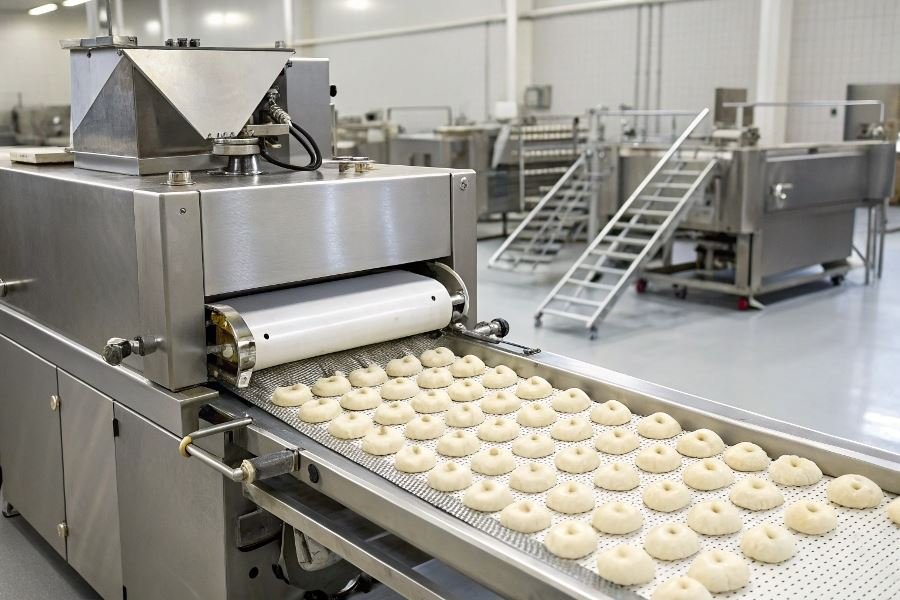
Behind every frozen gyoza, pierogi, or wonton package sits an industrial dumpling machine—a sophisticated piece of engineering that has revolutionized food manufacturing. These powerhouse systems have evolved dramatically since their introduction in the 1960s, transforming what was once a labor-intensive cultural tradition into a precision-driven industrial process without sacrificing the essence of these beloved foods.
From tradition to automation
The journey from hand-folded dumplings to automated production represents one of food manufacturing’s most impressive technological leaps. Early machines could produce perhaps 1,000 units hourly, while today’s advanced systems can create up to 12,000 perfectly formed dumplings per hour. This evolution hasn’t just increased production—it’s democratized global cuisine, making traditional foods from China, Eastern Europe, and beyond accessible worldwide.
Market dynamics and production scale
The industrial dumpling machine market spans from entry-level systems producing 2,000-3,000 units hourly (priced around $30,000) to fully automated lines exceeding $250,000 that integrate mixing, filling, forming, and packaging. Most mid-sized food manufacturers operate machines in the 5,000-8,000 hourly production range, balancing efficiency with capital investment.
Culinary versatility across continents
What makes these machines truly remarkable is their adaptability. The same core technology can be calibrated to produce Chinese jiaozi, Italian ravioli, Eastern European pierogi, or Indian samosas with minimal reconfiguration. This versatility has made industrial dumpling equipment essential in commercial kitchens across diverse culinary traditions, from quick-service restaurants to large-scale food processors supplying global markets.
The Engineering Marvel Behind Industrial Dumpling Production
Industrial dumpling machines represent the backbone of large-scale dumpling production worldwide. These sophisticated systems transform simple ingredients into perfectly formed dumplings with remarkable consistency and efficiency. When evaluating key characteristics of industrial dumpling machines, manufacturers must consider several critical factors that directly impact production quality, food safety, and operational efficiency.
Production Capacity That Meets Demand
Modern industrial dumpling machines deliver impressive throughput capabilities ranging from 1,200 to 9,000 dumplings per hour. High-end models from manufacturers like Anko Food Machine can produce up to 12,000 units hourly—equivalent to what 20 skilled workers might accomplish manually. This capacity scaling allows producers to match production volumes with market demands precisely.
Production capacity considerations:
- Entry-level machines: 1,200-3,600 units/hour
- Mid-range systems: 4,000-6,000 units/hour
- Industrial-grade equipment: 7,000-12,000+ units/hour
Precision Filling Systems
The heart of any quality dumpling machine lies in its filling mechanism. Advanced weight control systems employ load cells and servo-driven pumps to deliver filling with accuracy within ±1% of target weight. This precision ensures product consistency while minimizing costly ingredient waste.
The difference between good and exceptional machines often comes down to their ability to handle varied filling textures—from smooth pastes to chunky mixtures with particulates up to 12mm.
Dough Handling Excellence
Dough thickness consistency directly impacts cooking performance and customer satisfaction. Premium machines maintain thickness variations within 0.2mm across production runs through:
- Automated dough sheet calibration
- Multi-stage rolling systems
- Temperature-controlled environments
- Continuous tension monitoring
Forming and Sealing Versatility
| Dumpling Style | Forming Mechanism | Sealing Method |
|---|---|---|
| Potstickers | Folding plates | Crimped edge |
| Soup dumplings | Pleating wheels | Twisted top |
| Gyoza | Curved formers | Ridged press |
| Pierogi | Cutting dies | Flat press |
The best machines offer interchangeable forming tools that allow producers to switch between styles in under 15 minutes. Yamato Manufacturing systems feature programmable memory for up to 100 different product specifications, enabling rapid changeovers without sacrificing quality.
Food Safety Through Superior Construction
Material construction represents a non-negotiable aspect of industrial dumpling equipment. Industry leaders exclusively use:
304 or 316 food-grade stainless steel for all food-contact surfaces, offering superior corrosion resistance and sanitation properties. These materials withstand aggressive cleaning chemicals while preventing bacterial harborage points.
“The difference between consumer-grade and truly industrial equipment becomes most apparent during cleaning cycles and regulatory inspections.”
Modern systems incorporate tool-free disassembly for critical components, reducing cleaning time by up to 60% compared to older designs. This feature not only improves operational efficiency but also enhances compliance with stringent food safety regulations like FDA 21 CFR and EU 1935/2004.
The most advanced machines now include integrated CIP (Clean-in-Place) systems that automatically sanitize internal components without manual intervention, dramatically reducing labor costs while improving sanitation consistency.
When selecting industrial dumpling equipment, manufacturers must carefully evaluate these characteristics against their specific production requirements, ensuring they invest in systems that deliver the perfect balance of throughput, precision, versatility, and food safety compliance.
The Engineering Marvel Behind Modern Dumpling Production
Automation that thinks for itself
Today’s industrial dumpling machines are technological marvels that would make early food processing pioneers gasp in amazement. The automation capabilities have evolved from simple mechanical repetition to sophisticated systems that can adjust on the fly. Modern control interfaces feature touchscreen HMIs (Human-Machine Interfaces) that allow operators to monitor production metrics in real-time and make micro-adjustments without halting production.
The integration of Allen-Bradley PLCs and similar control systems has revolutionized precision. These smart systems can detect irregularities in dough consistency, filling distribution, and even predict maintenance needs before failures occur. One standout example is the Anko Food Machine SD-97W, which can produce up to 6,000 dumplings per hour while maintaining consistent quality through its adaptive filling system.
The difference between entry-level and advanced automation isn’t just speed—it’s intelligence. Modern systems don’t just execute tasks; they learn from them.
Energy efficiency that protects profits
The operational economics of dumpling production has undergone a remarkable transformation. Today’s machines consume 30-45% less energy than models from just a decade ago. This efficiency comes from:
| Feature | Benefit | Typical ROI Timeframe |
|---|---|---|
| Variable frequency drives | 20-25% power reduction during partial loads | 14-18 months |
| Heat recovery systems | Recaptures 30% of thermal energy | 24-30 months |
| Standby mode optimization | Reduces idle consumption by up to 80% | 8-12 months |
Manufacturers like Sammic have pioneered insulated production chambers that maintain temperature without constant energy input. The initial investment in these efficient systems typically pays for itself within two years through reduced utility costs—a critical factor when operating at industrial scales.
Maintenance simplified for maximum uptime
The cleaning and maintenance requirements have been reimagined with food safety and operational efficiency as dual priorities. Modern designs feature:
- Tool-free disassembly of critical components
- CIP (Clean-In-Place) systems that reduce manual cleaning time by up to 70%
- Antimicrobial surfaces that resist bacterial growth between cleaning cycles
The Rheon encrusting machines exemplify this evolution with their quick-release belts and removable hoppers that can be sanitized in under 15 minutes. This represents a dramatic improvement over older models that might require hours of downtime for thorough cleaning.
Versatility that spans global cuisines
Perhaps the most impressive advancement is the ability to produce virtually any dumpling style with minimal retooling. Modern machines offer:
- Adjustable folding mechanisms for everything from gyoza to pierogi
- Interchangeable die sets for different shapes and sizes
- Programmable filling ratios that can be saved as presets
The Yamato multifunction depositors demonstrate this versatility by switching between mochi, soup dumplings, and pot stickers with minimal downtime. This adaptability is crucial for manufacturers serving diverse markets or restaurants offering global menu options.
The technological sophistication of today’s industrial dumpling equipment represents not just incremental improvement but a fundamental rethinking of food production efficiency, quality, and flexibility.
Discover the essential features of industrial dumpling machines that boost production efficiency. Learn about capacity, precision filling, automation, and customization options to select the perfect equipment for your food manufacturing needs.
Discover the essential features of industrial dumpling machines that boost production efficiency. Learn about capacity, precision filling, automation, and customization options to select the perfect equipment for your food manufacturing needs.