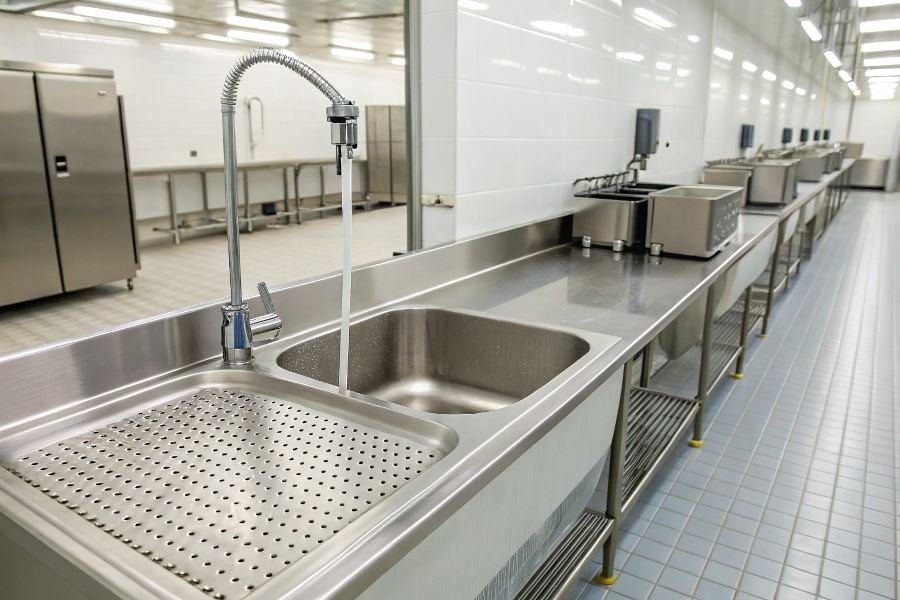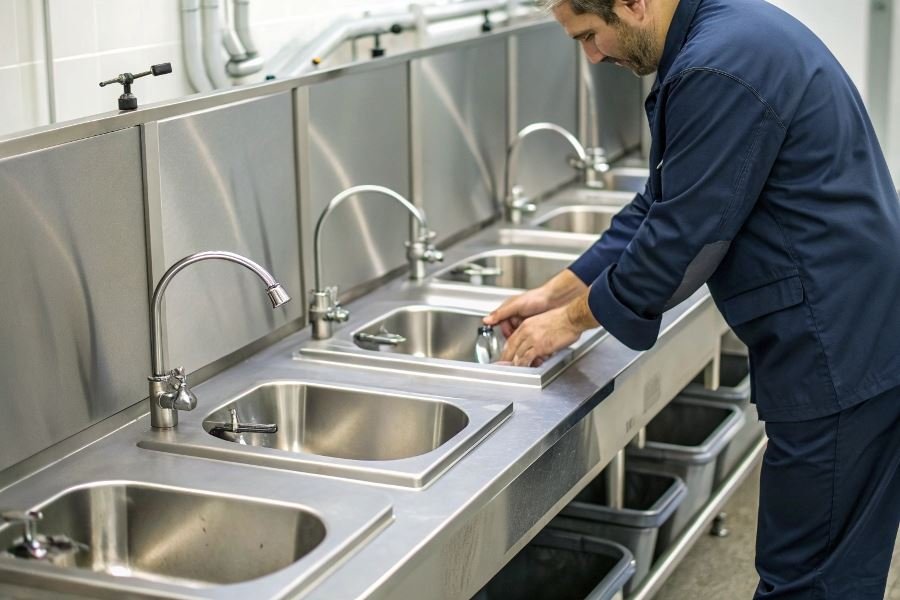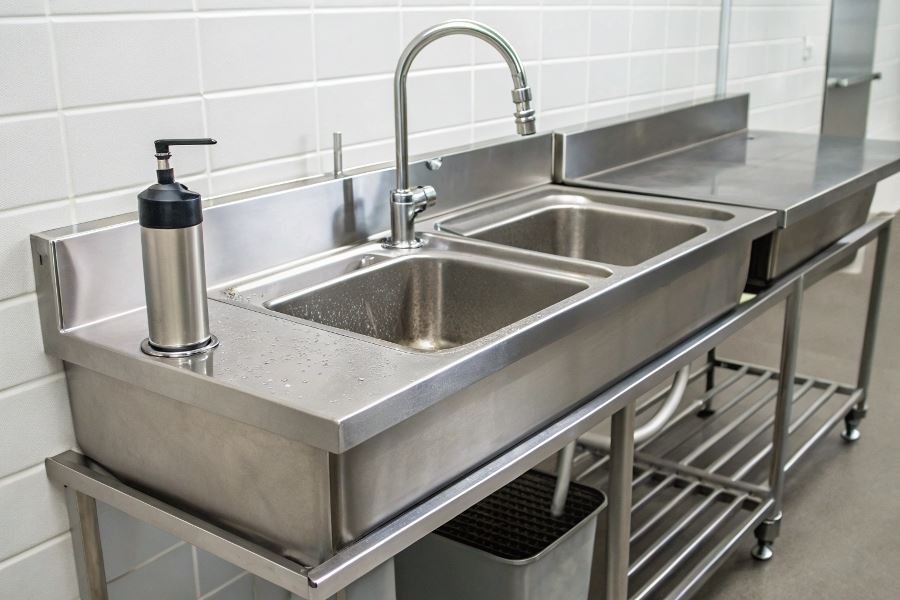
Ever walked into a commercial kitchen and noticed how everything revolves around the sink? It’s the unsung hero of food safety—the place where contamination stops and cleanliness begins. Yet surprisingly, sink selection remains one of the most overlooked decisions in facility planning, despite being a critical control point that FDA inspectors scrutinize first.
Selecting the right sink for food production isn’t just about having somewhere to wash—it’s about creating a fortress against foodborne illness. The FDA Food Code and NSF/ANSI standards have evolved significantly since their major updates in 2017, now requiring specific materials, configurations, and installation parameters that directly impact compliance. These aren’t just bureaucratic hoops; they’re science-backed safeguards.
The sink you choose directly impacts your bottom line. Studies from the Food Marketing Institute reveal facilities with properly designed washing stations experience 23% fewer production delays and significantly reduced cross-contamination incidents. When a single recall can cost upwards of $10 million, suddenly that “basic” sink becomes your most important insurance policy.
The selection process requires balancing three critical factors:
- Regulatory compliance – Meeting or exceeding current food safety standards
- Operational efficiency – Supporting workflow without creating bottlenecks
- Material durability – Ensuring longevity under harsh cleaning chemicals and temperature fluctuations
Your sink isn’t merely a vessel—it’s the foundation of your food safety program, the centerpiece of your sanitation strategy, and often the difference between passing inspection with flying colors or facing costly violations.
The Foundation of Food Safety: Material and Design Essentials
When selecting commercial kitchen equipment, few decisions impact food safety and operational efficiency more than your sink setup. The right sink becomes the cornerstone of sanitation protocols, workflow efficiency, and regulatory compliance. Professionals tasked with how to choose a sink for food production understand that this seemingly simple fixture requires careful consideration of materials, configuration, and ergonomic design to maximize both safety and productivity.
Stainless Steel: The Gold Standard in Food Safety
Not all stainless steel is created equal. The difference between grades can significantly impact your sink’s longevity and performance in demanding food production environments.
304 vs. 316: The Battle of Corrosion Resistance
| Feature | 304 Stainless Steel | 316 Stainless Steel |
|---|---|---|
| Composition | 18% chromium, 8% nickel | 16% chromium, 10% nickel, 2% molybdenum |
| Corrosion Resistance | Good for most environments | Superior, especially against salt and acids |
| Ideal Use Case | Standard food prep, lower budget | Acidic foods, coastal areas, dairy processing |
| Price Point | $1,500-2,500 for commercial units | $2,000-3,500 for commercial units |
| Lifespan | 10-15 years with proper care | 15-20+ years with proper care |
The addition of molybdenum in 316-grade stainless steel creates a nearly impenetrable shield against the corrosive effects of salt, acids, and harsh cleaning chemicals.
For facilities processing tomato-based products, citrus, or vinegar-heavy items, the investment in 316-grade sinks pays dividends through extended service life and reduced replacement costs. However, for standard food preparation with less acidic ingredients, 304-grade stainless steel offers an excellent balance of durability and value.
Compartment Configuration: Optimizing Workflow
The number of compartments in your sink directly impacts workflow efficiency and compliance with health regulations.
Single compartment sinks serve specialized purposes like hand washing stations or dedicated prep areas, but rarely meet the comprehensive needs of food production facilities.
Double compartment configurations represent the minimum standard for most operations, allowing for:
- Washing in one basin
- Rinsing or sanitizing in the second
Triple compartment sinks have become the industry standard, enabling the critical three-step process:
- Wash (with detergent)
- Rinse (with clean water)
- Sanitize (with chemical solution)
The triple-compartment design isn’t just about convenience—it’s about creating a systematic approach to food safety that minimizes cross-contamination risks and satisfies health department requirements.
For high-volume operations, custom configurations with four or more compartments allow for specialized stations dedicated to specific tasks like thawing, vegetable preparation, or seafood processing.
Ergonomic Design: Where Safety Meets Productivity
The human element often gets overlooked when selecting food production sinks, yet ergonomic considerations directly impact worker comfort, injury prevention, and operational efficiency.
Height considerations should account for the average height of your staff. The standard 36-inch counter height works for many, but custom heights between 34-38 inches may better accommodate your specific workforce.
Basin depth presents a critical trade-off: deeper basins accommodate larger items but increase back strain during extended use. The sweet spot for most operations falls between 12-14 inches, with specialized stations for larger equipment.
Integrated features like sloped drainage channels, rounded corners for easy cleaning, and splash guards significantly reduce repetitive motion injuries and improve sanitation outcomes.
The investment in thoughtfully designed sinks with proper ergonomics pays dividends through reduced worker compensation claims, decreased absenteeism, and improved productivity—making it as crucial to your bottom line as it is to food safety.
Making the Smart Sink Investment for Food Production
When it comes to finalizing your sink selection for food production, the decision extends far beyond simply picking a shiny fixture. The right choice represents a critical investment in your operation’s efficiency, compliance, and long-term success.
Balancing Cost Against Value
The initial price tag of a commercial food production sink can range dramatically—from $800 for basic models to $5,000+ for custom configurations with advanced features. However, fixating solely on upfront costs often proves shortsighted.
Premium sinks deliver returns through:
- Extended operational lifespan (typically 15-20 years for high-grade stainless steel versus 5-7 years for budget alternatives)
- Reduced maintenance interruptions
- Lower replacement frequency
- Enhanced operational efficiency
A Vollrath sink priced at $2,200 might initially seem expensive compared to a $1,200 alternative, but when amortized over its functional lifespan, the premium option often costs less per operational year.
The true cost of a sink isn’t what you pay today—it’s what you pay over its entire lifecycle.
Installation and Maintenance Realities
Even the finest sink becomes problematic without proper installation and maintenance protocols.
Installation Considerations
| Factor | Impact | Planning Requirement |
|---|---|---|
| Plumbing compatibility | Affects installation timeline and cost | Verify pipe sizes and water pressure requirements |
| Spatial requirements | Determines workflow efficiency | Allow 36″ minimum clearance around work areas |
| Weight support | Structural integrity | Ensure floor can support fully loaded sink weight |
| Drainage slope | Proper water evacuation | Maintain 1/4″ per foot minimum slope |
Professional installation typically adds $300-700 to your investment but prevents costly errors. Many manufacturers void warranties on improperly installed units, making professional installation effectively mandatory for premium models.
Maintenance Requirements
Establish a documented maintenance schedule including:
- Daily sanitization protocols
- Weekly deep cleaning procedures
- Monthly inspection of seals, joints and drainage components
- Quarterly professional assessment of plumbing connections
- Annual comprehensive evaluation
Document everything. Maintenance records not only optimize performance but serve as critical evidence during health inspections.
Health Department Compliance Checklist
Health inspectors don’t issue warnings—they issue violations. Your sink selection must align with regulatory requirements from day one.
✓ Material verification: Confirm NSF/ANSI 51 certification for food contact surfaces
✓ Compartment configuration: Ensure your operation has the legally required number of compartments (typically three for most food production)
✓ Hand washing station: Verify separate dedicated hand washing facilities within required proximity
✓ Water temperature capacity: Confirm hot water reaches and maintains 110°F minimum for washing, 180°F for sanitizing (or chemical alternative)
✓ Backflow prevention: Ensure appropriate devices are installed and certified
✓ Drainage compliance: Verify proper air gaps and grease trap integration where required
✓ Accessibility standards: Confirm ADA compliance if applicable to your operation
Health department requirements vary by jurisdiction—always verify local regulations before finalizing your selection.
The perfect sink for your food production facility balances immediate budget constraints against long-term operational needs while maintaining unwavering compliance with health regulations. When viewed as a strategic investment rather than a mere expense, the decision becomes clearer—choose quality, compliance, and longevity over short-term savings.
Discover how to select compliant, efficient sinks for food production facilities. Learn about material requirements, optimal configurations, and design factors that enhance safety and productivity while meeting strict industry regulations.
Discover how to select compliant, efficient sinks for food production facilities. Learn about material requirements, optimal configurations, and design factors that enhance safety and productivity while meeting strict industry regulations.